

Two major fashion institutions have announced a collaboration that repositions Azzedine Alaïa’s legacy. La Galerie Dior and the Azzedine Alaïa Foundation will present a double exhibition this autumn revealing Alaïa as something more than the precision-obsessed couturier the world knew. He was also a collector, one who spent decades quietly amassing pieces from haute couture’s greatest names. Christian Dior occupied a particular position in that archive.

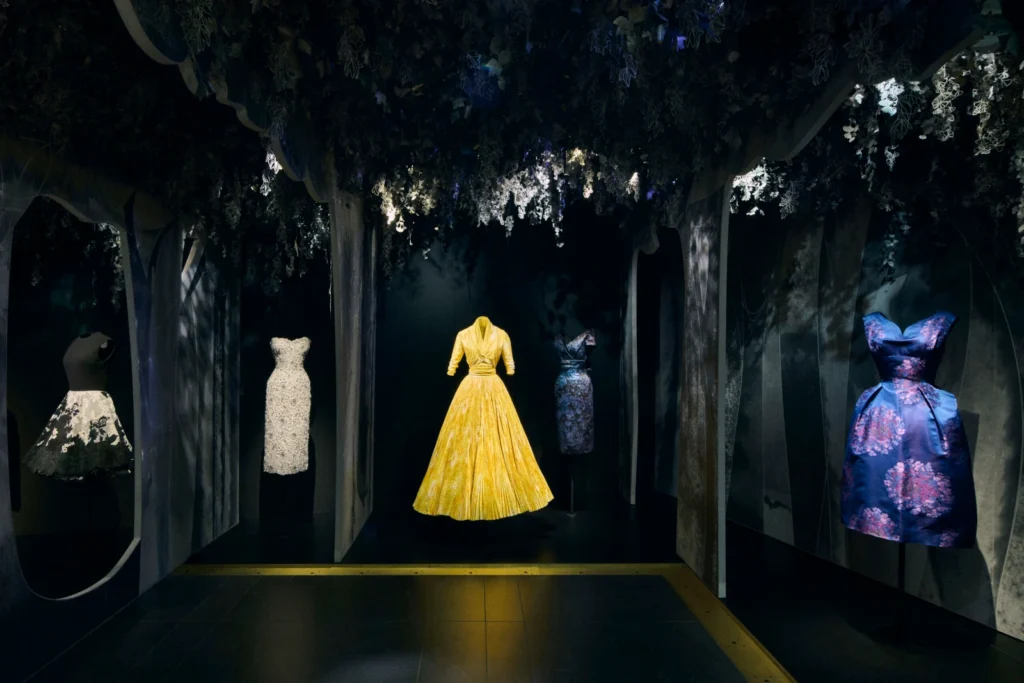
Around 600 Dior pieces now rest within the Azzedine Alaïa Foundation’s holdings. This was work Alaïa did in secret, building a collection that reflected his understanding of couture’s technical and creative peaks. More than a 100 of these pieces will appear at La Galerie Dior for the first time, spanning the house’s creative evolution from Christian Dior himself through Yves Saint Laurent to John Galliano. Such a concentrated focus on one house, maintained over decades, suggests more than just casual admiration.
A biographical detail adds context. In 1956, Alaïa spent a few days in the Dior workshops on avenue Montaigne, a brief stint sometimes described as an internship. His time there lasted only from June 26 to June 29, but he retained what he described as fond memories of the demanding ateliers. Christian Dior died in 1957, just a year later, making Alaïa part of the last generation to experience the founder’s workshops firsthand. That short encounter with Dior’s operational standards appears to have established a benchmark.

Concurrently, at the Azzedine Alaïa Foundation’s Paris venue, around 30 Christian Dior designs from Alaïa’s collection will hang alongside a similar number of his own creations. Both designers built their reputations on an obsessive attention to construction and fit. Dior’s New Look in 1947 redefined post-war femininity through engineered silhouettes, using interior boning, padding and structured undergarments to create his signature shapes. Alaïa, working primarily from the 1980s onward, developed body-conscious tailoring that used stretch fabrics and precise seaming to sculpt without the heavy internal architecture Dior required. Different decades, different materials, but a shared conviction that clothes should articulate the body’s form.
Both men operated as outsiders before their breakthroughs. Dior worked in fashion illustration and design before founding his house in 1946 with backing from textile manufacturer Marcel Boussac. Alaïa arrived in Paris from Tunisia in the late 1950s with limited resources, building his reputation through private clients before staging his first official show in 1979. He famously operated outside the traditional fashion calendar for years, showing collections only when he deemed them ready rather than adhering to seasonal schedules.

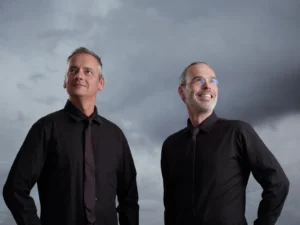
Olivier Saillard, who curated both exhibitions in collaboration with Gaël Mamine, has positioned them as “a new interpretation of the history of the House of Dior through the eyes of a discerning collector, while revealing a series of captivating correspondences between Christian Dior and Azzedine Alaïa.” Saillard served as director of the Galliera fashion museum in Paris from 2010 to 2020 and has worked extensively with the Alaïa Foundation since the designer’s death in 2017. His approach tends toward emphasizing craft and construction over commercial narrative.
Designer-owned collections carry particular authority in fashion preservation. Alaïa collected to study technical solutions, to understand how predecessors solved problems of volume, balance and movement. His archive included pieces from Balenciaga, Vionnet and Grès alongside the substantial Dior holdings. Cristobal Balenciaga, notably, was another architect of structure, known for garments that shaped space around the body through internal engineering. Alaïa’s collection choices reveal his priorities as a maker, documenting his intellectual lineage.

The Azzedine Alaïa’s Dior Collection exhibition at La Galerie Dior (11, rue François-Ier, Paris) is on view until May 3, 2026. The Azzedine Alaïa and Christian Dior, Two Masters of Couture exhibition, at the Azzedine Alaïa Foundation (18, rue de la Verrerie, Paris), is on view from December 15, 2025 to May 3, 2026.