
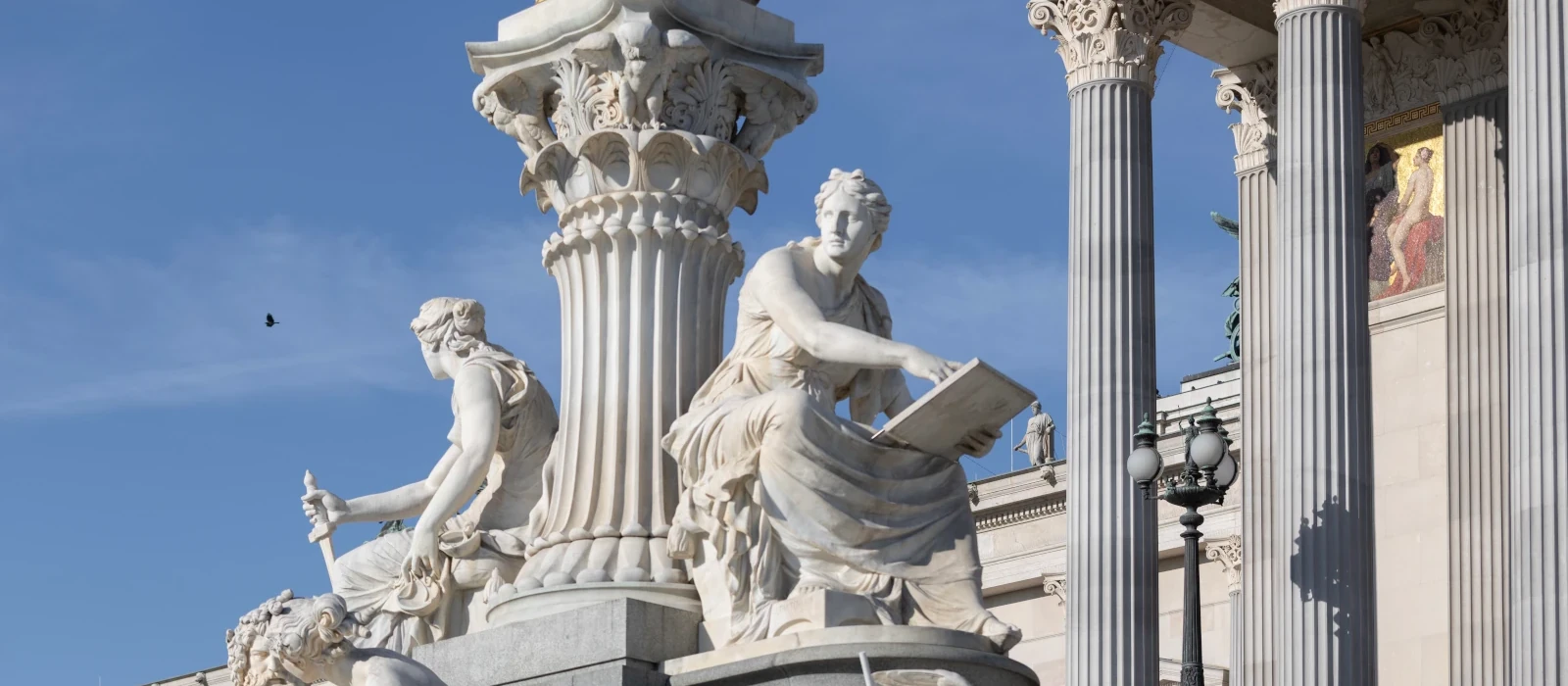
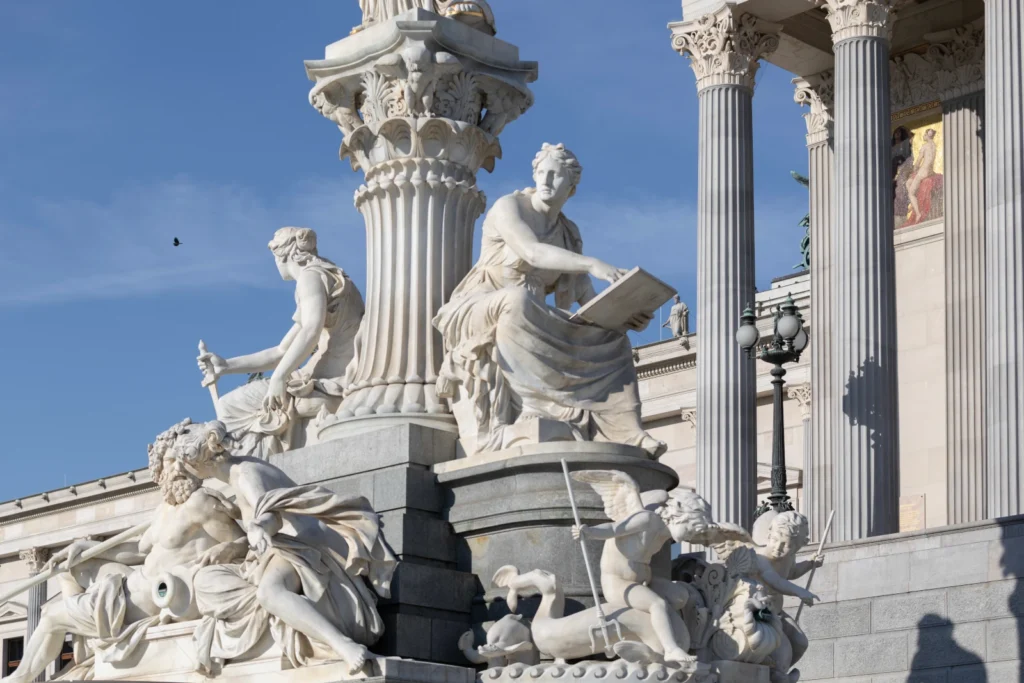
In my imagination, Vienna was always a city brushed in gold leaf, with opera arias drifting through open windows, horse carriages echoing down cobblestones, and that unmistakable aroma of coffee and pastry. It felt almost theatrical, a vision too romantic to be real. My recent visit revealed that the Austrian capital city was much as I had imagined.
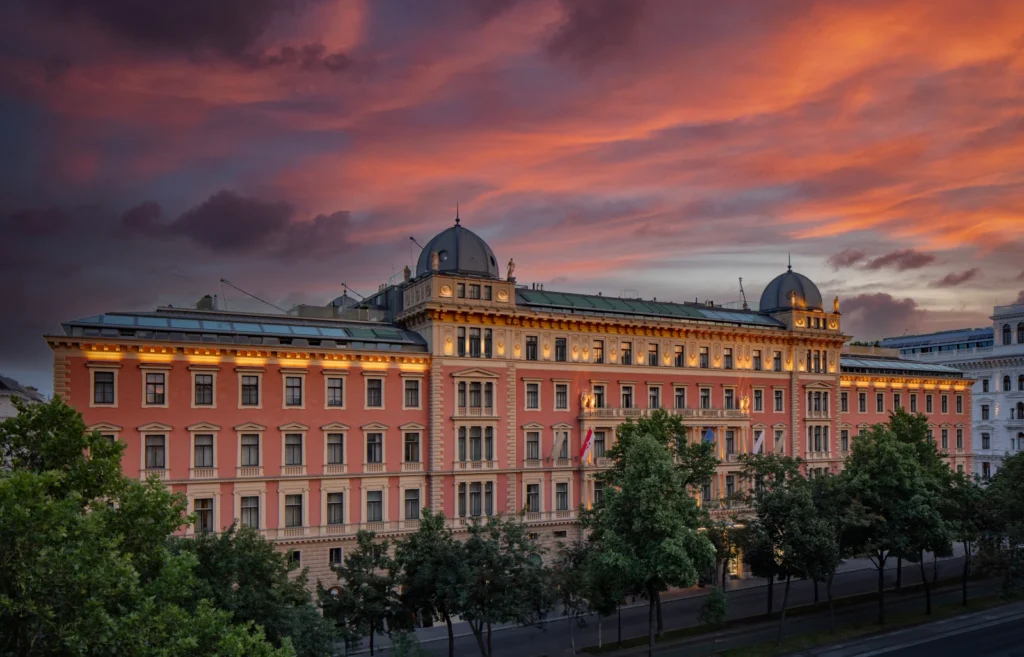
My journey began at the Anantara Palais Hansen Vienna Hotel, a 19th-century neoclassical palace reimagined with contemporary ease. Its arched doors opened to the city’s signature luxury: marble floors, sweeping staircases, and chandeliers glowing like softened candlelight. My room overlooked the Ringstrasse, the 5.3-km boulevard that’s lined by Vienna’s most famous palaces, museums, and parks.
Inside the hotel, designed by Danish-Austrian master architect Theophil Hansen who’s known for his role in crafting Vienna’s architectural identity, polished parquet and warm brass created comfortable elegance: imperial, but never intimidating.
Jürgen Ammerstorfer, the hotel’s General Manager, distills the spirit of the place: “Beyond design, we offer guests an immersive journey into Hansen’s legacy, not only as an architect but as a designer for imperial purveyors such as jeweller A.E. Köchert and glassmaker Lobmeyr. Through meticulous preservation, thoughtful innovation, and curated experiences, the Palais remains historic, timeless yet vibrant for today’s luxury traveller.”
A walk through time
A fine afternoon invited an architectural walk that traced Vienna’s evolution in real time. Jugendstil façades stood beside sleek galleries; monumental neoclassical buildings brushed shoulders with contemporary studios.
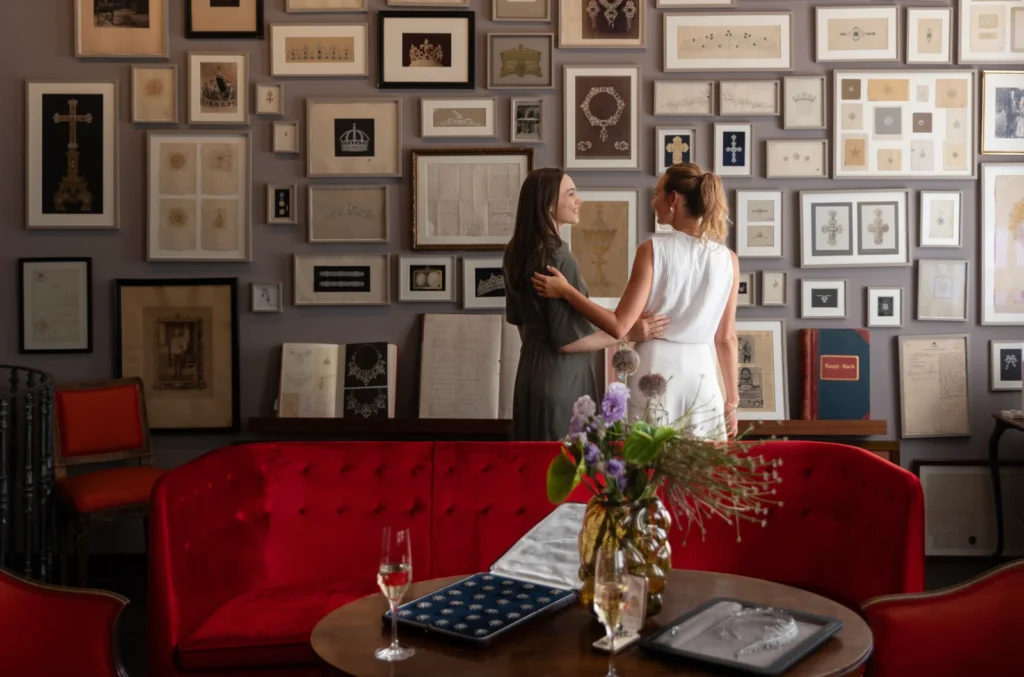
The route eventually led to A.E. Köchert, the imperial jeweller whose windows glittered like a private treasury. Inside, a descendant of the founding family lifted out a tray of diamond-studded stars, a modern interpretation of the pieces Empress Elisabeth once wore in her hair – also created riginally by A.E. Köchert.
“Vienna has always valued beauty with meaning,” he said, polishing a brooch until it caught the light. “Our Empress wanted her jewels to reflect light, not wealth. That’s still the philosophy; pieces that endure, but never shout.”
Wine in the hills
A short drive beyond the centre carried me to Weingut Wieninger, one of the city’s best-known urban wineries perched over the Bisamberg hills. From the terrace, rows of vines dipped toward a skyline where Gothic spires rose beside glass towers.
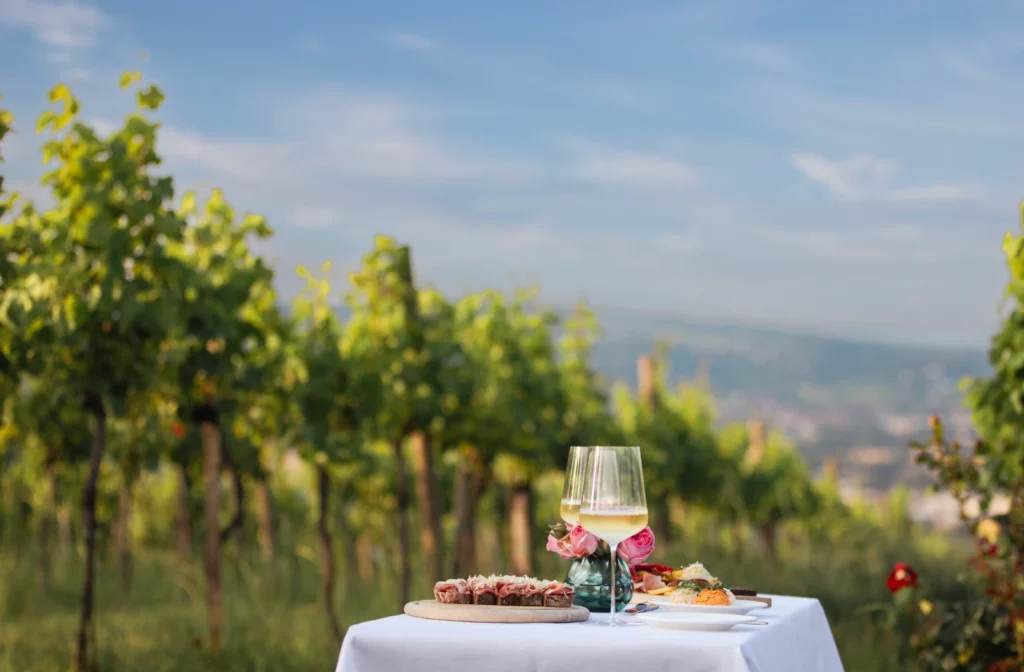
Inside the tasting room, sunlight glinted off barrels arranged with sculptural precision. The manager poured their signature Gemischter Satz. “Our vineyards sit on limestone and loess,” she said. “That minerality gives structure and freshness. We work biodynamically; no chemicals, just living soil. Vienna’s hills are alive, and we want our wines to taste like that.”
The wine, crisp, herbal, quietly complex, seemed very much like the city itself.
Fire and glass
In the creative Seventh District, where design ateliers share walls with antique shops, I stepped into a glowing glass studio run by master glassblower Robert Comploj. The furnace roared, lighting his face in shades of amber. A molten blob spun at the end of a steel rod, flickering like a creature unsure of its final form.
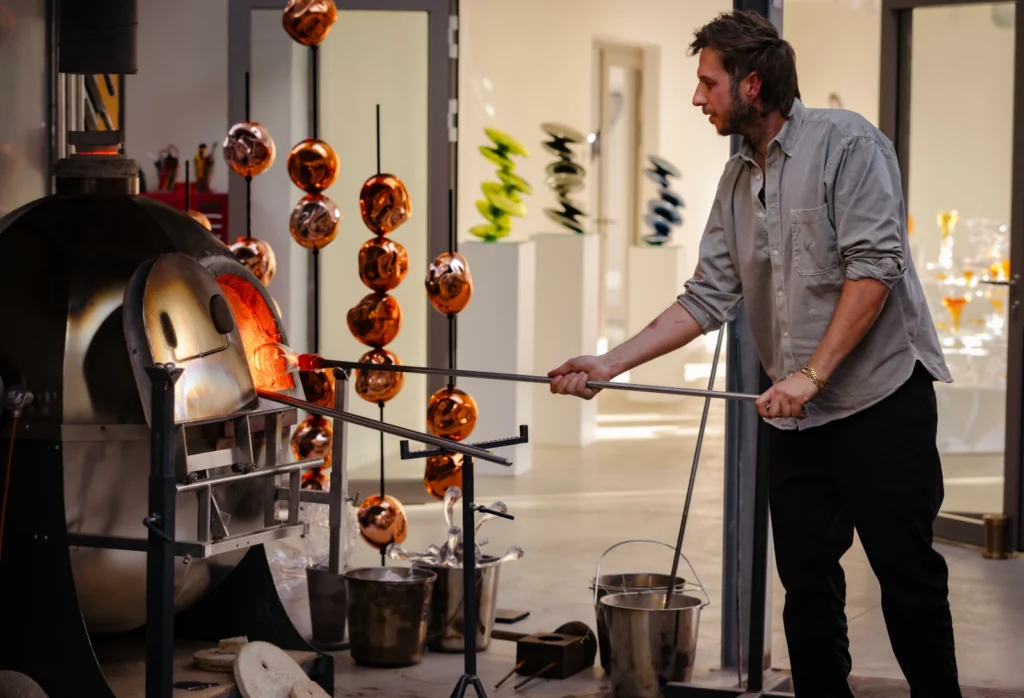
“Glass is like Vienna,” he said, turning the pipe as the blob changed shape. “It’s fragile, but strong.” He blew steadily, and the glowing mass expanded into something delicate and luminous. When it cooled, the finished piece was a swirl of smoke and fire.
A little later, after shaping a small paperweight flecked with midnight blue, my own beginner’s attempt at creating beauty from fire and sand, I returned to the Anantara Palais Hansen. The experience of crafting something by hand made the hotel’s emphasis on heritage and meticulous detail feel vivid.
A culinary interlude
Dinner at EDVARD, the hotel’s Michelin-starred restaurant, carried the city’s philosophy of refinement into its plates. Chef Paul Gamauf described his approach simply: “Austria’s finest ingredients are our roots, but the technique is global. We want every dish to feel precise, modern, and meaningful.”
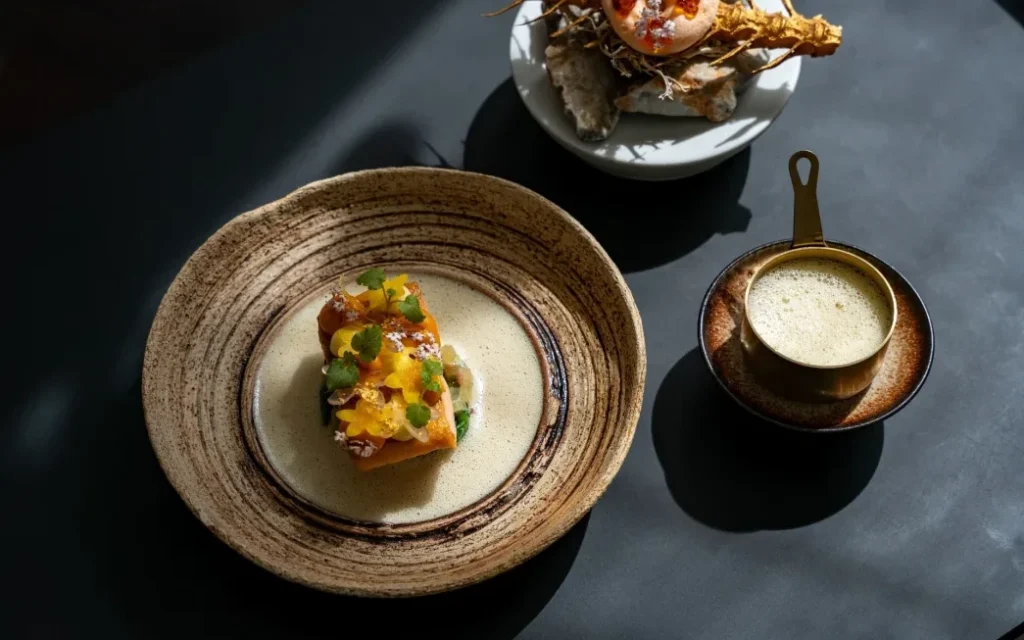
Char with fennel pollen, veal touched with black garlic, and an elderflower dessert that tasted like early spring arrived as quiet, thoughtful compositions, each a balance of tradition and invention.
“Our goal,” Gamauf said, “is to offer an international fine dining experience that is thoughtful, innovative, and deeply connected to the stories behind the ingredients.”
Outside, as evening softened the façades to a rose-gold glow, my guide Barbara Vrdlovec gestured toward a sleek gallery set inside a restored bank. “This is how Vienna evolves,” she said. “It doesn’t erase the past; it layers over it.”
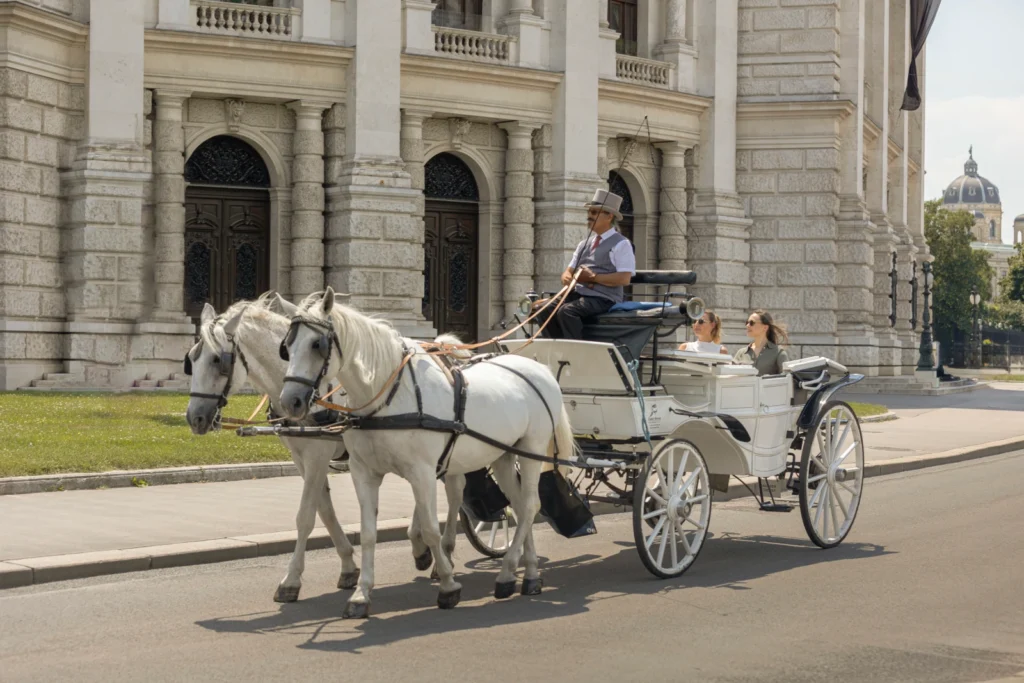
Later, I climbed into a fiaker, Vienna’s traditional horse-drawn carriage, and let the clip-clop echo through narrow lanes. The air smelled faintly of roasted chestnuts as the carriage swept past the State Opera.
As I looked at the gorgeous architecture silhouetted against the sky, I realised that in Vienna, luxury isn’t loud. It’s the quiet certainty of craft perfected over centuries, and the way the city invites you to slow down long enough to feel it.