
LF Review: ★★★★★
Sometimes, luxury doesn’t come in opulence. It comes in access. The luxury of being the only one there. The luxury of being allowed to witness nature as it unfolds gently. Antara‘s two-room catamaran allowed me to explore the virgin mangroves of Odisha, giving a fantastic lesson in slow travel.
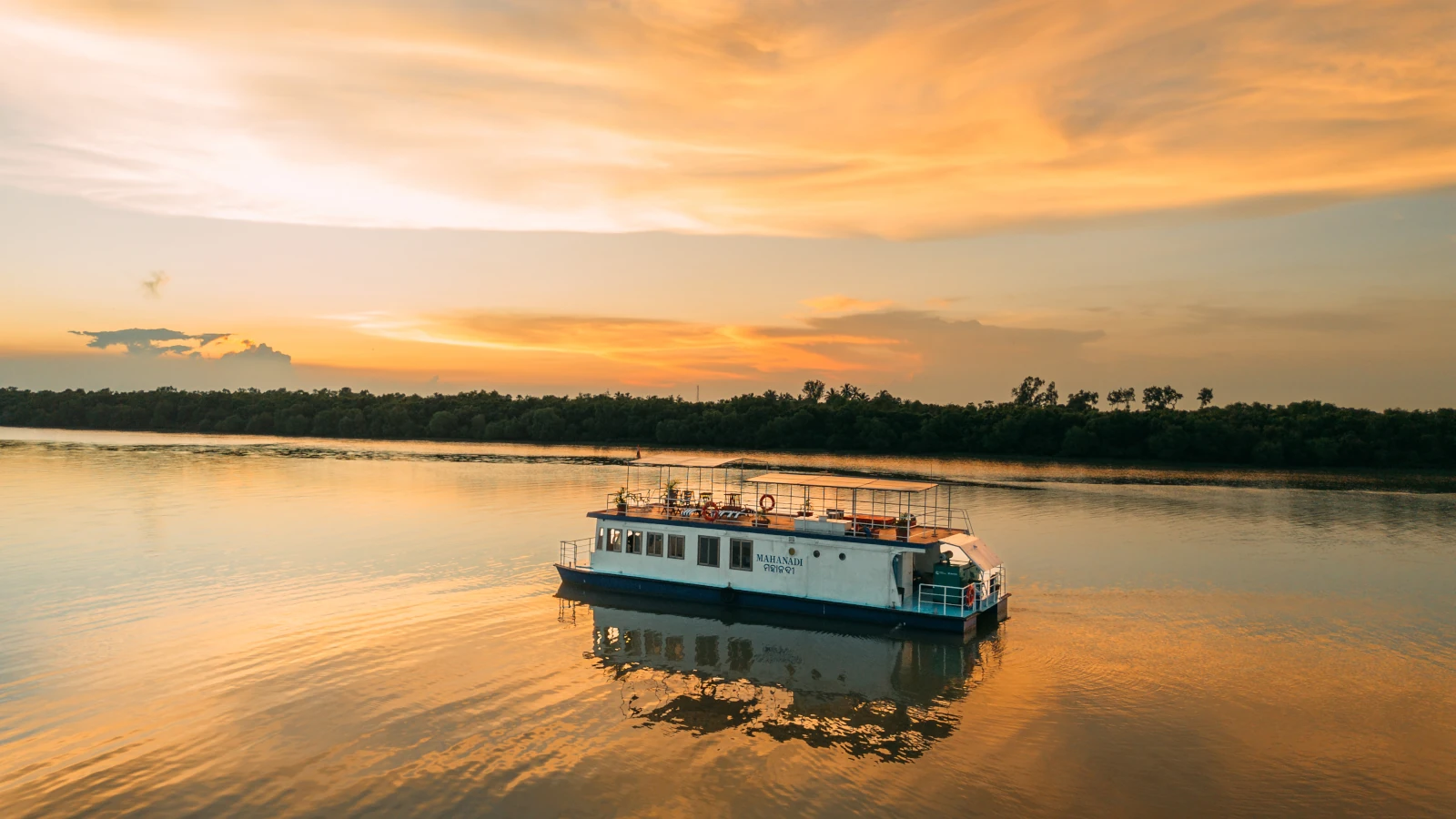
After a close to four-hour ride from Bhubaneshwar airport, I am in Gupti Jetty to board the Antara River Cruises catamaran. A short walk on a wooden board, I see my home for the next couple of days, Baitarini, an intimate and private two-bedroom vessel. The team is waiting for me and asks me to remove my shoes (for cleaning), and I slip into a pair of flip-flops.
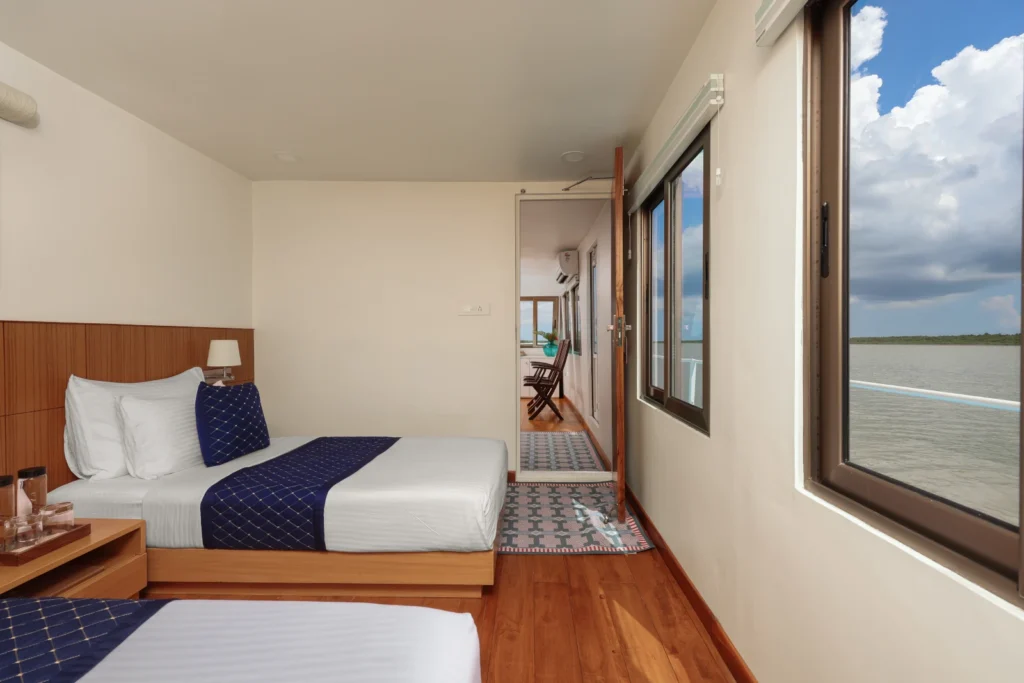
The crew has a cold towel and cucumber juice to welcome me, and it feels like a huge relief after my long journey. I am given a quick tour; there are two well-appointed rooms with attached bathrooms, a dining-cum-lounge area, and an upper deck area with seating. The kitchen area is at the back of the vessel, where all meals are made fresh. The interiors are aesthetic, with pristine white and blue shades offset by teak wood furnishings and beautiful Gond artwork on the walls. Bathroom amenities are by the luxury beauty brand, Kama Ayurveda.
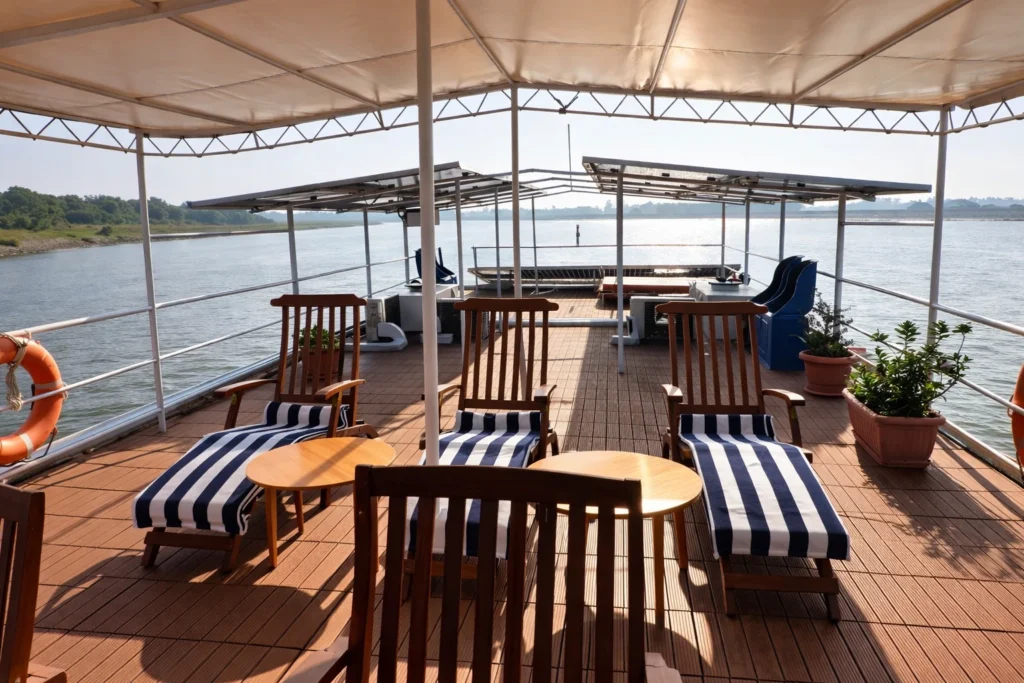
The communal lounge, done up in pastel hues, doubles as an elegant dining space. It is also a great place to simply sit and relax with a book in hand. The upper level has an expansive, charming sundeck that offers panoramic views of the river and the mangroves. This is also where breakfast and evening snacks are served. A small refrigerator is stocked with soft drinks for clients that ask—however, I would recommend that you stick to the drinks made by the chef.
The outer deck area is also a nice place to observe the species here—with the saltwater crocodiles, of course, being the star attraction. “This is unique, as no other accommodation has permission to stay overnight in the core zone of any park except us,” says Sanghamitra, my guide.
Food files
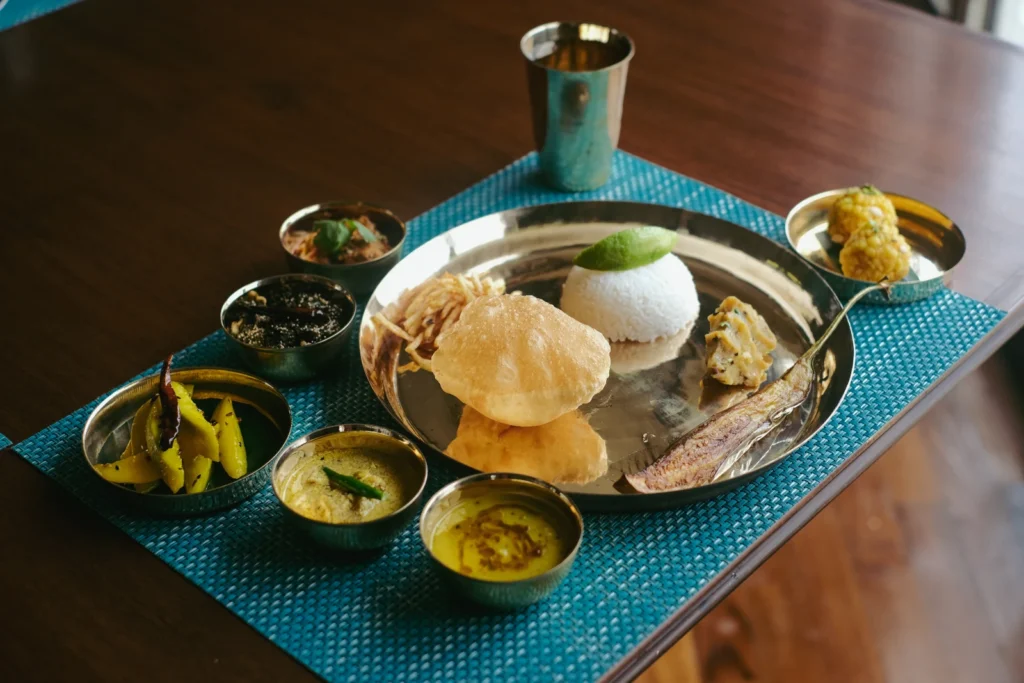
My first meal on board is a fantastic introduction to local Odia cuisine. With steamed rice (pakhala), Dalma (dal with vegetables), saga (leafy greens), vegetable stir-fries (bhaja; I had an interesting mix of potato and bitter gourd), a tangy chutney (khata), and papad (fried poppadums). The food is made using mustard oil and a minimal use of spices; everything is very palatable.
Special mention must be made of the chef on board, Sharath, who, despite not being from a hotel management institute, dishes out amazing fare—all curated to your dietary preferences. Each meal is well thought out—completely different from each other and hits the taste notes every time. I had one of the most amazing chhena podas I have ever tasted here. Afternoons are for snacks and tea, and there is an amazing dinner each night. After every excursion, once I was back on the catamaran, I was served a different juice each time—a small testament to how thoughtful the food on board is here.
All ingredients are local, and the fresh catch of the day is fish, crab, egg, and prawn. All ingredients are sourced from the local market and local farmers who come to the gate at the Gupti jetty with fresh vegetables. “The curd we make on board is from the local milkman’s milk, as we do not buy any packaged milk. Likewise, the lemon pickle is made by our chef from lemons grown in one of our staff’s gardens. We try not to buy any frozen food from the market, so I can assure you what we serve on board are very healthy meals,” says Sanghamitra.
The experience
One of the best places to sight the saltwater crocodiles, Bhitarkanika National Park, is a Ramsar site that covers a 672 km sanctuary area, with 145 square kilometers being declared a national park. For the curious, A Ramsar site is a wetland site designated to be of international importance under the “The Convention on Wetlands”, an international environmental treaty signed on February 2, 1971, in Ramsar, Iran, under the auspices of UNESCO.
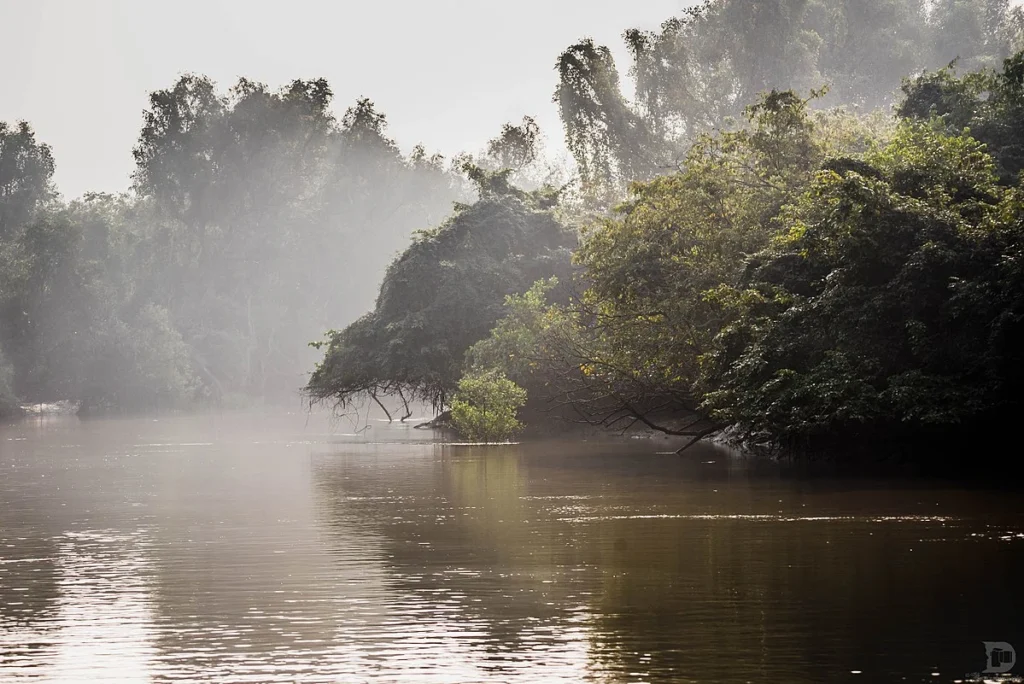
From playful Rhesus monkeys to seven variants of kingfishers, storks, hornbills, and more, the area is teeming with wildlife. The best part is that you can see everything from the comfort of the catamaran. When I was on board, I spotted several crocodiles—in varying sizes as they sunbathed on the mudflats. The conservation story of these crocodiles is a fantastic success story.
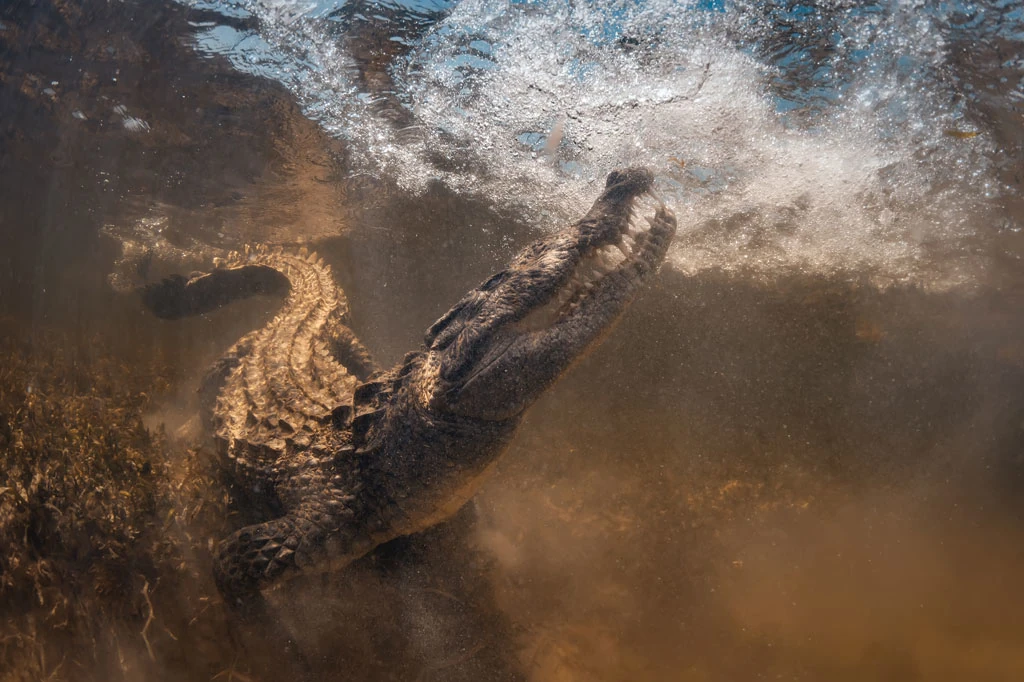
When we docked at Dangamal, I experienced a wonderful, guided walk into the jungle, where a round 4.5-kilometer trip brought me up close with the flora and fauna here. From a variety of birds to water bodies, there is never a dull moment. The trek ends at Shikarkothi, a shooting tower constructed by the erstwhile ruling kingdom. During my walk, I was mesmerized by the colors of the jungle fowl. We passed by a heronry as well that Sanghamitra pointed out specifically as being abuzz with birds in the roosting season.
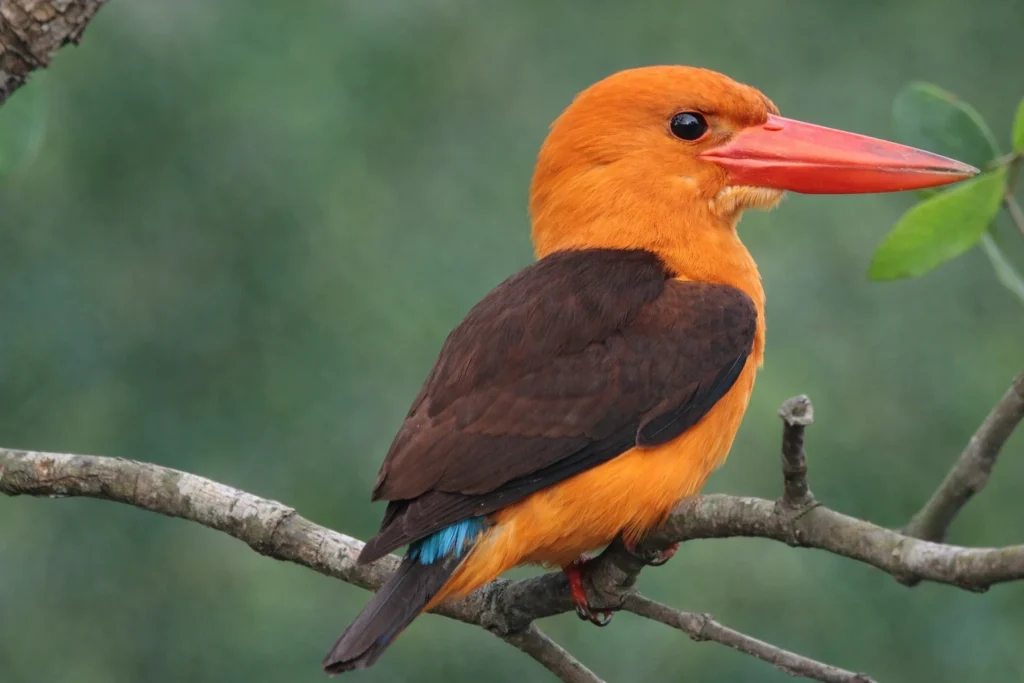
Once I returned and tucked into a fulfilling breakfast, I hopped onto a smaller boat to explore the creeks and saw more wildlife. The biggest star attraction here is the brown-winged kingfisher, an endemic species whose beauty is mesmerizing. Back at the catamaran for lunch, I soak in the sights of the river and see more crocodiles—including Kaalia, the biggest one here.
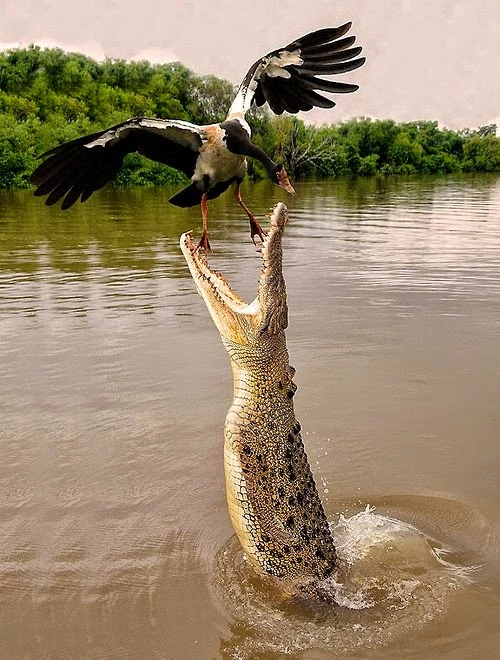
That evening, I head to the shore to visit the Orientation Center, where a film narrates about the stunning comeback of the crocodiles that were on the brink of extinction. The museum is informative, with interesting exhibits that showcase the unique landscape as well.
Green fingers
Antara River Cruises also prides itself on the fact that it is designed to minimize the impact on the environment in its ethos. They have partnered with Indian homegrown brands for high-quality, organic, fair-trade produce. There is freshly roasted Bili Hu coffee from Chikmagalur, Karnataka; Bhuria organic jams from Himachal; small-batch cheese from Darima farms, Himachal; and honey from Barosi farms.
As far as technical aspects are concerned, oil separators clear the river from oil going into it, as well as the sewage treatment plant. Biodegradable toilet paper is used. There is an RO filtration plant onboard. Water on the ship is served in reusable glass bottles, saving over 30,000 bottles of water in a year.
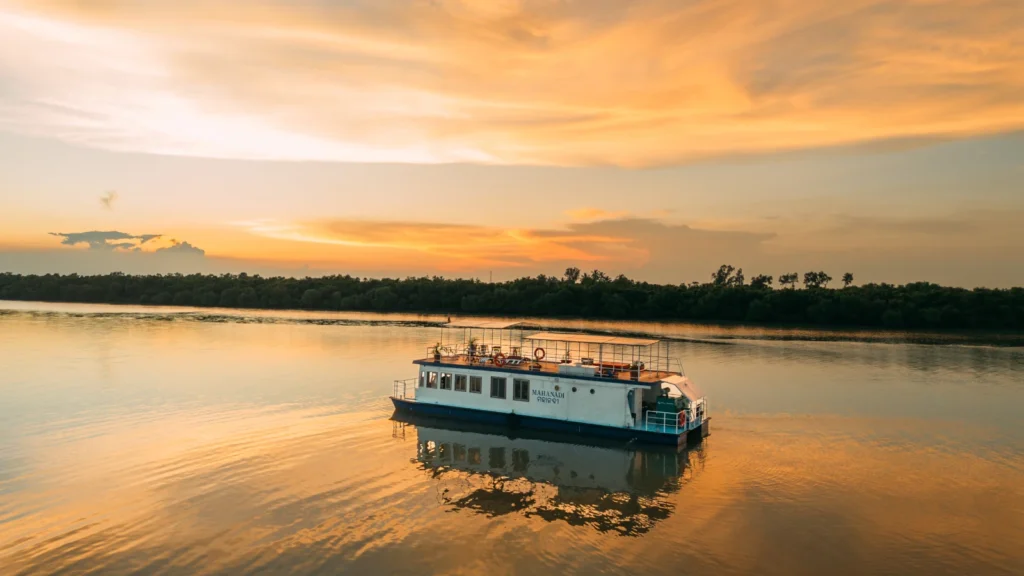
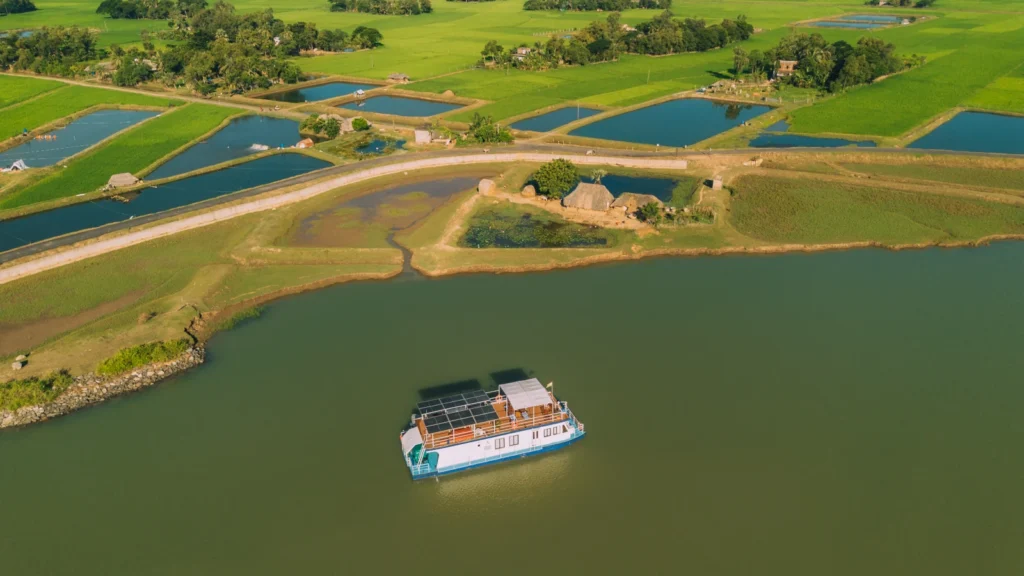
Most times, the catamaran uses tides in its favor to optimize fuel efficiency. The vessel uses power generated from the solar panels installed for its internal electrical uses, including air conditioners and water heaters.
In all, if you are looking for a holiday that is bespoke, ecologically conscious, and above all rooted in the land, the Antara River Cruises catamaran is an experience like no other.
LF Review: ★★★★★
Coordinates: Gupti, Odisha, India