
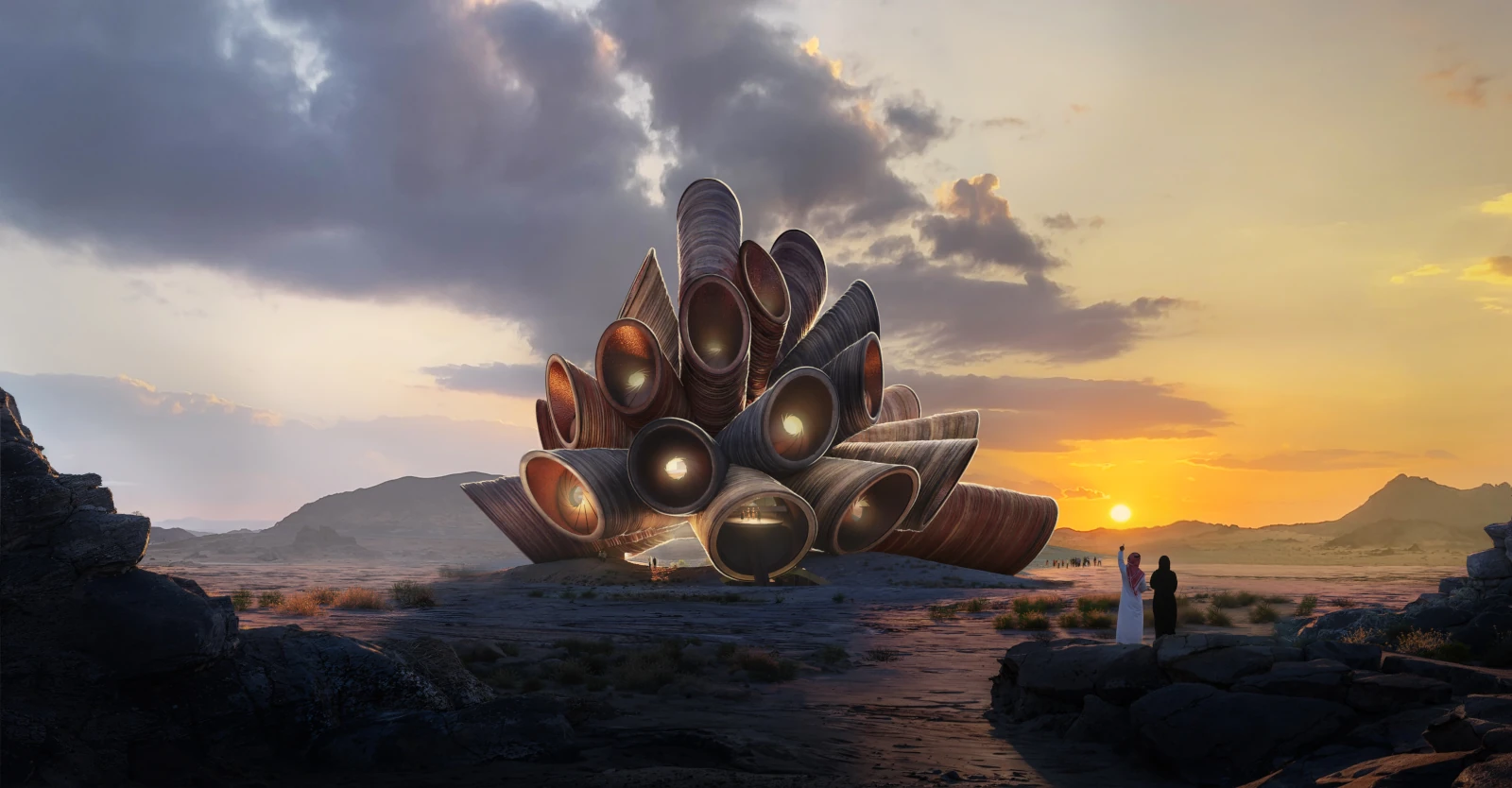
Saudi Arabia’s Royal Commission for AlUla (RCU) has approved the design for AlUla Manara, a new astronomy and astrotourism destination designed by Heatherwick Studio, set to be built beneath one of the darkest skies on Earth. The project combines live scientific research, public programming and visitor experiences, making it one of the more unusually structured facilities of its kind anywhere in the world.
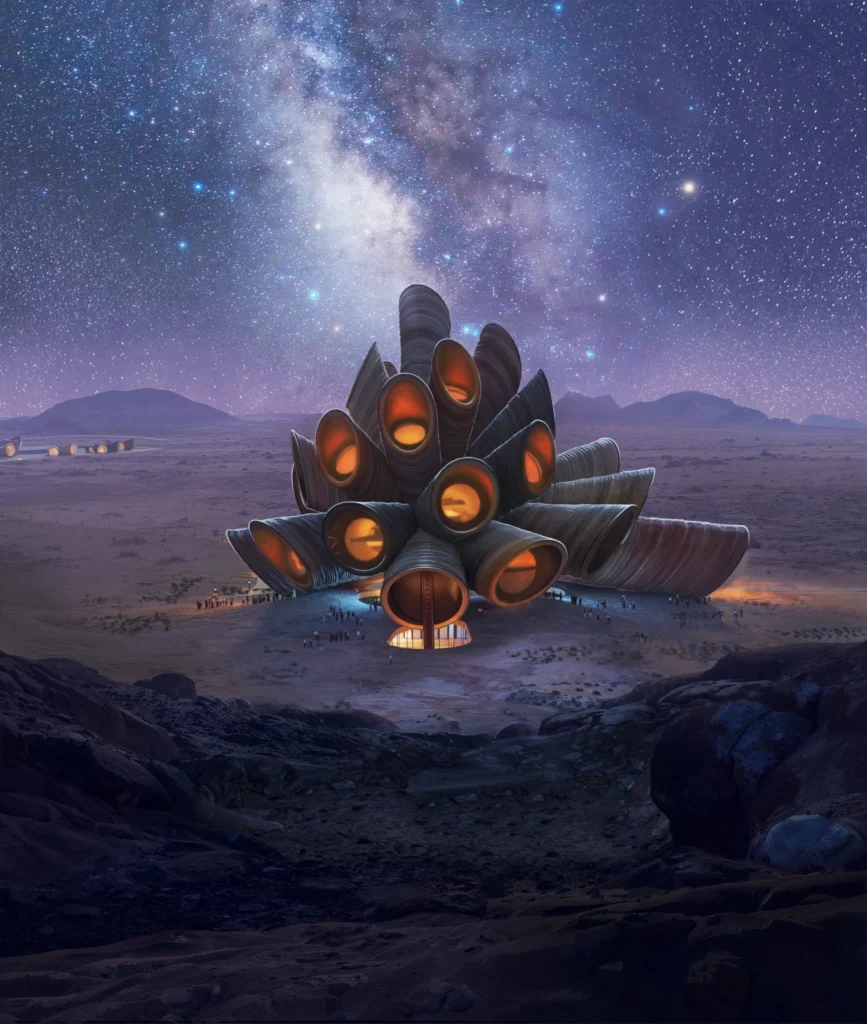
AlUla has had a relationship with the stars long before modern astronomy existed. Ancient Nabataean traders navigated by the night sky above these valleys, and the region’s cultural traditions carry deep celestial references that go back centuries. The facility, retracing that history, adds on to AlUla’s wider Manara programme, which includes the Astrotourism Policy, community astronomy initiatives and Dark Sky Park certifications already in place across the region.
Heatherwick Studio, known for Little Island in New York, Azabudai Hills in Tokyo and Coal Drops Yard in London, has shaped the building around spiralling geometries found across the universe, galaxies, planetary rings, clusters of stars and gas. Those same patterns appear in fossils, shells and plants on Earth. Three interlocking telescope-like structures rise from the desert floor, covered in textured stone that echoes AlUla’s sandstone landscape.
Stuart Wood, Executive Partner at Heatherwick Studio, said, “Space observatories are often remote, sterile places, technical outposts that feel distant from the public. We saw an opportunity to dissolve those barriers and create a place where visitors can step inside the wonder of the cosmos.”
Manara’s location, between Gharameel Nature Reserve and Harrat Uwayrid Reserve, will be part of the world’s third-largest Dark Sky Park. AlUla’s night skies rank in the top 5% globally for natural darkness and sky quality, a number verified by DarkSky International, which has certified the Manara site along with Sharaan National Park and Wadi Nakhlah Nature Reserve in Saudi Arabia.
Astrotourism as a global category has been growing steadily. The majority of destinations that have established visitor economies around certified dark sky tourism are located in New Zealand, Chile’s Atacama Desert and parts of Scandinavia. AlUla, being at the same level, has an abundance of historical and geographical sights to visit alongside it.
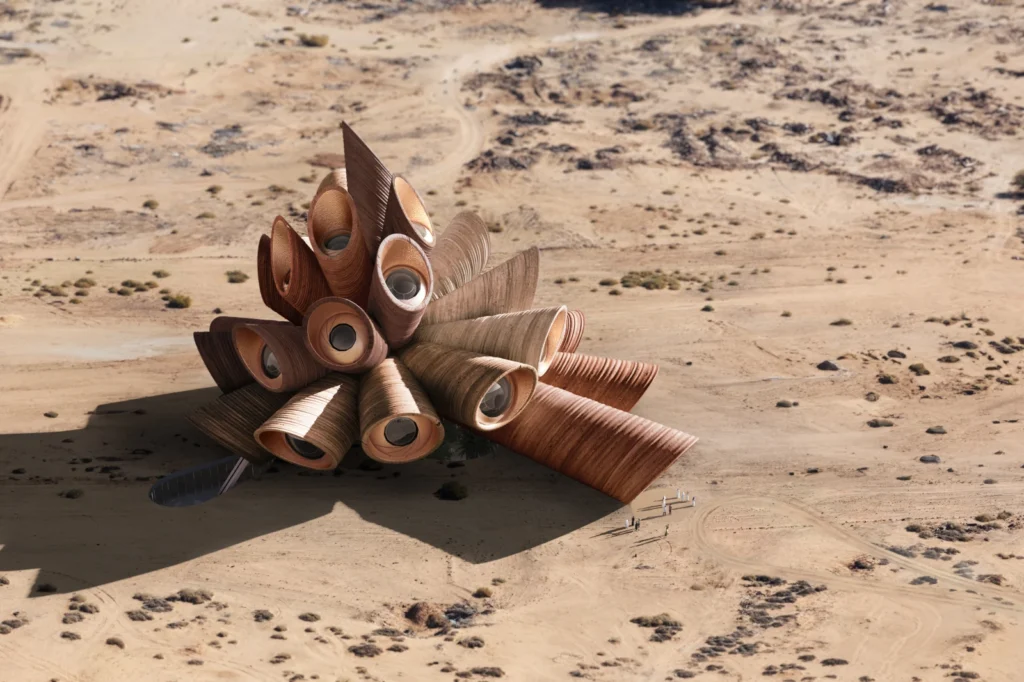
Manara will have immersive exhibitions, a planetarium, a restaurant and a rooftop observation deck. It will also run live scientific research alongside public programming, which means visitors will be inside a working research facility, not a static museum about space. Advanced observation technologies and interactive experiences will also be part of the offering, with the facility designed to support global knowledge exchange in astronomy and space science. That kind of setup is rare globally and closer in format to how the European Southern Observatory runs its public access operations in Chile.
Sustainability measures are built into the structure itself. Integrated shading systems manage sunlight during the day while keeping dark-sky visibility protected at night. Windows can be opened and closed in response to changing weather, which also supports energy efficiency. RCU has put in place a region-wide Astrotourism Policy that covers lighting controls, zoning and visitor management standards, all specifically aimed at preserving AlUla’s night skies for future generations.
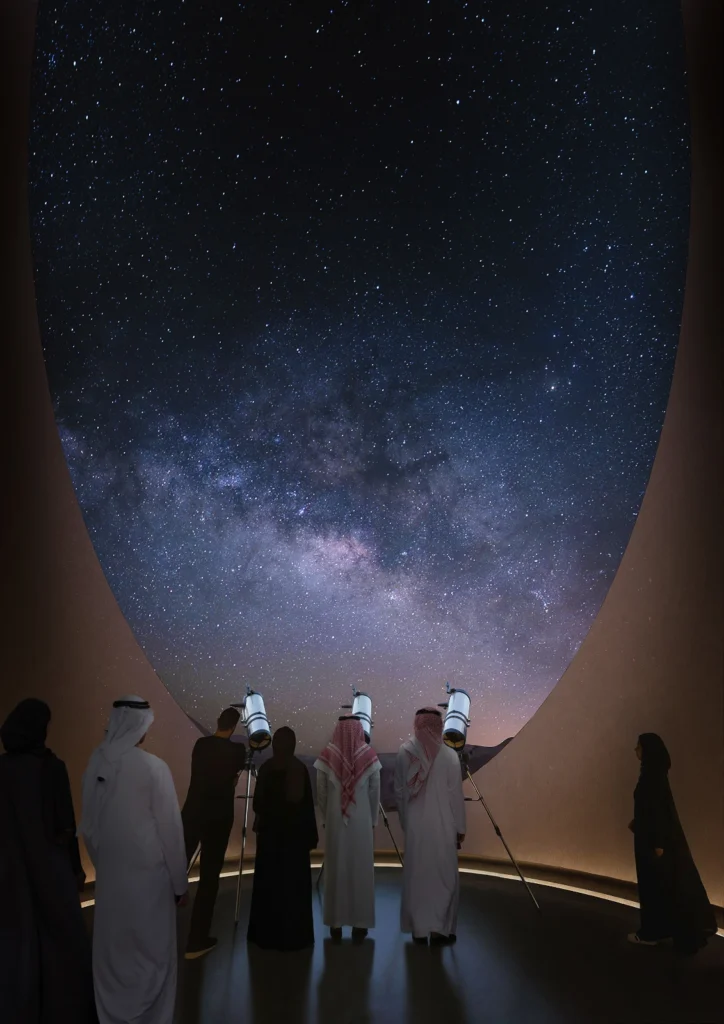
Naif AlMalik, Vice President of Wildlife and Natural Heritage at RCU, said, “Our dark skies are one of AlUla’s most remarkable natural assets and a resource we are actively safeguarding.”
Saudi Arabia‘s approach with AlUla has been consistent, use what already exists, the landscape, the archaeology, the skies, and build world-class programming around it. Abu Dhabi brought in the Louvre. Qatar built a full museum district. AlUla’s version of that strategy has always leaned on its natural and historical assets. Manara fits that pattern and also broadens AlUla’s tourism base beyond heritage, culture and archaeology, adding science and innovation as distinct reasons to visit.
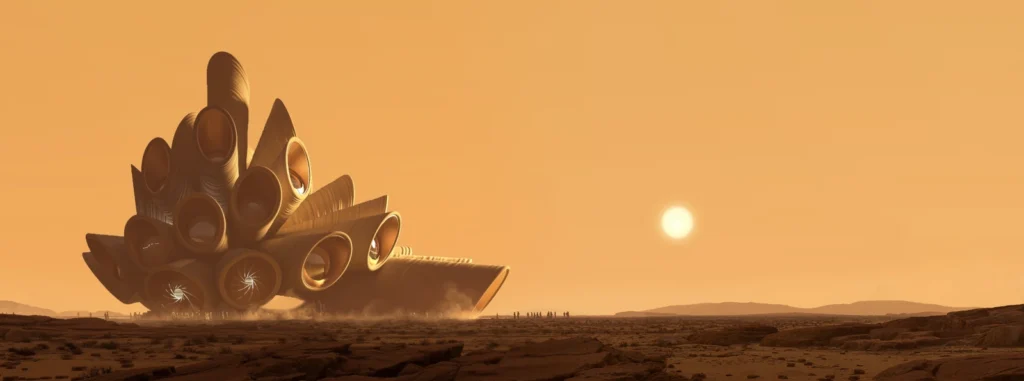
Phillip Jones, Chief Tourism Officer at RCU, said, “Just as Maraya became an internationally recognised icon for architecture and culture, Manara has the potential to become a defining symbol of AlUla’s future as a destination for exploration, learning and inspiration.”
No opening date has been confirmed. Manara has cleared design approval from RCU’s Board of Directors, with construction timelines yet to be announced. AlUla recorded around 300,000 visitors in 2022 and has been targeting 2 million annually by 2035 under Vision 2030. Manara, alongside Hegra and the wider network of nature reserves, is a key part of that plan.