
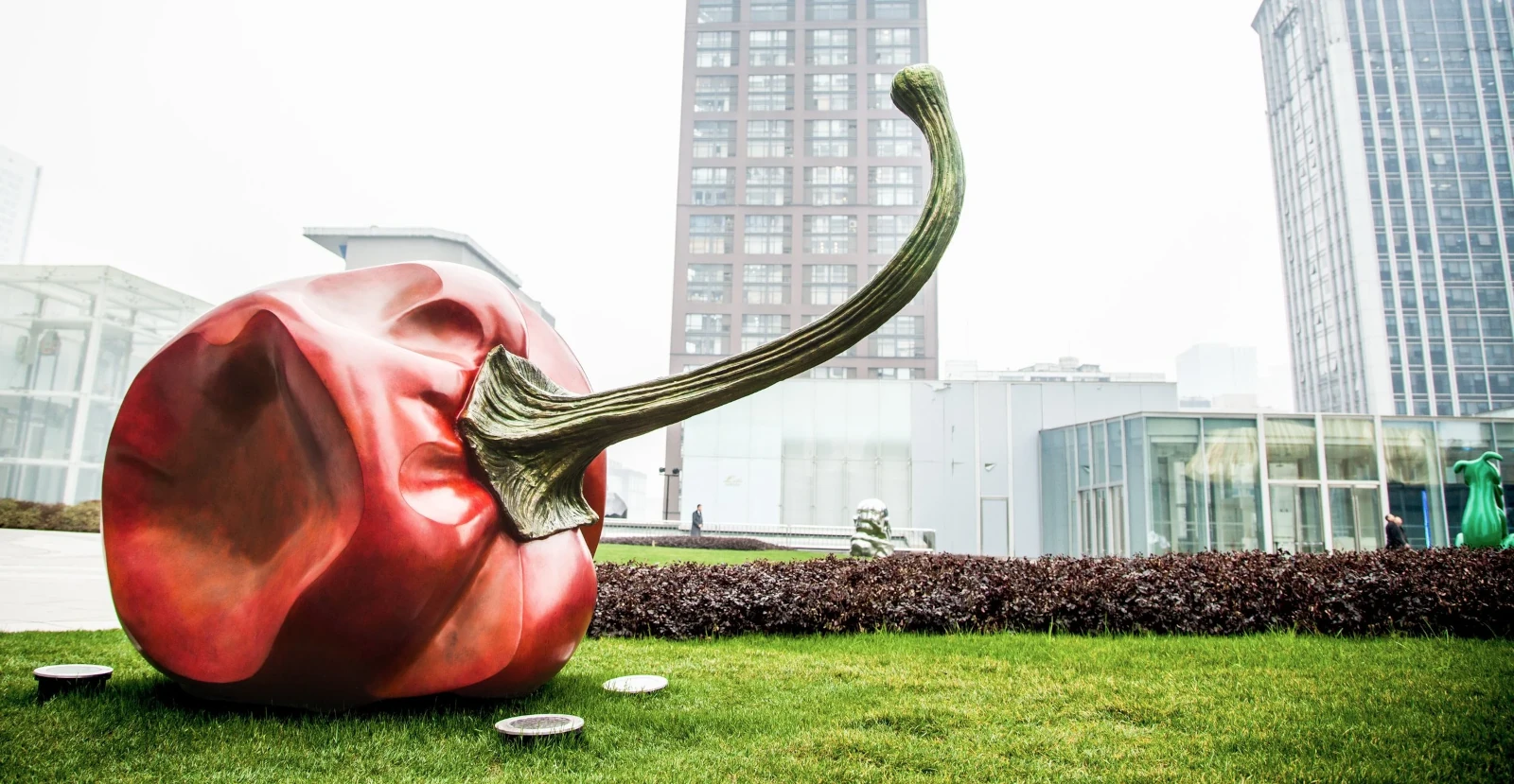
Fruits, seeds, spices. Those have been some of the core elements of Singapore-based artist Kumari Nahappan, best known for her large installations and sculptures. If you have been through Changi airport’s T3, you would have seen a giant saga (red sandalwood) seed installation, which since its installation in 2007, remains one of the most photographed – well, Instagrammed – installations anywhere.
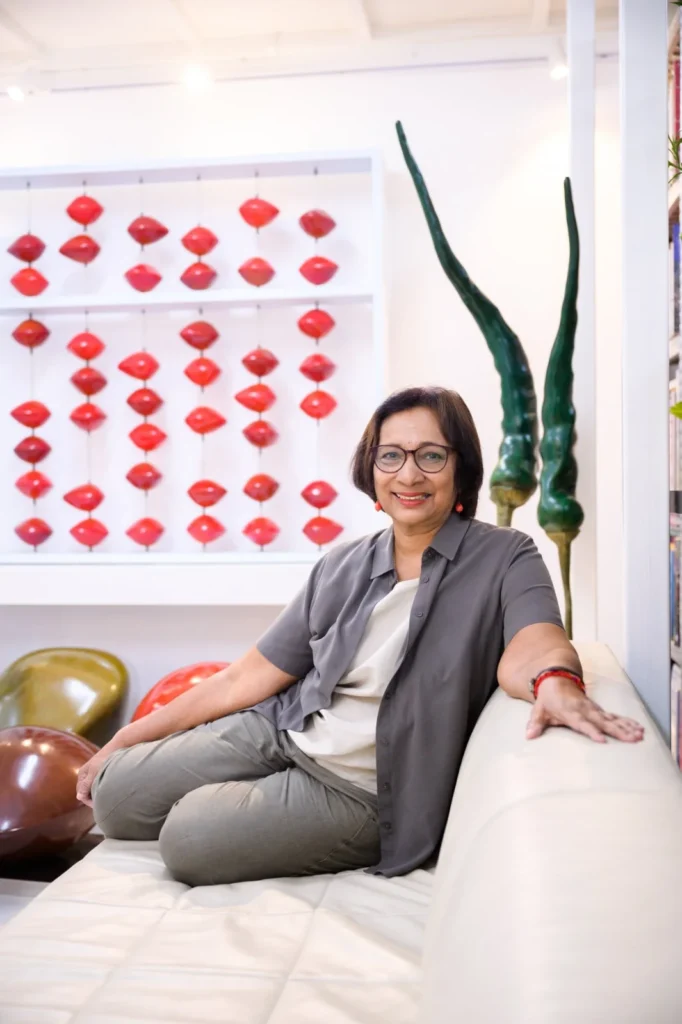
A contemporary artist who extensively explores seminal questions facing her, the 72-year-old has been especially known for her interdisciplinary works that have consistently pushed boundaries. The ancient spice routes inspire her endlessly.
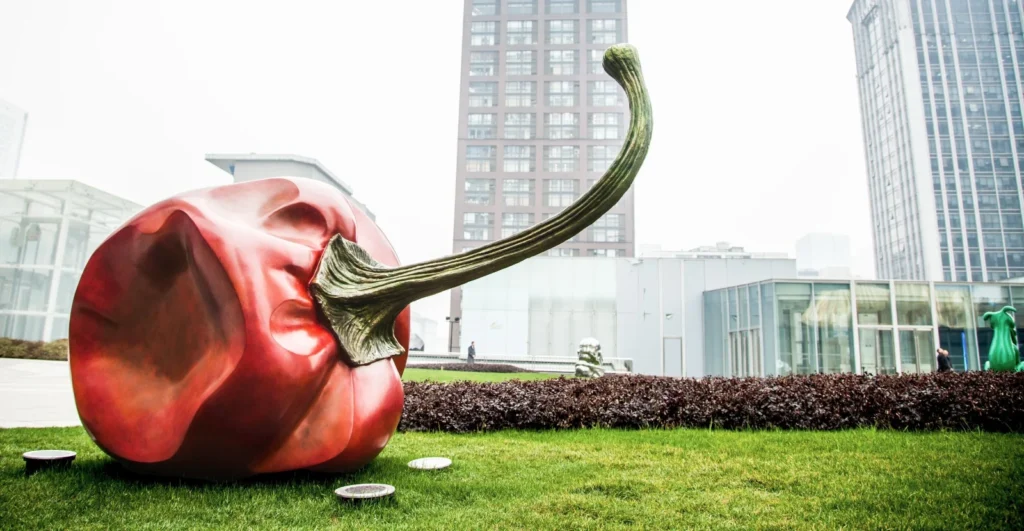
She continues to host multiple exhibitions around the world, with a recent one in India that traced her ancestry to Kerala and Andhra Pradesh specifically. Note the prominent use of natural materials – saga seeds, chilli peppers, nutmegs! In an exclusive interview, she speaks to LuxuryFacts about the diaspora linkages – highlighting how cultures transgress borders in multiple ways.
LuxuryFacts: How did/does India inform your art? As the land of your ancestors, in what ways does it shape your art?
Kumari Nahappan: India shapes my art through the cultural memories embedded in colours, forms, fragrances, and textures. The scarlet hue that runs through my work carries deep significance – it’s the colour of hibiscus flowers I collected for our family altar, the bindi, wedding ceremonies, and Shakti, the divine feminine force. Growing up immersed in these traditions rooted in nature, I was surrounded by sounds, aromas, and rituals that left profound impressions. My work is deeply rooted in Hindu cosmology, where celestial bodies dictate hues and chromatic frequencies chart the energies of the universe. India provides the spiritual and cultural foundation from which my universal language emerges.
LF: As a conceptual artist, what inspires you most in your depictions?
KN: I’m most inspired by making the abstract tangible – transforming fleeting experiences into form, colour, and movement that others can encounter and feel. The idea of rituals as art particularly inspires me, understanding their impermanence while celebrating their profound impact. I’m drawn to celebrating the vitality, rhythm, and energy of life as it unfolds in each precious moment – the eternal NOW. The potential energy and mystery held within natural elements, the way cultural memory travels across borders like spice aromas, and how individual narratives rooted in heritage can speak universally – these intersections fuel my creative vision.
LF: In a odernizing world, why is the attention on ancient spice routes still important?
KN: The spice routes represent something timeless about human connection and cultural exchange. In our fast-paced, globalising world, they remind us that cultural fluidity and exchange have always been part of human experience. These ancient pathways show how traditions can flow across borders, adapting and enriching each place they touch while maintaining their essential character. They demonstrate that we can honour our origins while remaining open to transformation. In contemporary cities, this understanding becomes crucial for creating inclusive spaces where multiple cultures can coexist and enrich each other, just as I experienced growing up in multicultural Malaysia and Singapore.
LF: Why has the depiction of seeds been so central to your work?
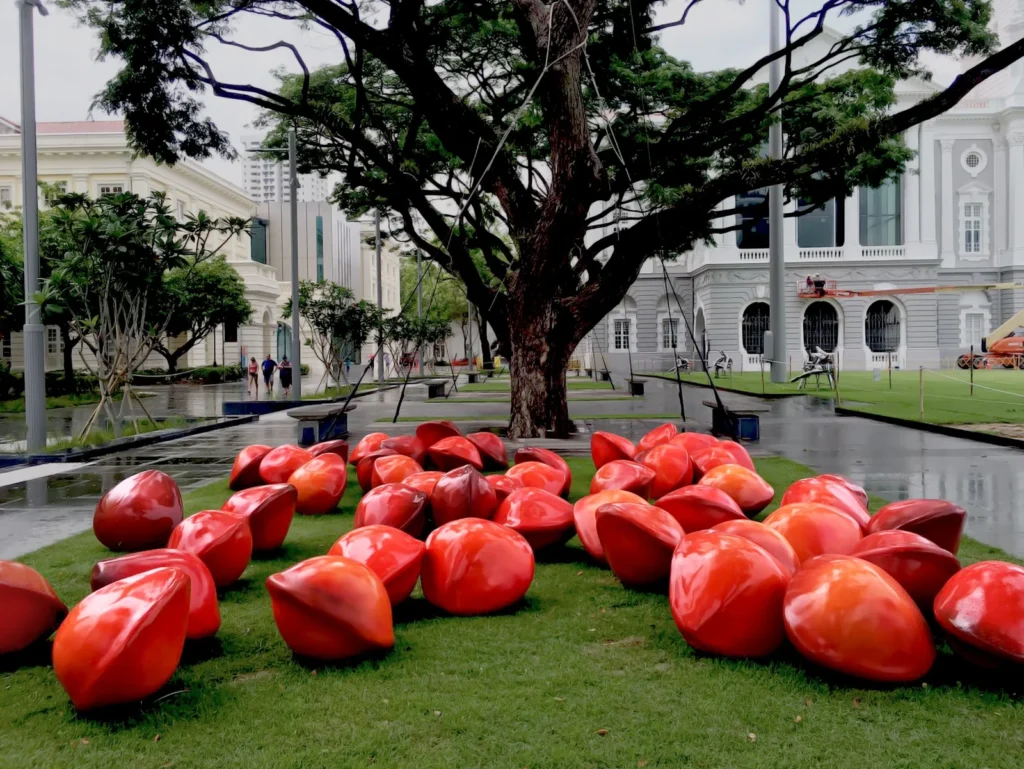
KN: Seeds embody infinite potential – they’re nature’s perfect metaphor for transformation and continuity. They represent the ultimate play with elements, holding potential energy, mystery, and the unknown within their small forms. Seeds carry memory while holding promise, representing the cyclical nature of existence central to my heritage. They bridge the tangible and mystical, rooted in earth yet reaching toward transcendence. In works like my Saga Seed installation at Changi Airport and ANAHATA with its 4,000 kilograms of scarlet saga seeds, they become universal connectors – bringing cultures together through shared symbolism of growth and potential while allowing each tradition to maintain its unique voice.
LF: Your art is in public spaces. How does that alter the way it is perceived?
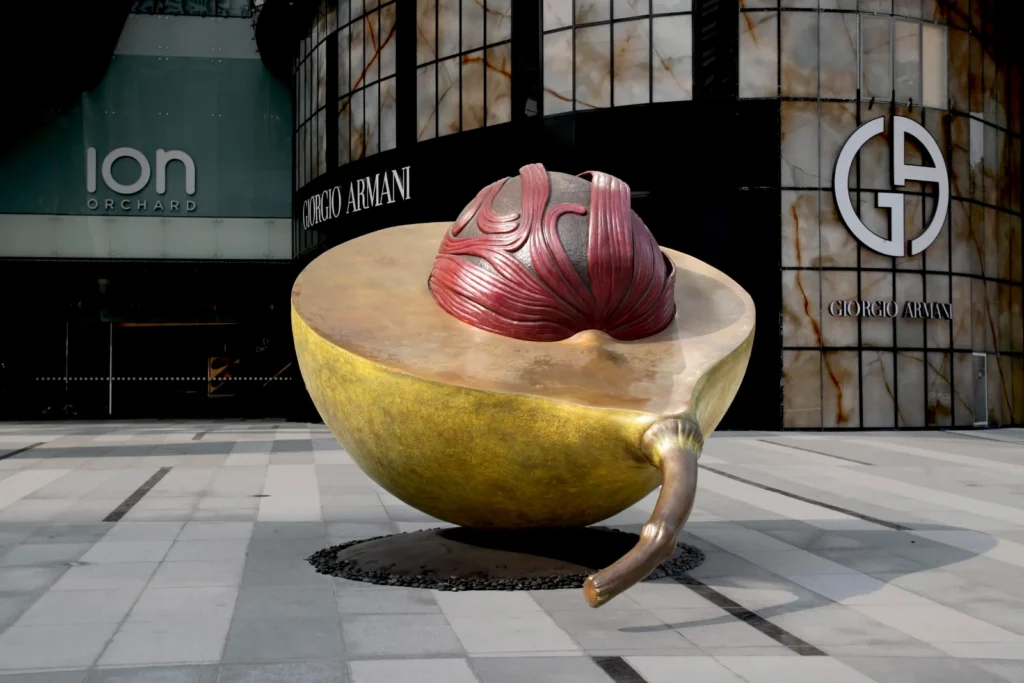
KN: Monumental scale transforms art from object to environment, from viewing to experiencing. In public spaces, I create “doorways to experience” where viewers become participants, each bringing their own story to the collective experience. Public art serves as a bridge between the everyday and the transcendent, creating moments of connection in fast-paced urban environments. It becomes a universal language, speaking across cultural boundaries while celebrating local traditions. The approach requires considering how many senses to engage – children naturally touch and explore, while adults bring layers of interpretation. Each installation becomes bound by colour, space, and time, inviting discovery and personal Connection.
LF: How does public art impact the quality of life in contemporary cities?
KN: Public art creates spaces where people can slow down and truly see, where visuals can be absorbed contemplatively. It provides moments of transcendence in everyday urban environments, offering bridges between different communities and cultures. My installations become environments where abstract concepts become tangible experiences, allowing diverse audiences to find personal meaning. Public art serves as cultural landmarks that help define a city’s identity while creating shared spaces for reflection and connection. It democratizes art, making it accessible to everyone regardless of background, and creates opportunities for cross-cultural dialogue in our increasingly diverse urban spaces.
LF: What does the creative process look like for you?
KN: As an artist, I let my journey unfold naturally, each step leading to a new discovery. My process begins with essential questions: How many senses do I want to engage? What story am I sharing? Sometimes inspiration comes from the scarlet thread that weaves through my work, sometimes from materials like saga seeds, or memories of hibiscus flowers from our family altar. I embrace the freedom to explore beyond traditional boundaries. Every medium has its own voice, and I choose the ones that bring the experience to life. The environment becomes a creative partner, revealing new possibilities along the way. Each piece is born from the meeting point of heritage and the present moment, celebrating cultural memory while welcoming transformation.