

LF Review: ★★★★★
Avatara, the Michelin-starred restaurant by Chef Rahul Rana in Dubai, is now serving an 8 course lunch and a 16 course tasting menu for dinner in the heart of Bandra in Mumbai. Under Chef Sanket Joshi’s masterful guidance, this establishment orchestrates a philosophical journey through the Rasas of Ayurveda, transforming ancient wisdom into contemporary culinary artistry. Carnivores, do not despair, for the food neither appears nor tastes like your usual vegetarian affair.
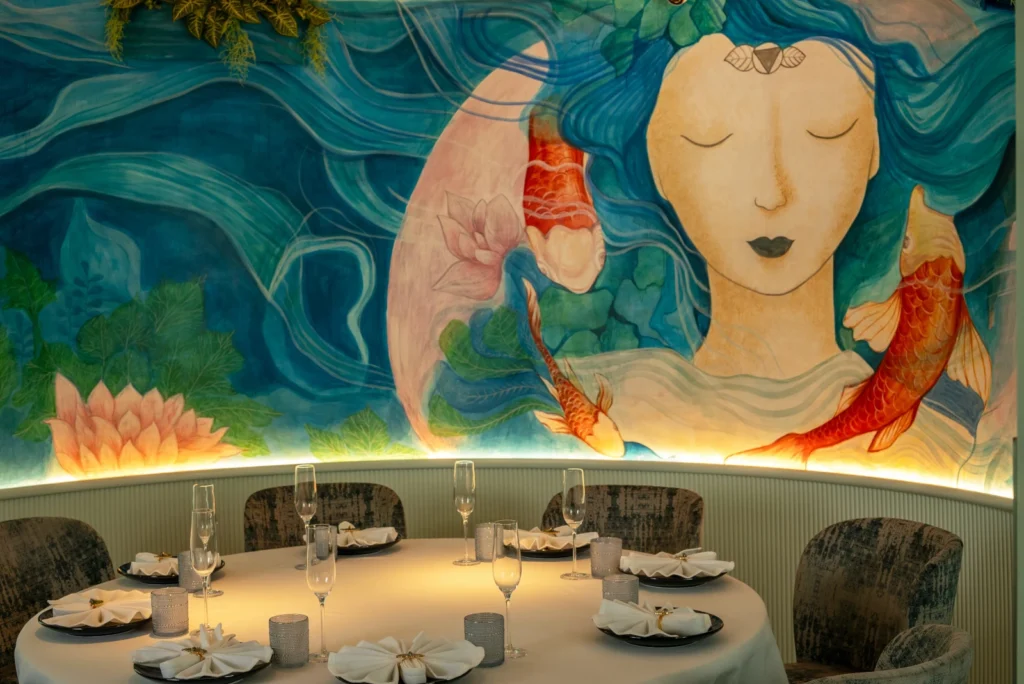
Avatara represents the future of Indian fine dining—where ancient wisdom meets contemporary technique, where vegetables aren’t substitutes but stars, and where every meal becomes a meditation on the beauty of thoughtful cooking.
The six rasas: A symphony of sensation
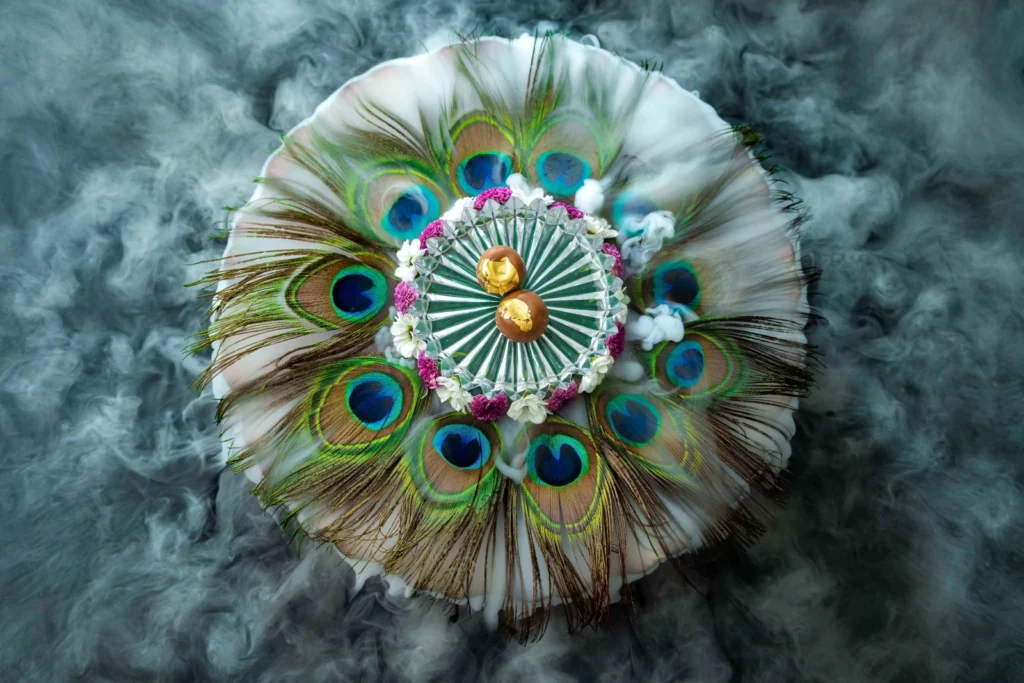
The 16-course tasting menu (₹5,500 per person) begins with six perfectly conceived small bites that appear in a stunning setup with peacock themed crockery. The Lavana (salty) dish opens with braised red beet crowned with ghee roast ketchup and appalam—a bold statement that immediately signals the unconventionality of this Indian restaurant. The interplay of earthy sweetness against the umami-rich ketchup creates an unforgettable first impression.

The Tikta (bitter) course showcases bitter gourd cafreal with sweet potato and raw mango curry, a composition that could have been aggressively challenging but instead achieves a remarkable balance. Chef Joshi’s technique transforms the often-maligned bitter gourd into a genuinely compelling bite. The Madhura (sweet) follows with makhan malai, popping sugar, and saffron—pure joy on a spoon that captures childhood nostalgia while maintaining sophisticated execution.
What is impressive is how each Rasa flows into the next seamlessly. The Amla (sour) butternut dhokla with black lime pickle and fafda provides acidic punctuation, while the Katu (pungent) sago wada with charred pepper and peanut relish delivers controlled heat. The Kashaya (astringent) concludes this opening act with sarson saag, corn ghewar, and pickled radish—astringency that cleanses and prepares the palate for what follows.

Main courses: Innovation meets tradition
The progression through the main courses reveals Avatara’s true genius. Their circular use of ingredients speaks for both sustainability and creative ingenuity. The Kalingam transforms humble watermelon into something extraordinary through grilling, shaped like a flower and with a melt-in-your-mouth texture, paired with stone fruit pickle and tomato water that adds layers of complexity.
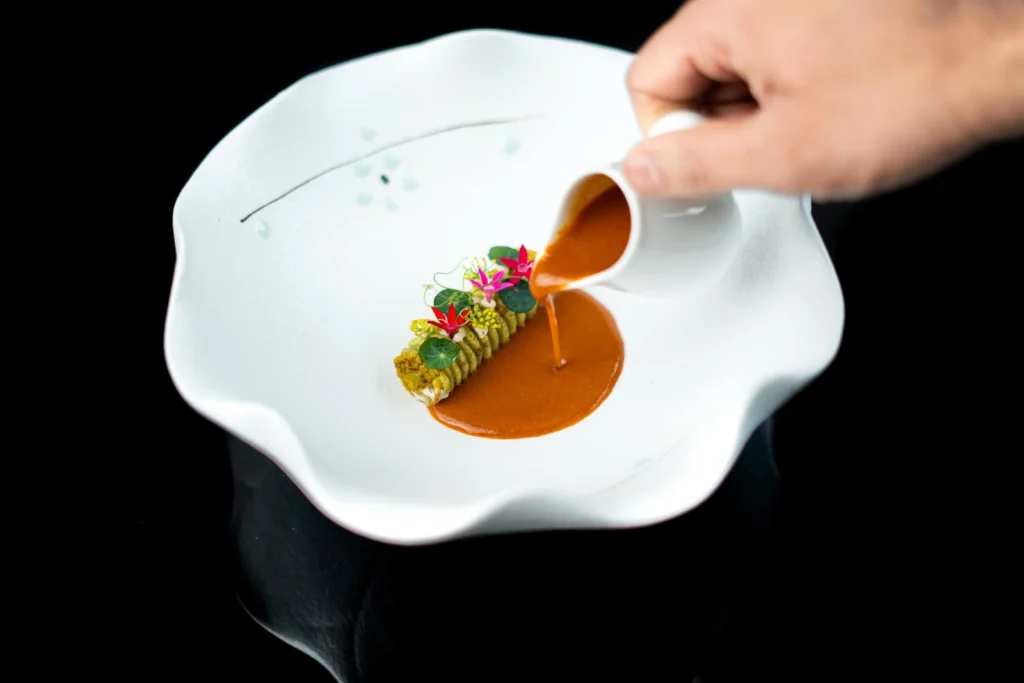
The Kokum course deserves particular praise for its freeze-dried bhindi stuffed with thecha—a technique that concentrates flavor while creating textural intrigue. Paired with sunchoke modak and kokum rassa (gravy) on top, it demonstrates how techniques can enhance traditional flavors rather than overshadowing it, leaving a strikingly familiar Malvani taste profile.

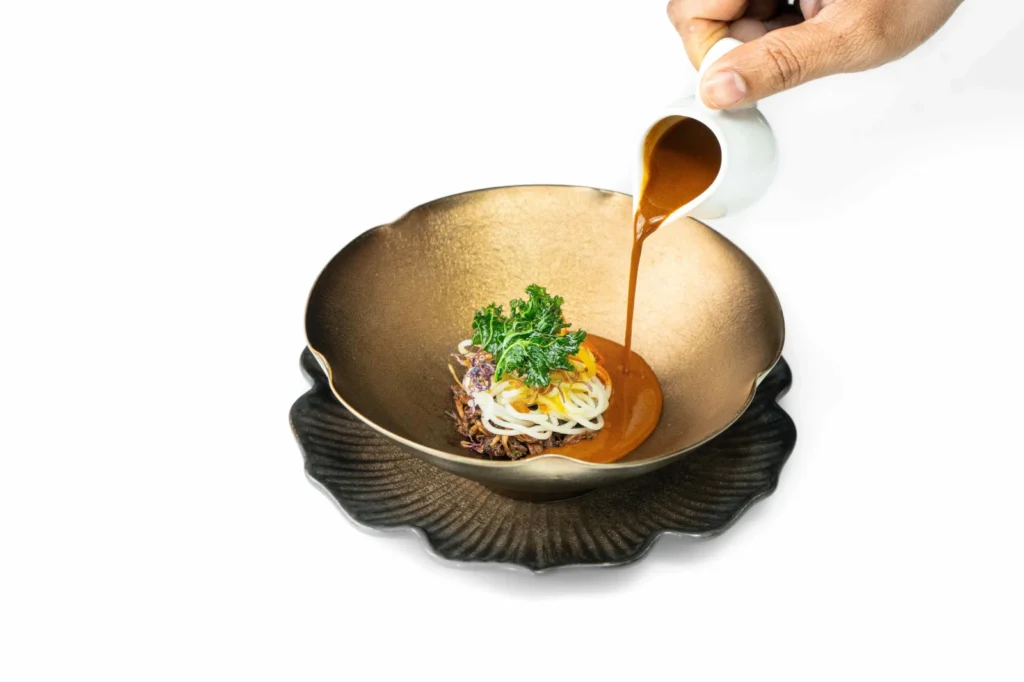
However, it’s the Dalika that truly captivates—horse gram galouti with ragi singhal and lentil sesame tea. This was my standout dish of the evening, showcasing how indigenous ingredients can be elevated to fine dining heights without losing their essential character. The galouti‘s silky texture against the nutty complexity of ragi creates a harmony that lingers long after the last bite. The tea tastes like a truly tasty rasam, without the triviality.
The next course Klaayah pays beautiful homage to the iconic Bengali delicacy through green pea chokha, shisho luchi cannoli, and gajar jhol. It’s these cultural references, executed with precision, that make Avatara more than just a restaurant—it’s a celebration of India’s diverse culinary heritage.
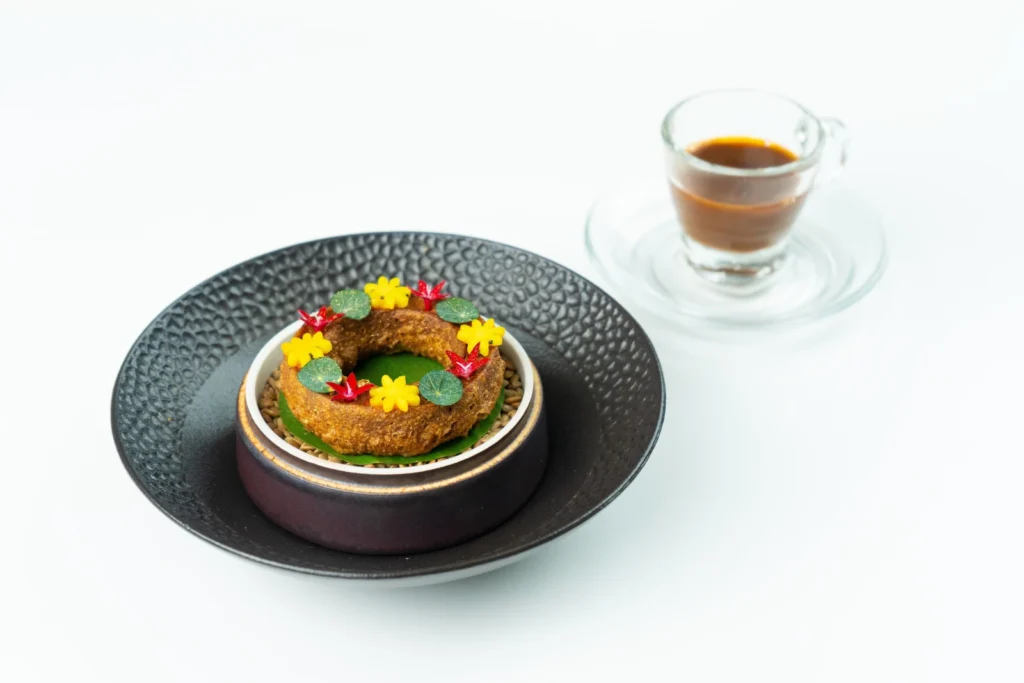
The Panasa course with Coorg-spiced jackfruit and idiyappam deserves recognition for its regional authenticity, while the Krishna Phal, dramatically presented on a lotus flower with passion fruit and spiced guava water, proves that Instagram-worthy presentations need not compromise taste.
The meal’s conclusion is nothing short of theatrical. The Parna course—a paan-flavored amuse-bouche encased in a milk chocolate sphere—provides the perfect finale. It’s creative, nostalgic, and leaves an indelible impression that epitomizes Avatara’s approach to dining.
Beyond the tasting menu
Avatara’s commitment to inclusivity shines through their varied offerings. The new 8-course lunch menu (₹3,000 plus taxes) features highlights like Raj Kachori with chilled yogurt and pomegranate, and the intriguing Bambooshoot Momo with miso corn dashi—proving that innovation doesn’t require evening formality.
Their beverage program deserves equal attention. The Kinvit section showcases house-fermented creations like Kashmiri Kava Kombucha and Berry Chhang that complement the meal’s philosophy. Don’t miss the Nannari Mojito with Indian sarsaparilla and chia seeds, or the Holy Basil Smash—drinks that are as thoughtfully conceived as the food.
The restaurant’s dedication to dietary inclusivity—offering gluten-free, vegan, and Jain variations—ensures no one is excluded from this exceptional experience.
Final verdict
Avatara Mumbai succeeds brilliantly in translating its Michelin-starred Dubai sibling’s vision to Indian soil. Chef Joshi has created something rare—a restaurant that honours tradition while fearlessly embracing innovation. Every dish tells a story, every technique serves a purpose, and every bite contributes to a larger narrative about what Indian vegetarian cuisine can achieve.
This isn’t casual dining—it’s an investment in experiencing Indian cuisine at its most refined and thoughtful. Avatara doesn’t just deserve its acclaim; it elevates the entire conversation about vegetarian fine dining in India.
LF Review: ★★★★★
Coordinates: 7th floor, Krishna Curve Building, Juhu Tara Rd, opp. Juhu Garden, Hasmukh Nagar, Santacruz (West), Mumbai, Maharashtra, India