
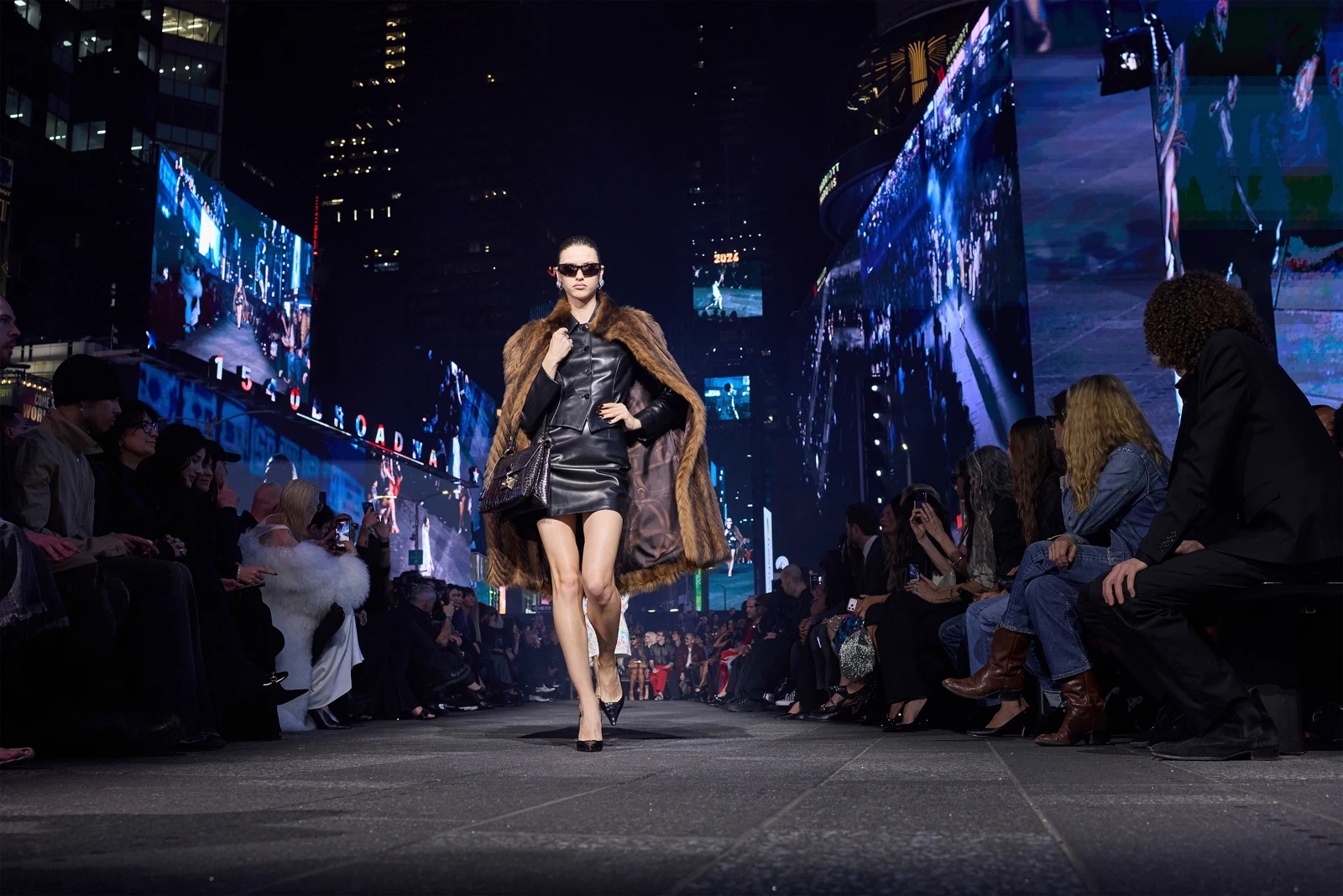
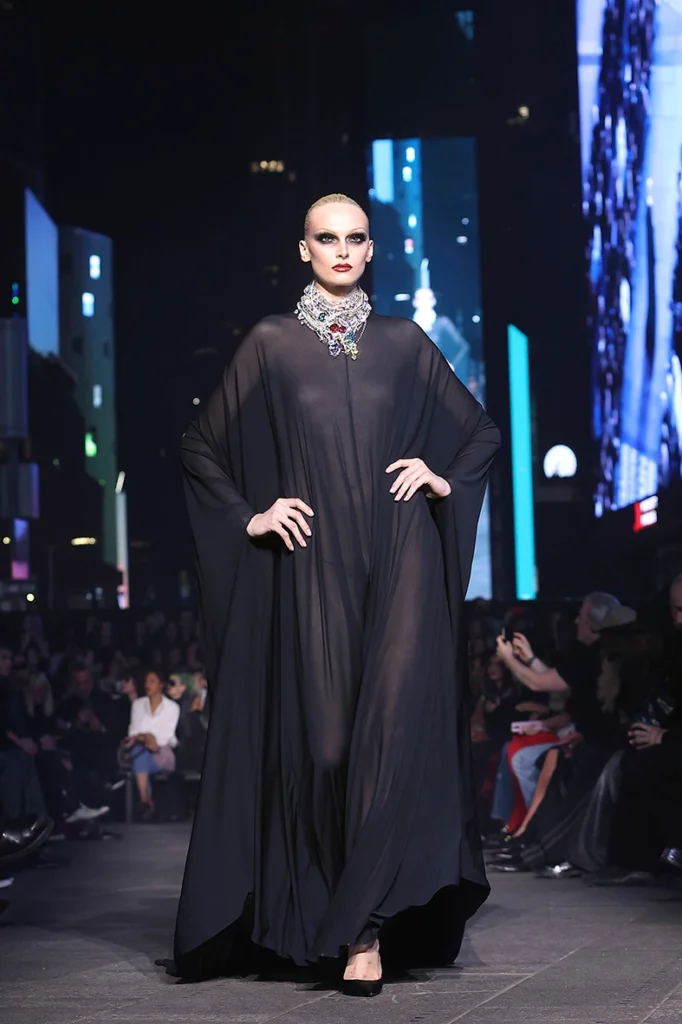
Seventy years after opening its first store outside Italy in New York, Gucci has returned to the city, not with nostalgia, but with a fresh take. The House staged its latest collection, GucciCore, in Times Square on May 17, alongside the launch of a limited-edition line called Gucci NY, inspired by the city itself.
Times Square was not a random choice. In the 1980s, the Fifth Avenue flagship housed the Gucci Galleria, a private space sitting above the store, reachable only through a separate entrance by clients who held a specialized golden key. Demna, the House’s Creative Director, pulled directly from that history for the show invitations, which arrived as brass keys tucked into aged leather sleeves. It was a small detail that set the tone for everything that followed.
Before the show began, Times Square’s screens ran a video montage mixing found footage with advertisements, both real and fictional. Products ranged from Gucci Acqua, Gucci Underwear, Gucci Viaggio, and Gucci Businesswear to Gucci Automobili, Gucci Gym, Gucci Pets, Gucci Time, Gucci High Jewelry, a Palazzo Gucci hotel, and something simply called Gucci Life. It was Gucci presenting itself as more than a fashion house, but as a complete way of living, an ethos, a lifestyle, and an aesthetic identity.
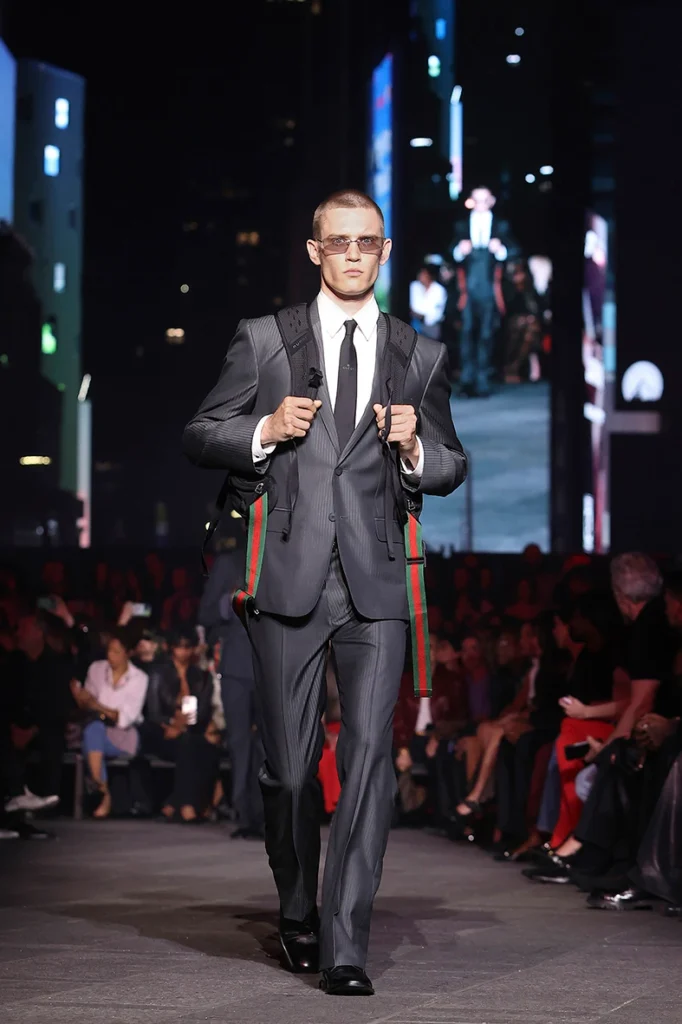
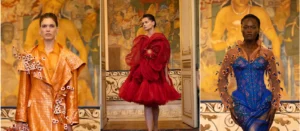
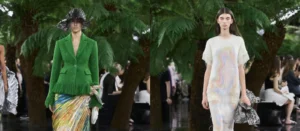
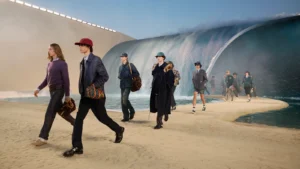
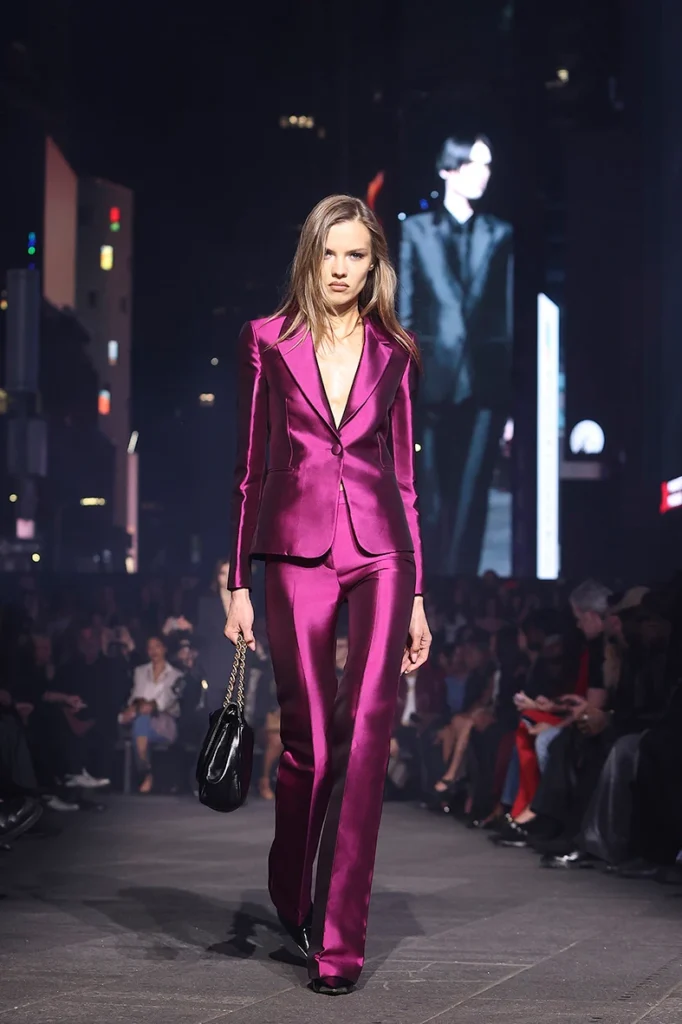
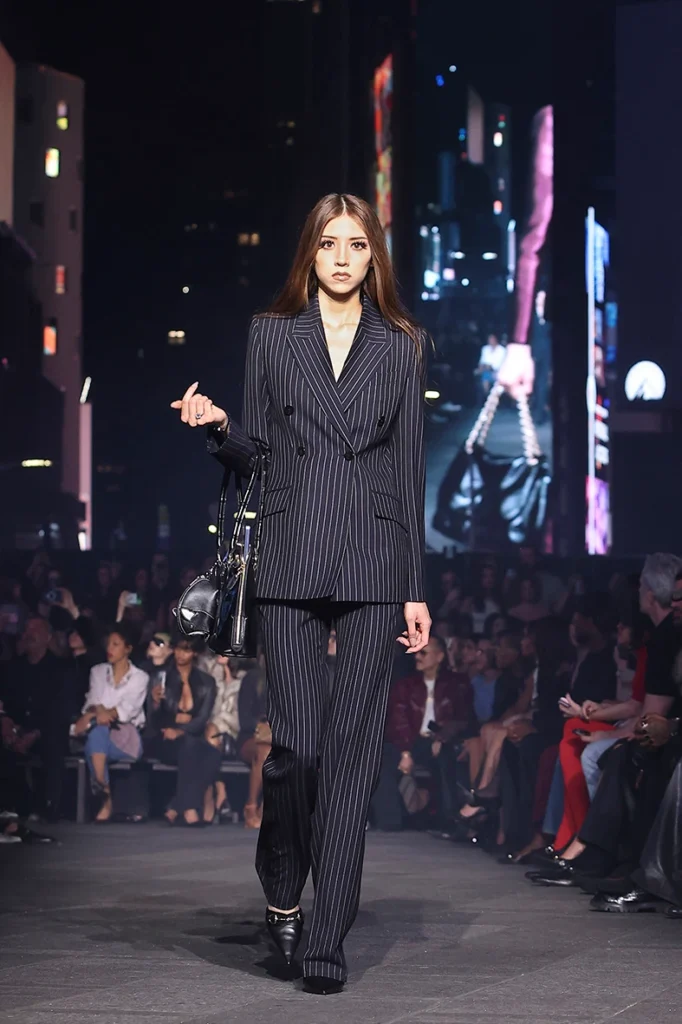
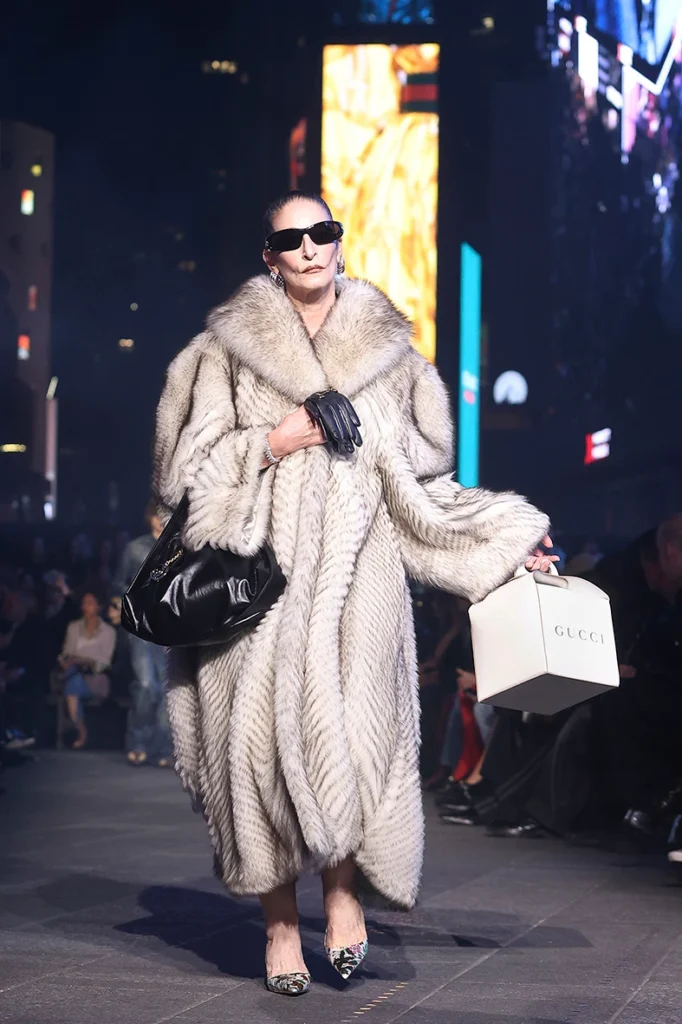
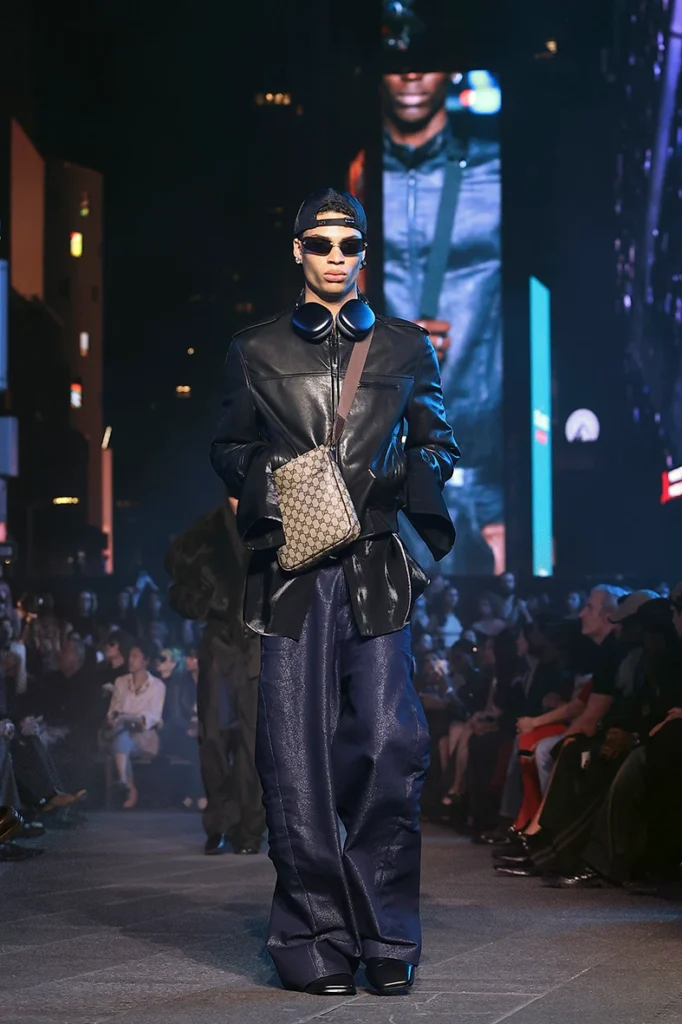
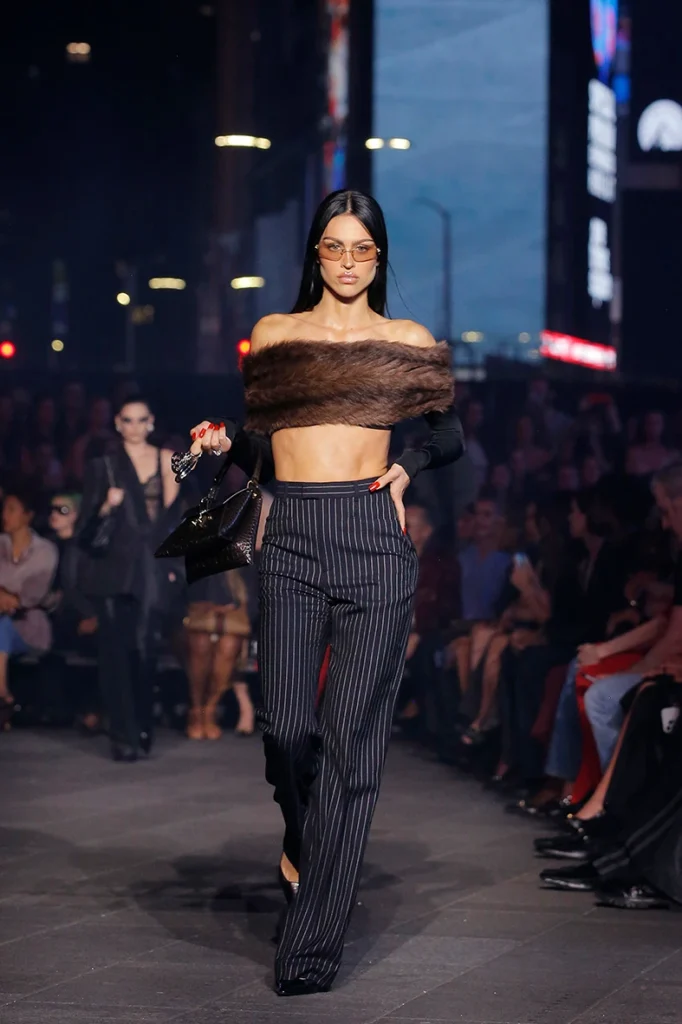
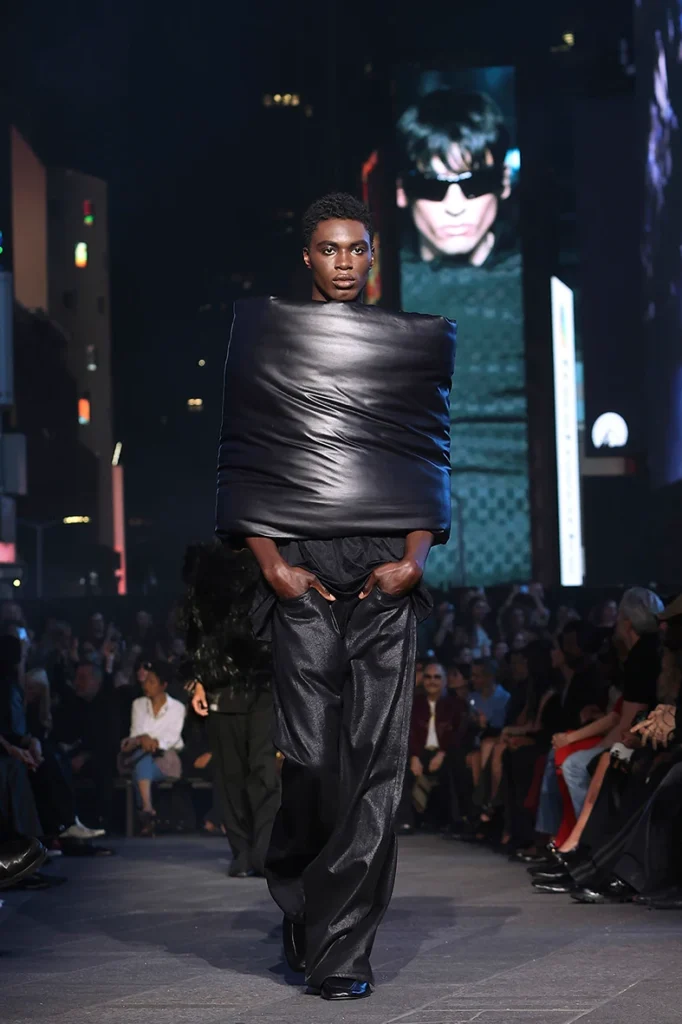
The collection drew its characters from every corner of New York. There were pinstripes for the businesspeople, shearling coats for ladies who lunch, skaters in soft, slouchy streetwear, and poised gowns for socialites. The references stretched from Madison Avenue to Brooklyn, SoHo to Harlem, and Fifth Avenue. Demna showed his characteristic humor with his interpretation of New York ‘kinds’.
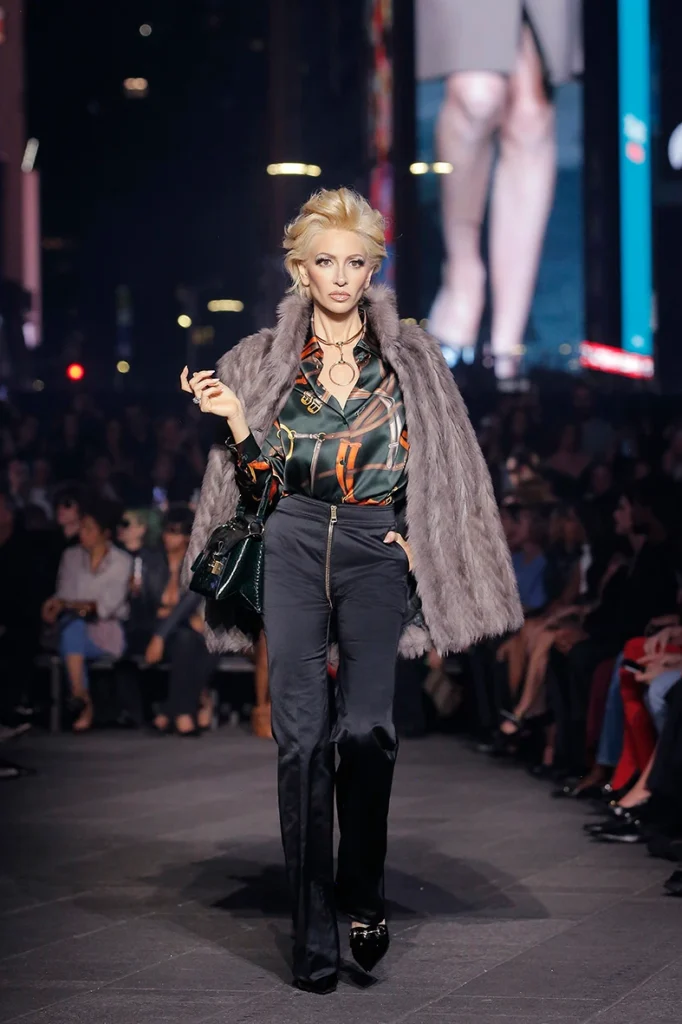
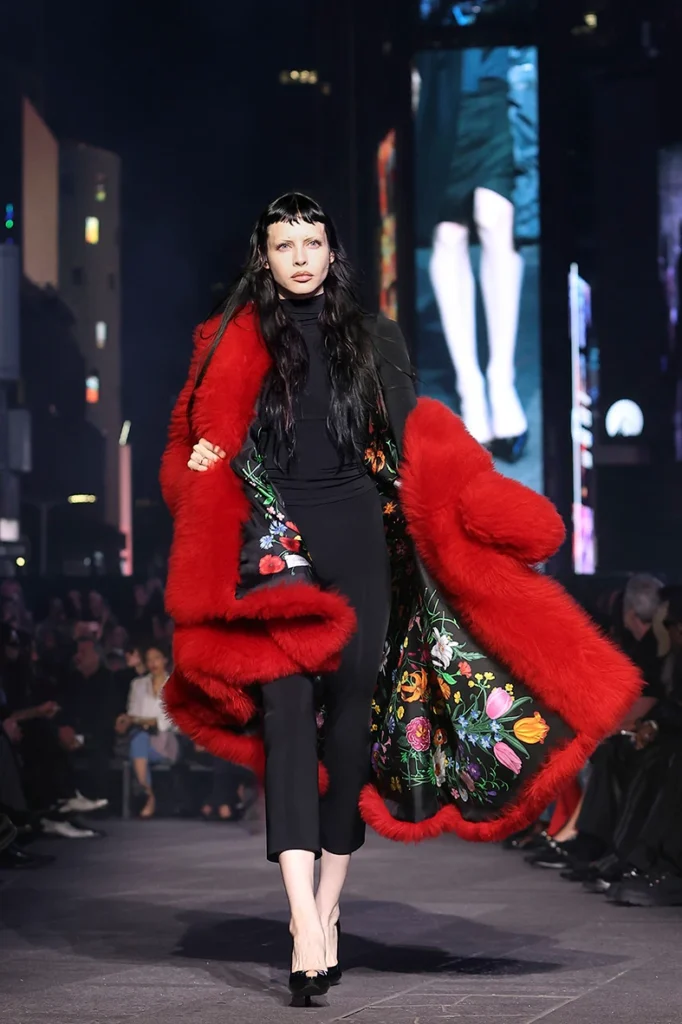
In terms of craft, the range was wide. Plush circular duvet stoles in buttersoft leather and monogrammed fabrics forego function for form, sitting next to pragmatic reversible coats in technical fabrics and textured shearling lined with goat hair. The Web stripe, a House code since 1951, was reworked as a standalone bandeau top.
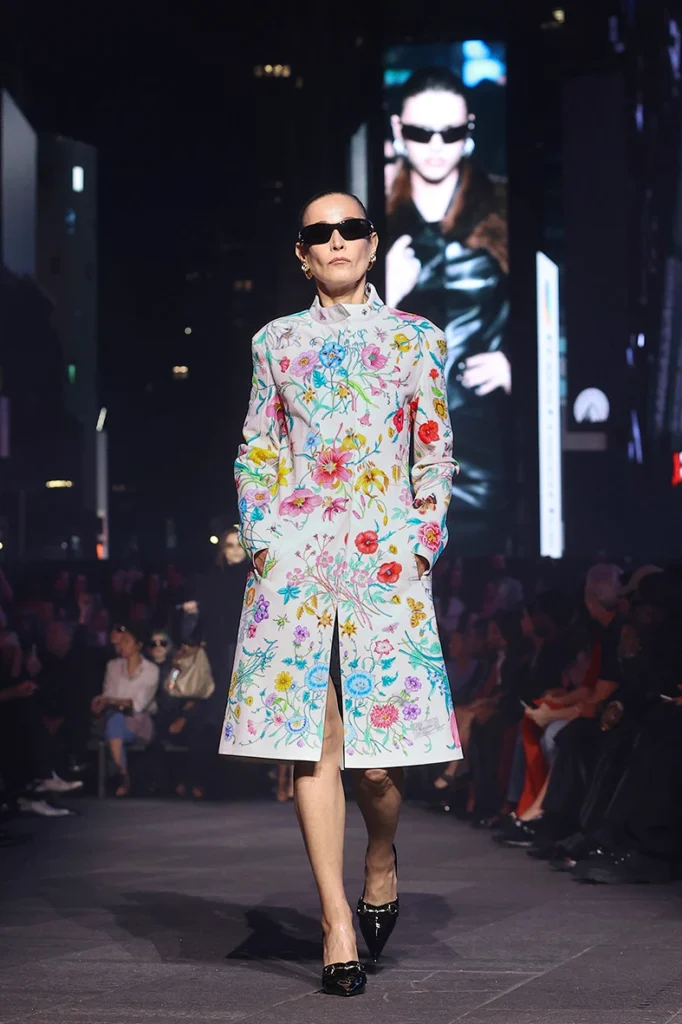
Alta moda pieces came in croc-scale sequins, beaded fringes, and feather embroideries, with that same level of detail brought into menswear for a sense of utilitarian extravagance. The Horsebit appeared as a stirrup on severe heeled boots, paired with angular stilettos tipped in metal.
Bags arrived in inky tones and jewel-like patinas. Wristwatch clutches came with actual timepiece straps. Capacious unstructured sling totes were reimagined in new fabrications. Each piece felt considered, part of what the House is calling a permanent wardrobe, built around pieces meant to last beyond a single season.
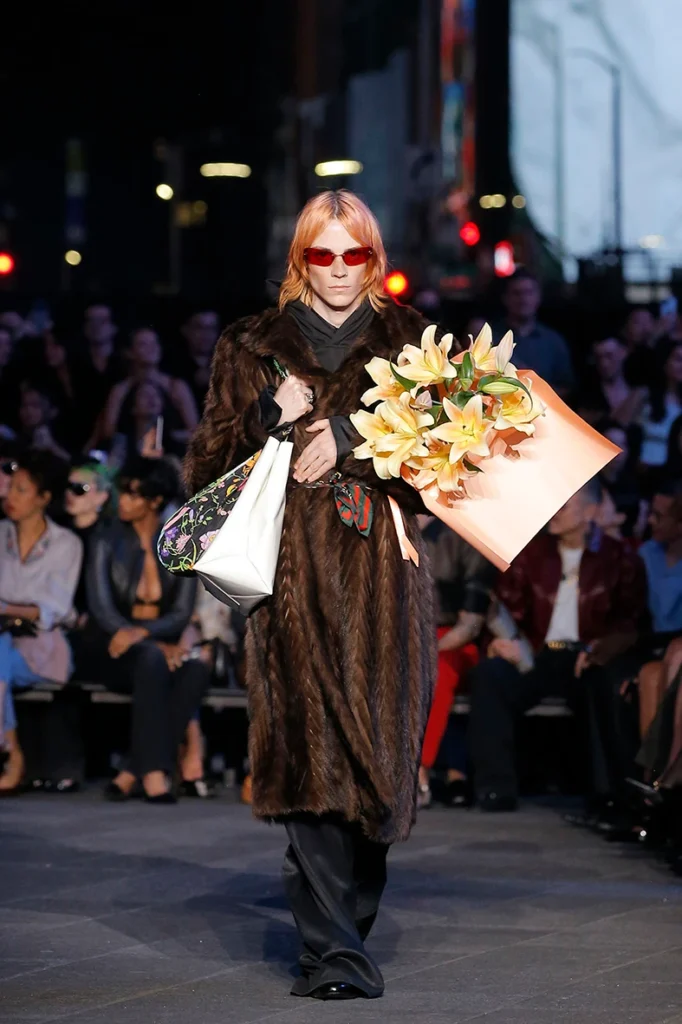
GucciCore is the fourth chapter in Demna’s character studies approach, following La Famiglia, Generation Gucci, and Primavera. Each has built its own world. Demna is building a body of work at Gucci that reads as a series, each chapter adding to the last rather than replacing it.
The afterparty took the form of an elegant house party inside a grand 19th-century mansion on Madison Avenue, staged as the fictional home of Barbara Gucci, the matron character from The Tiger, a short film directed by Spike Jonze and Halina Reijn. Guests were given access through a membership card enclosed in a welcome letter. Each room was designed as an intimate, experiential space with a distinctive identity, inviting guests into a private world shaped by installations, musical acts, and staged environments.
On the first floor, the Stanza della Verità, brought over from the Gucci Storia exhibition at Palazzo Gucci in Florence, was conceived as a cross between an office and a living room, set up as a forensic reconstruction of an unseen moment, filled with objects referencing the gossip, lore, and infamous anecdotes that have followed the House over the decades. A pillar-like installation called L’Oracolo offered an interactive interface with responses across three classifications, designed to say as much about the visitor as about Gucci itself.
Inspired by ancient practices but grounded in a sense of playfulness, the oracle installation complemented a tarot room, where Dree Hemingway and Mariacarla Boscono conducted readings for guests. A music room on the ground floor parlor hosted jazz performances. The basement lounge had a DJ set from BrokinPaper. Familiar spaces including a home gym with Technogym equipment and personal trainers, a kitchen, study, bedrooms, and living rooms were fitted with custom Gucci linens, carpeting, and upholstery.
Works by New York-based artists John Snowden, Jennifer Caravalho, Stephanie Ketty, James Bantone, Blayne Planit, Aurora Mecaj, Serena Mecaj, Jessica Hodin, Kristina Nagel, Jaouad Bentama, and Xavier Baxter filled the walls. Sculptures by Francesco Rosati, Edoardo Cozzani, and Oyku Bastas were placed throughout, alongside a framed portrait of Barbara Gucci.
Gucci NY, the limited-edition collection launched alongside the show, includes handbags, accessories, shoes, and jewelry built as a tribute to the city. It introduces the new Gucci NY tote in two sleek styles, available exclusively at the Fifth Avenue, Wooster Street, and Meatpacking boutiques, Saks Fifth Avenue, and Bloomingdale’s 59th Street, with the online launch exclusive to the United States on Gucci’s website. The Fifth Avenue and Wooster Street boutiques have also been refreshed with a contemporary aesthetic, creating an updated environment for clients to experience the House.