
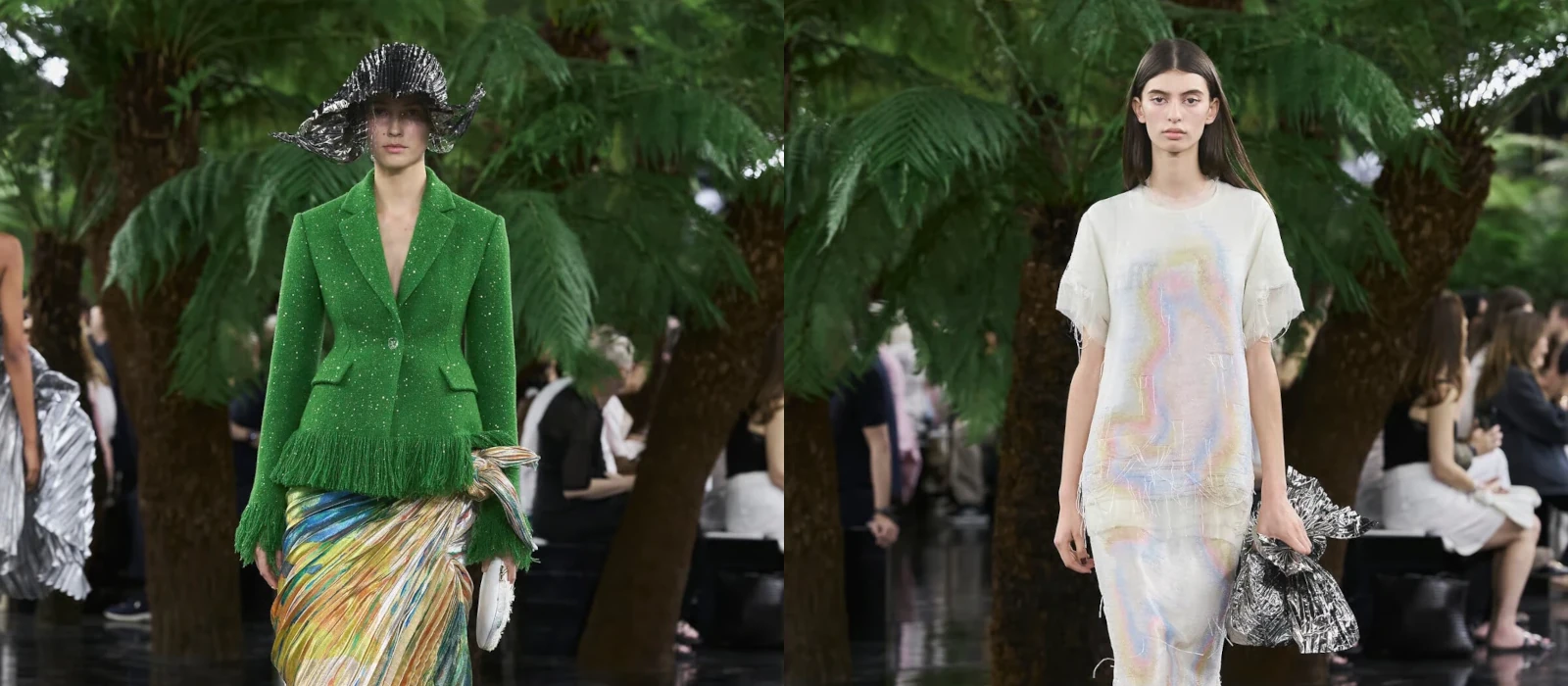
Dior’s Haute Couture Fall Winter 2026-2027 collection, designed by Jonathan Anderson and inspired by American sculptor Lynda Benglis, is more than just the designer’s second haute couture collection for the house. It is a further conformation of the direction Anderson is taking for the high fashion house – artistic, visionary, yet rooted in tradition.
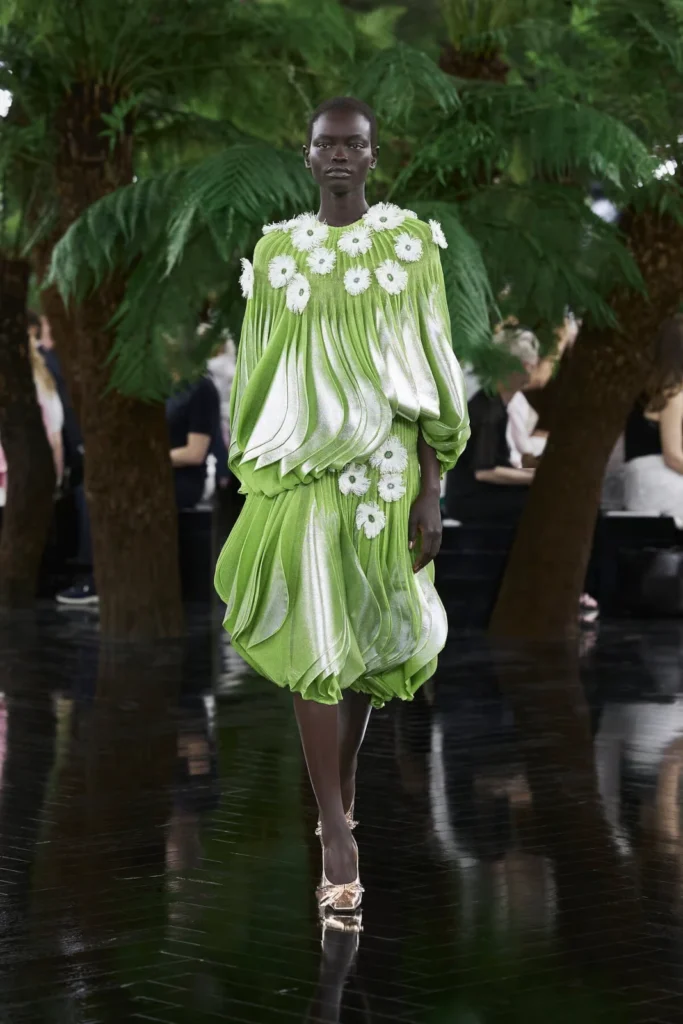
Many of Benglis’ works start out flat. She knots, pleats or moulds materials until they take on a three-dimensional shape. Couture works in a similar way. Fabric is cut and shaped, and it takes on a sculptural form once it is worn. Anderson has taken this shared process as a starting point for the collection. Hand-plissé, knotting and draping appear throughout as physical techniques.
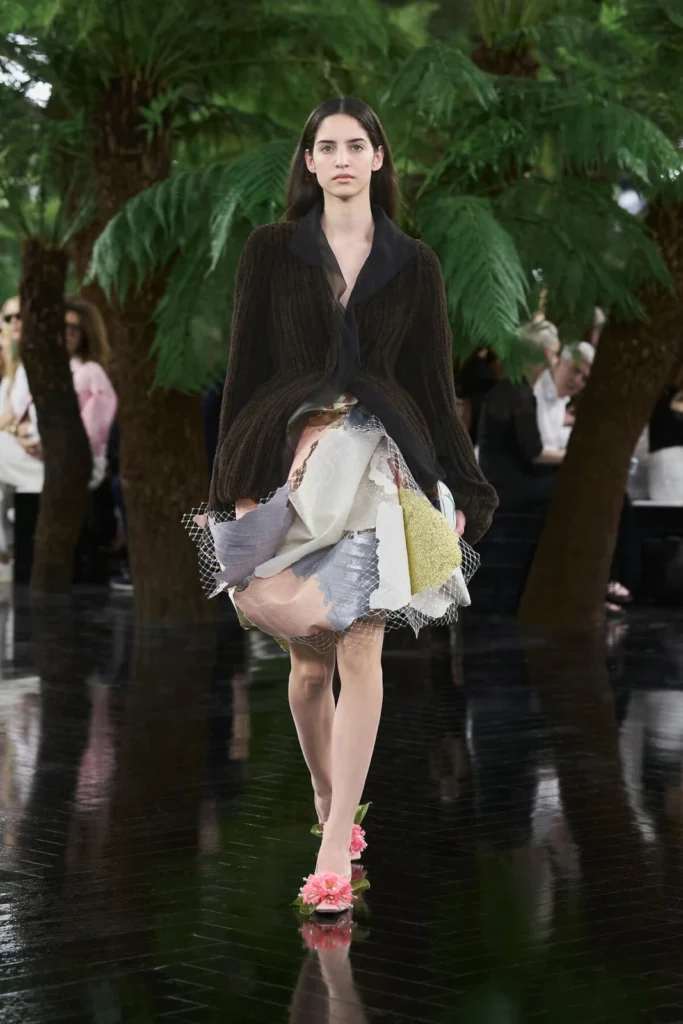
The Dior ateliers have also copied the surfaces found in Benglis’s sculptures, using metallic, iridescent, encrusted and paper-like fabrics. A soft silver netting is made to look like chicken wire. “I’m very involved in my studio work. The studio is my lab, so to speak,” Benglis once said.
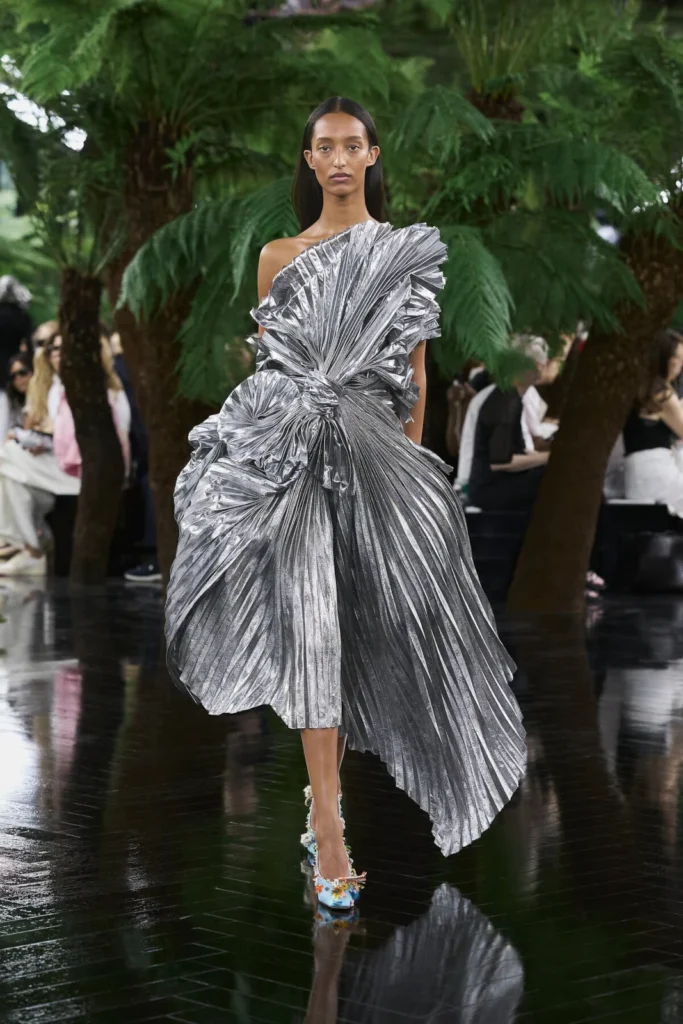
Benglis has a long-standing relationship with Ahmedabad in Gujarat, India, and this connection is expressed through specific pieces in the collection. Her Peacock series, begun in the late 1970s after seeing peacocks while staying at the Sarabhai family estate in Ahmedabad, is interpreted in bright floral and beaded embellishment.
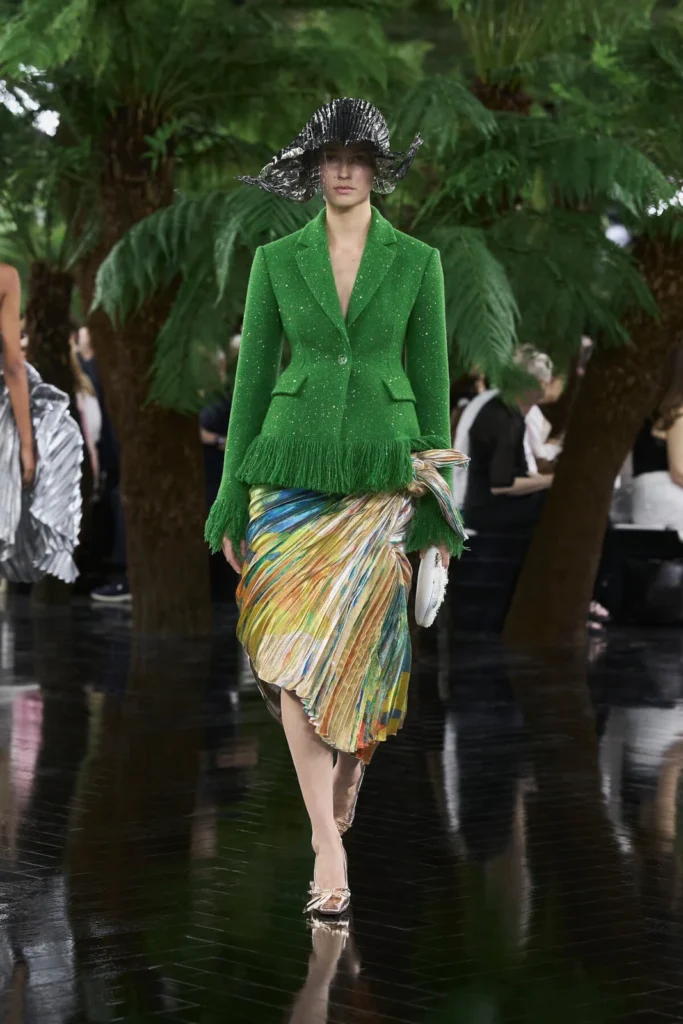
This connection to Ahmedabad led Anderson to research Indian craft, specifically the 18th century tradition of chintz. These finely woven cottons were typically hand-painted or block-printed, and they had a lasting impact on European decorative arts. Antique fragments of chintz and indiennes, sourced from a specialist dealer, appear on the Petit Dîner and mini Lady Dior bags.
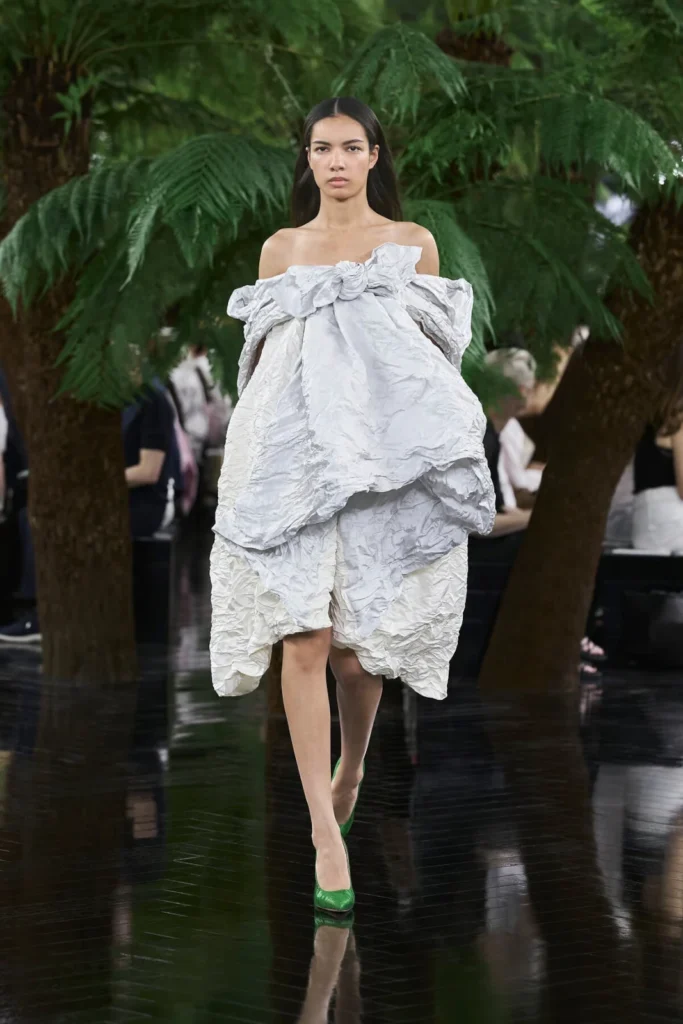
The Ahmedabad landscape also promoted Anderson to explore contrasting environments, setting its relative abundance against the arid climate and clear air of Santa Fe, New Mexico, where the 84-year-old Benglis keeps a home and studio. The floral influences of the collection as well as its colors are borrowed from both landscapes.
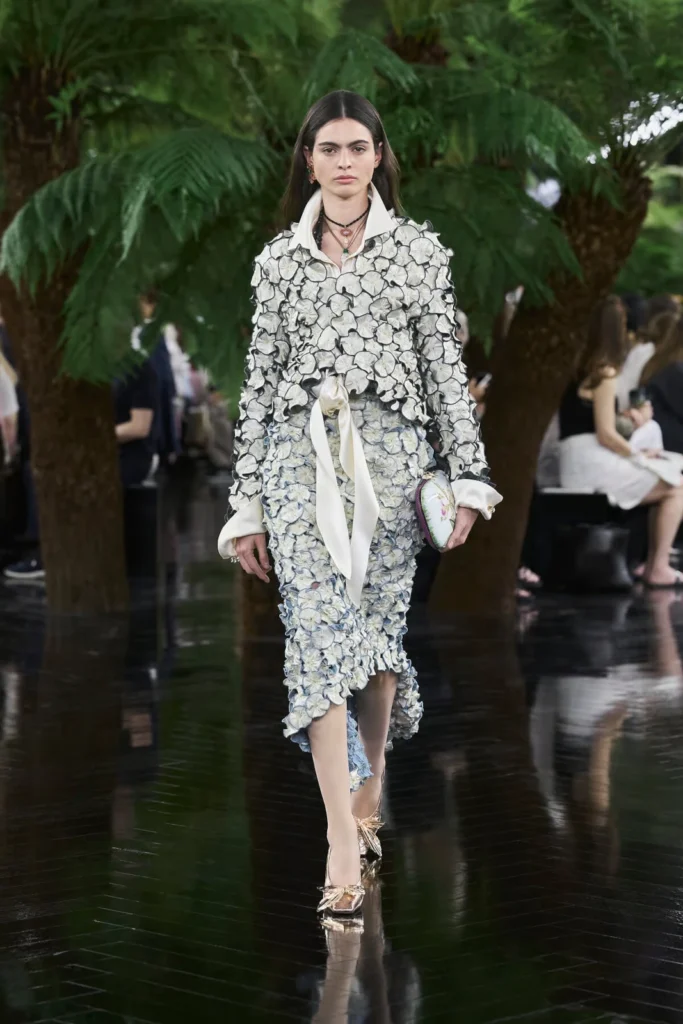
Bags in the collection carry mother-of-pearl inlays, passementerie and shiny leathers that match the clothes. The Dior Anthology series, started last season, continues here. Four bag shapes were made in collaboration with the artist: a Dior Cigale in metallic plissé, a sculptural Dior Bow, a new Lady Dior, and a Petit Dîner with a Benglis-inspired bow.
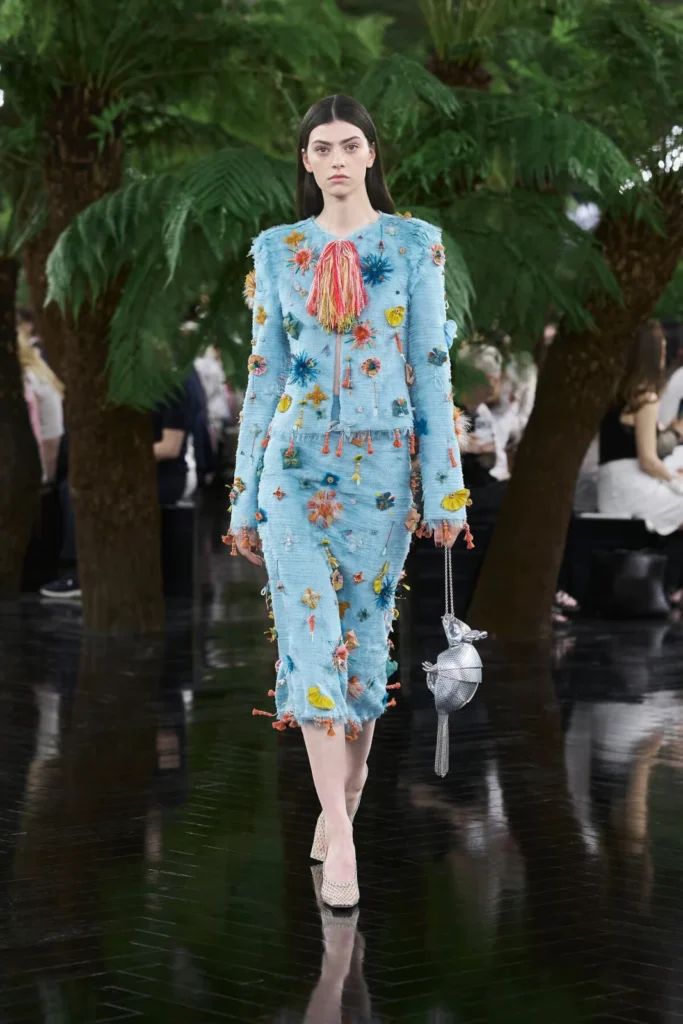
For the footwear, the collection uses sparkle, sheen and lattice overlay to reference the surfaces and materials in Benglis’ art. Satin colour-block pumps feature an elongated square toe, a silhouette that also appears on styles embroidered with irregular paillettes, micro-sequins, beads and floral embellishment. Ornaments based on the Peacock series appear on three looks and are used on sheer pumps, while other shoes are decorated with pleated metal bows.
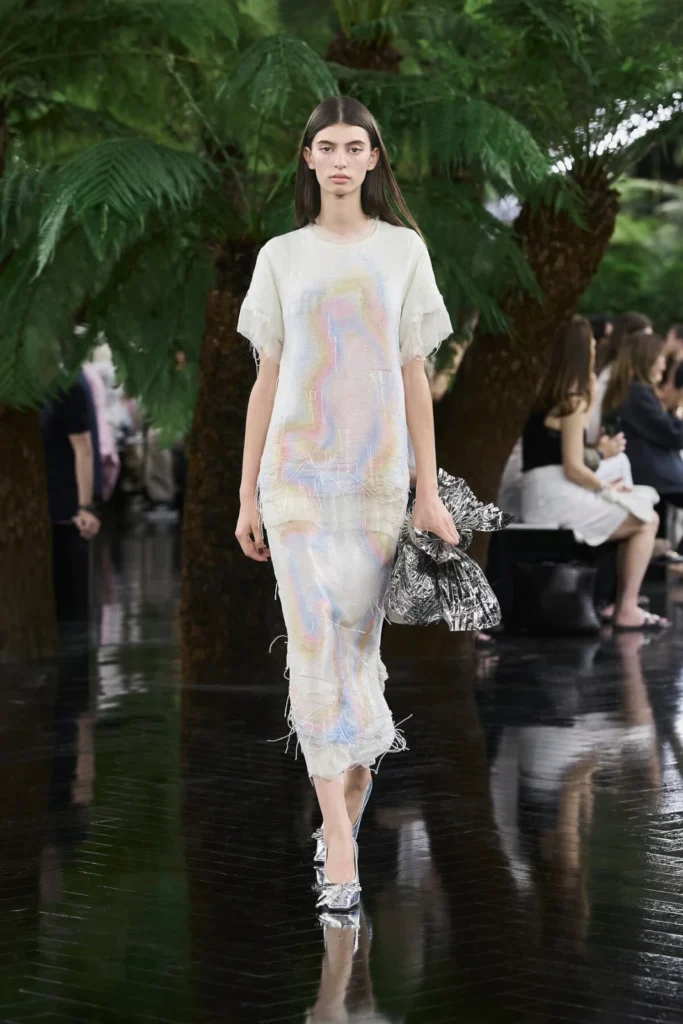
Jewellery pieces were made by artisans in France and in India (Jaipur). Mother-of-pearl, rock crystal and carved green onyx, which stand in for traditional emeralds, are strung onto tasselled cords, a style also made in black onyx, haematite and carnelian beads.
Floral patterns from rare antique Indian textiles appear in richly coloured micromosaics, and necklaces made of graduated discs are shaped to look like terracotta. The Peacock series also appears directly, in embroidered pieces on sterling silver wire made in Paris.