
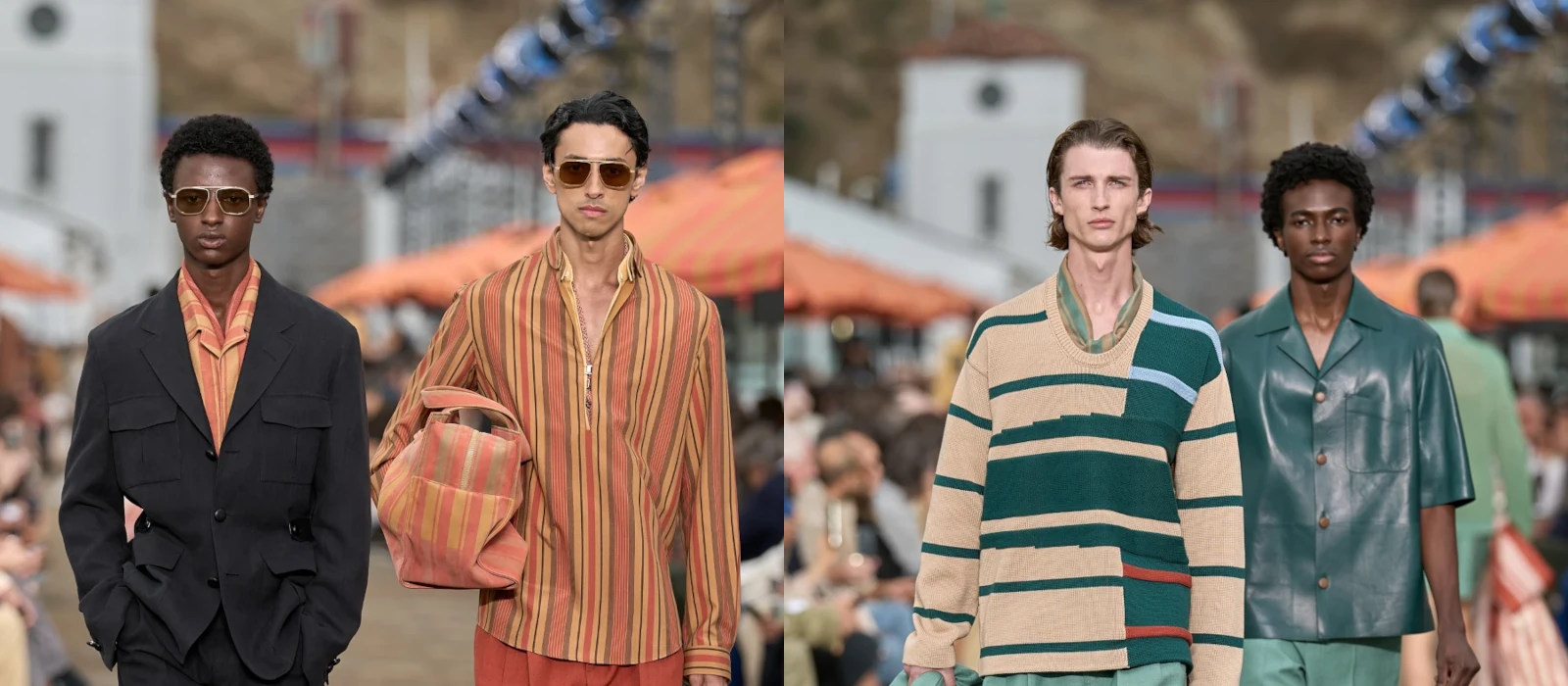
Zegna’s Summer 2027 collection arrived at Malibu Pier with a clear reference point: la villeggiatura, the Italian practice of seasonal relocation that shaped a particular mode of upper-class life from the 1950s through the 1970s. It was never simply about holidaying. Families of a certain standing would move entirely, taking their rituals, their sense of propriety, and their clothes with them, settling into a slower rhythm, while keeping the same standards they held at home. Artistic director Alessandro Sartori used that tradition as the organising principle for this season.
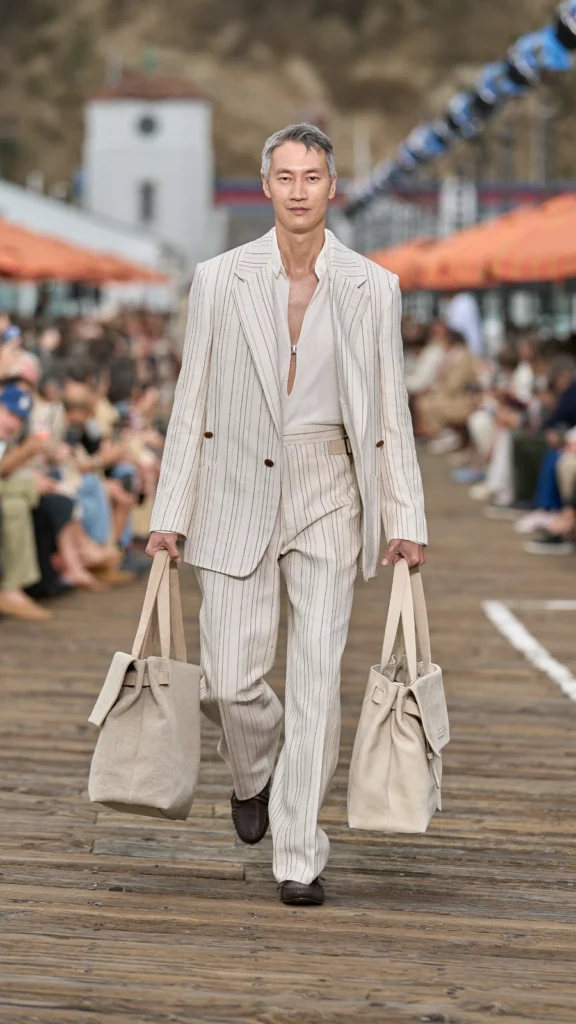
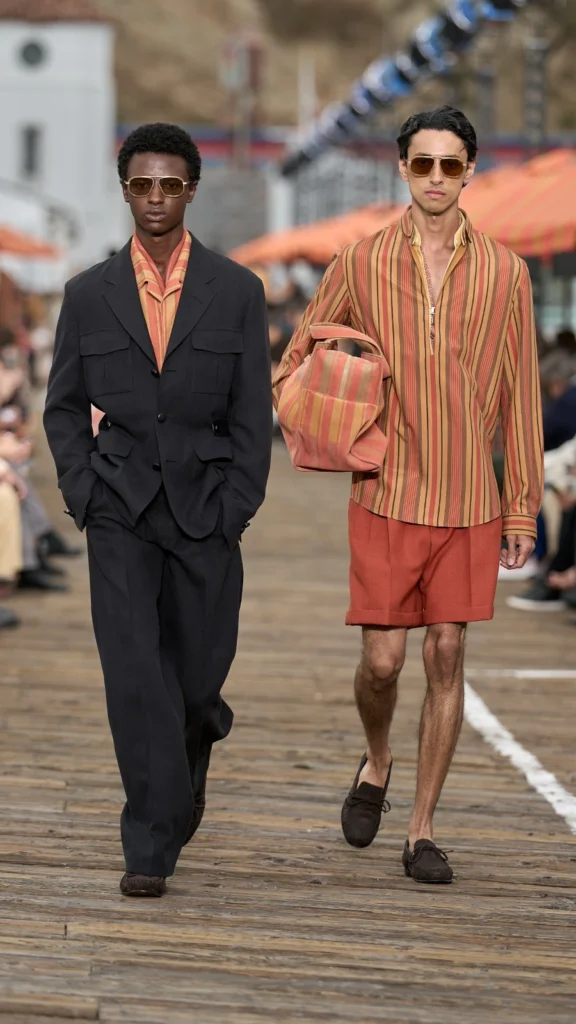
The silhouette runs vertical and loose, fluid without being formless, with lines that skim the body. Striped suits are worn with matching shirts as full-length colour blocks. It is a reduction in visual decision-making, the kind of dressing that looks unconsidered but isn’t. Sartori has been working along this axis since his return to the house in 2016, gradually narrowing the gap between tailoring and ease.
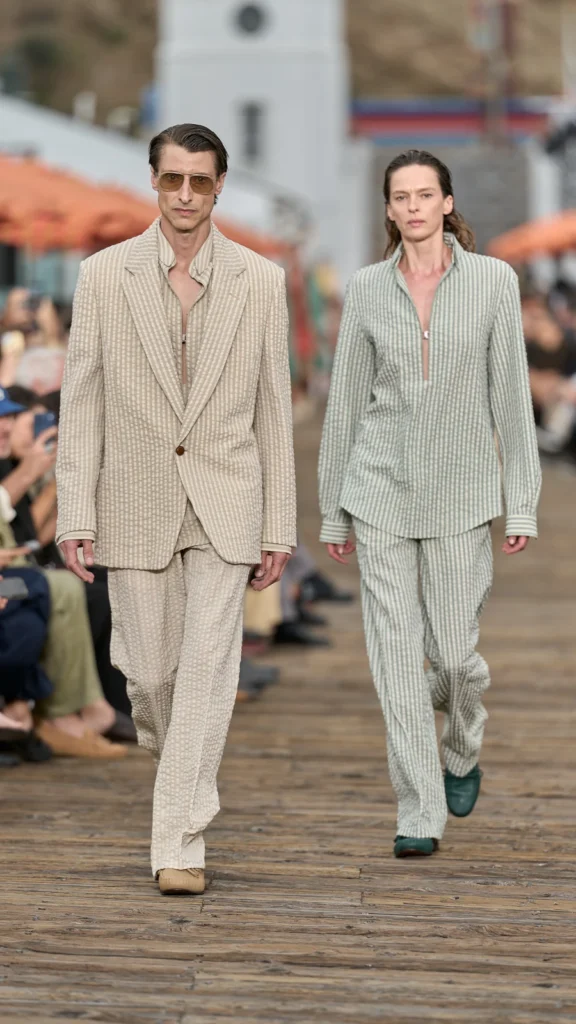
Stripes have been used widely throughout this collection, and the importance of how they have been used has evolved for the menswear industry over the years. Stripes have typically expressed opposing ideas of rigidness associated with military uniforms and relaxed, enjoyable vacation wear.
The artistic director has used irregular stripes for all garments in this collection, and, although it’s not completely devoid of the formal structure associated with them, he has helped make them feel closer to leisure style clothing.
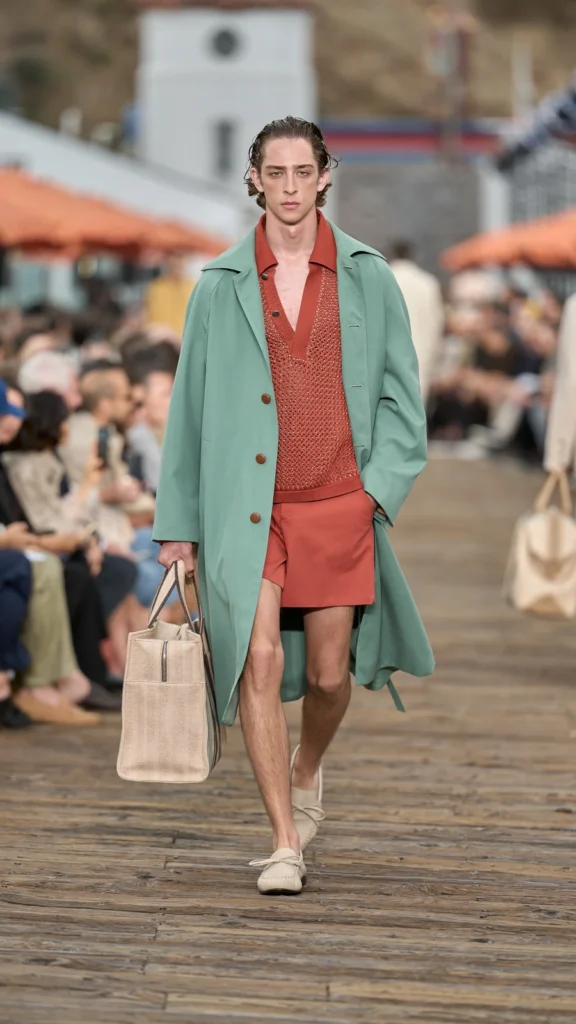
The collection continues Zegna’s focus on adjustable, reconfigurable garments. Shirts have detachable, interchangeable collars. Blazers carry hidden half-belts that shift between cinched and loose. The multifunctional double-breasted jacket from last season returns. This has been a consistent thread in Sartori’s work at Zegna, garments that function differently depending on how they are worn, resisting the idea of a fixed, singular use.
Leather anoraks and intarsia bombers reference the nautical world without turning it into a theme. Smock detailing appears on funnel necks. Braided and knitted suede runs across bombers and pullovers. Towelling pullovers and shorts sit alongside tailored trousers.
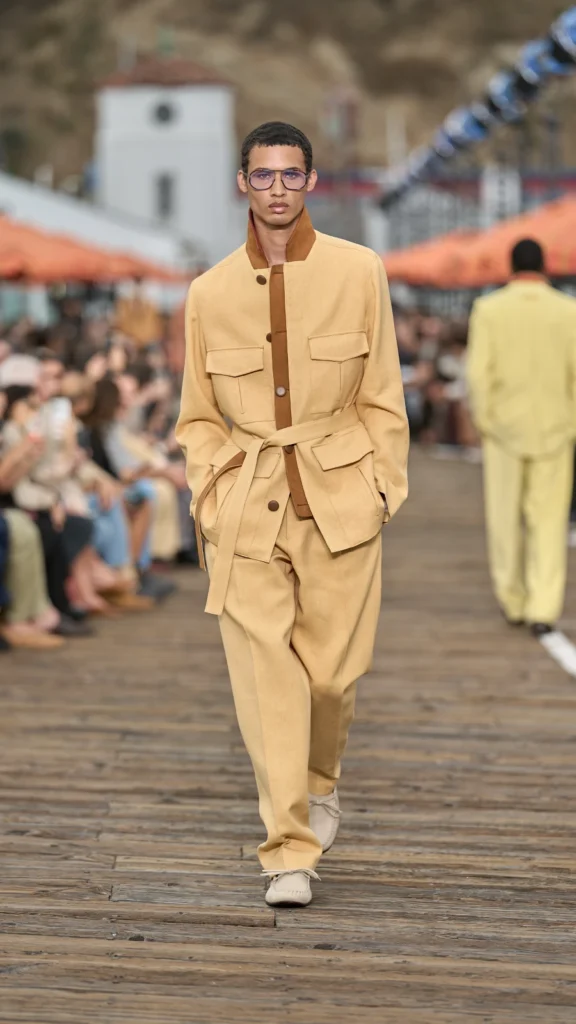
The belted safari jacket is an important part of the collection this season, and also appears as a short-sleeved overshirt. Duster coats are worn over shorts. Overshirts will have a more fluid appearance than knitted jackets, which will be closely fitted.
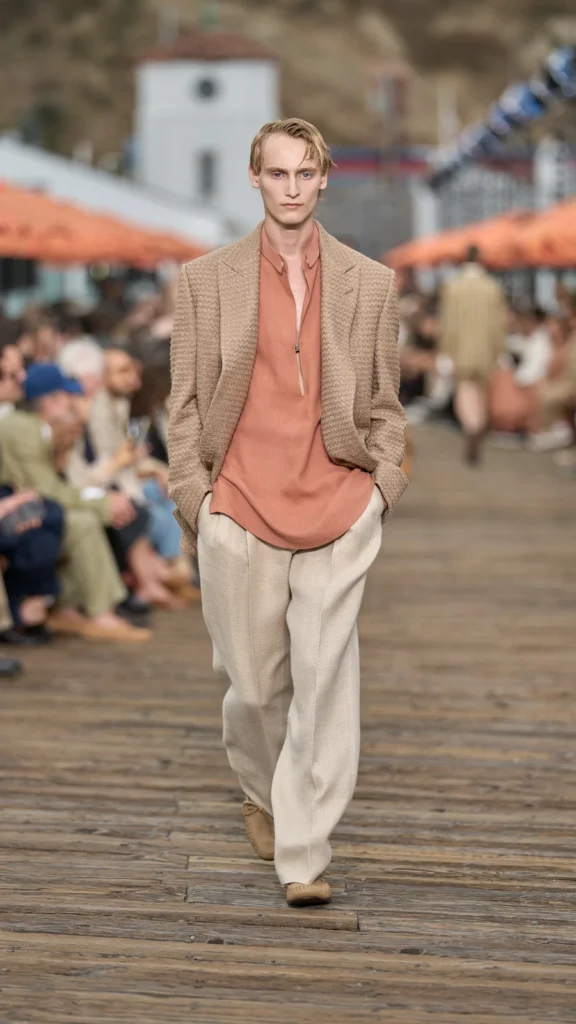
Fabric is where Zegna’s advantage tends to show most clearly. The house has operated its own mill in Trivero since its founding in 1910, and Sartori has consistently used that access as a design tool rather than a production convenience. This season’s materials include raw silk fancy stripe gabardine, washed hemp gaberdine and popeline, Oasi Lino oxford, tela and stripe jacquard, coloured denim drill, printed silk, french velvet, raw silk canvas, raw silk and wool and paper canvas, jacquard stripe silk and wool, bouclé towelling and stripe seersucker.
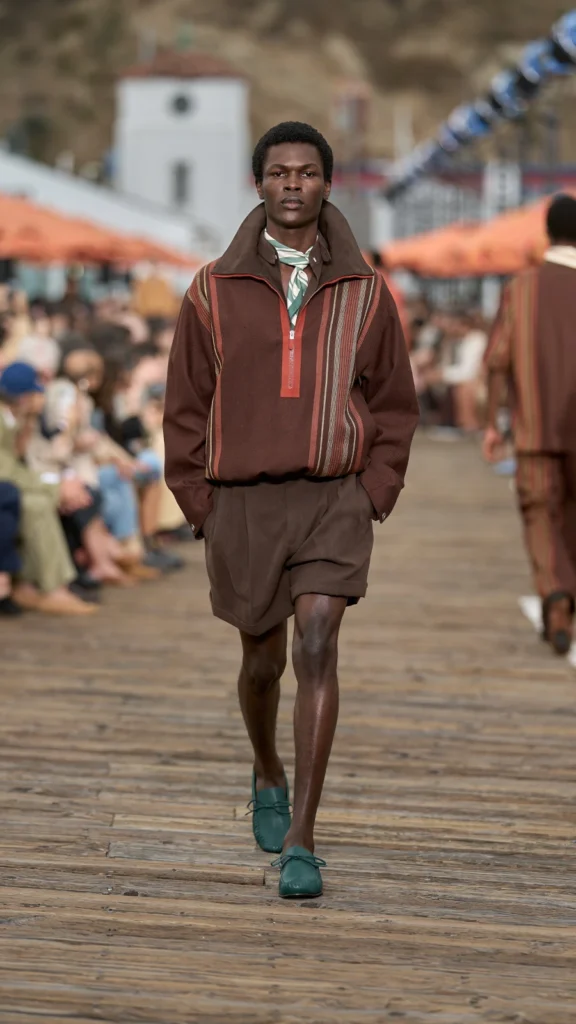
The palette runs through water and coastal tones, acquamarina, acqua, onda, alga and marea form the base, with accents of boa, bandiera and madrepora, neutral tones of conchiglia, cima, duna and molo, and desaturated black threading through.
Accessories include slippers and moccasins in soft leather, bags and duffels in striped or plain nubuck, squared glasses, silk foulards and knitted silk scarves.
“By creating new categories, erasing staid ones in an endless quest for styles apt for liquid lives of today, I am allowed the enriching possibility to create an ever-evolving aesthetic that’s rooted in the classics yet freed from outmoded restraints. There is something so ours to what we did this season, with an openness that feels cosmopolitan rather than being proudly or narrowly local. The urge to experiment, which at ZEGNA is a matter of shapes as well as materials, keeps driving us forward. Everything here starts from fabrics, which have texture and pattern, and look endlessly renewed by simply twisting and turning the subtlest elements, even just a thread. Constant evolution is what we strive for,” Sartori explained.
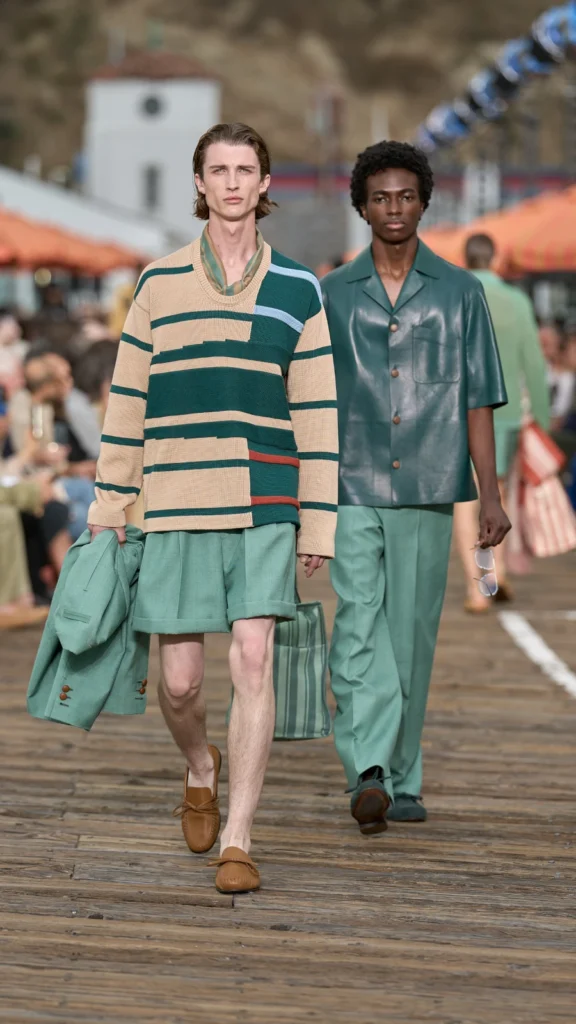
Zegna held the show at Malibu Pier and announced its support of California State Parks alongside it. The house framed this as an extension of the Oasi Zegna project, the environmental and reforestation initiative the founding Zegna family established in the hills around Trivero over a century ago.
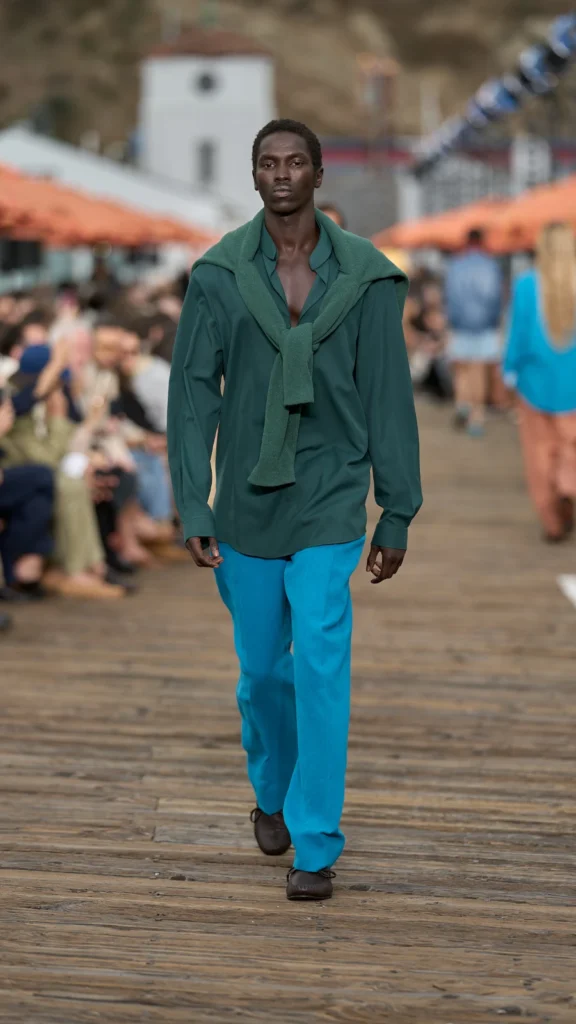
La villeggiatura, as a tradition, was built on a close relationship with specific landscapes, the understanding that a place is not just a setting but something inhabited and returned to across seasons. The California show location and the conservation commitment carry that same logic forward, at a considerable geographic distance from where the concept originated.