

For nearly five decades, Diesel has operated on the idea that clothing should feel lived in, not preserved. Glenn Martens, who took the creative director role in 2020 and previously reshaped Y/Project into one of fashion’s most conceptually rigorous labels, has spent his time at Diesel refining that philosophy into something more precise. This season, he pushed it to its logical extreme: a collection built around the specific, slightly chaotic energy of the morning after.
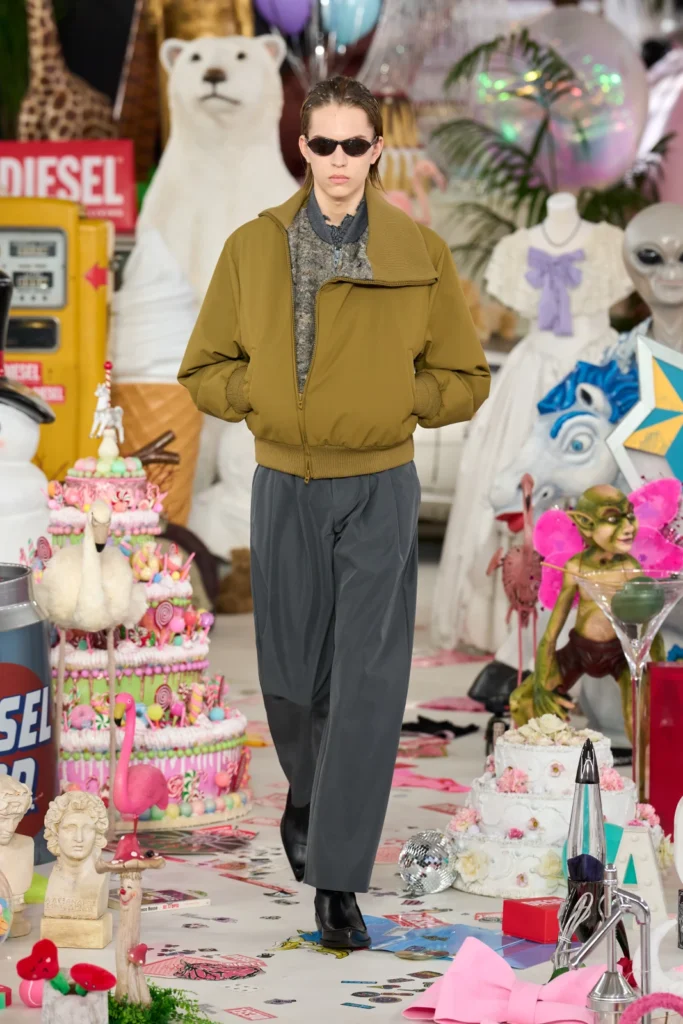
Denim is treated with resin to lock in permanent creases, engineered to look like jeans worn through the night and straight into the next day. Double-layer jersey tops are constructed to appear carelessly thrown on, though they hold their position exactly as intended. Wrinkled knits are deliberately boiled down from oversized proportions. Fabric treatments throughout are designed to mimic clothes lifted off a floor, which is either the laziest or most technically demanding brief a design team could receive.
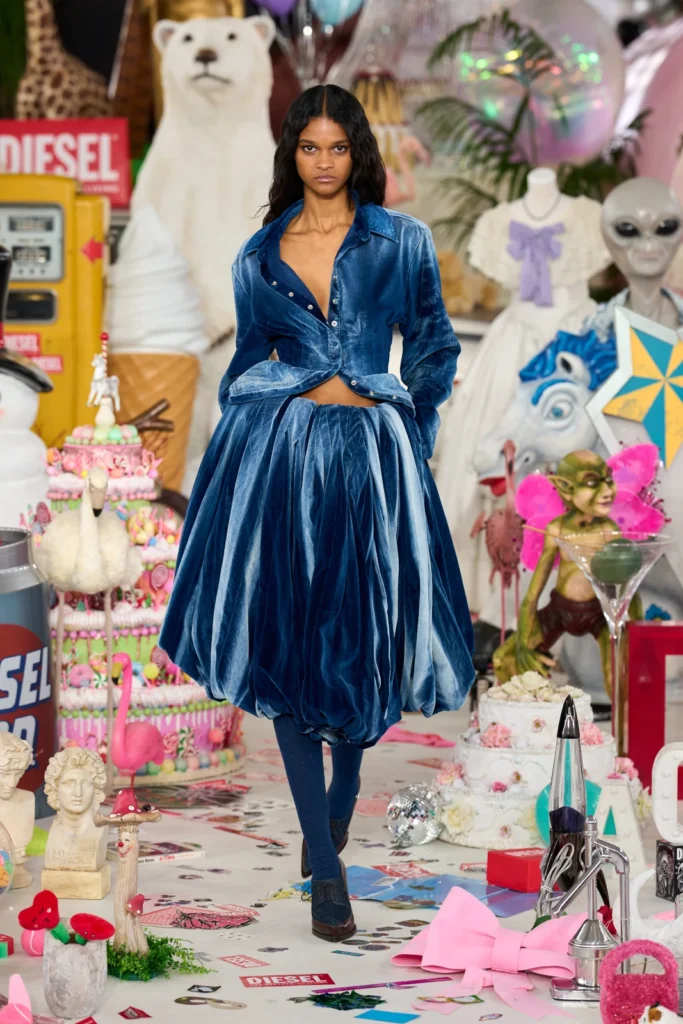
Martens said, “This collection is about waking up in a place, with no idea what happened last night, and you are the most glorious person ever. When you sneak away from the hotel room of the person who you don’t even know, you are truly at your best. These are super-wearable pieces for successful living, the essence of Diesel.” Not meant to be a luxury brand historically, Martens has given this collection a couture look with fabric manipulation and treatments.
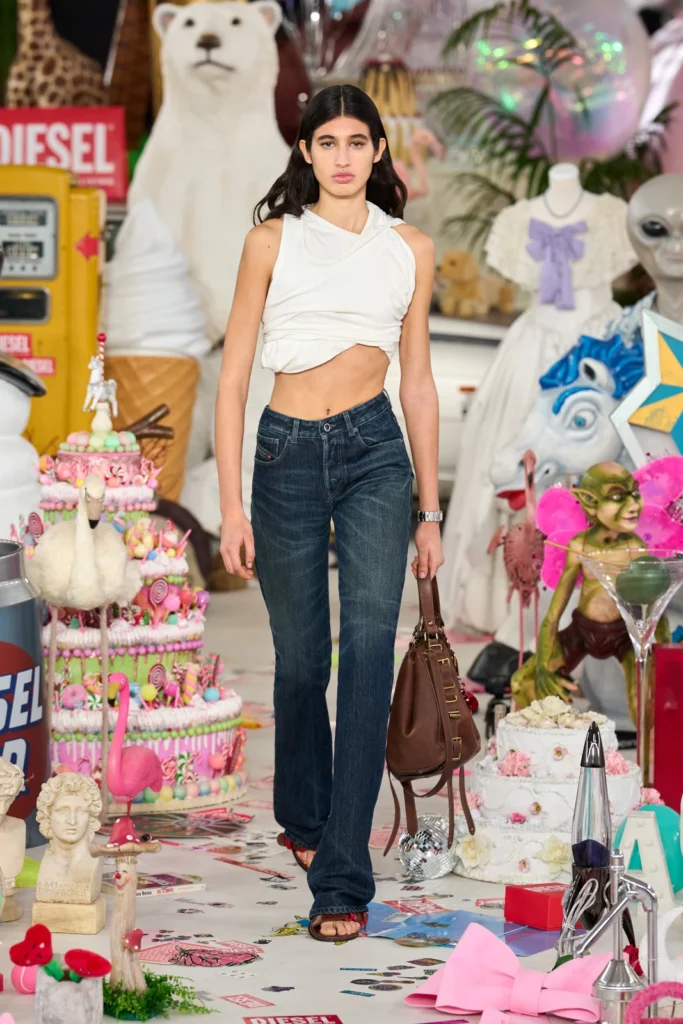
Wearability is a word Martens uses carefully. Extra-long jeans carry hidden vertical slits near the ankle, fastened by hook-and-eye closures designed for a stiletto heel to slip through. Pantaboots with flat, pointed soles are built for dressing fast. Stretch denim hotpants look wrapped in an instant. Trompe l’oeil jumpsuits mimic rucked-up T-shirts and skirts. Rucked-up skirts conceal leggings inside. Drama is engineered into the construction, not layered on top of it.
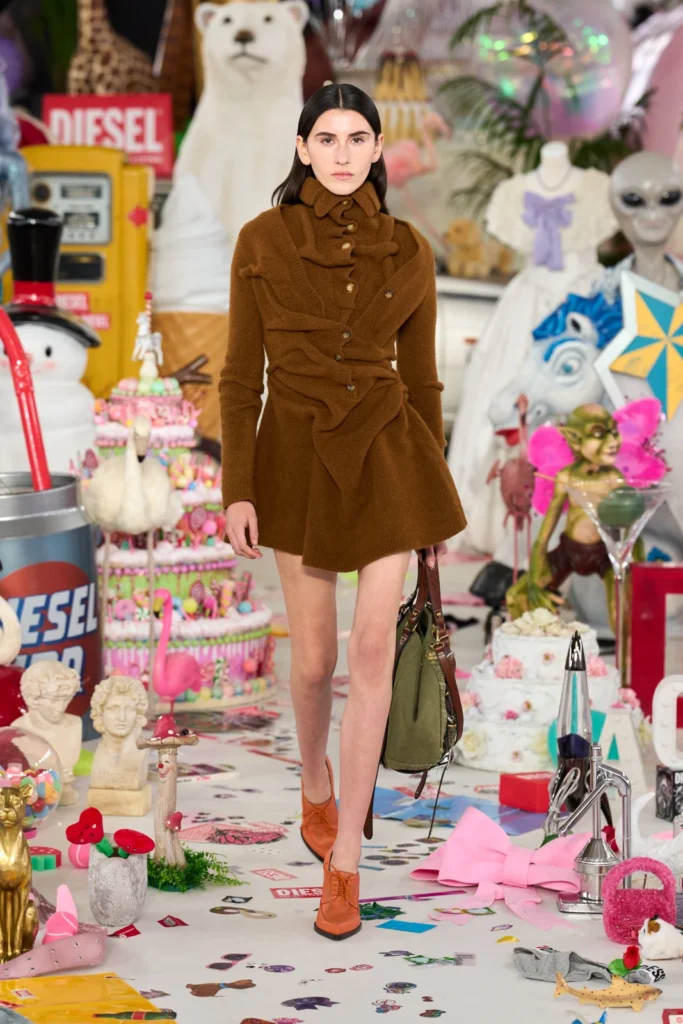
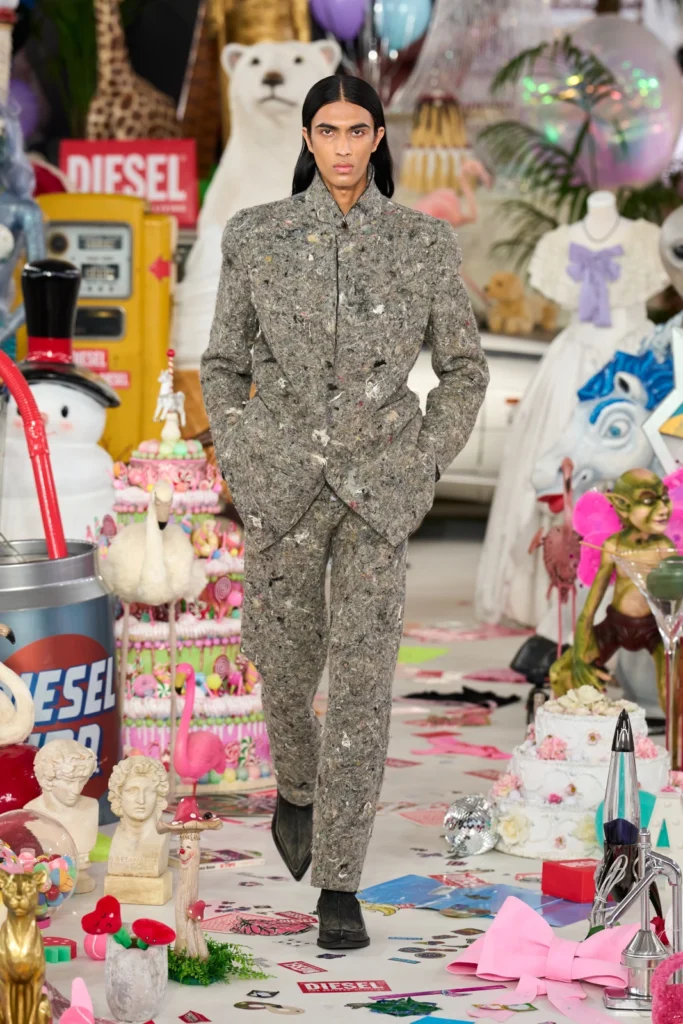
Tailoring carries a separate argument. Felted pieces are constructed from production scraps and industrial leftovers, material that was otherwise destined to be discarded. Fluffed-up alpaca and wool mix coats come unlined and unstructured. Intarsia knits feature cut-out florals at the neck or hem, as if the wool has been worn through. Pants gain pockets at the hem, sitting directly over the shoe, an addition that shifts function into something more considered.
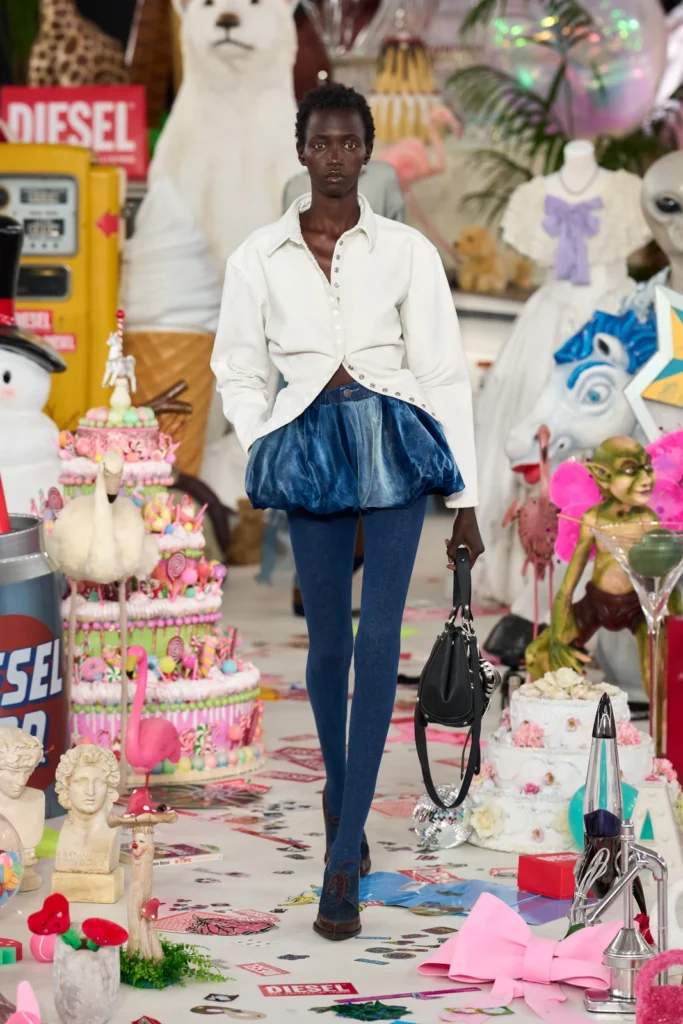
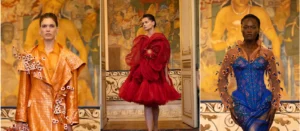
Evening pieces escalate things further. Velvet denim skirts carry significant volume. Torn long-sleeve Diesel tour tees and destroyed denim jeans arrive encrusted with crystals, then layered with ripped-hem tulle tops and skirts. Destruction and embellishment have been a recurring tension in fashion for several seasons, and Diesel is pressing harder into that space than most.
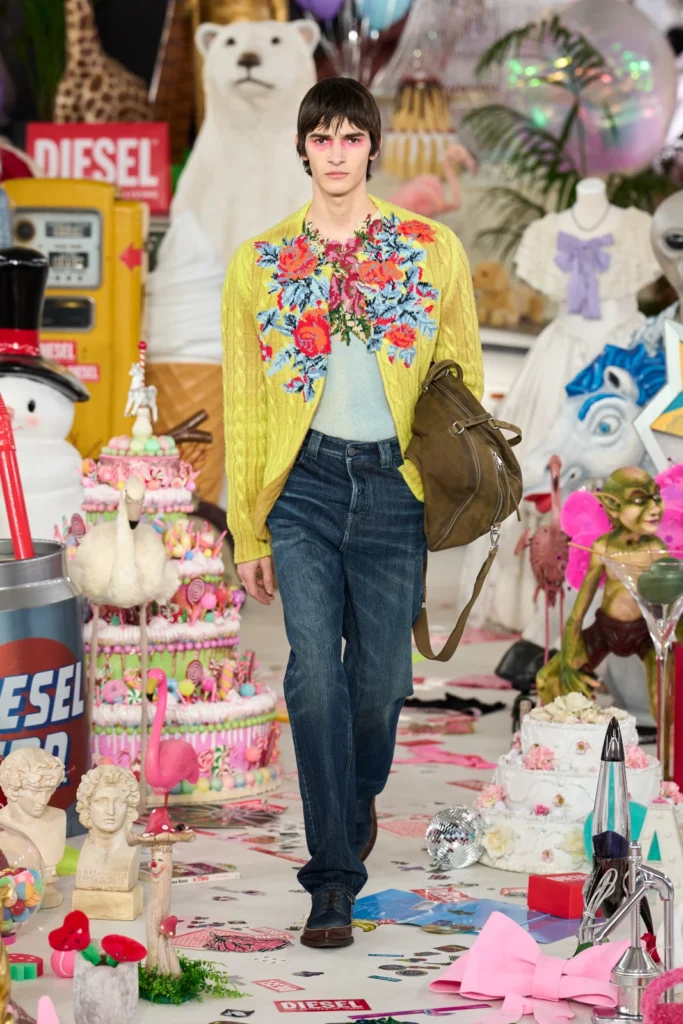
Color and texture operate without restraint. Denim is flocked. Monster coats arrive as patchworked clashes of vivid hues. Fluffy-lined coats carry rough-cut fronts. Leather blousons, shirts and pants are painted in elemental shades. Draped velvet tops, pants and dresses land as a full riot of color, with no intention of coordinating in any conventional sense.
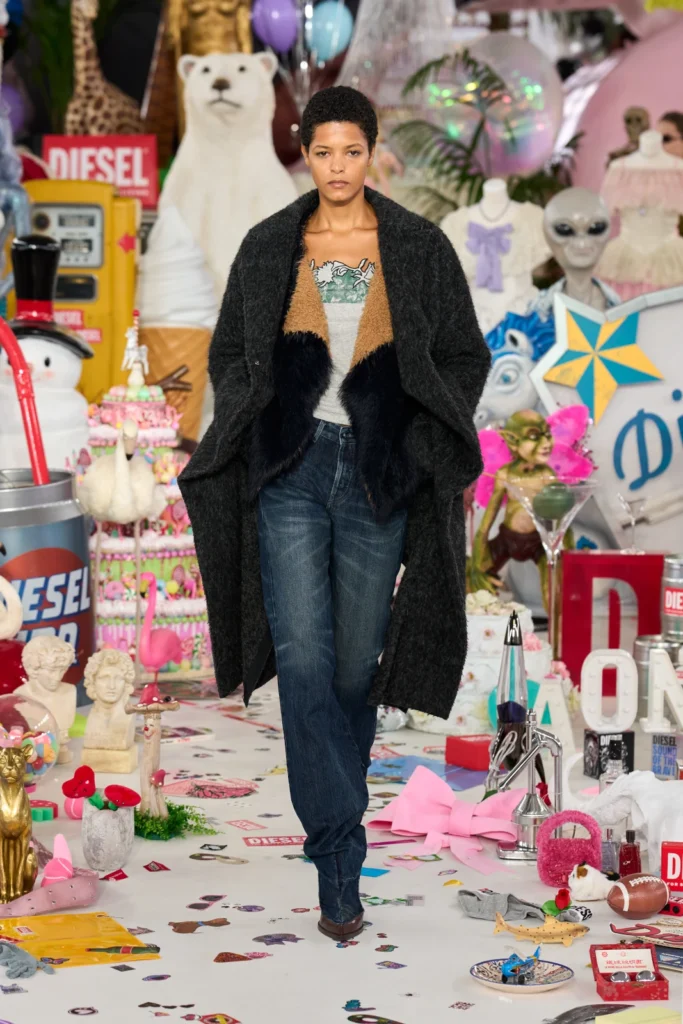
Printed pieces go through a more layered process. Prints are foiled, plasticized with their own pattern, and then the foil is partially cracked open to expose what sits underneath. On a jersey top, it reads as surface texture. On a wrapped dress or an oversized coat, it reads as something closer to revelation.
New accessories debut alongside the collection. D-One bag arrives with handles that convert into multi-buckled straps running down the body, available in leather, crystal-encrusted denim, and the collection’s floral prints. A softer version of the Dome bag and the 1DR in fresh prints also feature.
Footwear carries a sculptural profile, with pointed toes framed by a lateral wall around the foot, running across women’s pumps and boots and men’s derbies and ankle boots. Mule sandals with a buckle across the foot complete the shoe offering. In eyewear, the D-mentional family features curved frames with logo temples. Sculpt-D goes more minimal, with a cut-out oval D on the stems designed to cast a literal letter shadow on the skin. Jewels reference angels and faux pearls.
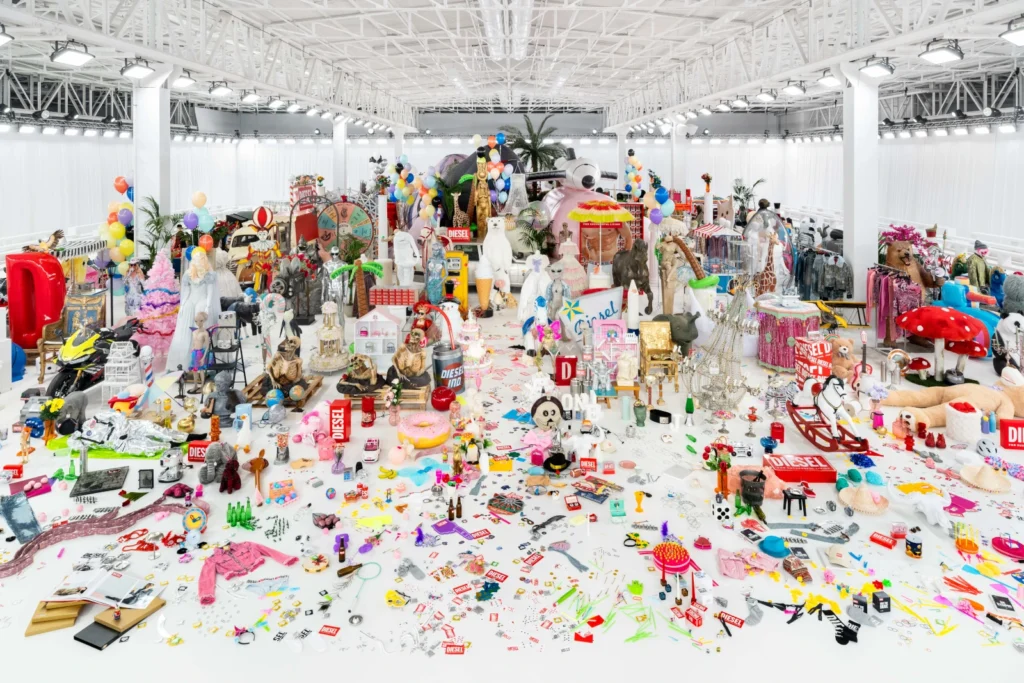
Staging the show inside an installation built from around 50,000 pieces of archival Diesel memorabilia, drawn from approximately 6,000 different categories and displayed forensically under bright lights, was a deliberate choice. Diesel was founded in 1978 by Renzo Rosso in Molvena, Italy, and has built one of the more extensive brand archives in contemporary fashion. Repurposed objects and props filled the set, functioning as a record of the brand’s history rather than mere decoration. Upcycling runs through the collection itself, with responsibly sourced and recycled materials used across denim, ready-to-wear, and bags.