
At Paris Couture Week Spring/Summer 2026, Indian designer Gaurav Gupta presented The Divine Androgyne, a collection that stands among the most philosophically and technically ambitious bodies of work in his couture career.
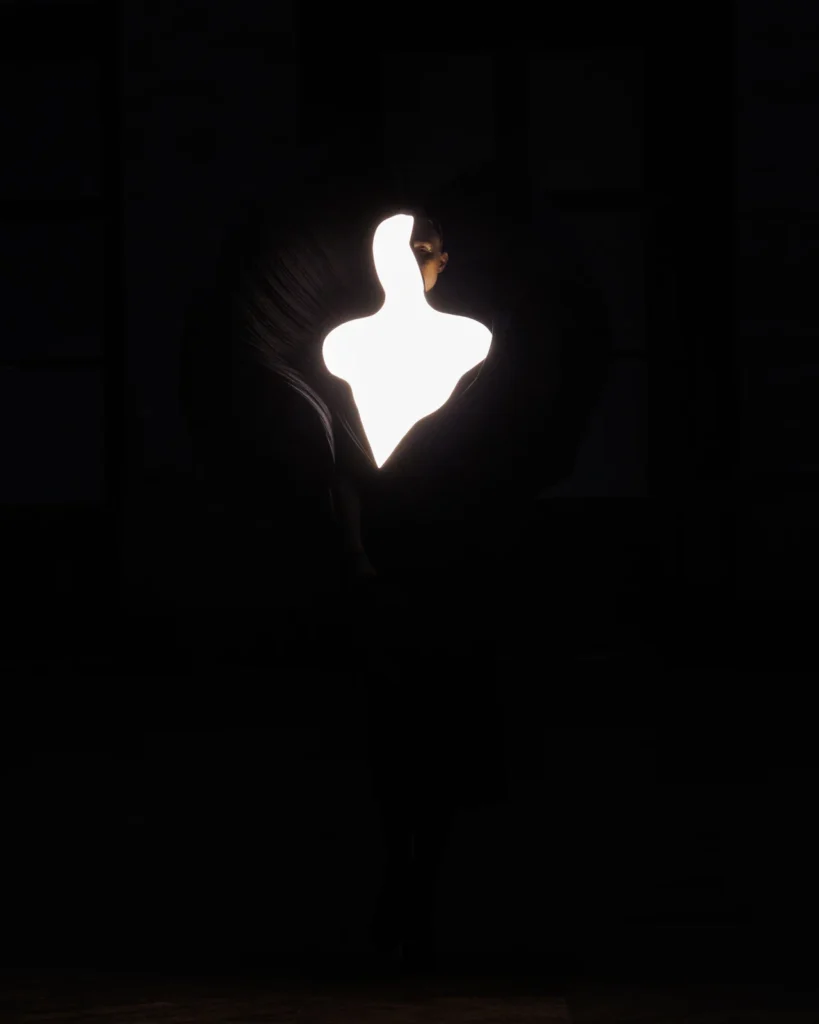
Rooted in the ancient Indian concept of Advait, or non-duality, the collection interrogates the binaries that govern how identity, relationships, time, and the body itself are understood—positioning couture not as adornment, but as living architecture.
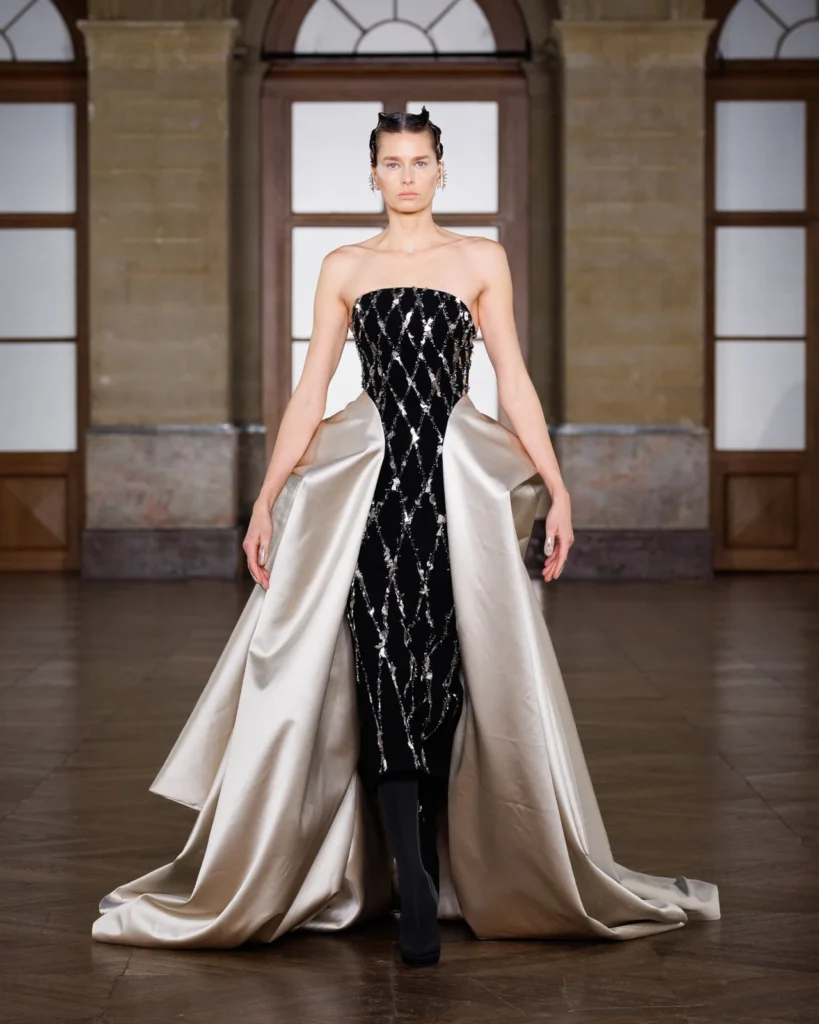
The collection was sparked by a moment of misnaming. Following Gupta’s Spring/Summer 2025 show, sections of the international press referred to his life partner, Navkirat Sodhi, as his wife. Rather than correcting the label, Gupta turned inward, using the moment to question why relationships and identities must be defined within fixed social structures at all. That inquiry became the conceptual foundation of The Divine Androgyne, which does not challenge individuals, but the systems that demand categorisation.
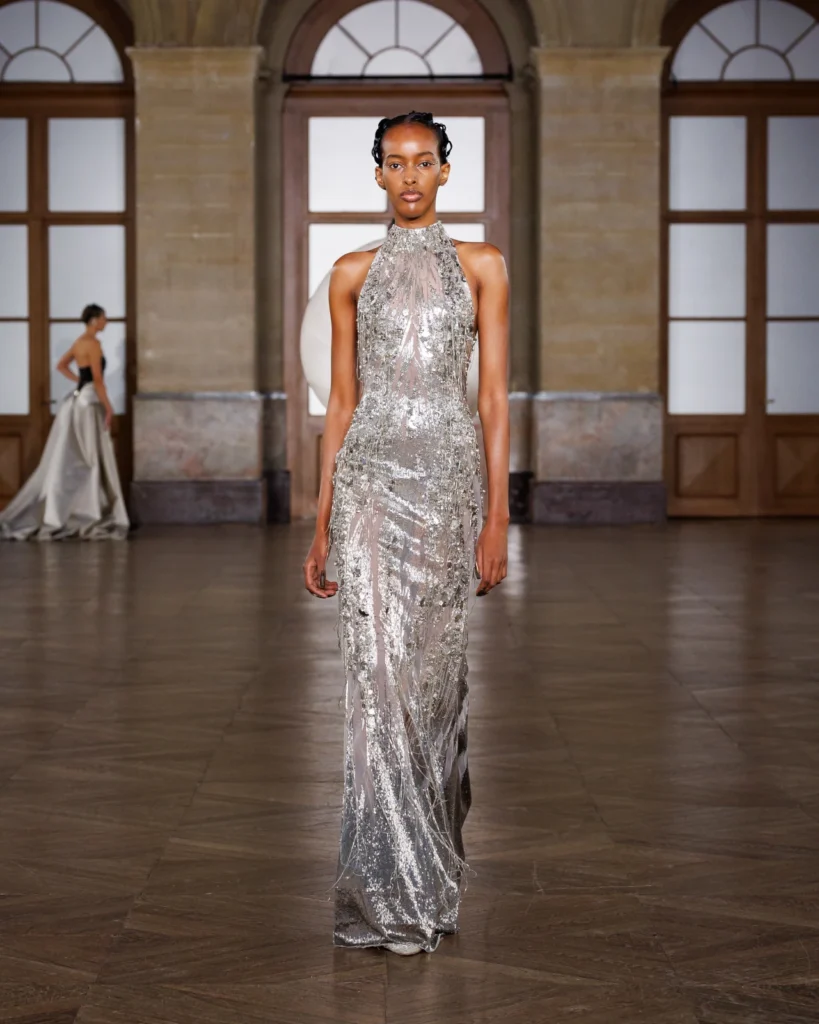
Across the collection, time is treated as material rather than chronology, space as architecture rather than distance, and the body as a site where consciousness, memory, and energy intersect.
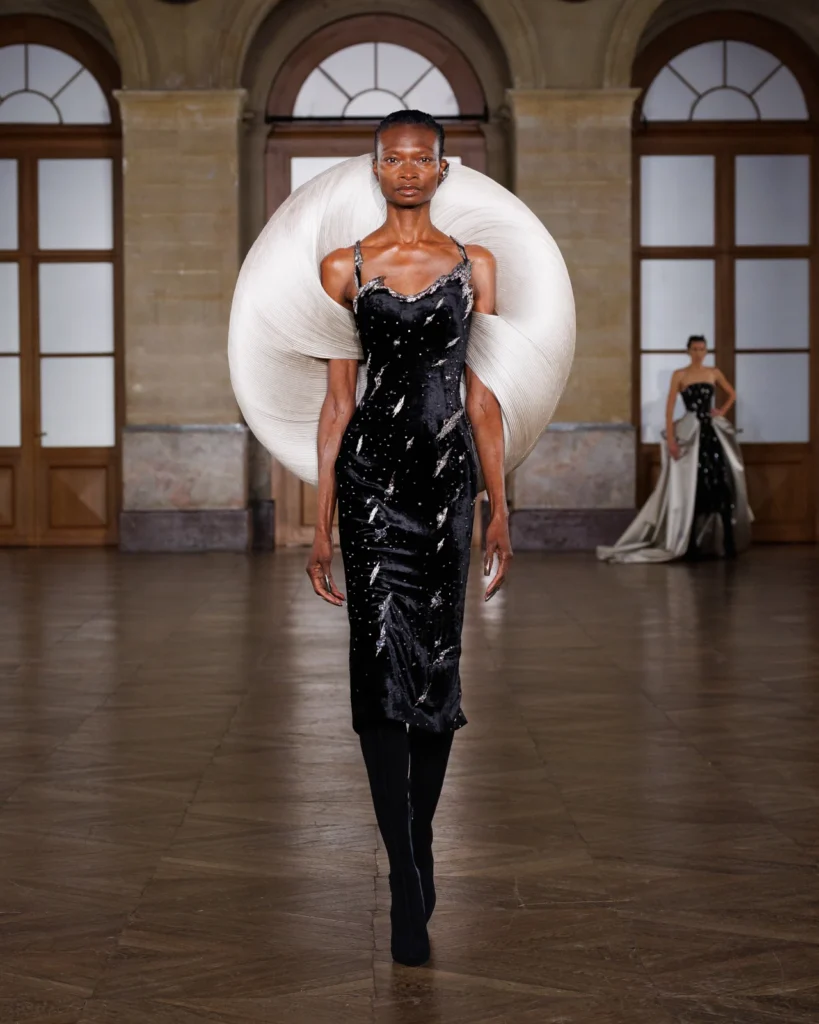
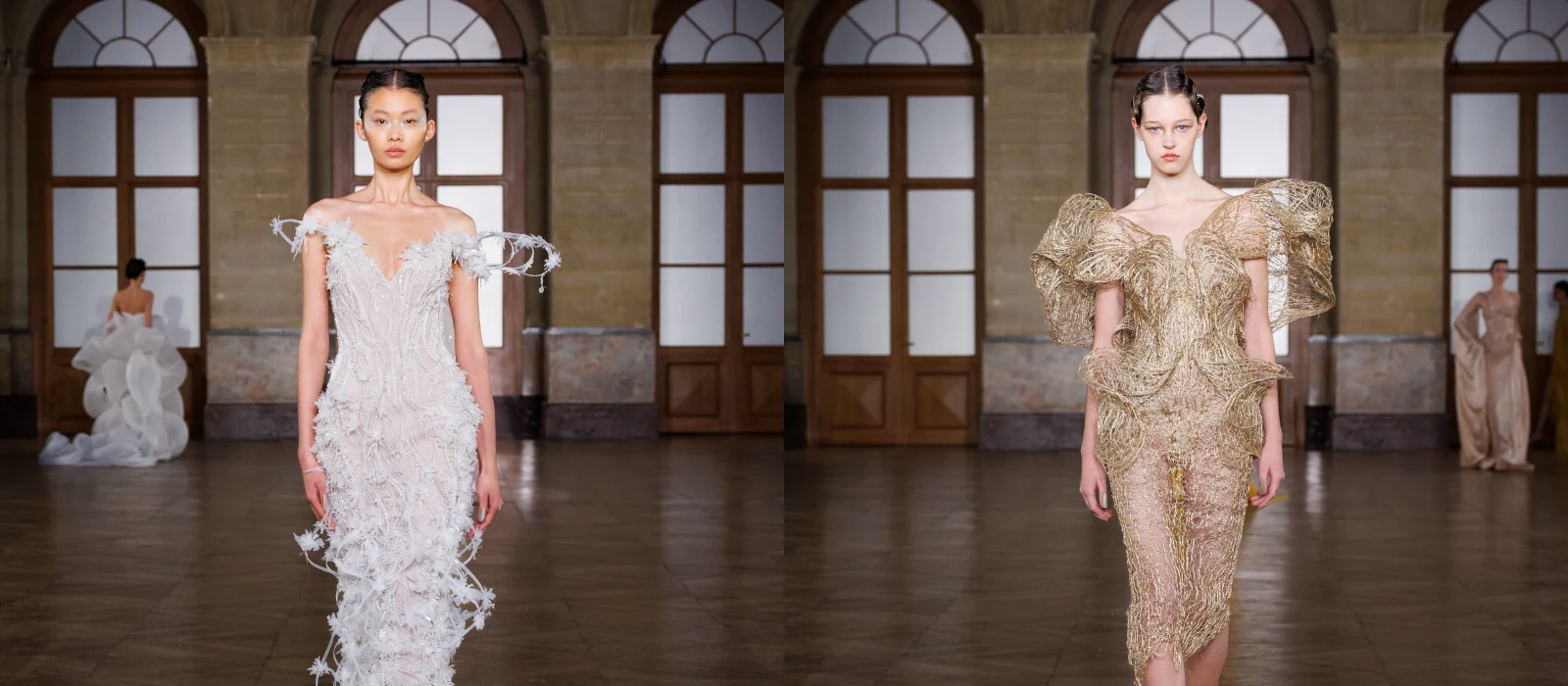
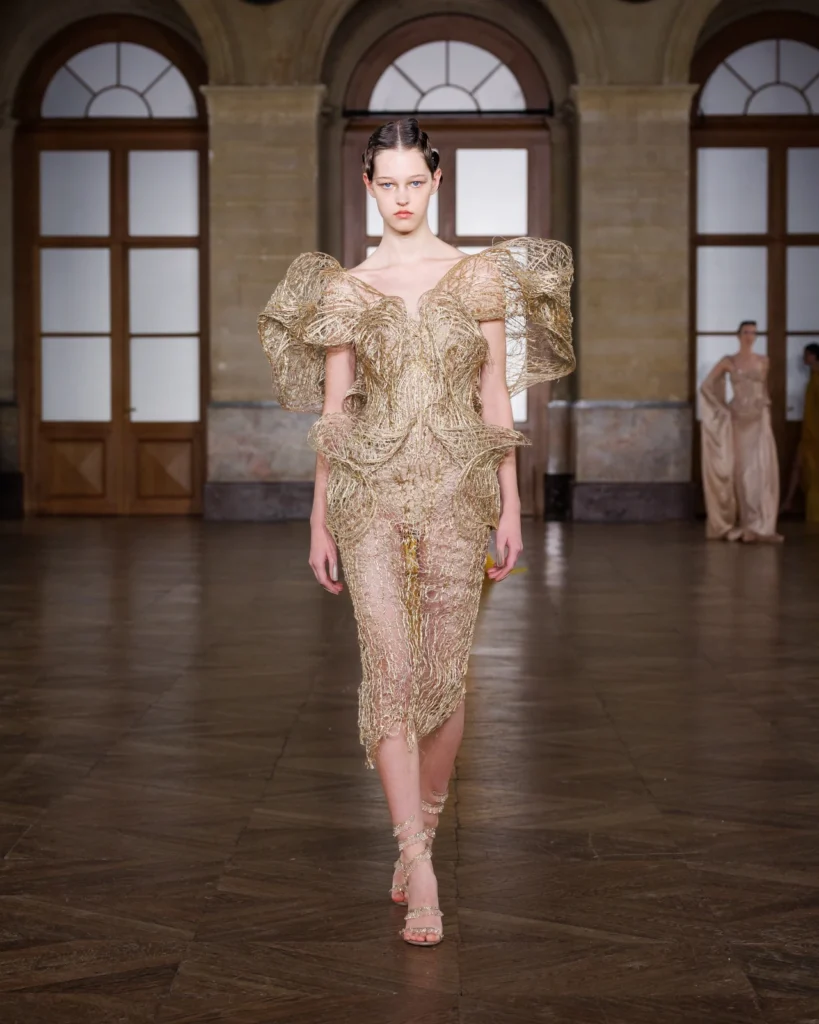
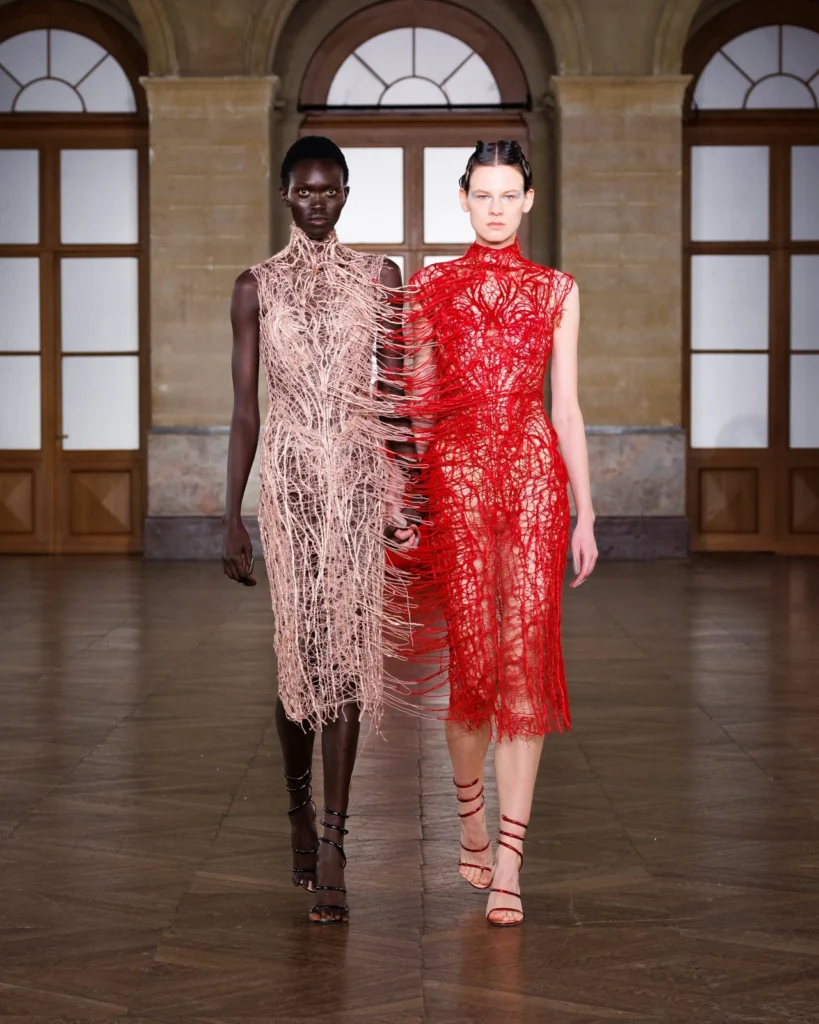
A newly developed embroidered filament architecture, engineered through a proprietary technique in Gupta’s atelier, forms the technical backbone of the season.
Thousands of fine threads are structured into web-like networks that map nervous systems and energy points across the body, appearing most powerfully in paired twin silhouettes physically connected by continuous cords, and in a black, body-mapped gown tracing the invisible circuitry of the human form.
Each of these garments required approximately 700 hours of hand embroidery, transforming thread into anatomy.
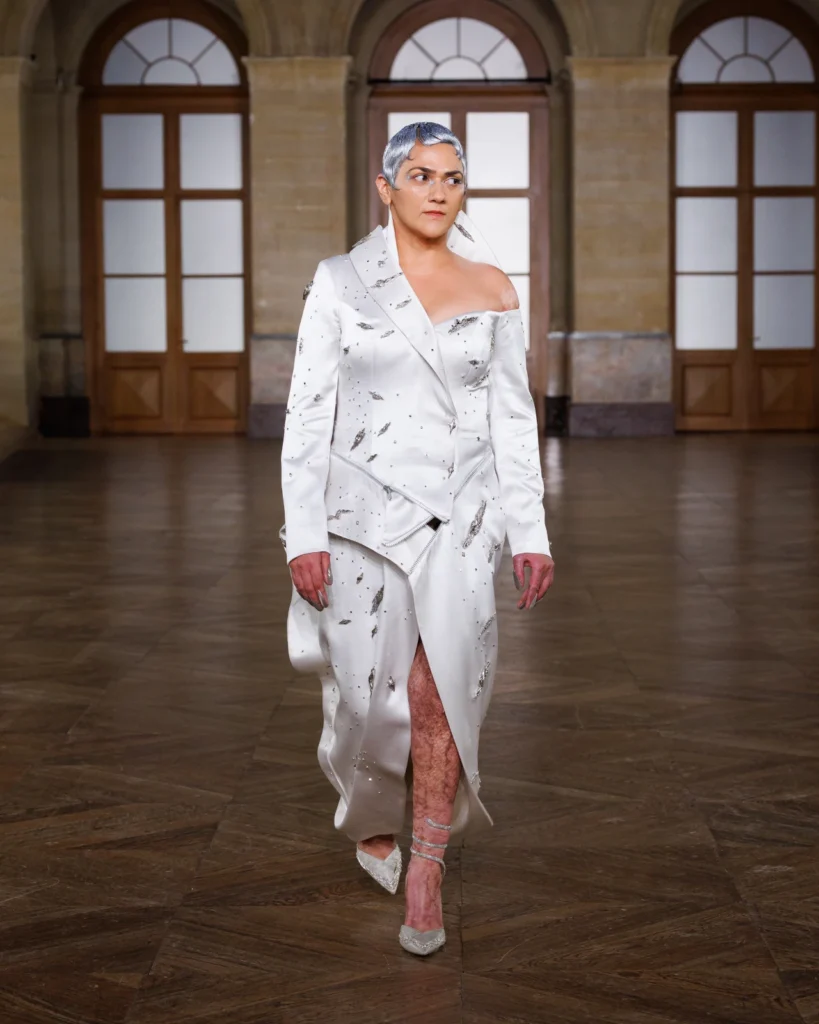
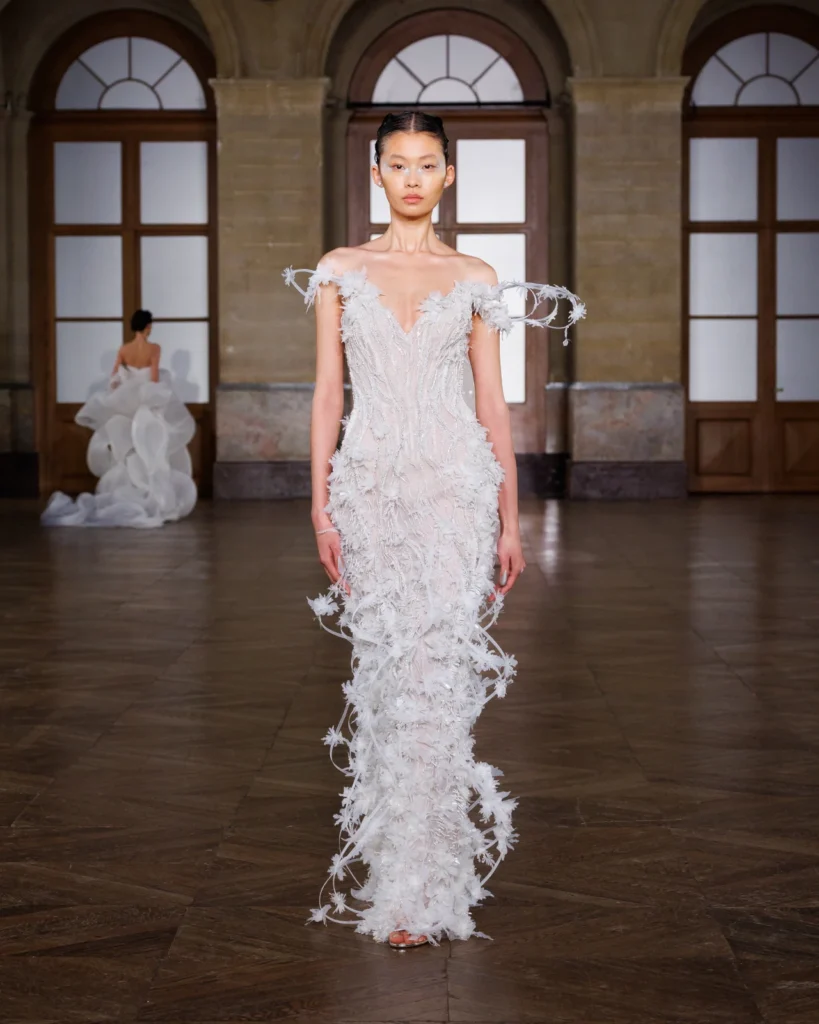
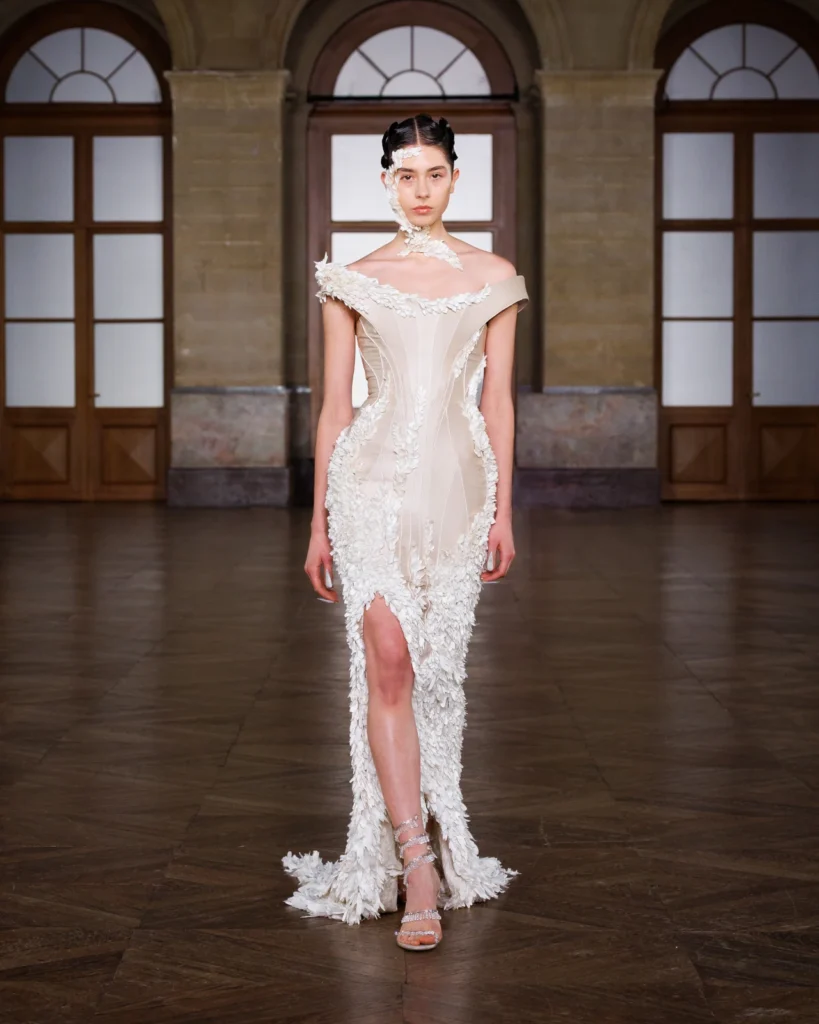
From there, the collection unfolds through a restrained fantasy forest where bloom and decay coexist as parallel states of being. In sculpted bridal and sari gowns, mogra (Indian jasmine) is engineered directly into the garment’s structure, treating nature not as ornament but as sacred architecture. These white silhouettes replace ceremony with rebirth, presenting the bride as transformation itself. Each required over 900 hours of embroidery and the collaboration of nearly 50 artisans.
The narrative then moves toward origin – imagining the earliest attempts of matter to organise itself into life. Hybrid surfaces and engineered resin constructions culminate in a cosmic gown composed of more than 2,000 individually placed resin elements, forming an extraterrestrial skin that suggests creation as a fragile, ongoing experiment rather than a finished state.
Throughout the collection, space and time collapse into a single continuum. Deconstructed watch components—clock hands, mechanical plates, silver bases—are reimagined as ornament, tracing orbital formations across sculpted gowns and corseted silhouettes.
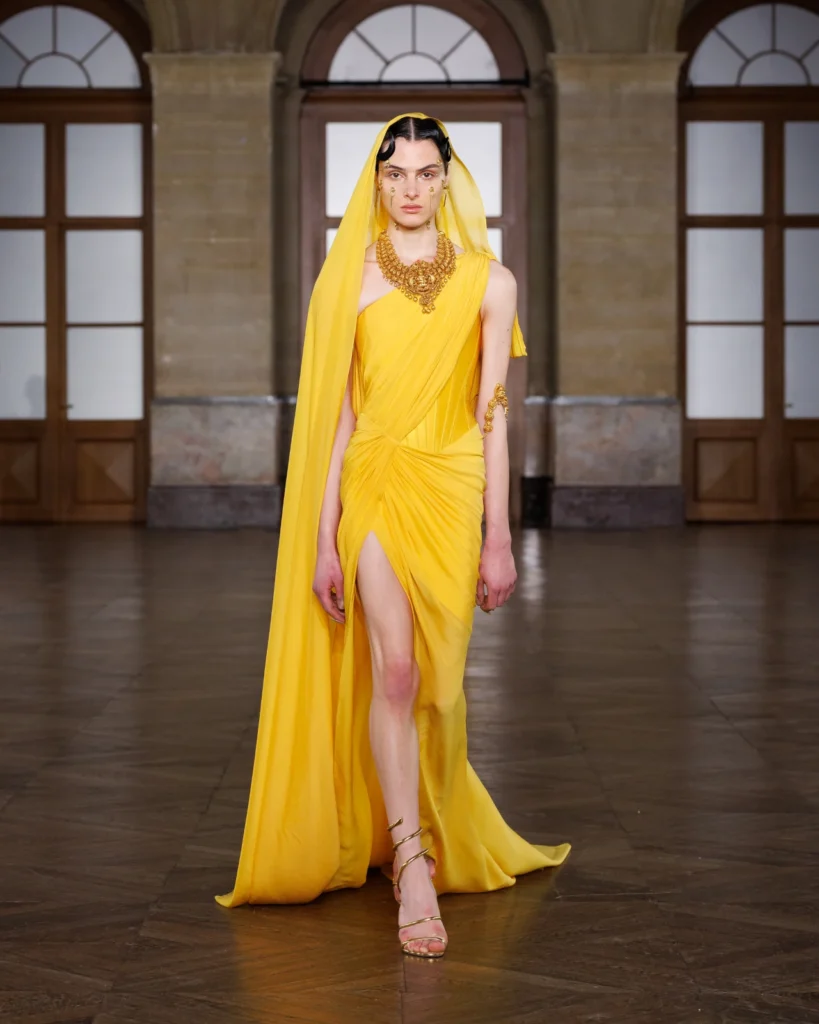
Rooted in the Vedic philosophy of cyclical time, past, present, and future coexist within the same form, illuminated by over 30,000 Preciosa crystals, integrated through Gupta’s third collaboration with the Czech crystal house.
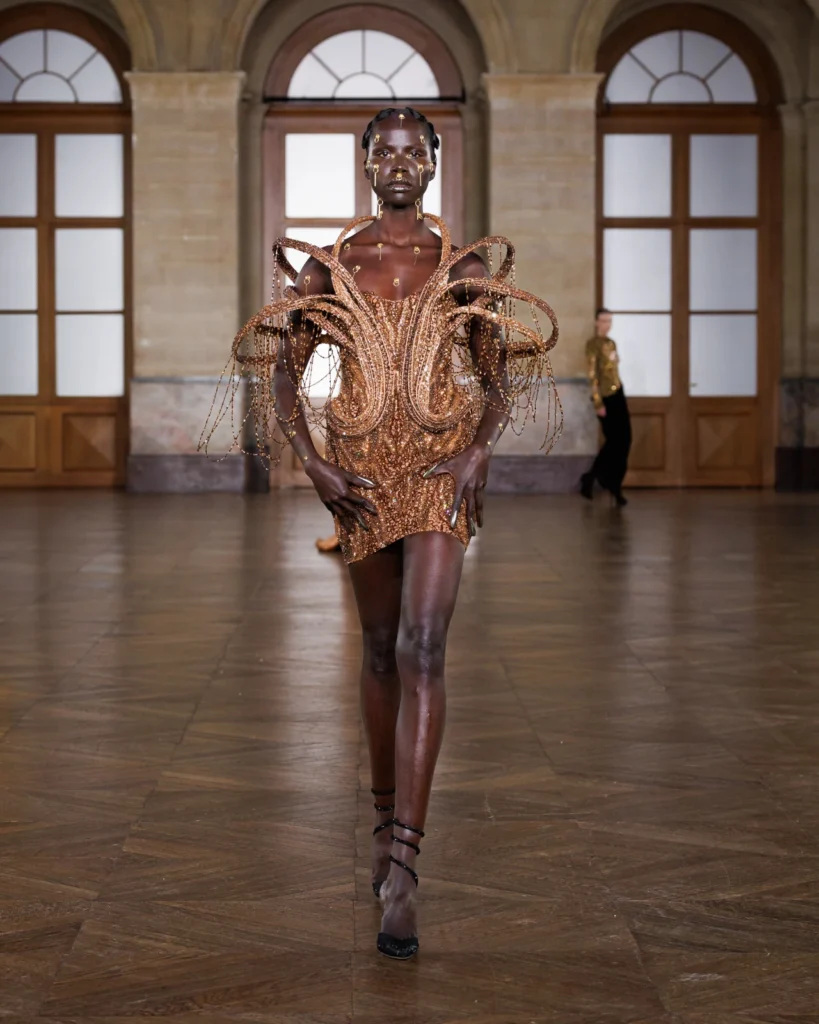
The journey culminates in a monumental temple-statue–inspired corset, sculpted using a custom-developed fibre moulding technique. Taking nearly 700 hours from conception to completion, the form evokes sacred stone in motion, as if a temple sculpture had stepped out of time and into breath.
“Every silhouette in this collection is built as a living structure,” Gupta said. “We are not decorating the body—we are mapping consciousness, memory, and movement onto it. These garments are meant to feel alive, as if they are still becoming.”
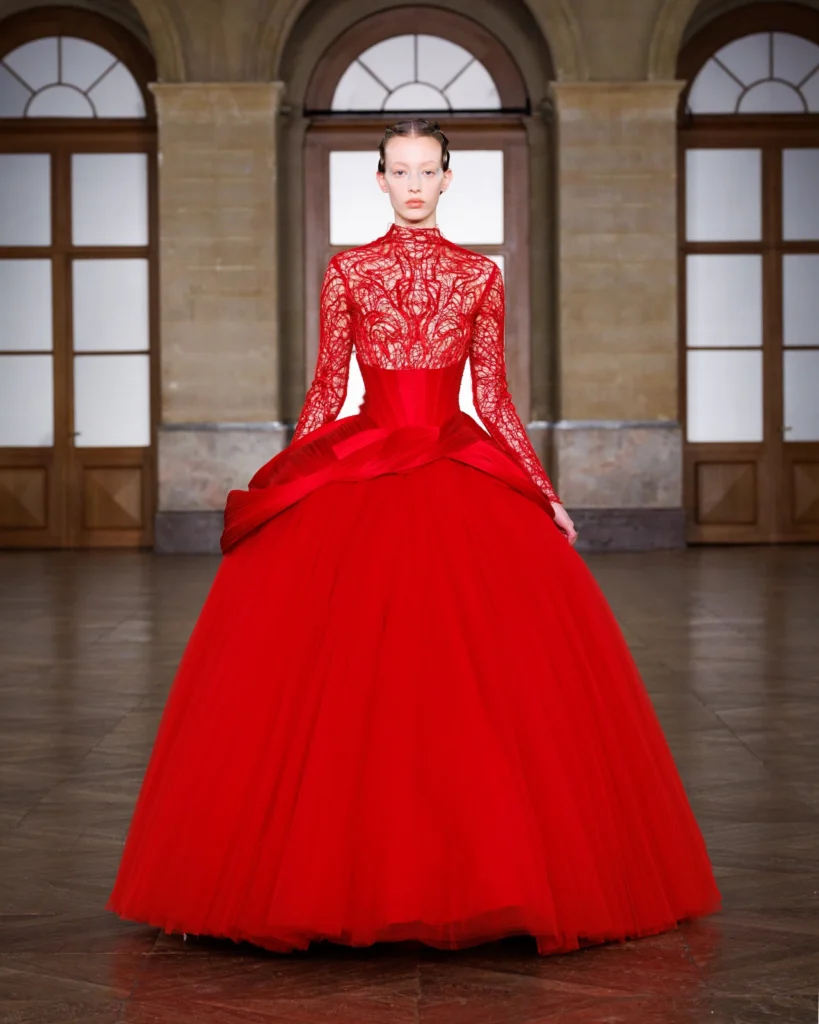
The metaphysical vision extended beyond clothing. Jewellery, created in collaboration with Indriya, reinterpreted Indian temple jewellery and uncut diamonds as modern heirlooms rooted in ritual and devotion.
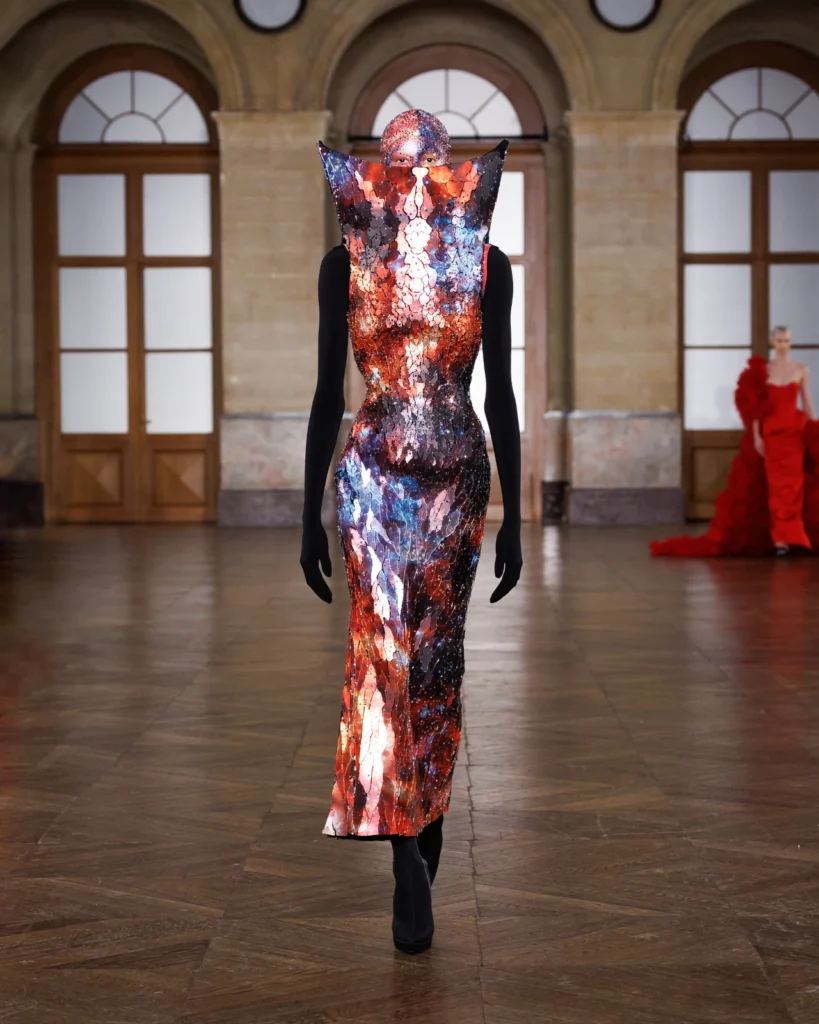
Makeup by MAC, led by Marieke Thibault, mapped marma points across the face using illuminated half-moon spheres and metallic pigments, while hair by Kérastase reinforced the dialogue between structure and surrender. Footwear, developed with Rene Caovilla, translated Gupta’s architectural language into motion.
In another news, Gupta has unveiled his first-ever dedicated menswear flagship at DLF Emporio, New Delhi, marking a decisive new chapter for the Gaurav Gupta Man.
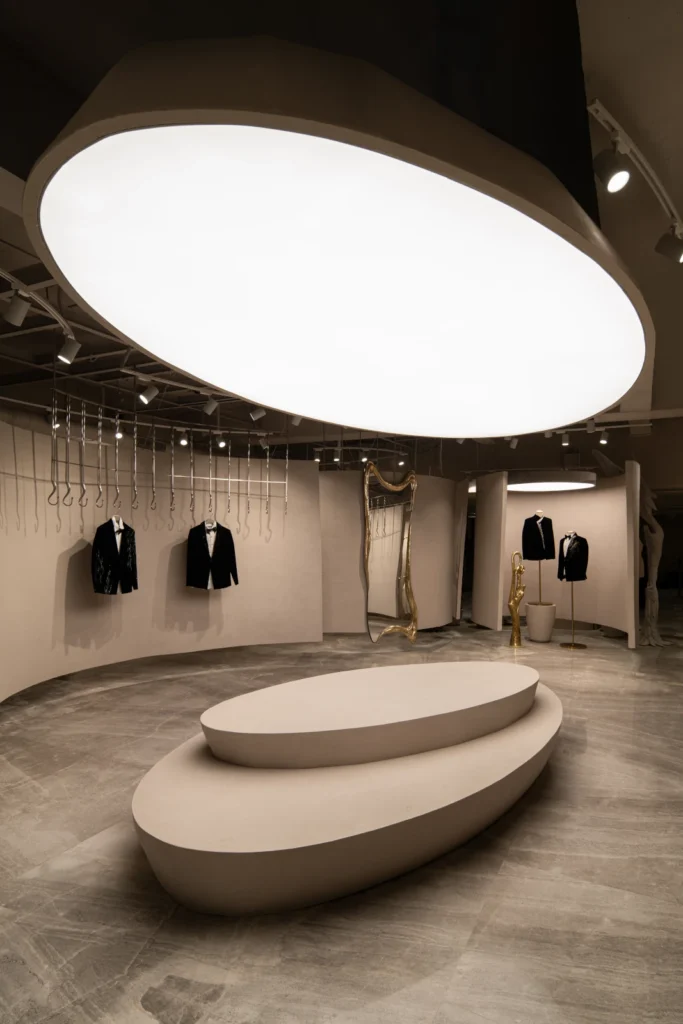
Spanning approximately 2,300 square feet, the boutique represents a long-term commitment to menswear as a core pillar of the house rather than a secondary offering. Designed by architect Karanbir Duggal in close collaboration with Gupta, the space is conceived as a sculptural environment guided by the philosophy of Shunya—emptiness treated as potential.
Curved architectural volumes, controlled sightlines, and layered spatial transitions create a gallery-like experience where garments unfold gradually, allowing craftsmanship and silhouette to take precedence.
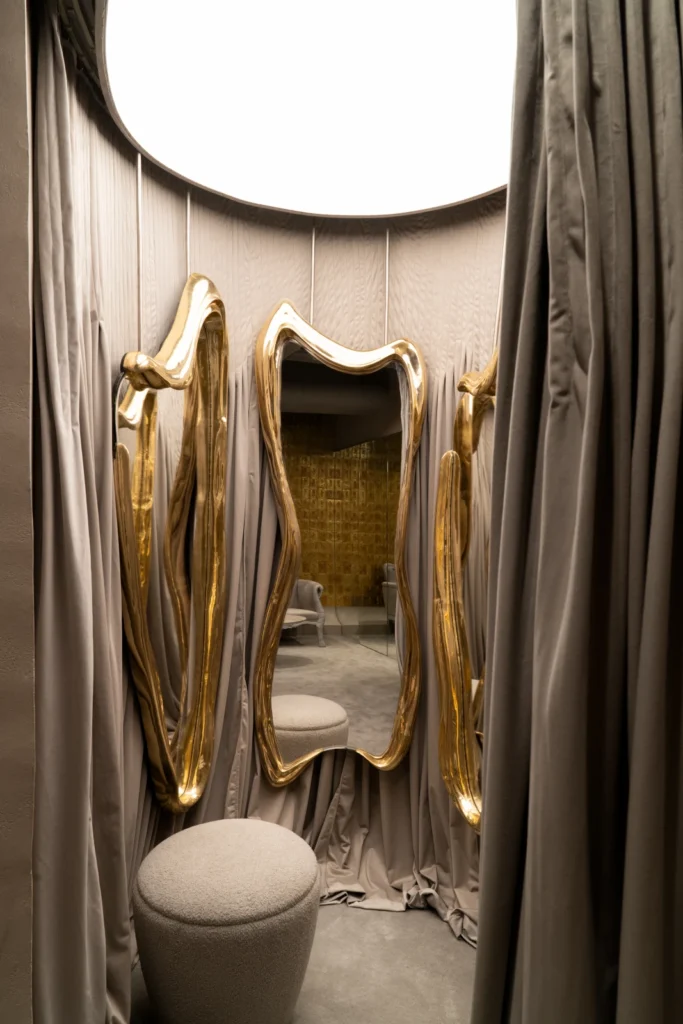
“This space reflects how I think about menswear today,” Gupta said. “It is fluid, sculptural, and introspective. Architecture and clothing exist in quiet conversation.”
Since its debut in 2017—when Shahid Kapoor served as showstopper at GQ Fashion Nights—Gaurav Gupta menswear has grown into a globally visible design universe worn by figures such as Ranveer Singh and Jr NTR on international stages. The flagship brings that evolution together under one roof, offering tuxedos, bandhgalas, ceremonial tailoring, kurtas, Nehru jackets, draped silhouettes, accessories, and footwear.
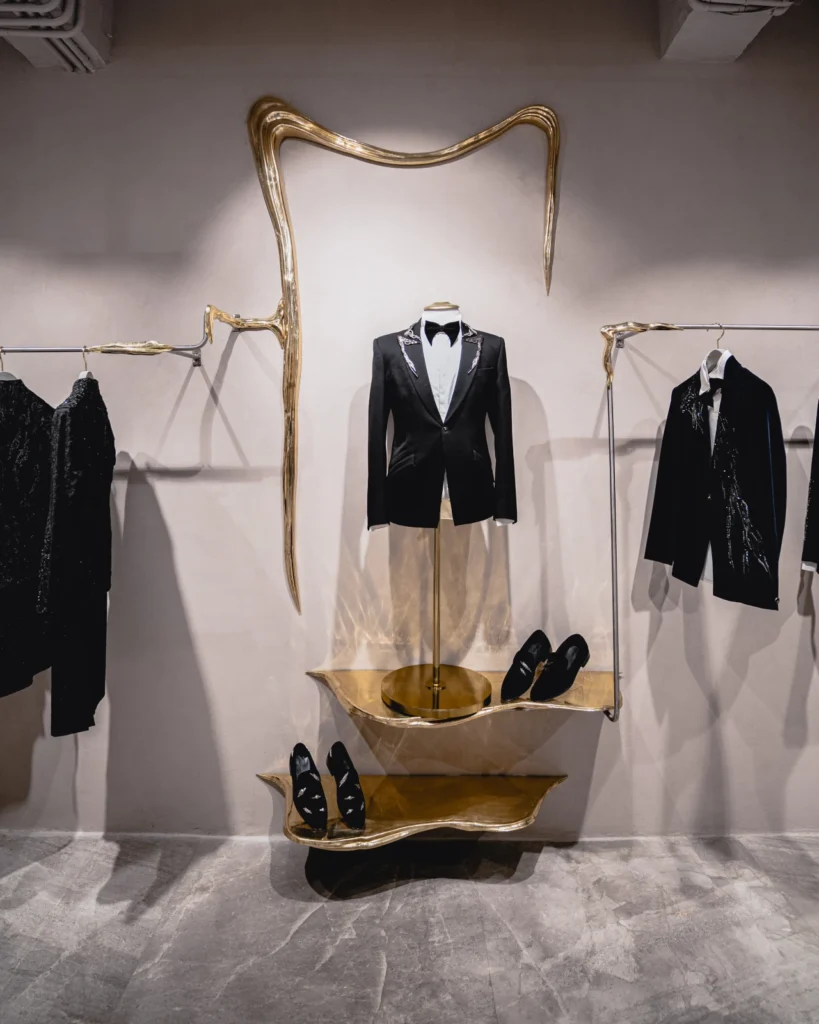
Taken together, The Divine Androgyne and the opening of the menswear flagship articulate a single, unified vision: one where couture, menswear, architecture, and philosophy are not separate expressions, but interdependent systems in Gaurav Gupta’s world.