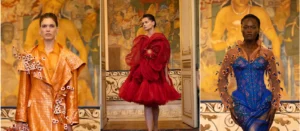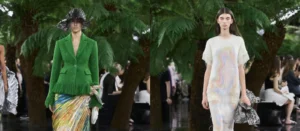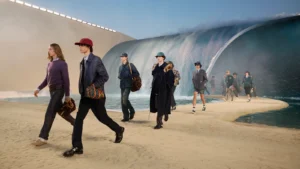

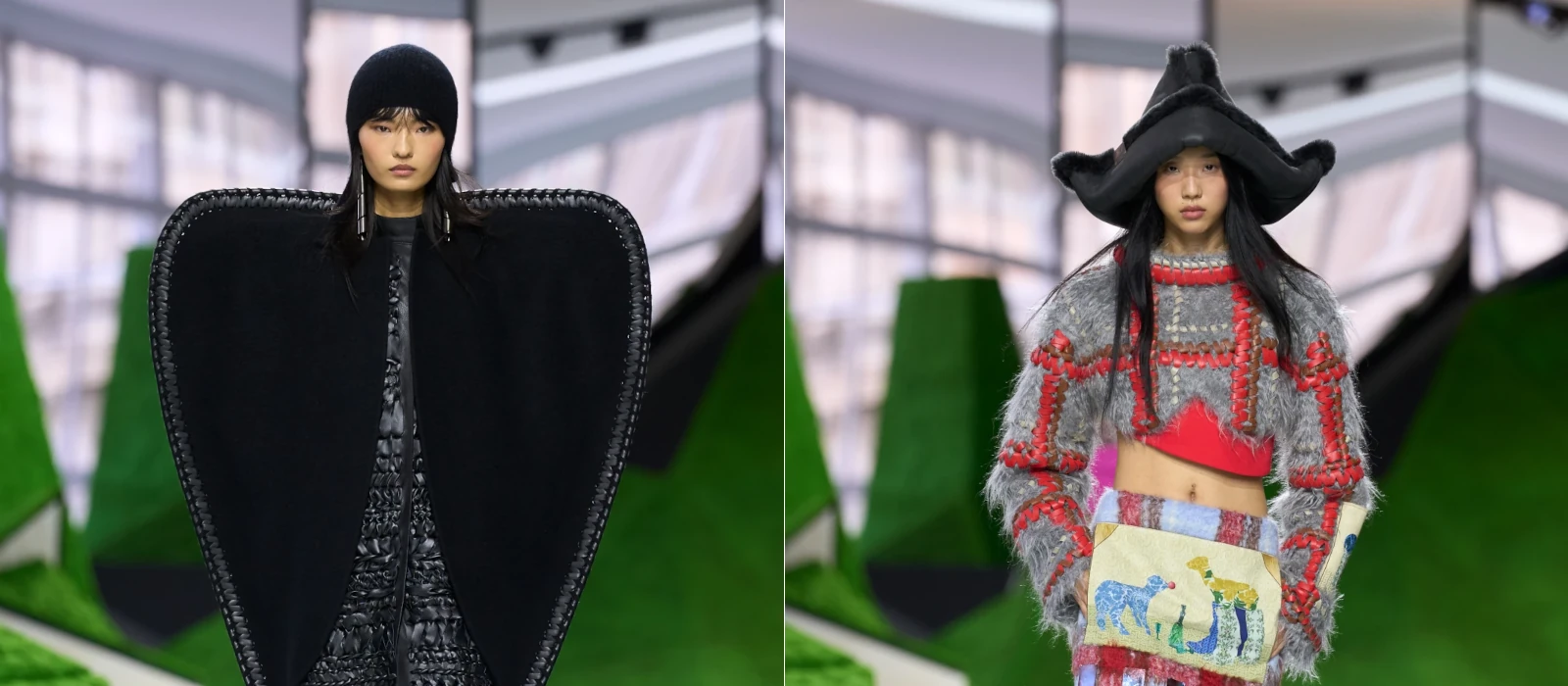
For Fall/Winter 2026, Louis Vuitton’s creative director Nicolas Ghesquière turned to the oldest design force there is — nature, and used it to rethink clothing from the ground up. Not its colors, not its prints, but its actual structural logic. Mountains, forests, plains. Wind, rain, sun. These are the forces that shaped the silhouettes, drove the material choices, and set the tone for a Women’s collection called Super Nature, presented inside the Cour Carrée of the Musée du Louvre in Paris.
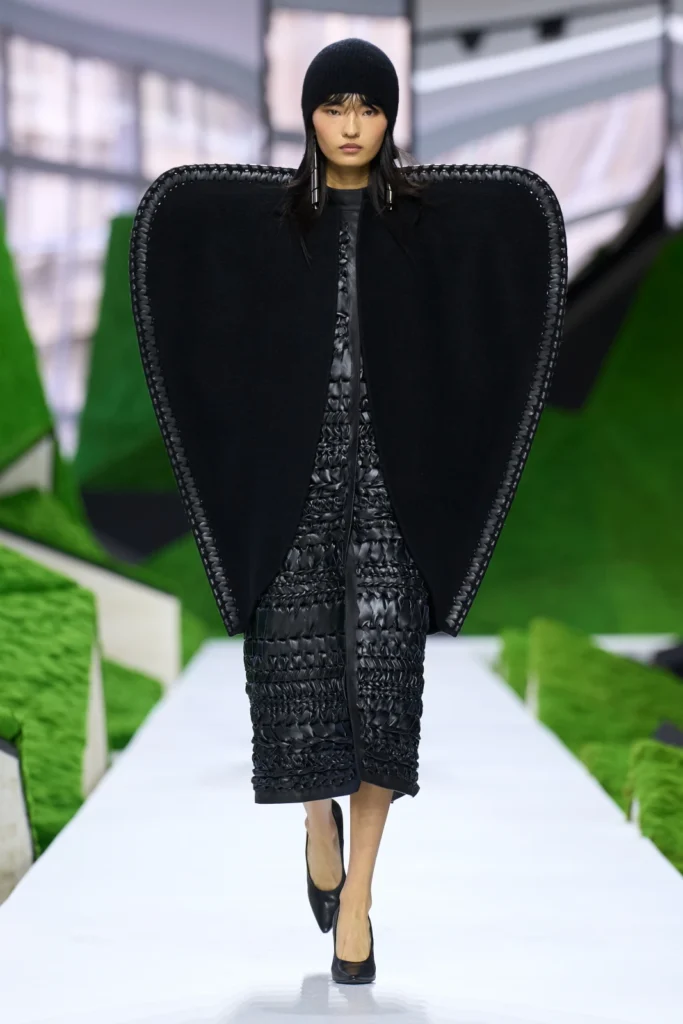
Ghesquière’s proposition here goes further than borrowing from the natural world, which fashion has always done. He is treating nature as a system, one that generates its own rules about how clothes should be built, what they should protect against, and what stories they should carry. The result is a collection that feels grounded and forward-looking at the same time.
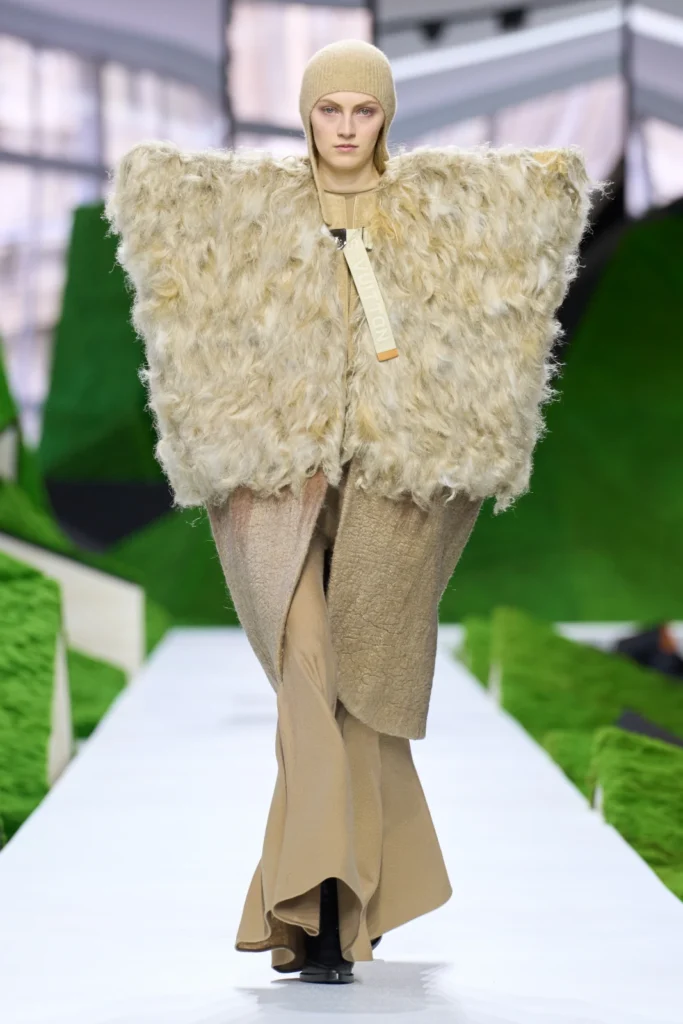
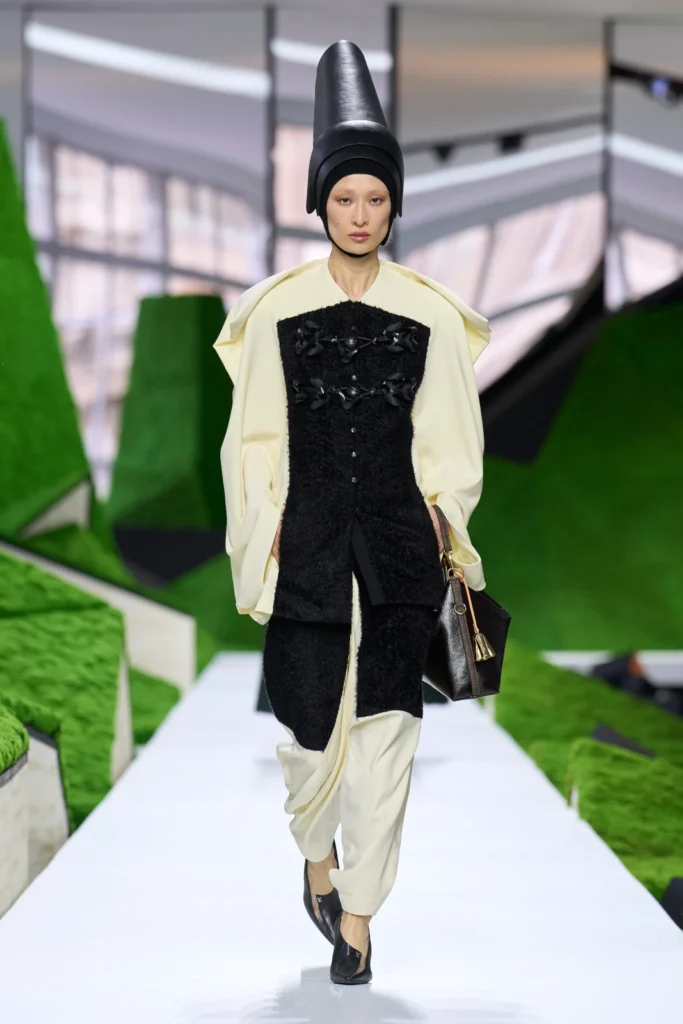
Pulling from traditional costume, Ghesquière built clothes that carry evidence of lives lived outdoors. His reference point was the idea that what people wore was always shaped by where they lived, what weather they faced, and what they needed to move through.
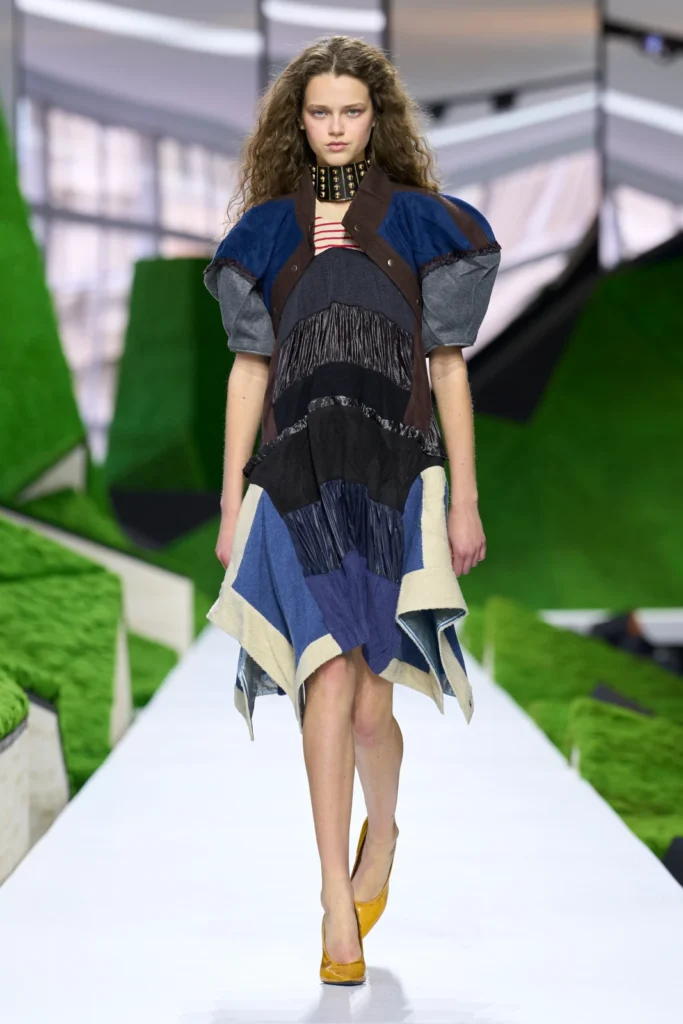
Across his 15 years at Balenciaga and now into his second decade at Louis Vuitton, Ghesquière has consistently returned to garments built with purpose, structures borrowed from sportswear and protective dressing. Super Nature pushes that thinking further back in time, closer to folk dress, to clothes that hold the memory of how communities have actually lived across generations.
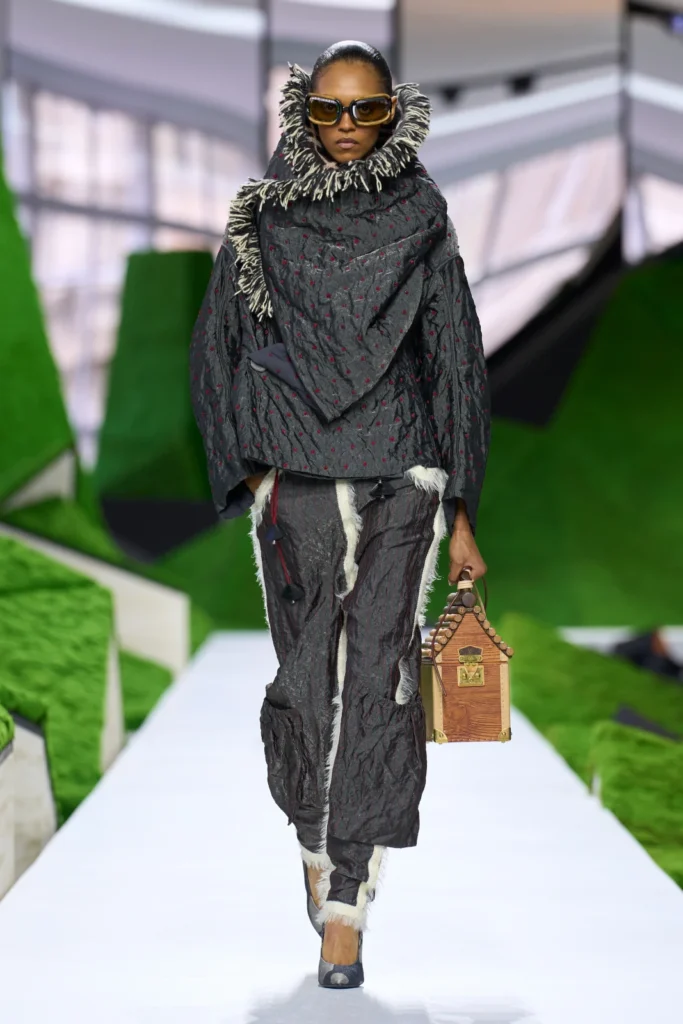
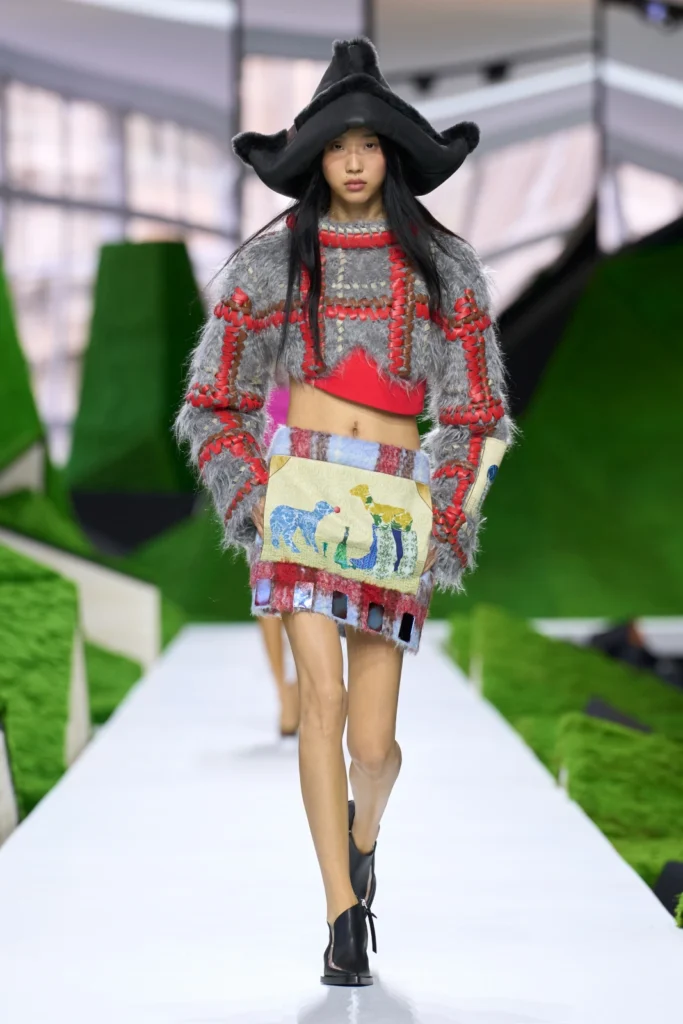
Animals and plants appear not as surface decoration but as something more embedded. Animalier patterns are woven directly into canvas and denim. Flowers are shaped from leather and used as both ornament and protection.
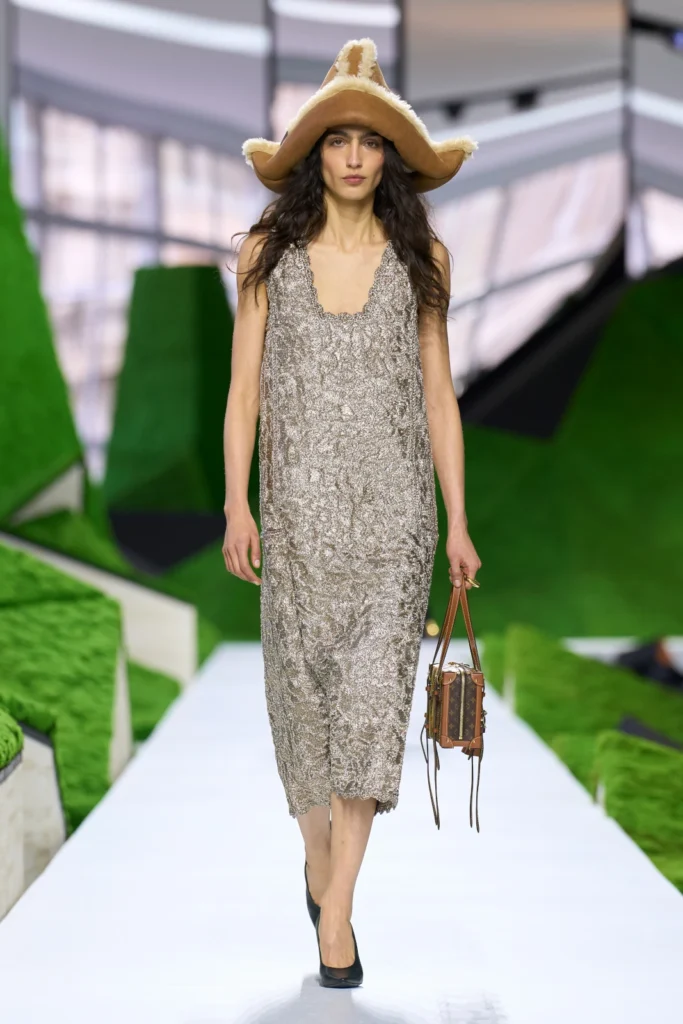
Ghesquière works through collage, pulling together materials and references from different places and times within a single garment, creating what the house describes as a mapping of “a topography of the body.” These clothes feel like they have traveled.
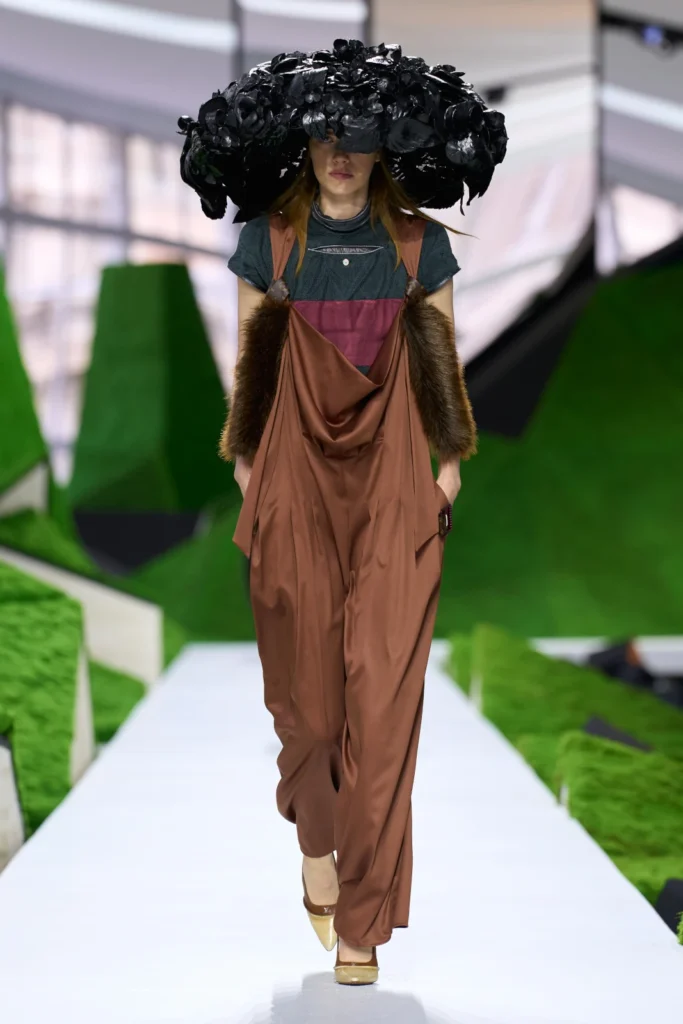
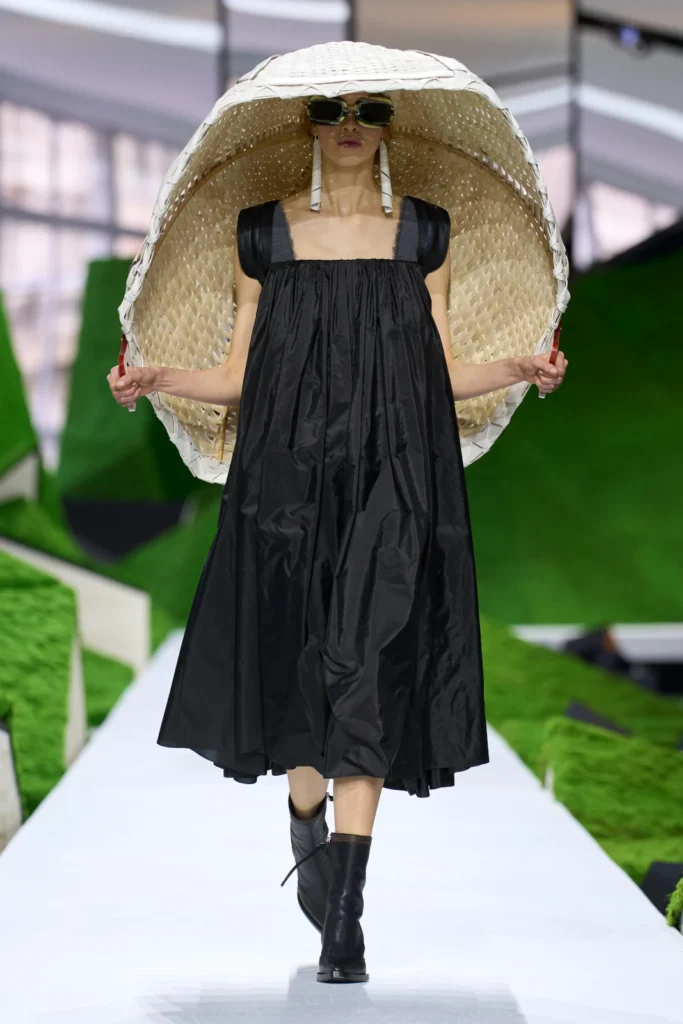
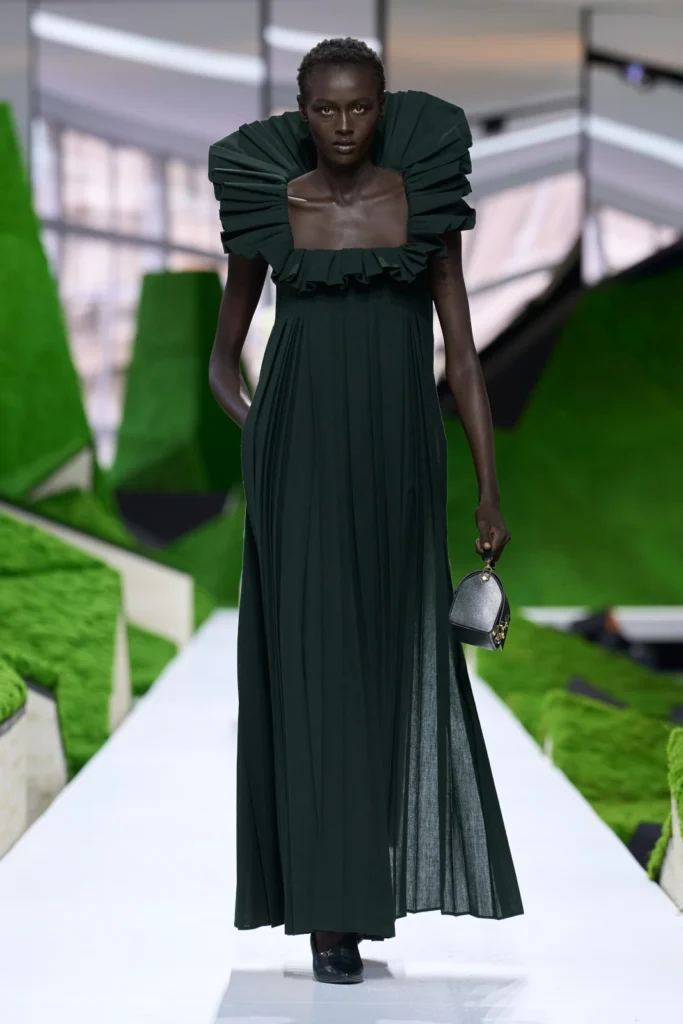
Warm Mongolian style hats, a ‘hut’ handbag with log roof, Asian basket hats to protect from rain, wide shouldered capes inspired by the clothing of people living in mountainous regions in Central Asia – the collection is duly inspired by historical sartorial choices.
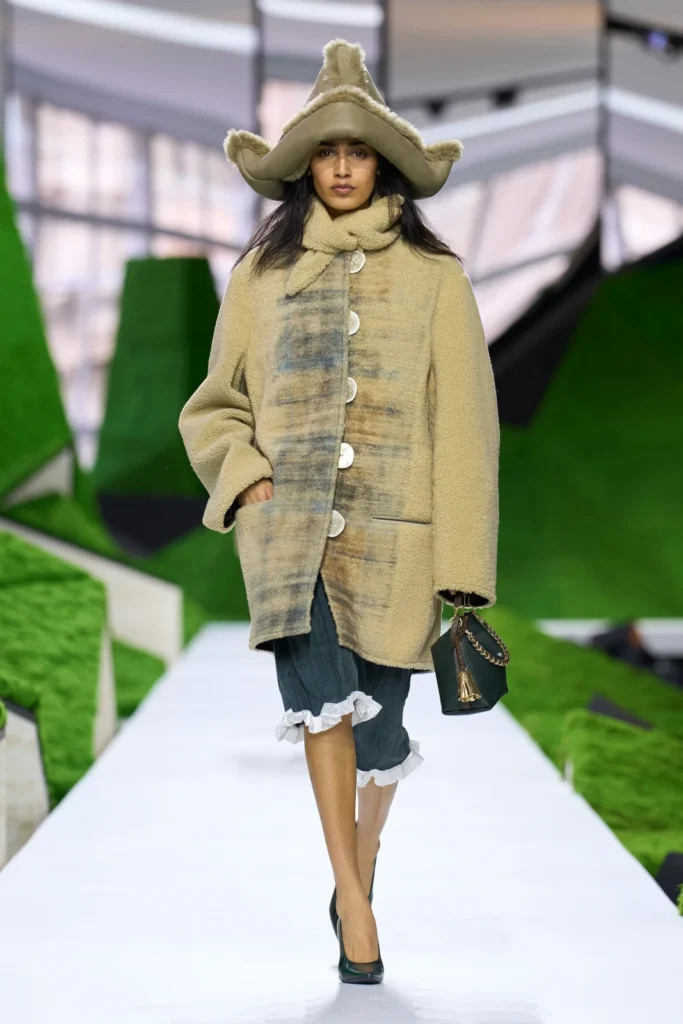
Material development is where the collection makes its most ambitious technical claims. Ghesquière frames the approach as hyper-craft: not copying nature, but transforming it. Three-dimensional printing and resins produce buttons that look like minerals pulled from rock, heels that resemble antlers. Entirely new fur-like textures are developed from plant-based materials. Most striking is the leather, grained, grooved, and treated to look and feel like wood, while remaining soft and wearable. It is a material that should not exist, and yet it does.
Accessories bring the collection’s thinking into the house’s oldest traditions. Originally designed in 1932 to carry champagne bottles, Louis Vuitton’s Noé bag returns here in its original proportion and colorway. It is a restoration, not a reinterpretation. It is one of the house’s earliest silhouettes, and bringing it back to its source scale is a deliberate choice about the value of the original over the updated. Travel bags and exploration pieces sit alongside it, keeping Louis Vuitton’s identity as a maker of luggage and trunks, a craft the house has practiced since 1854.
Jewelry holds multiple histories within a single object. A reinterpretation of Man Ray, filtered through a Modernist parure and expressed in the house’s own visual language: earrings, a ring, and a collier studded with the nail-heads of a Louis Vuitton trunk. Surrealist art, modernist design, and the house’s trunk-making heritage are all present at once, none more important than the other.
For the show’s setting, production designer Jeremy Hindle, known for his work on both seasons of Apple TV+’s Severance (2022, 2025), turned the historic Cour Carrée into what the house describes as a neo-landscape, a built abstraction of the natural world seen through a future-facing lens. Inside and outside blurred. Each model’s walk became a kind of journey through what the house calls “a fluctuating, living pastoral painting, a modern allegory, a sci-fi fable.” Hindle’s signature on Severance is environments of precise, almost clinical control. So placing that eye inside a collection about raw terrain and wilderness produces a specific kind of tension that feels very intentional.
Ghesquière has been direct about what this collection is not. It is not a retreat from modern life or a romantic fantasy about escaping into nature. It is a response to the present, one that recognizes the natural world and the digital world as being in constant conversation. Clothes shaped by landscape, by a sense of belonging, and by what the house calls “fundamental truths, past and present,” form a new kind of folklore. Ghesquière puts it succinctly: “It is not an escape from our realities, but an echo of them.”