

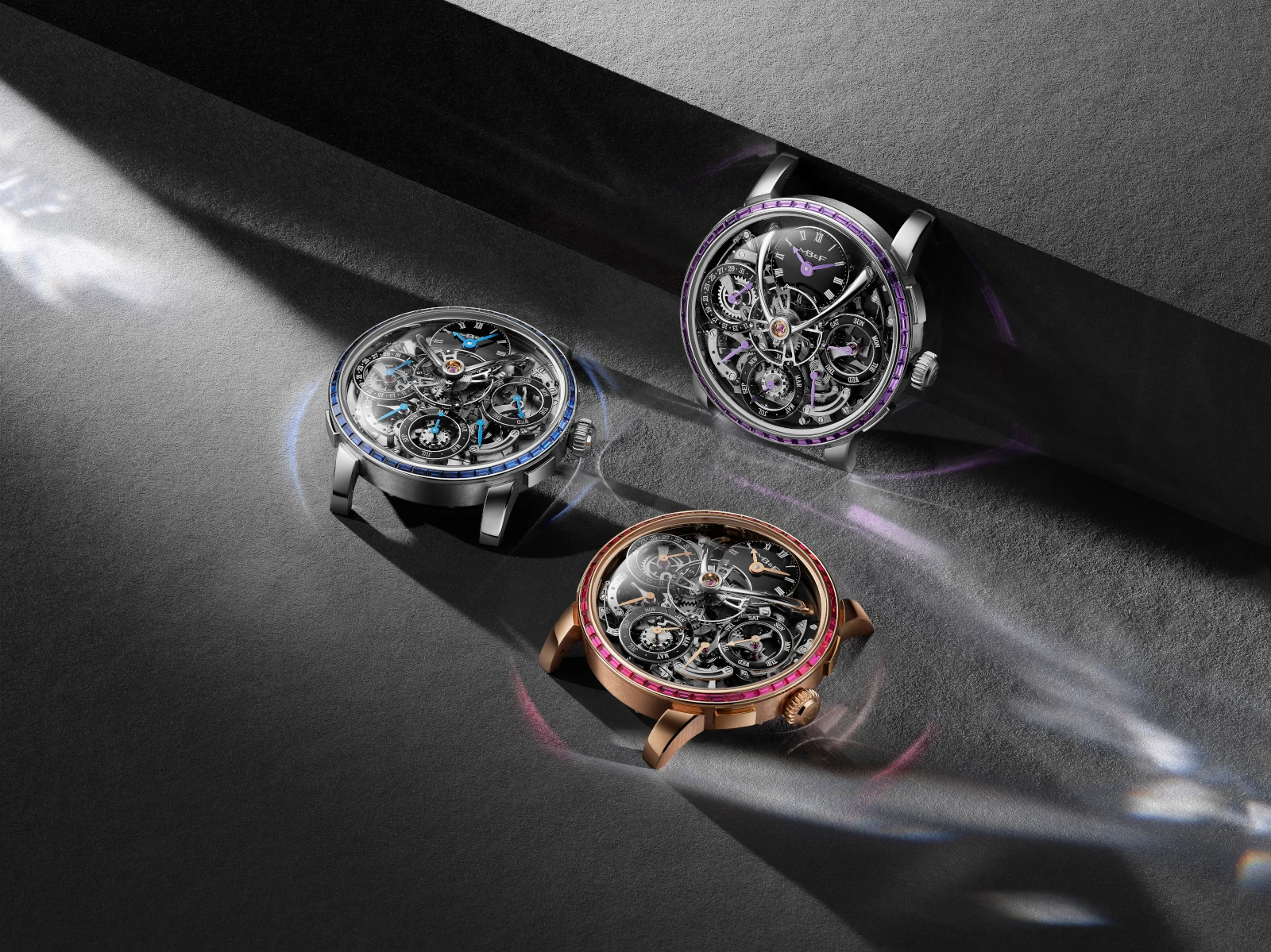
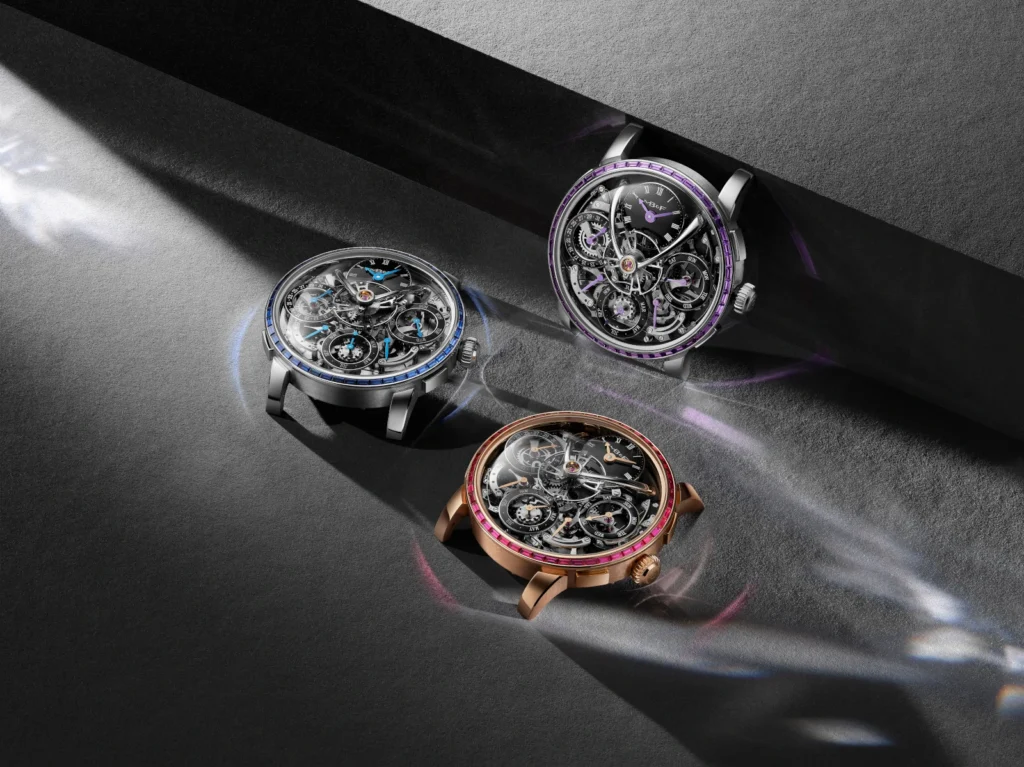
MB&F is releasing three new versions of its LM Perpetual in 2026, each featuring a bezel set with coloured gemstones, in what the Geneva-based brand is calling the Chromatic Editions.
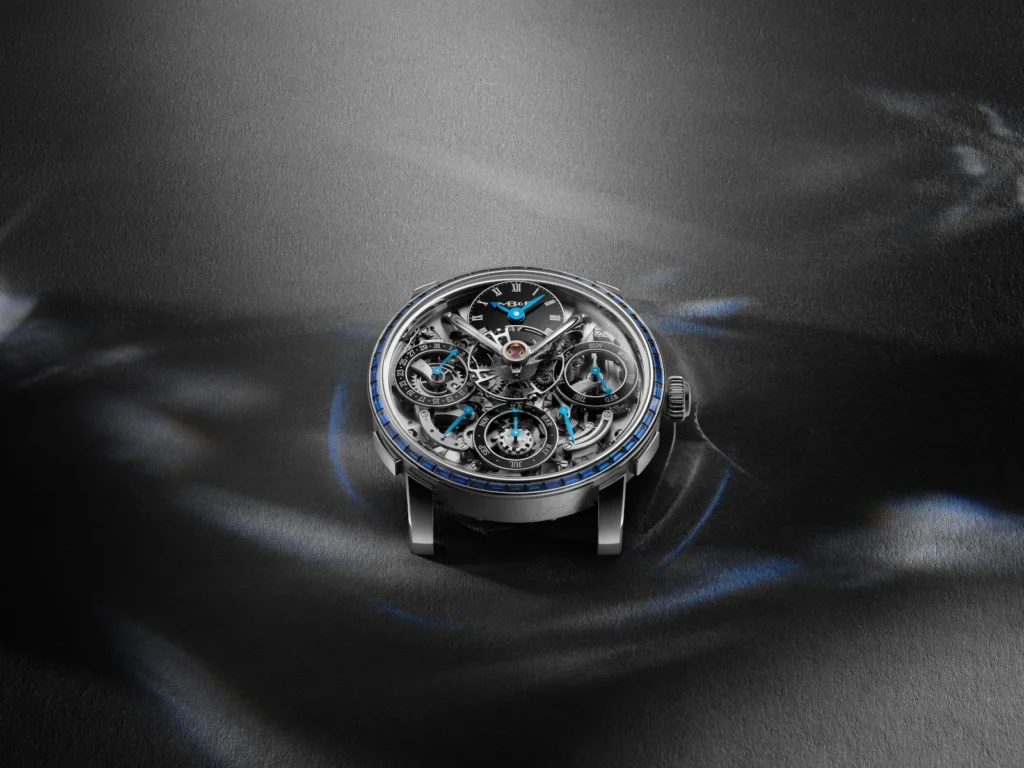
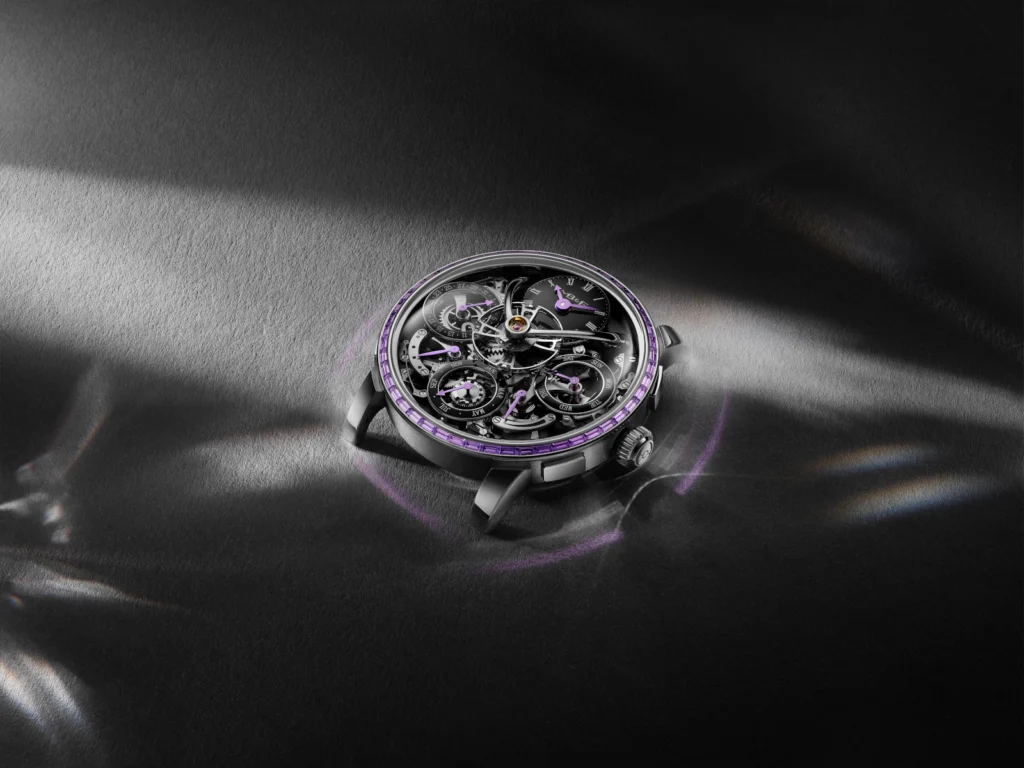
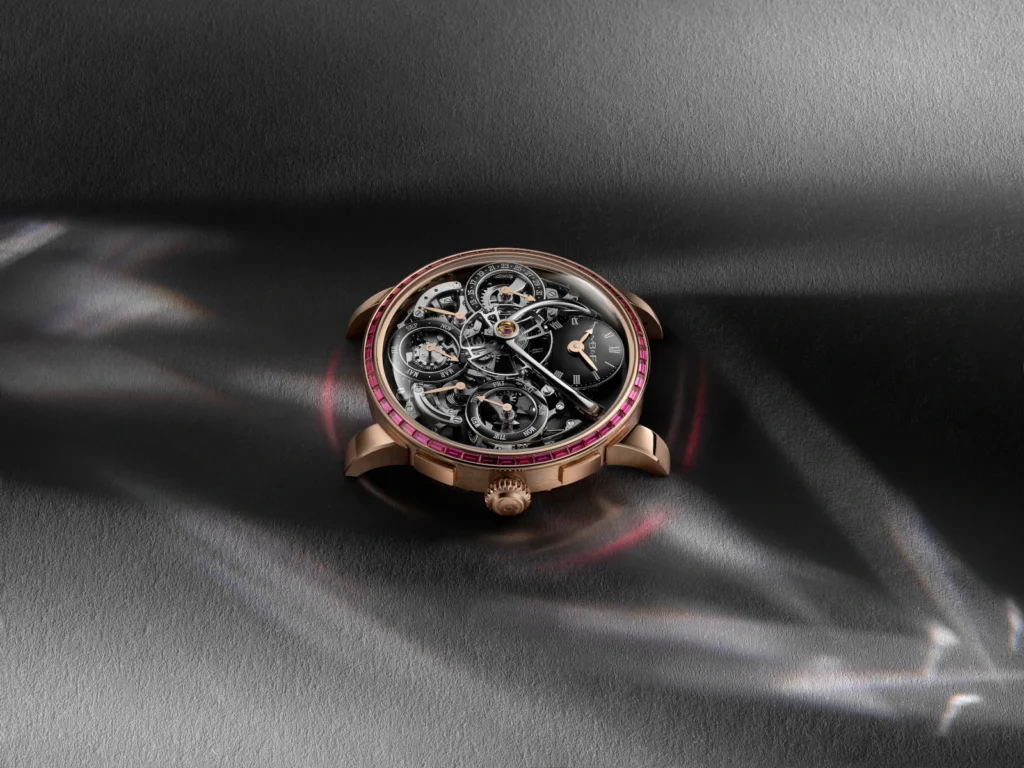
Two of the three are built in 18k white gold, one set with 48 baguette-cut blue sapphires sourced from Madagascar and Sri Lanka, and the other carrying purple sapphires from the same regions. A third is crafted in 18k red gold with a bezel set in red rubies from Mozambique. All 48 gemstones on each bezel were hand-set by STG Creation, a Geneva-based workshop and long-term friend of the brand. Each edition is limited to just eight pieces, making the total Chromatic production 24 watches across all three variants. The stonework was added without changing the case diameter.
The hands are treated with the same colour as the case. Purple PVD-treated hands for the purple sapphire edition, blue PVD for the blue sapphire version, and 5N PVD hands for the ruby edition to match the tone of the red gold case.
MB&F was founded in 2005 by Maximilian Büsser, who had previously served as general manager of Harry Winston Rare Timepieces. The Legacy Machine collection launched in 2011 with LM No.1, followed by LM2 and LM101, and LM Perpetual arrived as the fourth watch in that line in 2015. “What would have happened if I had been born in 1867 instead of 1967? In the early 1900s the first wristwatches appear, and I would want to create three-dimensional machines for the wrist, but Grendizers, Star Wars, and fighter jets would not have been around for my inspiration. But I do have pocket watches, the Eiffel Tower, and Jules Verne, so what might my 1900s machine look like? It has to be round and it has to be three-dimensional,” Büsser once said.
LM Perpetual was developed over three years in collaboration with Stephen McDonnell, an independent watchmaker from Northern Ireland who had contributed to MB&F’s very first timepiece, Horological Machine No.1. The movement was built to address problems that Büsser felt conventional perpetual calendars had never properly solved. “I call perpetual calendars boomerang watches because they come back for repair so often. The mechanisms jam, block, break, or jump days when they shouldn’t,” said Büsser.
Conventional perpetual calendars sit as modules on top of existing base movements and are coordinated by a grand levier, a long lever that runs across the complication and shifts as the date changes. This system assumes every month has 31 days and skips through dates that do not exist at the end of shorter months. A calendar moving from February 28 to March 1 scrolls through a February 29, 30 and 31 that are not real. Setting the leap year on a traditional perpetual calendar requires manually scrolling through up to 47 months. The grand levier also means that perpetual calendars require a full dial, making it impossible to support subdials with hidden studs since those studs would block the lever’s motion entirely.
McDonnell’s mechanical processor works differently. Built from a series of superimposed discs and driven by a planetary cam, it uses 28 days as the default since every month has at least that many, and adds the extra days each individual month actually needs. Nothing skips. A dedicated quickset pusher handles the leap year directly within the four-year cycle. The pushers that allow calendar adjustment automatically switch off during the date changeover, removing any risk of damage from pressing at the wrong moment. All 581 components are built as a single fully integrated calibre with no module and no base movement, fitted into virtually the same case size as LM No.1.
Removing the grand levier changed what the dial could look like. Without a lever running across the movement, the full perpetual calendar mechanism could be placed directly on the movement plate, presented on a dial-free display and read from above. Hours and minutes sit at 12 o’clock, nestled between the arches of the suspended balance. Day of the week sits at 3 o’clock, power reserve at 4, month at 6, a retrograde leap year indicator at 7, and the date at 9.
All subdials are skeletonised except for the time indication, and they appear to hover above the movement because they sit on hidden studs, a construction not possible in a conventional grand levier system since those studs would block the lever. The balance wheel is suspended visibly at the top of the watch, connected to the escapement on the back of the movement by what MB&F describes as likely the world’s longest balance staff. Turning the watch over reveals the escapement animating the view through the caseback, with the hand-finished bridges and plates as the visual draw from that side. LM Perpetual won the Best Calendar Watch Prize at the Grand Prix d’Horlogerie de Genève in 2016.
LM Perpetual Chromatic Editions are priced at CHF 228,000 (approximately US$ 312,000).