
Soho House has arrived in Tokyo, and its first Japanese outpost sits in Aoyama, one of the city’s most design-conscious and culturally rich neighbourhoods, just a short walk from Omotesando.
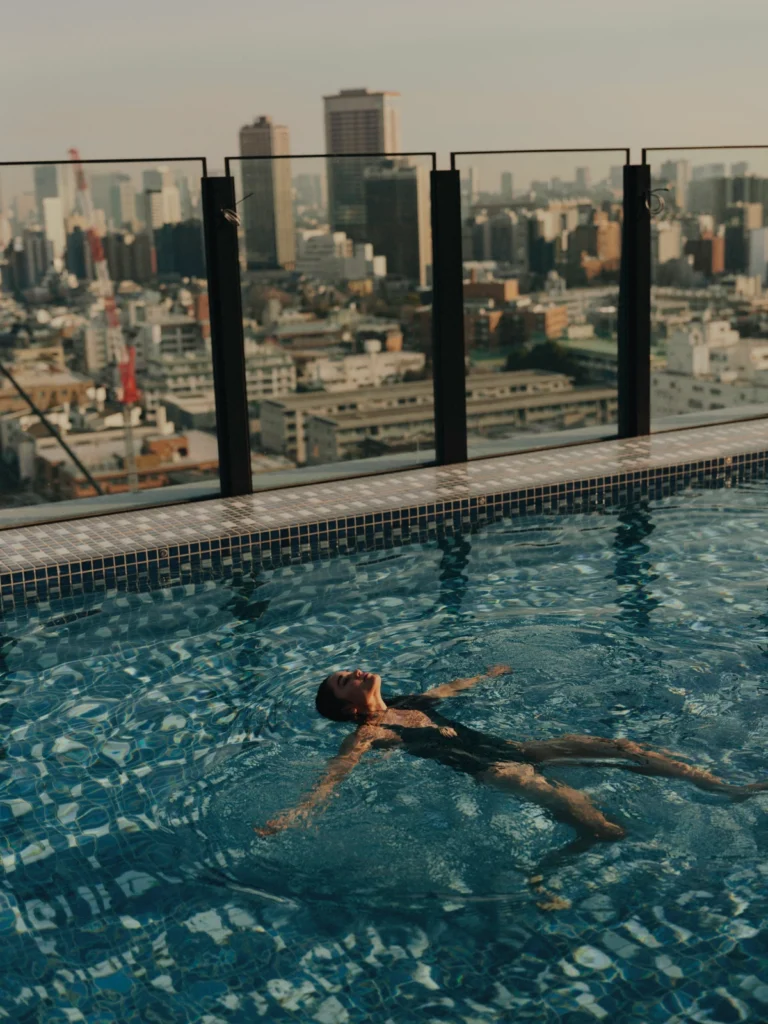
Aoyama has long been home to flagship stores, considered dining, and some of Tokyo’s more design-conscious businesses. Soho House Tokyo spans 75,000 sq ft across a modern high-rise, with rooftop views of Tokyo Tower and, on clear days, Mount Fuji.
Rather than importing its established formula wholesale, Soho House has built this location as a meeting point between its own maximalist design identity and Japanese craft traditions. Members enter through a ground floor reception finished in warm, earthy tones. Custom lighting sourced from Osaka hangs overhead. A desk hand-crafted from Japanese lacquer panels, made in Kyoto by Makino Urushi, anchors the space. Walls are clad in handmade washi paper by KAMISM.
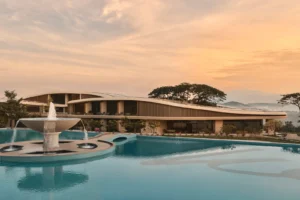
Two club floors on the 13th and 14th levels are connected by a spiral staircase. A rooftop pool and terrace, a wellness studio, event spaces, and 42 bedrooms complete the House.
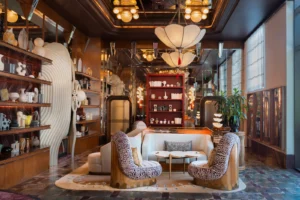
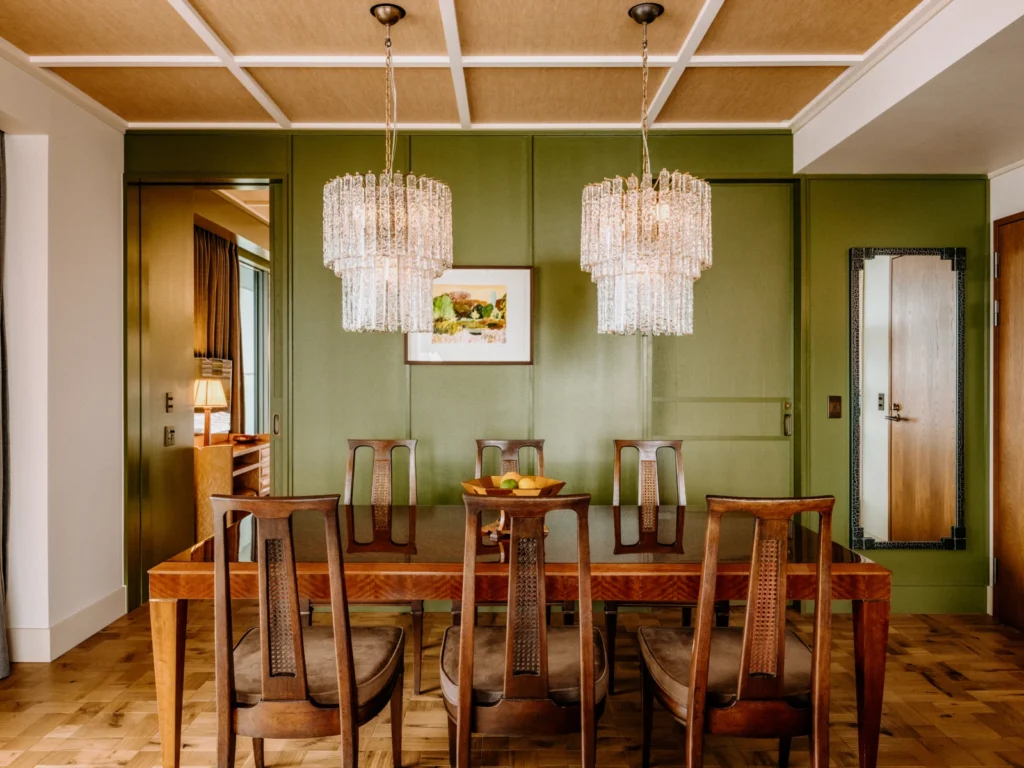
On the 13th floor, the club lounge is finished in a deep burgundy red drawn from traditional Japanese lacquer, placed against British wood panelling. A ceiling referencing Tatami patterns and a bar designed to echo the form of Japanese roof tiles give the space a layered, textured quality. On the 14th floor, the design is more direct in its contrasts. Two Murano chandeliers sit against Japanese washi lights, and a large central leather-covered bar is topped with an onyx stone surface in ochre and green tones. A custom DJ booth has been installed, positioning the floor as a functioning cultural venue beyond its use as a dining and drinks space.
At the far end of the 14th floor, the Cabaret Room is lined in matcha green silk Moire wallpaper, with a bar coated entirely in Japanese black and green lacquer. It is a flexible space built for live performances, screenings, presentations, and drinks receptions. Its bespoke carpet pattern was drawn from the Japanese character for home, 内, a motif that reappears on bedroom headboards and seating upholstery across the House.
Food has always been a serious part of the Soho House offering, and in Tokyo it carries additional weight. Tokyo holds more Michelin stars than any other city in the world, and the expectations that come with that are built into how the city eats. On the club floors, the menu is built around seasonal ingredients and runs a mix of European comfort food and local Japanese dishes. Weekly-changing Donburi Rice Bowls, Prawn Scotch Egg made okonomiyaki-style, Kaisendon with chutoro, negitoro, akamizuke, egg yolk, and wasabi, and Roast Chicken served with maitake sauce, mash, and chicken scratchings are all part of the menu.
On the 13th floor, an open sushi counter serves lunch and dinner under Kunihiro Shinohara, the House’s head sushi chef, who works in the Edomae tradition. Edomae is a style of sushi that developed in Tokyo during the Edo period, built on curing and seasoning fish with precision rather than serving it entirely raw. It is one of the most technically demanding styles in Japanese cuisine.
On the same floor, the House Brasserie takes a different approach, offering British dishes made with seasonal Japanese ingredients and designed for sharing. A Chicken Pot Pie with morels and truffle, Fatty Tuna Brioche with fruit tomato and English mustard, Unzen Pork Sausage Rolls with a black garlic HP sauce, and a Sticky Toffee Pudding made taiyaki-style with Okinawan caramel sauce make up some of the signature dishes. Cocktails served throughout the House include the Highball Fifty, a locally crafted drink that brings together bright botanicals, floral jasmine, and green shiso, balanced by cherry sweetness.
The wellness studio on the 13th floor has floor-to-ceiling windows looking out over the city. It splits into two zones, one for mat-based practices including Pilates, yoga, and low-impact HIIT, and the other built around Reformer Pilates, cardio tramp, and jump board sessions. A food and drink menu covers smoothies, Sencha ceremonial green tea, turmeric shots, low-fermentation kombucha, and matcha.
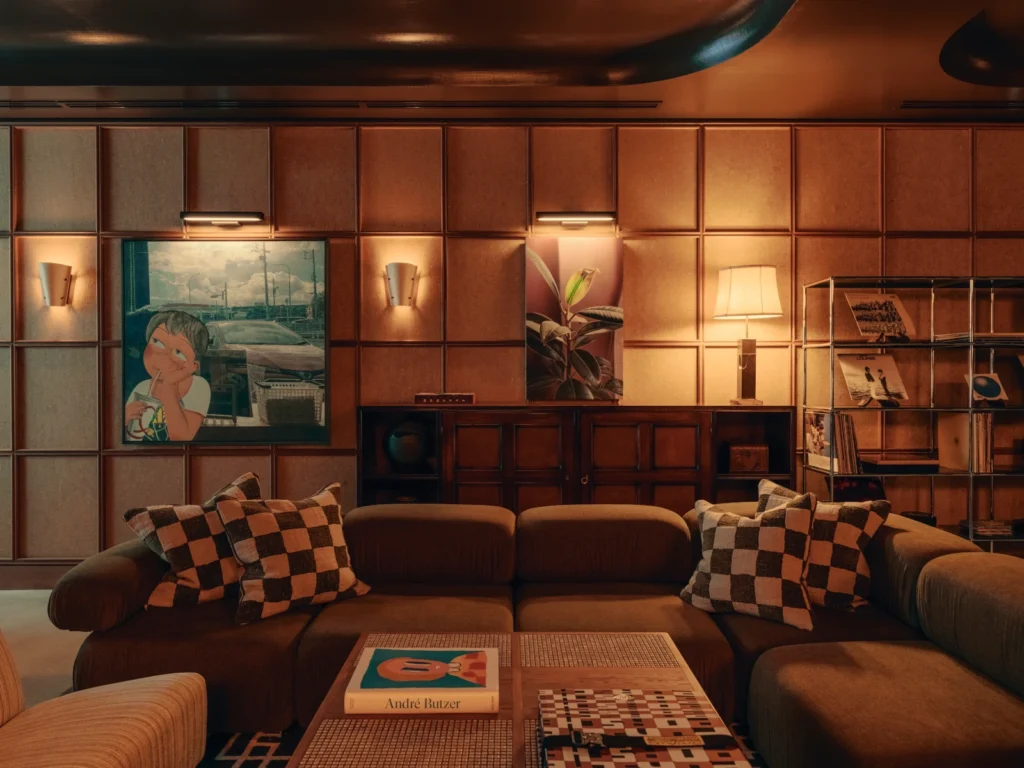
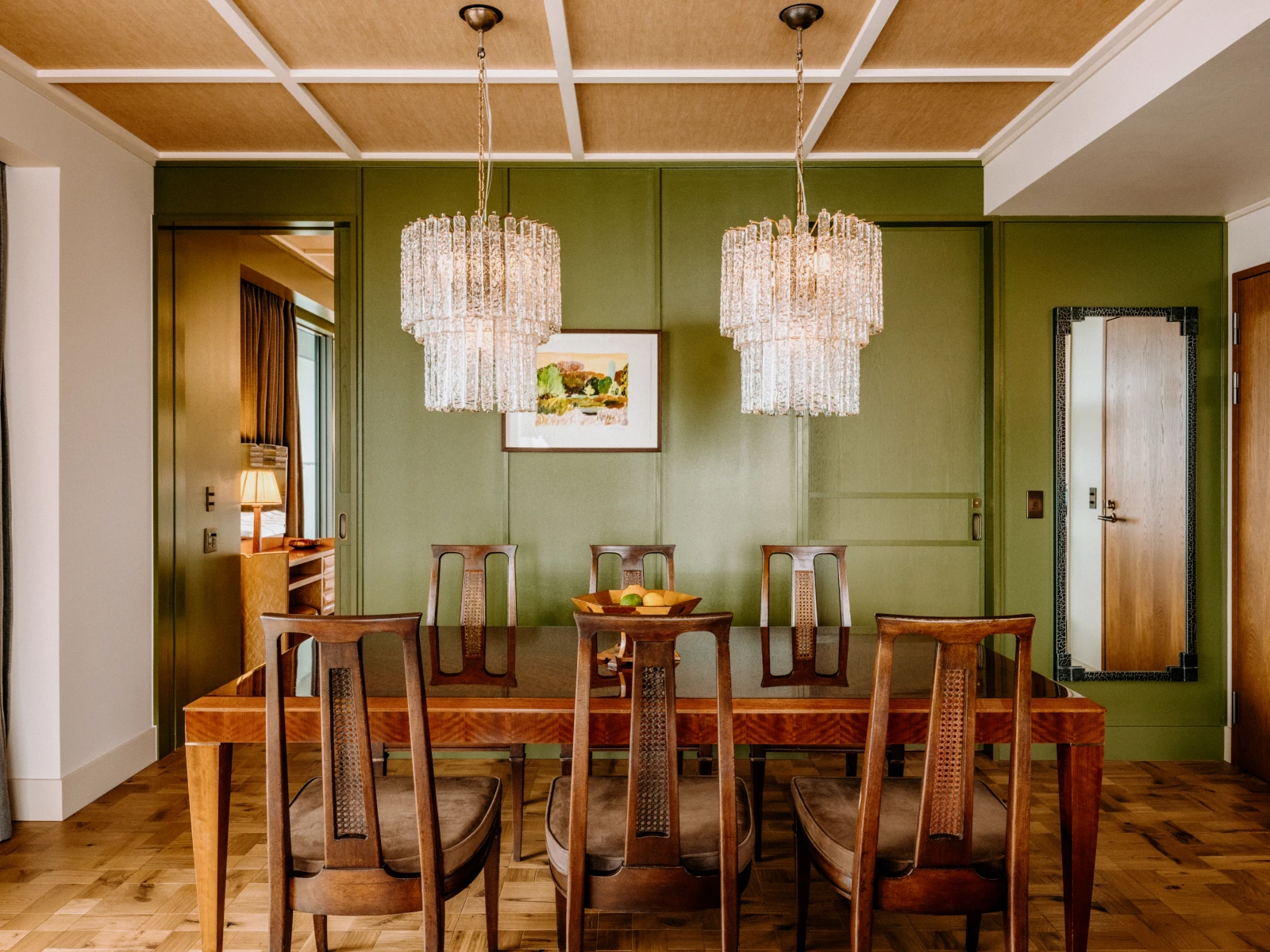
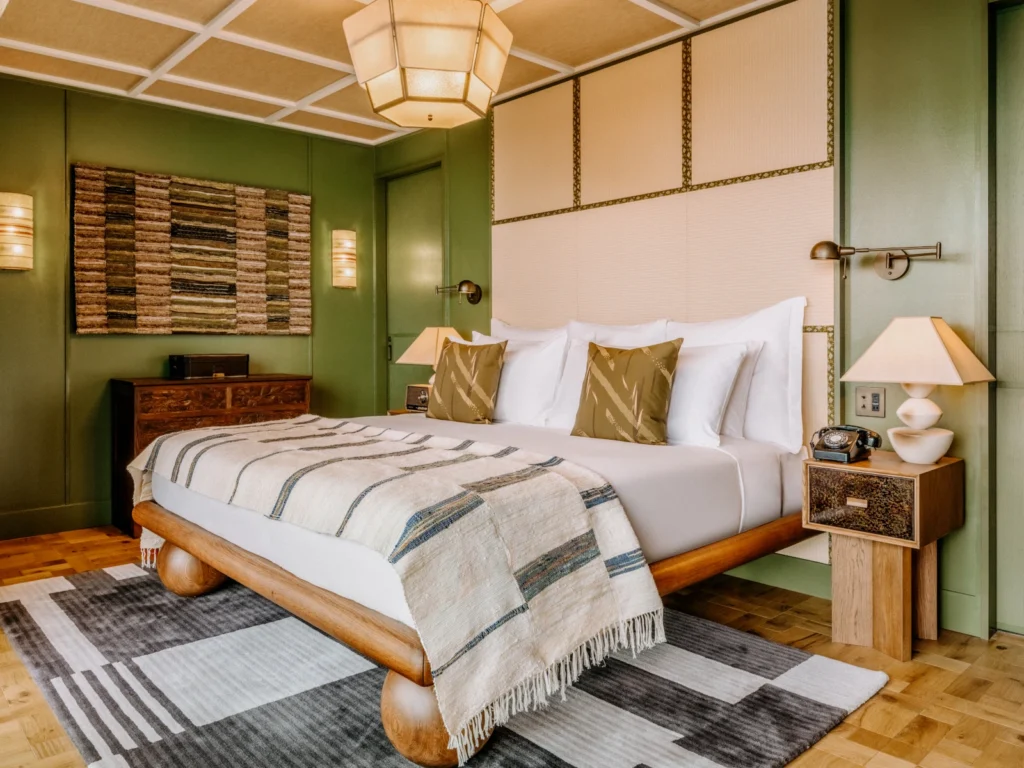
Forty-two bedrooms ranging from Cosy to Extra Large are finished in a Bancha colour palette, a reference to the earthy green tones of roasted Japanese tea. Every room has bespoke soft furnishings made from upcycled vintage kimono fabrics and sakiori weaving, a traditional Japanese textile technique that repurposes worn fabric into new cloth.
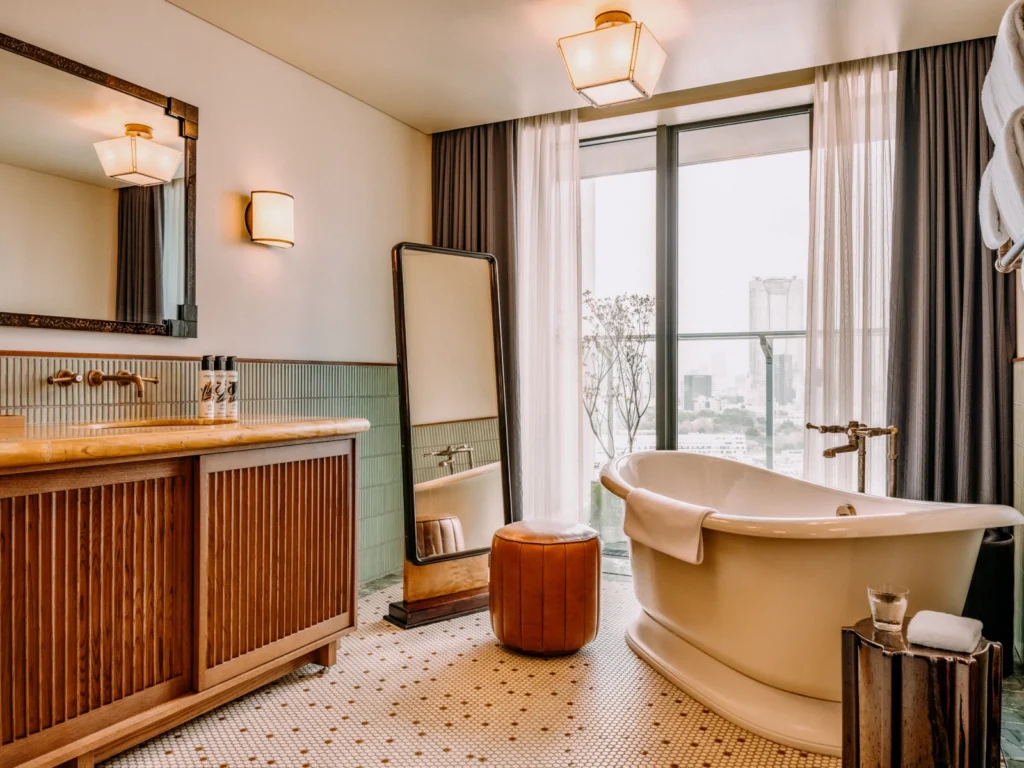
Each room has a balcony with city views, parquet flooring inspired by Tatami patterns, lacquered bedside tables by Makino Urushi, mirror frames in a Kara-nuri finish, and Nagoya tiles in the bathrooms. Corridor walls on the bedroom floors are lined in custom-made washi paper inspired by Japanese denim indigo blue.
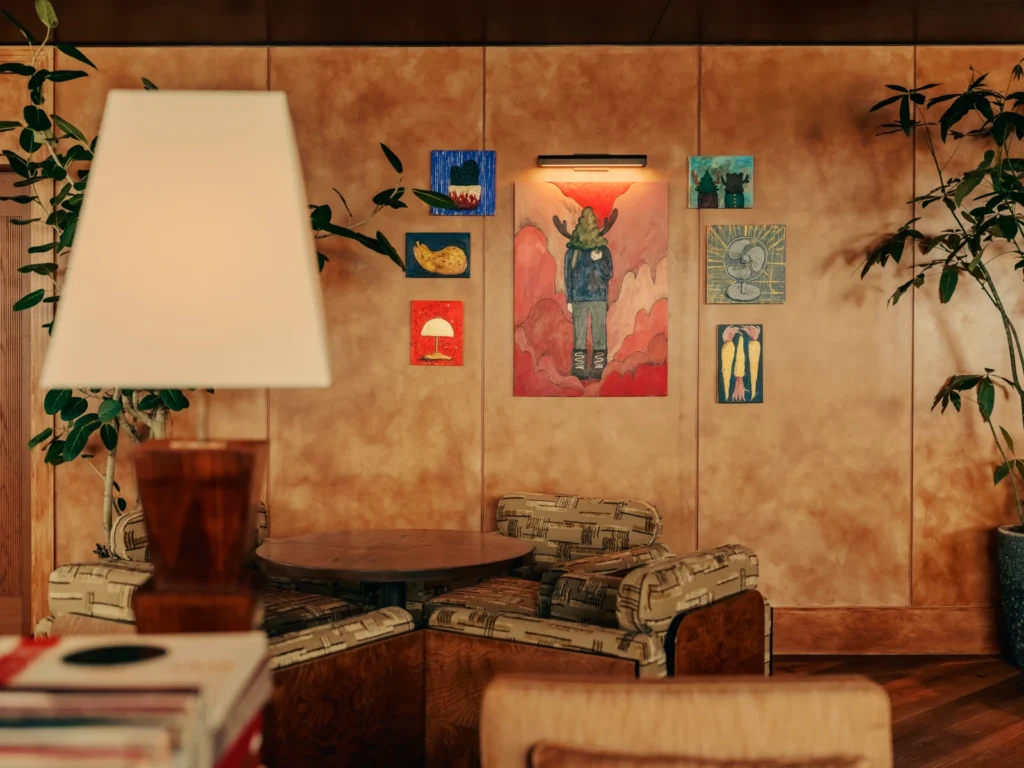
More than 40 artists born, based, or trained in Japan have contributed to the House’s art collection, covering different media and generations. A third created new commissions specifically for the space. Toru Otani has produced a contemporary reimagining of a traditional room divider. Gabriel Hartley has installed a ceramic work in the private dining area. David Horvitz has made a site-specific version of his Nostalgia series for the club bar. Hiroya Kurata created a limited-edition artwork series for the bedrooms. Institutional artists Yuko Mohri and Ryoji Ikeda are also part of the collection. Ikeda’s data.scape [universe] is the largest wall-based new media installation in the collection to date.
For the staff uniforms, Soho House partnered with Onitsuka Tiger on a collaboration drawing from the brand’s Japanese denim DENIVITA series. Onitsuka Tiger, which predates its later life as part of the ASICS lineage and has since been re-established as a standalone luxury label, carries real cultural weight in Japan. It is a partnership that reflects a genuine understanding of local creative identity.
Soho House’s mentorship programme has supported more than 2,000 young creatives from lower-income and underrepresented backgrounds across 23 cities globally since 2018. It pairs members with emerging creatives to offer guidance, contacts, and career support. In Tokyo, the programme will launch from September 2026 in partnership with OWN Academy.