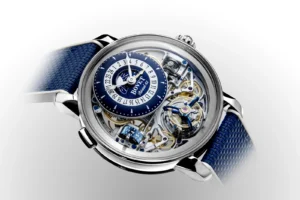


Geneva Watch Days 2025 opened with a statement from TAG Heuer, as the Swiss watchmaker introduced innovations that challenge centuries of tradition and set a new direction for mechanical timekeeping. The brand revealed two major launches that underline both its engineering depth and creative direction: the TH-Carbonspring oscillator, a milestone in mechanical watchmaking, and the Carrera Astronomer, a timepiece that reinterprets the moonphase complication through a modern, scientific lens.
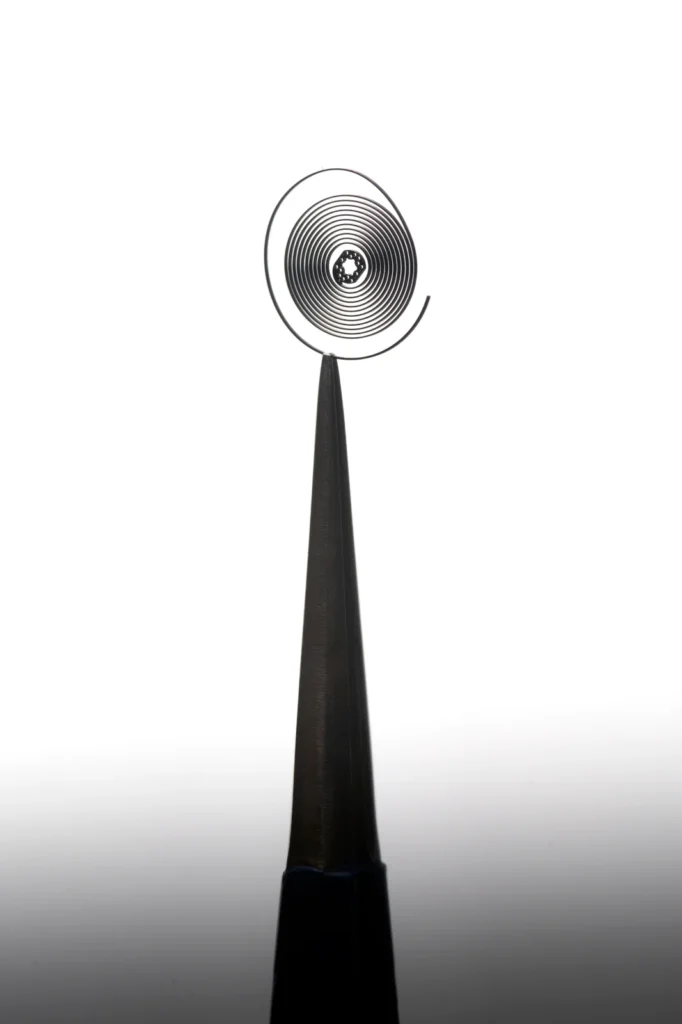
The TH-Carbonspring has been developed entirely in-house at the TAG Heuer LAB and represents the result of almost ten years of research and testing. The innovation replaces conventional hairspring technology with a carbon-based alternative that improves environmental resistance, shock protection, and precision performance. Its properties make it resistant to magnetism, less prone to disruption from daily shocks, and lighter in weight, which reduces inertia and enhances chronometric stability. These advantages are protected by four patent applications, with one already granted and three pending.
Emmanuel Dupas, TAG Heuer technical director, said, “Given the scale and complexity of the goal we set ourselves at the TAG Heuer LAB, the innovation process has involved countless steps and at least as many failures as successes. It starts with intuition, then a hypothesis, then development, and then testing. Each result carries weight. Sometimes a result gives you confidence in your hypothesis. Other times, it goes against it and your hypothesis breaks down. There are no short cuts. Only hard work, backed by a healthy level of scientific doubt and the competences of your team.”

The launch of the TH-Carbonspring recalls the historical trajectory of watchmaking. From Christian Huygens’ invention of the balance wheel and hairspring in 1675, to the adoption of alloys and later silicon in the 20th century, the regulating organ of a watch has always defined precision and progress. TAG Heuer’s approach signals a move beyond silicon, introducing a new material that could influence the next chapter of the 500-year story of mechanical watchmaking. Chief executive Antoine Pin described it as “an epic, heroic achievement that only a brand Designed to Win could have pulled off,” while confirming that further technologies are already in development to build on this foundation.
To mark the debut of the TH-Carbonspring, TAG Heuer has created two limited-edition watches in its most iconic collections: the Monaco Flyback Chronograph TH-Carbonspring and the Carrera Chronograph Tourbillon Extreme Sport TH-Carbonspring. Both are cased in forged carbon, with dials carrying spiral motifs that echo the hairspring itself.
The Monaco Flyback Chronograph runs on the in-house TH20-60 Calibre, a chronometer-certified movement with an 80-hour power reserve, while the Carrera Tourbillon Extreme Sport carries the TH20-61 Calibre, an automatic chronograph tourbillon with a 65-hour reserve. Each model will be produced in just 50 numbered pieces, presented in bespoke packaging, and designed with carbon detailing across cases, indexes, and pushers to match the technical spirit of the innovation they introduce.

Alongside this breakthrough, TAG Heuer also revealed the Carrera Astronomer, a contemporary exploration of astronomical watchmaking. The collection introduces a moonphase complication that shows seven lunar stages on a rotating disc, advancing daily at 1:00 AM to stay synchronized with the real lunar cycle. This approach emphasizes accuracy and clarity, breaking from the abstract symbolism that often defines traditional moonphase designs.
The Astronomer connects back to TAG Heuer’s history in space exploration, most notably John Glenn’s orbital flight in 1962, when the astronaut wore a modified Heuer stopwatch during NASA’s Friendship 7 mission. That legacy of performance beyond Earth now continues with a collection that measures celestial cycles in mechanical form. The Calibre 7 movement, with a 50-hour power reserve, drives the watch’s display, while the caseback carries an engraved astronomical observatory and Victory Wreath as a nod to its inspiration.
The Carrera Astronomer arrives in three variations. The stainless-steel model with a silver dial and beads-of-rice bracelet offers a clean and modern look. A second edition, limited to 500 numbered pieces, introduces turquoise details on a silver dial with a grey leather strap, combining luminous accents with a futuristic aesthetic. The third model, also limited to 500 pieces, is a two-tone edition that blends stainless steel with 18K 5N rose gold, paired with a bracelet in the same configuration. Each carries a 39-millimeter case size that balances elegance with everyday wearability.
The dual launch positions TAG Heuer to expand its reach across different watchmaking frontiers. The TH-Carbonspring establishes a new regulating organ that could shape the performance standards of mechanical watches for years to come, while the Carrera Astronomer shows how even traditional complications can be reframed for a contemporary audience. Both projects reflect the same mindset that guided TAG Heuer’s development process—long-term focus, resilience, and a determination to deliver ideas that go beyond convention.