
Not every journey is for Instagram. Some are made for something far more personal – to reconnect with who we are, and more importantly, where we come from.
In the last year or so, I’ve seen a quiet trend among people my age – 20-somethings from metro cities taking trains, buses, and even flights to the small towns and villages their parents or grandparents left behind decades ago. This isn’t a nostalgia trip. It’s something deeper. It’s root tourism – a kind of travel that isn’t about ticking off destinations, but rather tracing where your story began.
I come from Bihar, and for most of my life, I saw people leaving the state – for jobs, education, marriage, opportunity. But now, I’m seeing a return, not out of necessity, but desire. Friends who grew up in Noida or Mumbai are suddenly visiting their ancestral homes in Gaya or Darbhanga, wanting to hear their grandmother’s Bhojpuri in full flow, eat litti chokha from a local haat, or just sit by a pond their parents once played around. These aren’t dramatic homecomings – they’re small, personal journeys, and they matter.
Unlike heritage tourism, which is usually curated for outsiders, root tourism is inward-looking. It’s not about grand palaces or heritage walks led by guides. It’s about discovering the lane your mother walked down to school, visiting the old railway crossing your grandfather worked at, or seeing the neem tree that once shaded your family’s home. In a world of fast-paced travel, where even wellness is packaged, this kind of travel is refreshingly slow, raw, and full of feeling.
This is not about romanticising rural life. It’s about bridging a very real cultural gap.
For many in Gen Z and younger millennials, there’s a cultural dislocation we carry – a feeling that we don’t quite belong to the towns our parents left behind, nor to the cities where we live now. We speak hybrid languages, celebrate festivals in fragments, and know our traditions mostly through second-hand stories. Root tourism offers us a way to fill in the blanks. Not necessarily to adopt old ways, but to understand them – and decide for ourselves what to carry forward.
I know someone who recently spent three weeks in a small village in Tamil Nadu where his great-grandfather once lived. He didn’t have a fixed itinerary – just mornings spent with elders, afternoons exploring temples, and evenings trying to learn the local dialect. Another friend went to a forgotten part of Rajasthan where her family used to run a small jaggery business. She came back not just with photographs, but a handwritten recipe her great-aunt still uses.
This is not about romanticising rural life. It’s about bridging a very real cultural gap. In many cases, the families we visit during these trips are surprised – sometimes even puzzled – by our desire to reconnect. But those same people eventually open their hearts, kitchens, and memories to us.
While root tourism often begins as a personal, unstructured quest, some hospitality brands are beginning to understand its emotional depth – and are consciously creating space for it. Interestingly, even heritage hotels, once focused solely on grandeur and opulence, are shifting gears. They are no longer just showcasing history to tourists, but helping individuals find traces of their own – through local stories, community interaction, and a sense of return rather than escape.
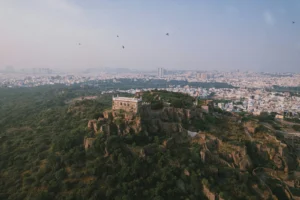
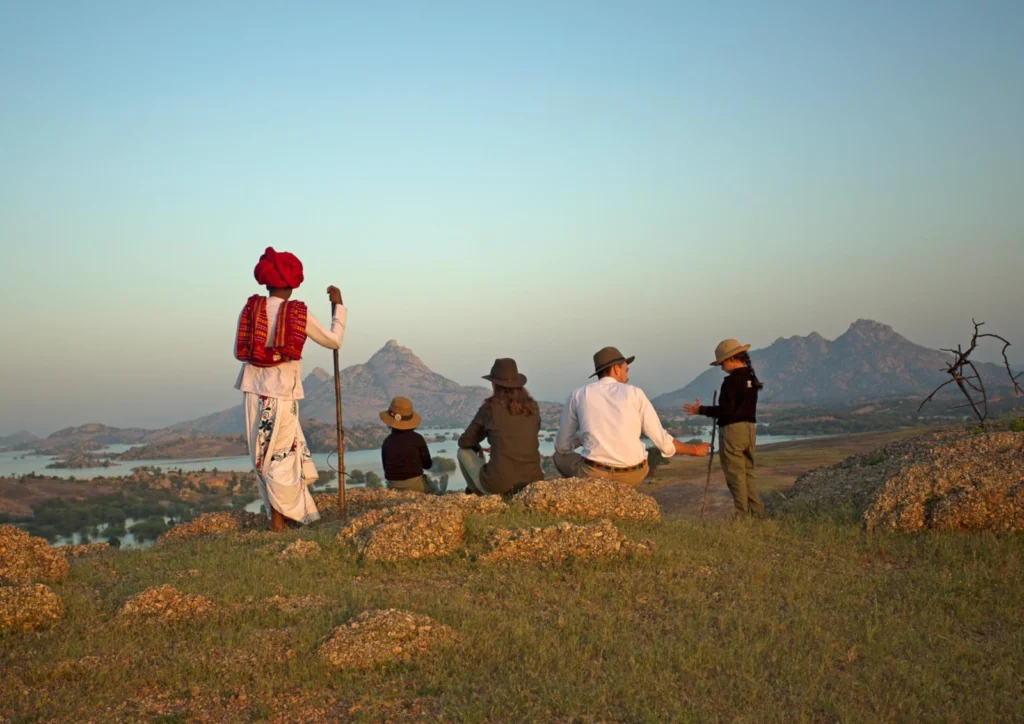
At Suján Jawai in Rajasthan, for instance, the experience is rooted in the land itself. Nestled at the foot of the ancient Aravalli Mountains, guests are invited to venture on wilderness drives in search of leopards, ride through the countryside on horseback, or follow temple trails that reveal centuries-old shrines and local legends. Evenings often unfold under star-studded skies, with meals crafted from fresh, local produce, celebrating the region’s flavours and traditions. Similarly, CGH Earth, a collection of boutique properties celebrated for their commitment to eco-sensitive, place-rooted luxury, approaches hospitality with a deep sense of cultural responsibility. From traditional meals prepared with heirloom recipes at Coconut Lagoon in Kerala to waking up in a restored colonial mansion at Brunton Boatyard in Fort Kochi, every CGH Earth property is deeply intertwined with its surroundings, offering travellers an authentic connection to the land and its stories.
There’s a therapeutic element to root tourism as well.
In Madhya Pradesh, Ahilya Fort in Maheshwar offers a quiet, personal take on rooted hospitality. Once the home of Maharani Ahilyabai Holkar, the fort now welcomes travellers seeking connection through memory – of walking the same ghats their ancestors once did or listening to the Narmada flow just as it always has. In Rajasthan, RAAS Devigarh brings a similar sense of belonging. This restored palace invites guests to reconnect with old traditions, trace family ties, or simply pause in spaces that once held generations – where even the staff, from nearby villages, help bridge forgotten stories.
There’s a therapeutic element to root tourism as well. Many of us grew up hearing our parents talk about “back home” like it was a mythical place. But to go there – to sit in the veranda they talked about, or smell the air that once surrounded their childhood. It turns memory into reality. And in doing so, it gives us a piece of ourselves we didn’t know was missing.
I once visited my ancestral home in a small village near Chhapra, Bihar. The house had been rebuilt, the trees were older, and the roads a little more worn. But walking through it, I heard echoes – of stories, laughter, voices I never met. For the first time, my surname, which always felt distant and formal, began to feel real.
Root tourism may never become a travel category listed on booking apps. It’s not easy to commercialise, and that’s probably for the best. But as more of us search for grounding in a world that feels increasingly unrooted, these small, quiet pilgrimages to our own past might just be the journeys that matter most.