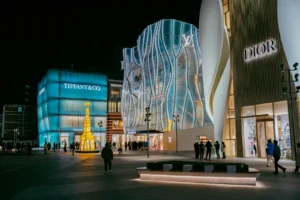

There is a pattern in how India’s luxury market gets read from the outside. The conversation begins with Mumbai. It acknowledges Delhi. It eventually mentions Bengaluru as the next frontier. Hyderabad appears late in the list, if at all.
The data disagrees.
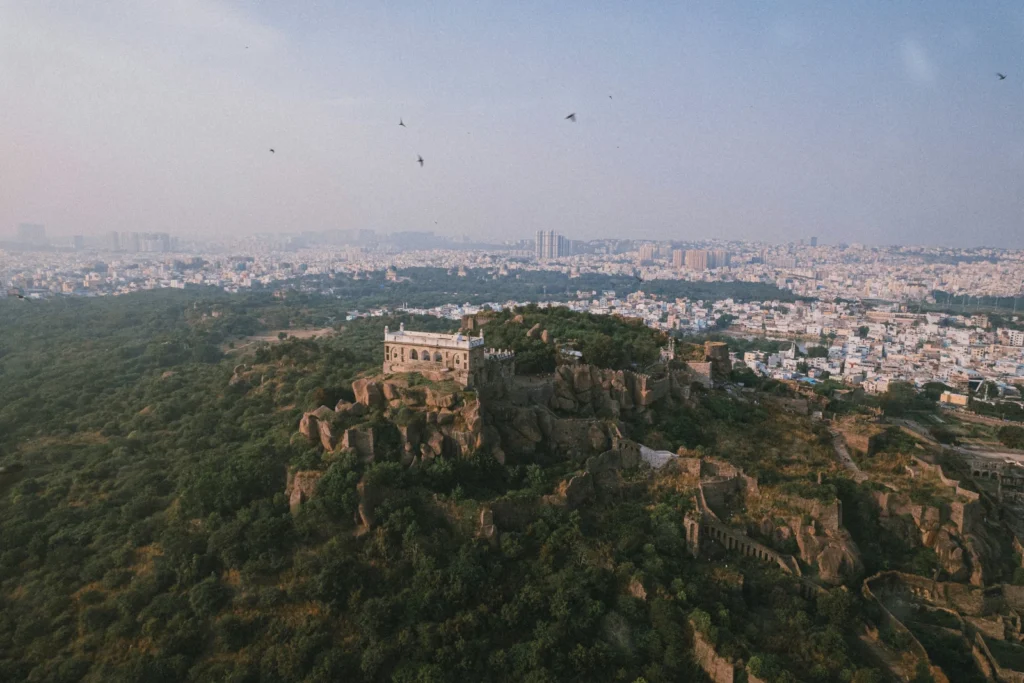
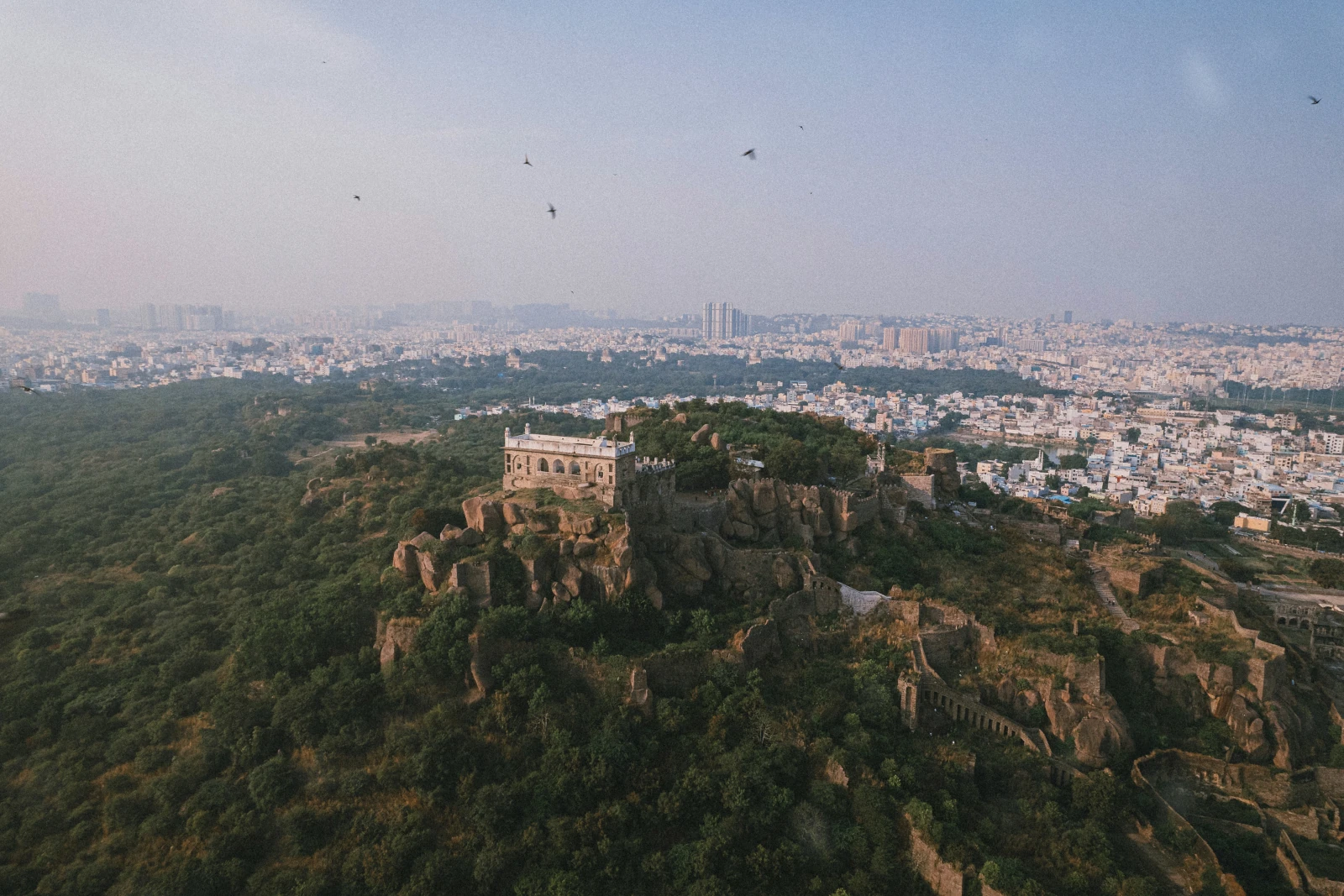
Hyderabad is the largest ultra-luxury residential market in South India by value. And the fastest growing luxury residential market in the nation. The volume of housing transactions at the above-ten-crore threshold, the density of ultra-high-net-worth households concentrated in specific corridors, the overseas travel spend flowing out of the city — by every demand indicator, Hyderabad belongs in the first tier of the conversation, not the second.
And it has no pure-play luxury mall.
That contradiction — demand at 4.0 on a five-point readiness scale, infrastructure at 2.2 — is the Hyderabad Paradox. It is the subject of Report I in LC Intelligence’s new series The Future Geography of Luxury in India, and it is the most instructive diagnostic I have encountered in three decades of working in this market.
The Luxury Readiness Matrix at the centre of the methodology scores ten indicators across two dimensions. The demand indicators — residential volume, HNI density, travel spend, branded retail penetration — paint a picture of a city already at the engagement stage of luxury adoption. The infrastructure indicators — pure-play retail, international hotels, zoning, fine dining — describe a city that has not yet built the architecture to serve the consumer that already exists within it.
The gap between these two readings is 1.8 points. It represents, in structural terms, the difference between a luxury market that has formed and a luxury ecosystem that has not.
The consumer driving Hyderabad’s demand score is not aspirational. UHNW household density in corridors such as Jubilee Hills, Banjara Hills, and Gachibowli reflects the convergence of two distinct wealth streams: new economy capital from technology, pharmaceuticals, and life sciences — sectors in which Hyderabad has become one of India’s most significant centres — and established business family wealth with multi-generational luxury familiarity.
The demand exists entirely independently of the infrastructure to serve it, which is precisely what makes the gap measurable and the paradox real.
This is a buyer who is internationally educated, globally travelled, and already purchasing luxury regularly. The purchases are happening in Dubai, in London, in Milan, in Singapore — not because those cities carry stronger luxury mythology than Hyderabad, but because those cities have built the infrastructure to receive this consumer. Hyderabad has not. The demand exists entirely independently of the infrastructure to serve it, which is precisely what makes the gap measurable and the paradox real.
The report also examines what this gap produces in economic terms: the systematic export of luxury spend to cities that have built the infrastructure to receive it. India’s overseas luxury-correlated travel spend reached US$17 billion in FY2025. A portion of this is structural leakage — bespoke preferences, flagship exclusivity — that will not return regardless of what India builds. But a portion is recapturable, flowing to Dubai and Singapore and Paris not through preference but through proximity and infrastructure. Build the equivalent and a portion comes home.
The Coordination Problem chapter of the report addresses why Hyderabad’s infrastructure has not formed despite demand that would justify it. The answer is not economic — it is sequential. Luxury infrastructure clusters do not emerge gradually; they form through a triggered sequence. Hyderabad has candidate nuclei — the approved Ritz-Carlton, the Kokapet corridor, Neopolis — but no anchor has yet triggered the adjacency and density formation that follows.
The window, however, is not indefinite. Luxury clusters operate on a timing logic as much as a spatial one — and the advantages of early positioning accrue disproportionately to the first mover. The analogy from comparable markets is instructive: in the decade before Dubai’s luxury retail district achieved full density, the gap between available consumer wealth and available luxury product was wider than Hyderabad’s today. The brands that entered during the formation phase did not simply gain market share. They shaped the architecture of the market itself — and the brands that arrived after density was established entered a market where someone else had already set the terms.
Hyderabad’s formation sequence has not started. The next report in this series covers Bengaluru, and early data suggests that India’s assumed third city presents a meaningfully different profile. The comparison, when published, will matter.
This series continues with Bengaluru, Chennai, and Pune — the same framework, the same indicators, every city comparable. The aim is to give India’s luxury industry the map it currently navigates by instinct.
Report I — The Hyderabad Paradox — is available at LC Intelligence. Executive summary accessible via View Snapshot.