
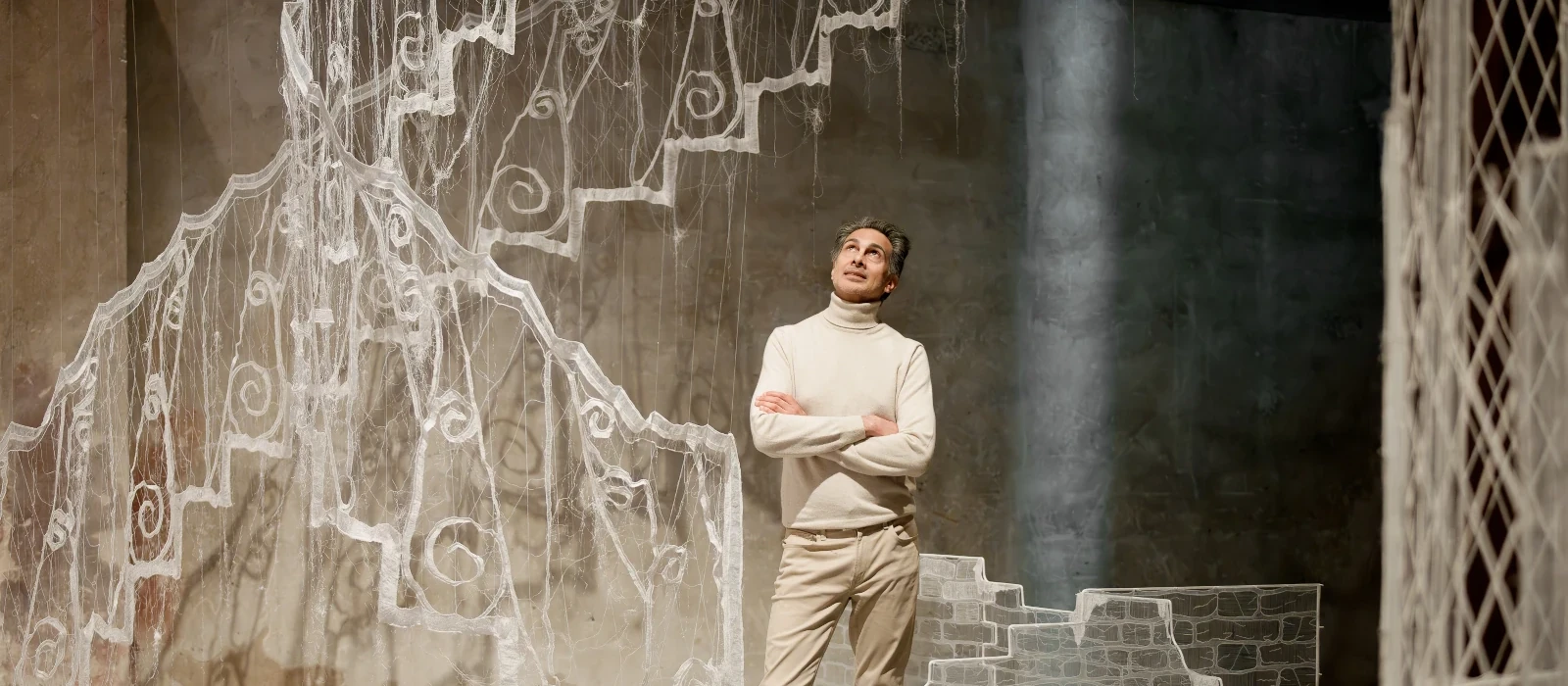
Dr. Amin Jaffer speaks about objects with the concentration of someone who has spent a lifetime listening closely to them. A carved chair from colonial India carries the residue of empire and exchange. A fragment of stone can possess greater emotional force than a flawless jewel. Materials move through his thinking as vessels of memory: jade, ivory, clay, thread, paper mâché, bronze. Civilisations overlap inside his sentences. Mughal ateliers drift towards Renaissance Europe. Venetian palazzi meet the architectural language of New Delhi. Ancient Egypt enters conversations about contemporary luxury.
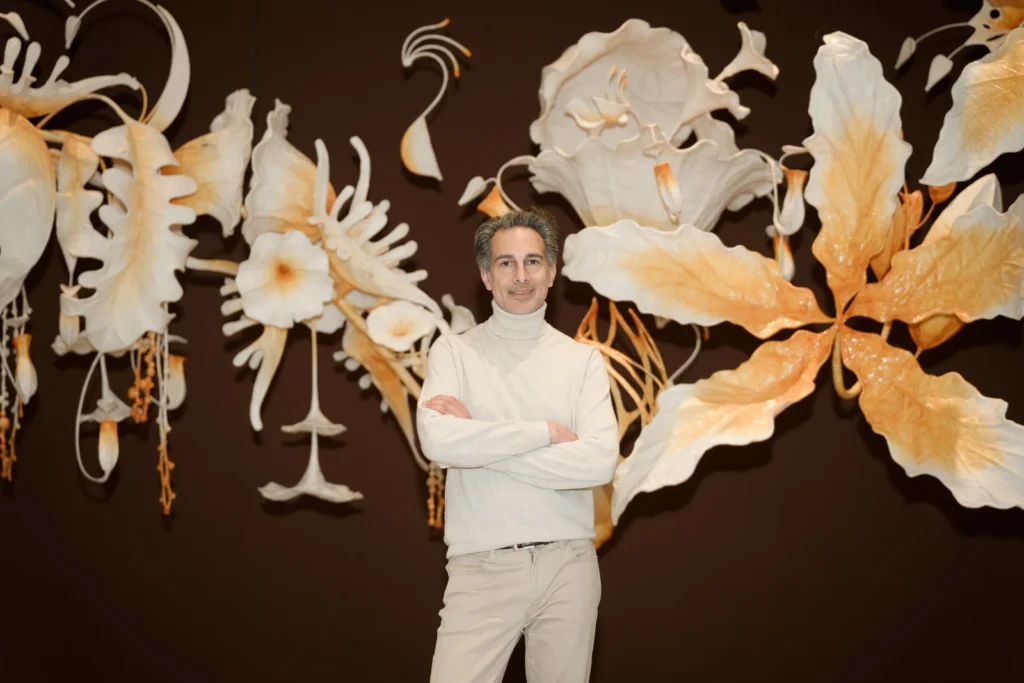
For more than three decades, Jaffer has occupied a singular position in the cultural world, moving between museums, scholarship, auction houses and international exhibitions with unusual ease. Formerly Senior Curator at the Victoria & Albert Museum and International Director of Asian Art at Christie’s, he now serves as Director of The Al Thani Collection, one of the world’s most ambitious private art collections. Alongside that role, he has emerged as an increasingly influential curatorial voice in the redefinition of global art history, particularly as museums and biennales attempt to move beyond rigid western frameworks.
“Changing socio-political times are reflected in the ways in which collections are formed and interpreted,” he says. “There is a conscious effort to question established western hierarchies of cultures and materials.”
The statement arrives without grandstanding. Jaffer rarely speaks in slogans. His language is measured, elegant, precise. Yet behind the restraint lies a significant shift in institutional thinking, one that has transformed the landscape in which he works. Over the past decade, museums across Europe, the Gulf and Asia have increasingly turned towards broader narratives of cultural exchange, reassessing inherited assumptions about value, geography and artistic legitimacy.
“Fragments, objects that are less understood or made of simple substances, are given equal, or sometimes more, weight than they would be in a traditional museum curation”
At The Al Thani Collection, housed within the Hôtel de la Marine overlooking Place de la Concorde in Paris, those ideas unfold spatially. The collection itself, assembled by His Highness Sheikh Hamad bin Abdullah Al Thani, comprises more than 5,000 works spanning centuries and continents. Mughal jewels sit alongside medieval sculpture, contemporary craftsmanship and ancient artefacts. Traditional museum chronology dissolves. Hierarchies soften.
“Fragments, objects that are less understood or made of simple substances, are given equal, or sometimes more, weight than they would be in a traditional museum curation,” Jaffer explains.
The approach feels radical within institutions long shaped by European taxonomies of art and civilisation. Yet Jaffer’s interest lies less in dismantling museums than expanding their vocabulary. His exhibitions often reveal histories through adjacency rather than argument, allowing objects from different worlds to enter into conversation with one another.
That instinct towards dialogue appeared early. Jaffer recalls becoming “mesmerised by museum experiences” around the age of 10 or 11, developing a fascination with “ancient Rome and the Renaissance, Christian art and Mughal architecture”. At the time, the idea of building a career around such interests felt uncertain, even improbable. The art market of the early 1990s lacked the scale and glamour it possesses today.
“My decision to pursue a life in art was full of uncertainties,” he says, “but I was completely committed to the idea.”
After studying on the V&A/RCA History of Design programme, he completed doctoral research that led to a fellowship at the V&A and eventually to the publication of Furniture from British India and Ceylon in 2001. The book reshaped understanding of domestic interiors in the colonial period, tracing how Indian craftsmanship and British aesthetics became entangled through furniture and decorative arts. Even then, Jaffer gravitated towards stories of cultural convergence rather than isolated traditions.
“Within the wider museum world and marketplace,” he says, “we have witnessed the emergence of new spheres of collecting and the recognition of artists and cultural movements which were hitherto undervalued.”
His subsequent exhibitions expanded that interest on an international scale. Encounters: The Meeting of Asia and Europe, 1500–1800 examined artistic exchange across continents, while Maharaja: The Splendour of India’s Royal Courts at the V&A in 2009 offered audiences a richer understanding of princely India beyond orientalist fantasy. The exhibition arrived at a moment when western institutions were beginning to recognise growing global appetites for histories outside the Euro-American canon.
At Christie’s, Jaffer witnessed another transformation underway. Collectors from India, the Gulf and East Asia increasingly reshaped the economics and priorities of the international market. New museums emerged across the Middle East. Cultural institutions began competing globally for audiences, influence and prestige.
“Within the wider museum world and marketplace,” he says, “we have witnessed the emergence of new spheres of collecting and the recognition of artists and cultural movements which were hitherto undervalued.”
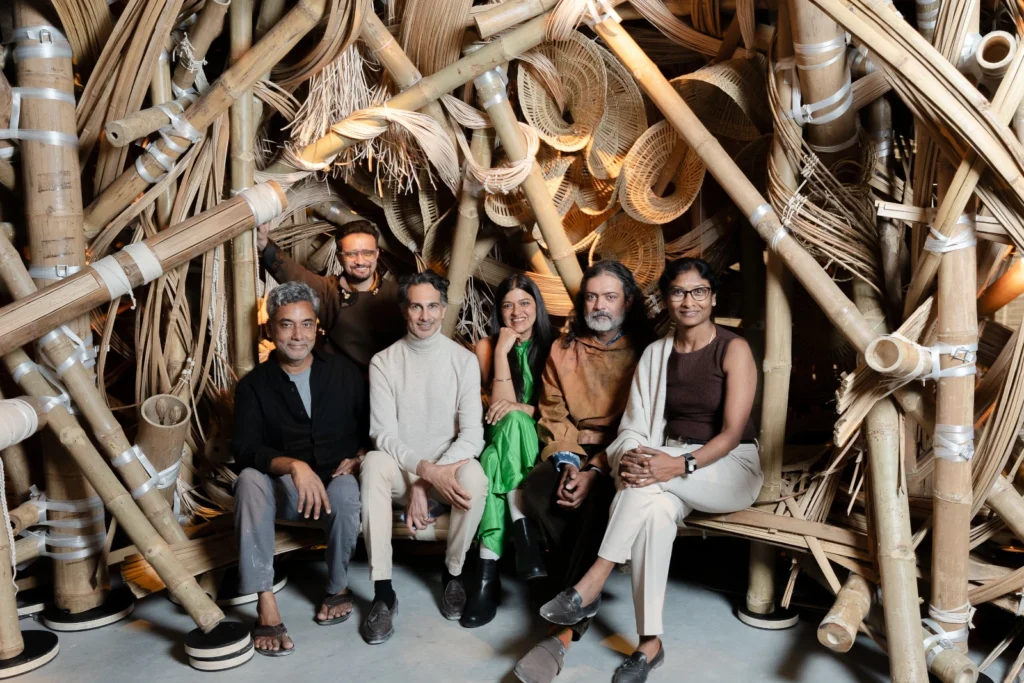
Few projects embody that shift more clearly than his current work on the Pavilion of India at the 61st International Art Exhibition – La Biennale di Venezia. Titled Geographies of Distance: remembering home, the exhibition marks India’s return to Venice for the first time since 2019 and arrives at a moment when the country’s cultural visibility has acquired new international intensity.
Presented by the Ministry of Culture, Government of India, in partnership with Nita Mukesh Ambani Cultural Centre and Serendipity Arts, the exhibition gathers five artists whose practices engage with material memory, migration and belonging: Alwar Balasubramaniam, Sumakshi Singh, Ranjani Shettar, Asim Waqif and Skarma Sonam Tashi.
Across the pavilion, artists work with materials deeply rooted in Indian traditions: clay, thread, recycled matter, organic fibres, paper mâché. Architecture appears suspended, fractured, vulnerable.
The exhibition’s title carries a sense of emotional dislocation shaped by mobility, urban transformation and diaspora. Home becomes unstable, fragmented, portable.
“The pavilion explores home not as a fixed physical location,” Jaffer says, “but as an emotional space carried within the self, a repository of culture, personal mythology and emotion.”
The exhibition responds to the Biennale’s overarching theme, In Minor Keys, conceived by the late curator Koyo Kouoh. Jaffer’s interpretation avoids spectacle in favour of atmosphere and emotional resonance. Across the pavilion, artists work with materials deeply rooted in Indian traditions: clay, thread, recycled matter, organic fibres, paper mâché. Architecture appears suspended, fractured, vulnerable.
“The general public already has an idea of what India is,” Jaffer says. “Colourful, lively, richly ornamented, deeply symbolic, spiritual and self-referential.” His ambition for Venice, however, moves in another direction. “As the Pavilion curator my objective was to reveal a different, but equally potent, aspect of India: contemporary but rooted in our own material traditions, restrained and meditative.”
That distinction matters. International exhibitions often flatten nations into visual shorthand, rewarding spectacle over complexity. Jaffer instead foregrounds intimacy, fragility and reflection. Even the pavilion’s public programme unfolds with understated choreography: performances and interventions appearing throughout Venice “at dawn on a bridge” or “resonating at dusk”, dissolving into the city’s rhythms rather than overpowering them.
The emphasis on materiality runs throughout Jaffer’s thinking. Asked what distinguishes true cultural luxury from mere opulence, he offers a surprisingly unsentimental answer. “Opulence is easy to achieve,” he says. “The Industrial Revolution in the 19th century made seemingly-rich decorative finishes cheap to produce.”
He points towards ancient Egyptian art as a personal ideal.
Luxury, for him, requires originality, rarity and discipline. “True luxury exists when design is original, production is limited, and when there exists a delicate equilibrium between richness and simplicity.”
He points towards ancient Egyptian art as a personal ideal. The answer reveals much about his broader aesthetic instincts. Jaffer consistently gravitates towards precision over excess, towards objects shaped carefully by human touch rather than mechanical repetition.
“What moves me most,” he says, “is works that are made by the unique hand of the artist rather than by a studio or reproductive process.”
In an era increasingly dominated by digital replication and accelerated image culture, the comment acquires additional weight. Jaffer belongs to a generation of curators still deeply invested in the aura of physical encounter. Museums, in his view, remain places where texture, scale and craftsmanship possess emotional authority impossible to reproduce on a screen.
There is, nevertheless, something distinctly contemporary about his worldview. His projects unfold across a network of international collaborations stretching from Paris to Jeddah, Venice to New Delhi. In 2023 he became an Artistic Director of the Islamic Arts Biennale, another institution attempting to reposition regional cultural histories within a broader global conversation. He also contributes to the forthcoming Yuge Yugeen Bharat Museum, envisioned as one of India’s major future cultural institutions.
“Do you feel the art world today is finally moving toward a more genuinely global understanding of art history?” I asked. “Yes,” he replies, “this is finally happening in great measure thanks to initiatives such as the Islamic Arts Biennale and the upcoming Yuge Yugeen Bharat Museum, which interpret culture from perspectives different from those perpetuated in the West.”
Beneath the diplomacy, institutional strategy and scholarly rigour lies a simpler conviction about why objects matter.
The answer feels neither triumphant nor defensive. Jaffer understands that institutions remain shaped by power, politics and economics. Yet he also believes genuinely new perspectives are emerging through curatorial practice itself, through the stories museums choose to tell and the objects they choose to elevate.
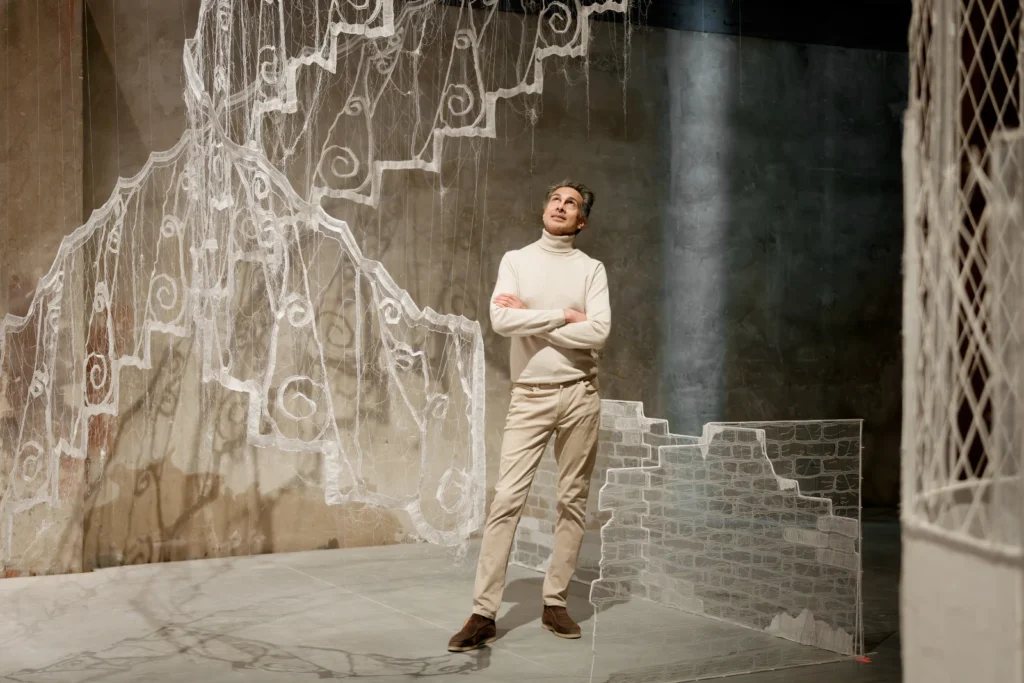
At the Hôtel de la Marine in Paris, where visitors move between Mughal treasures and Renaissance masterpieces beneath gilded ceilings once occupied by the French state, that philosophy becomes tangible. Histories overlap rather than compete. Geography loses its hierarchy. The museum transforms into a site of encounter rather than classification.
For all the scale of his projects, however, Jaffer continually returns to deeply personal ideas about art and emotion. Beneath the diplomacy, institutional strategy and scholarly rigour lies a simpler conviction about why objects matter.
“What touches me,” he says, “is an underlying message relevant to the human condition.”
The line lingers because it arrives without ornament. After decades spent among extraordinary collections, Jaffer still speaks like someone searching for connection rather than prestige. The child wandering through museum galleries at 11 years old never entirely disappeared. He simply learned how to build larger worlds around that original sense of wonder.