
When I wrote about the Swatch × AP collaboration for LuxuryFacts earlier this year, the central argument was about symbolic compression — the risk a luxury brand takes when it allows mass audiences access to its codes before its mythology reserves can absorb the proximity.
The AI question in luxury is structurally identical. Brands that will be amplified by AI are those with deep mythology. Brands that will be commoditised by it are those with visibility but no mythology underneath.
The mechanism differs. The architectural consequence is the same.
The Paradox the Data Reveals
The State of AI in Luxury survey, conducted by DLG and Europa Star in 2025 across heritage maisons, contemporary luxury brands, and emerging players, reveals a paradox that every luxury leader must confront. Seventy one per cent of luxury executives agree AI adoption cannot be delayed. The urgency is understood at sector-wide strategic level.
Yet 42% remain in Pilot Purgatory — running isolated, small-scale experiments that generate boardroom presentations and never scale to enterprise level. A chatbot here. A virtual try-on pilot there. Each launched with enthusiasm. Each quietly fading without integration or measurable return.
Meanwhile 43% are embedding AI into core business processes and building compounding advantages that widen with every iteration. The divide between these groups is not a technology gap. It is a strategic clarity gap. And it is widening.
The Three Arenas
AI’s impact on luxury manifests in three distinct arenas where the competitive gap between leaders and laggards is being decided.
1. Customer Intimacy at Scale
Building a unified client memory that connects every touchpoint into a living profile. Not what they bought but what it meant to them and what dream they want to fulfil next. Over 66% of executives in the survey identify consumer insights as AI’s top priority.
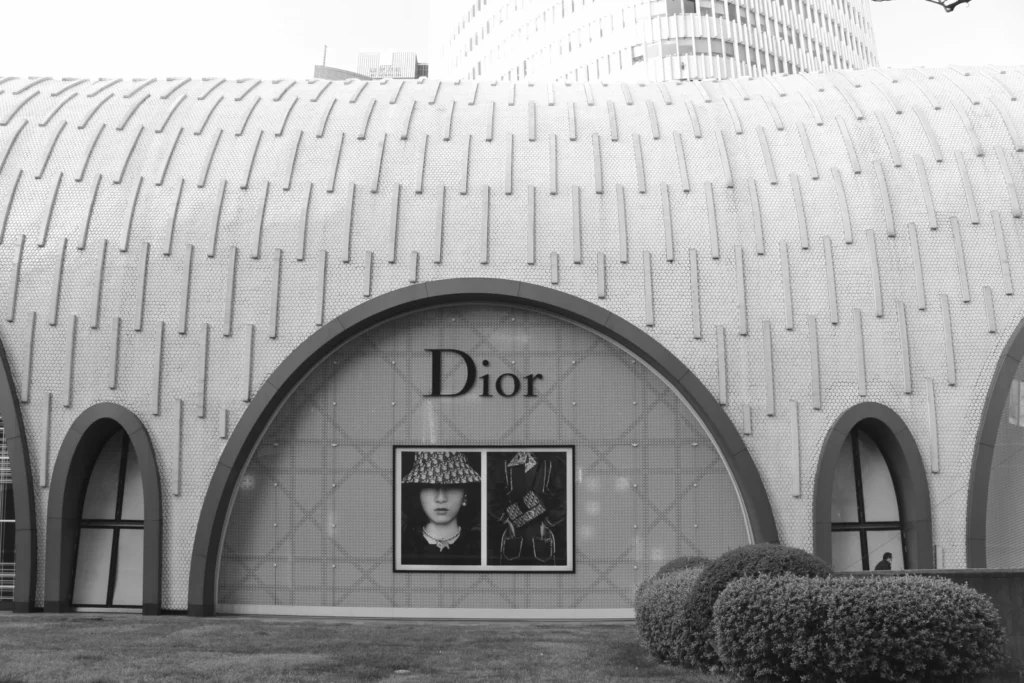
For example, clienteling at Dior has evolved from handwritten client books held by individual sales associates to a unified digital memory accessible across every maison worldwide. When a client walks into a Dior boutique in Mumbai having previously purchased in Paris, the associate knows not just what was purchased but the occasion, the styling preference, and the relationship history. The dream being fulfilled next is already visible before the conversation begins.
2. The Invisible Backbone
Operational intelligence that makes luxury consistency possible at scale without compromising the craft and human relationship at the heart of luxury service.
3. Creative Augmentation
AI as a tool for deepening heritage storytelling, surfacing archive depth, and personalising provenance narratives for individual clients in ways that strengthen rather than dilute mythology.
For example, Cartier’s use of its 175-year archive is the clearest current example. AI allows designers to surface historical sketches, discontinued motifs, and forgotten gemstone combinations across decades of archival material in hours rather than months. The result is not AI-designed jewellery — it is human creativity deepened by institutional memory that would otherwise remain inaccessible at the pace modern design cycles demand.

What AI Cannot Do
This is the architectural truth that every luxury founder needs to understand before making any AI investment decision.
AI surfaces what is already there. It cannot create what was never built.
The brands that Bain identifies as winning in their 2026 study — specialists outperforming generalists, meaning-led brands outperforming product-led ones — are winning because they built mythology before the AI disruption arrived. When one in two luxury consumers uses AI to discover and evaluate luxury products, those consumers are searching for meaning, provenance, and cultural authority.
AI finds it for them. Or it finds its absence.
India’s Leapfrog Moment
India does not appear in the Bain-Altagamma report. India’s luxury market is still forming — not yet large enough to register in a global study dominated by China, the US, Europe, and the Gulf.
That absence is the opportunity. India’s AI infrastructure and luxury consumer base are developing simultaneously. Indian luxury brands building now are not inheriting legacy systems built before AI existed. They are building from scratch in an AI-native environment.
The Indian luxury brand that builds mythology and AI capability together — from the beginning, without the weight of legacy systems to retrofit — can achieve in five years what European maisons have spent two decades and hundreds of millions of euros trying to build.
But only if the mythology comes first. AI amplifies what is there. It cannot substitute for what was never built.
The soul of a brand is not in the tools it avoids. It is in the intent with which it uses the tools of its time.
The Synthetic Executive
The divide ultimately comes down to leadership. The AI era demands what I call the Synthetic Executive — a leader who holds brand soul at the centre of every AI decision, who can converse fluently with technologists while remaining anchored in the craft and heritage that makes luxury meaningful, and who orchestrates the entire ecosystem of technology, talent, and brand architecture into a coherent experience.
It is a strategic, translational, and cultural role where the craft of the 21st century includes the craft of governing intelligence.
The Choice
The Great Divide is not inevitable. It is the sum of a thousand daily choices — to integrate or to leave in silos, to govern with discipline or to let pilots multiply without coordination, to build mythology before the AI arrives or to hope that AI will build it for you.
It will not. The soul of a brand is not in the tools it avoids. It is in the intent with which it uses the tools of its time.
In 2030, the luxury industry will not remember which brands had AI. It will remember which brands used it wisely, bravely, and beautifully.
The Great Divide white paper is available for download online.