
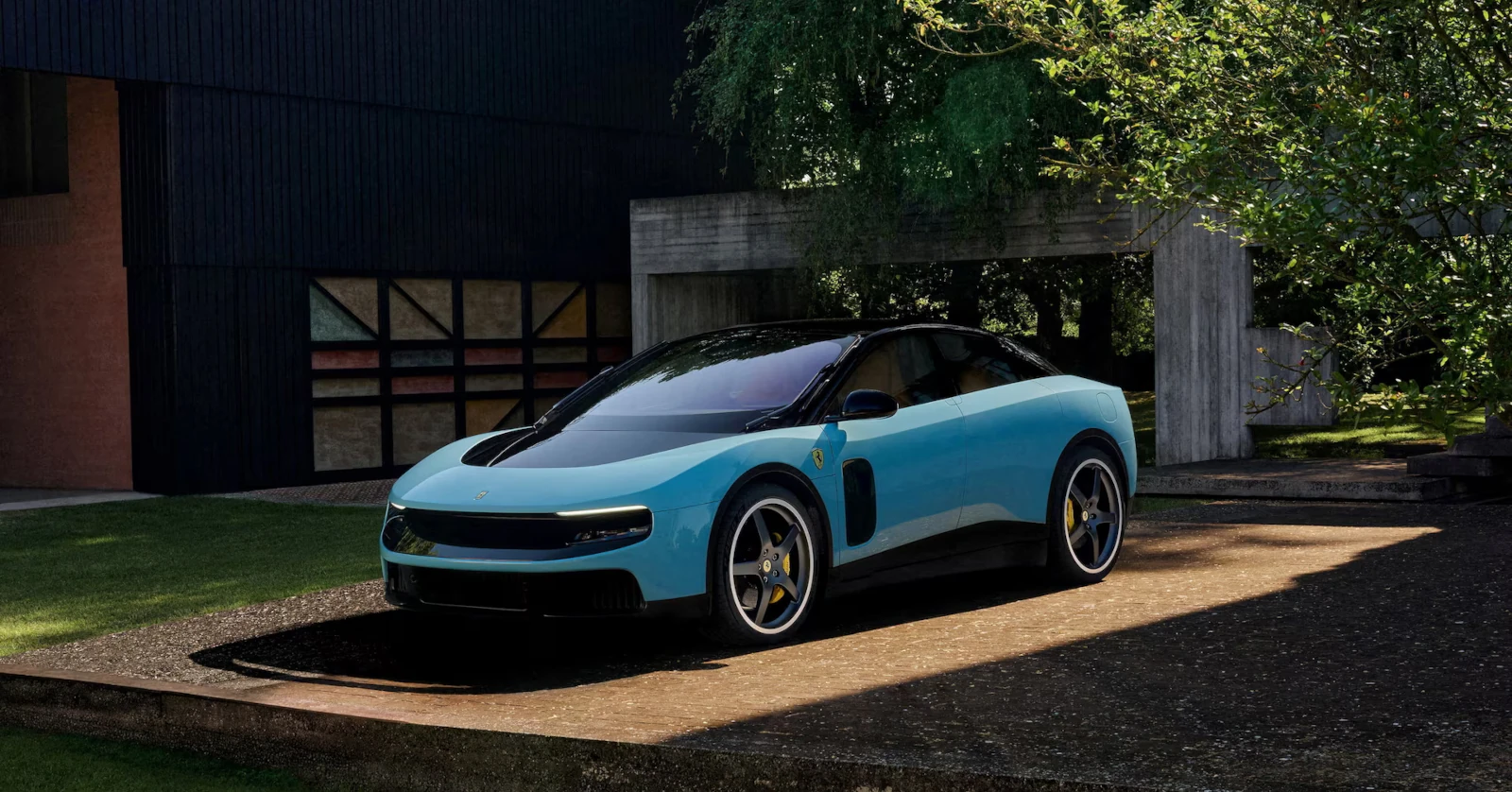
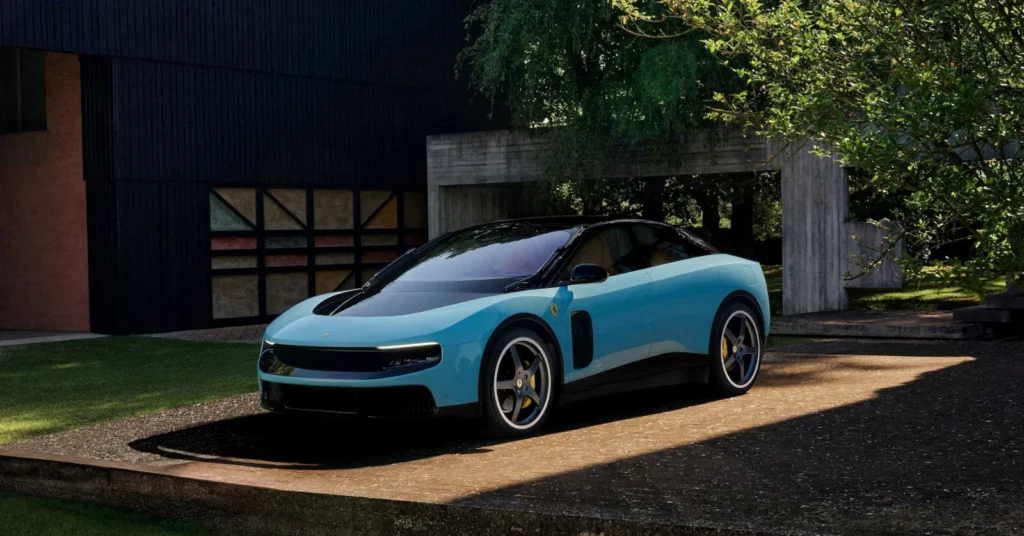
A UHNWI who manages the portfolios of billionaires sent a message within minutes of the Ferrari Luce reveal in Rome. Two laughing emojis. Then: “It is sooooo much worse than the AP Swatch collab. And costs half a million.”
That message captures something precise. The Swatch × AP launch — which I analysed for LuxuryFacts recently as a case of symbolic-compression, where mass audiences gain access to luxury codes at dramatically lower thresholds — generated its own wave of debate about whether proximity to a luxury universe eventually erodes the mystique that makes it desirable.
The Ferrari Luce raises the same question from a different angle. Not through collaboration, but through category extension. The mechanism is different. The architectural risk is identical.
Both are versions of the same error: spending mythology reserves before fully understanding their value — or their fragility.
The pattern nobody is naming
Ferrari is not the first heritage luxury brand to arrive at this moment.
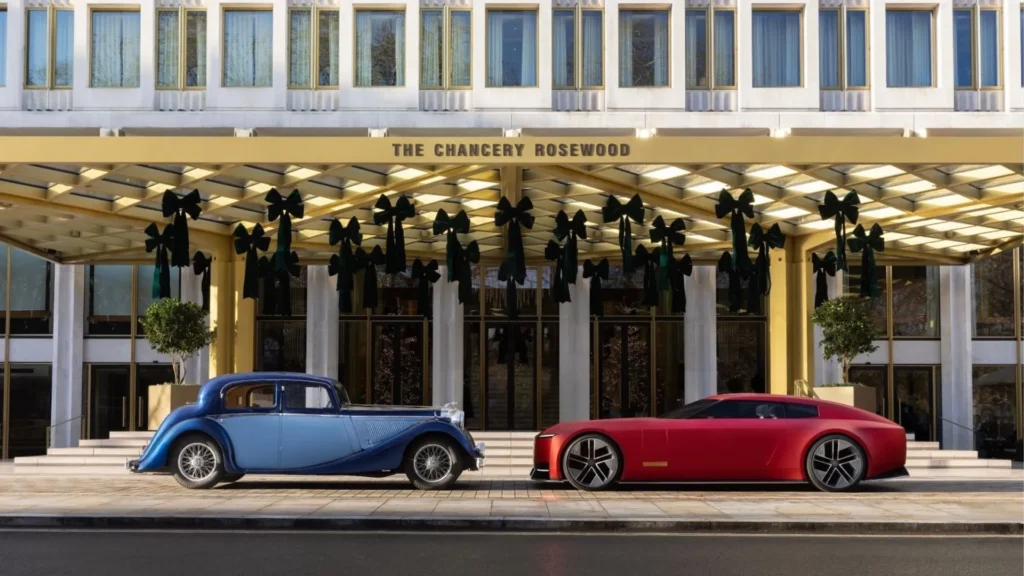
In November 2024, Jaguar erased six decades of British automotive heritage in a single rebranding exercise. The leaping cat disappeared. In its place arrived a visual identity that its own audience described not as modernisation but as erasure. The brand had not evolved — it had abandoned.
Ferrari shares fell 6.27% in Milan trading. Analyst Anthony Dick called it the sharpest market reaction to a car design ever recorded.
The lesson was clear: luxury brands derive their power from continuity of mythology. You can adapt the expression. You cannot abandon the soul.
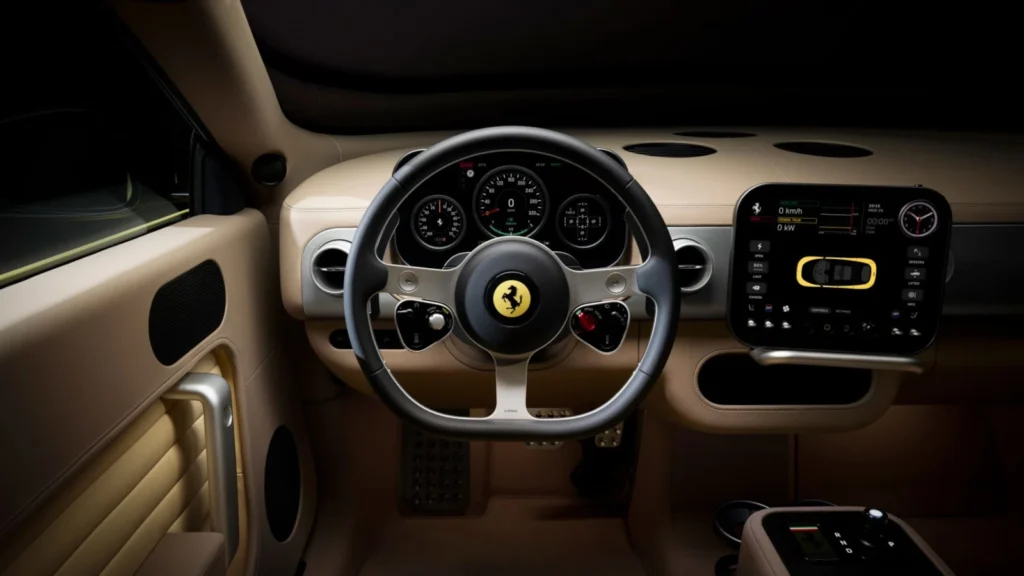
Eighteen months later, Ferrari unveiled the Luce — its first fully electric vehicle, priced at €550,000, with creative authority handed to LoveFrom, the agency of Jony Ive and Marc Newson. Former Chairman Luca di Montezemolo said publicly that Ferrari risks destroying a legend. His closing line: at least remove the prancing horse.
Ferrari shares fell 6.27% in Milan trading. Analyst Anthony Dick called it the sharpest market reaction to a car design ever recorded.
The industry watched Jaguar. It learned nothing.
The Jony Ive problem
Ive is the world’s most consequential democratiser of design. His life’s work made technology beautiful and accessible to billions. His design philosophy is oriented toward inclusion, clarity, and the removal of barriers between people and objects.
Ferrari’s mythology is built on the precise opposite: deliberate inaccessibility, visceral theatre, beauty that carries an edge of threat.
Every luxury brand is now navigating a market in which premium and contemporary brands have so successfully replicated the visual codes of luxury that aesthetic distance alone no longer justifies the structural price premium.
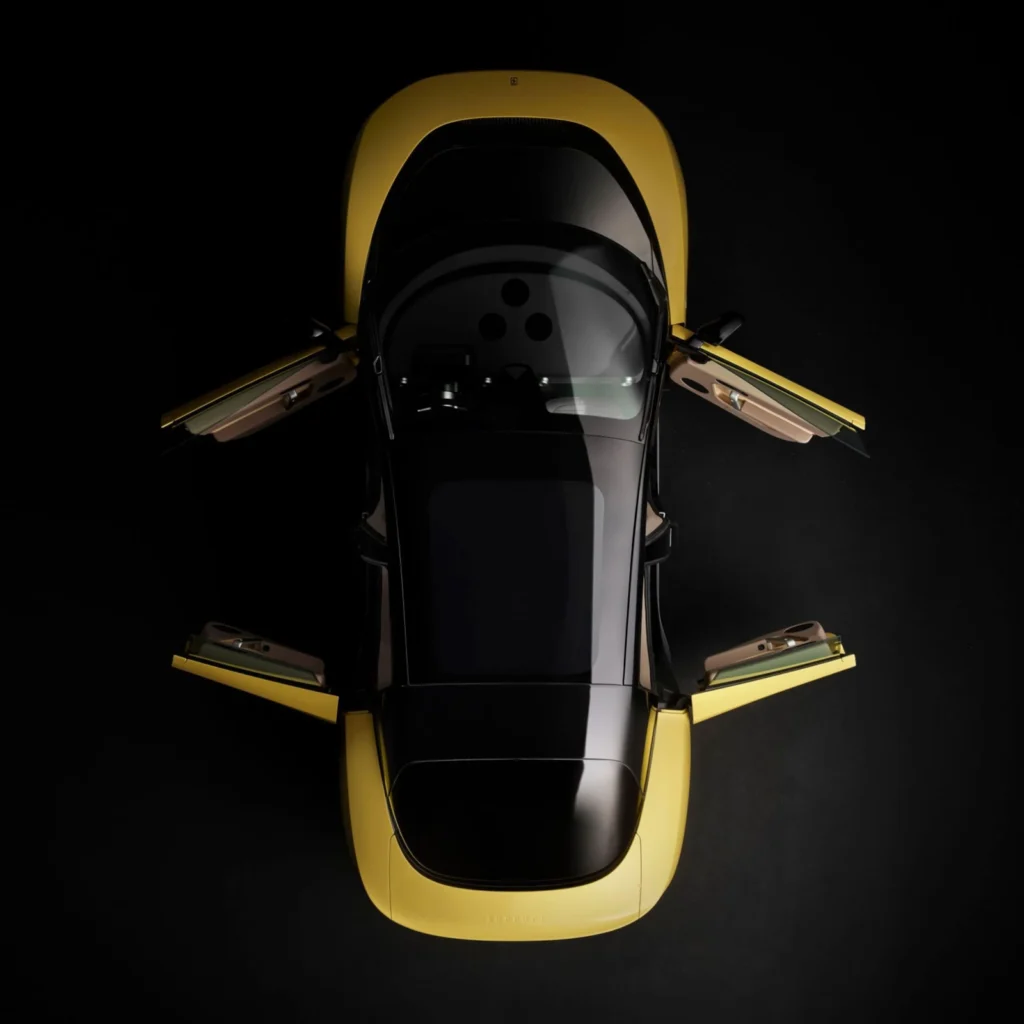
These are not merely different aesthetics. They are opposing philosophical positions on what design is for.
The result — compared across social media to a Honda Accord, an Apple Store minivan, and a luxury toaster — was architecturally predictable before a single sketch was drawn. When you hire the world’s greatest democratiser to design the world’s most exclusive object, the philosophical collision is inevitable.
The upmarket pressure every brand now faces
Ferrari’s decision did not emerge in a vacuum. Every luxury brand is now navigating a market in which premium and contemporary brands have so successfully replicated the visual codes of luxury that aesthetic distance alone no longer justifies the structural price premium.
The brands surviving this pressure are those that have made the opposite choice. Hermès deepened scarcity, tightened distribution, and committed harder to institutional myth-making as the pressure to democratise intensified. The commercial result is consistent and unambiguous.
Ferrari had the mythology. It had the scarcity. It had institutional heritage no competitor could replicate.
Ferrari had that discipline once. The Luce suggests it faced the same pressure — and blinked.
What this means for founders building now
The Ferrari and Jaguar failures carry their most urgent lesson not for established maisons, but for founders at the beginning of their luxury architecture journey.
The question every founder must answer before any significant brand decision is not whether it will grow the business. It is whether it protects the mythology.
Ferrari had the mythology. It had the scarcity. It had institutional heritage no competitor could replicate. What it lacked, at the moment of the Luce decision, was the architectural discipline to refuse a commercially attractive option that mythology coherence should have made unthinkable.
That discipline — knowing what your brand can afford symbolically, not just financially — is not instinctive. It is not inherited with the badge or the founding story. It must be built deliberately, tested against real decisions, and maintained under commercial pressure.
The founders building luxury brands today have one advantage Ferrari did not: the pattern is clearly visible before they have built enough mythology to lose.
The question is whether they are paying attention.