

In a landmark sale for Indian art, Yashoda and Krishna by Raja Ravi Varma has become the most expensive modern Indian artwork ever auctioned. Sold by Saffronart for ₹167.2 crore (approximately $18 million), the painting far exceeded its pre-sale estimate and underscores surging demand for iconic Indian works.
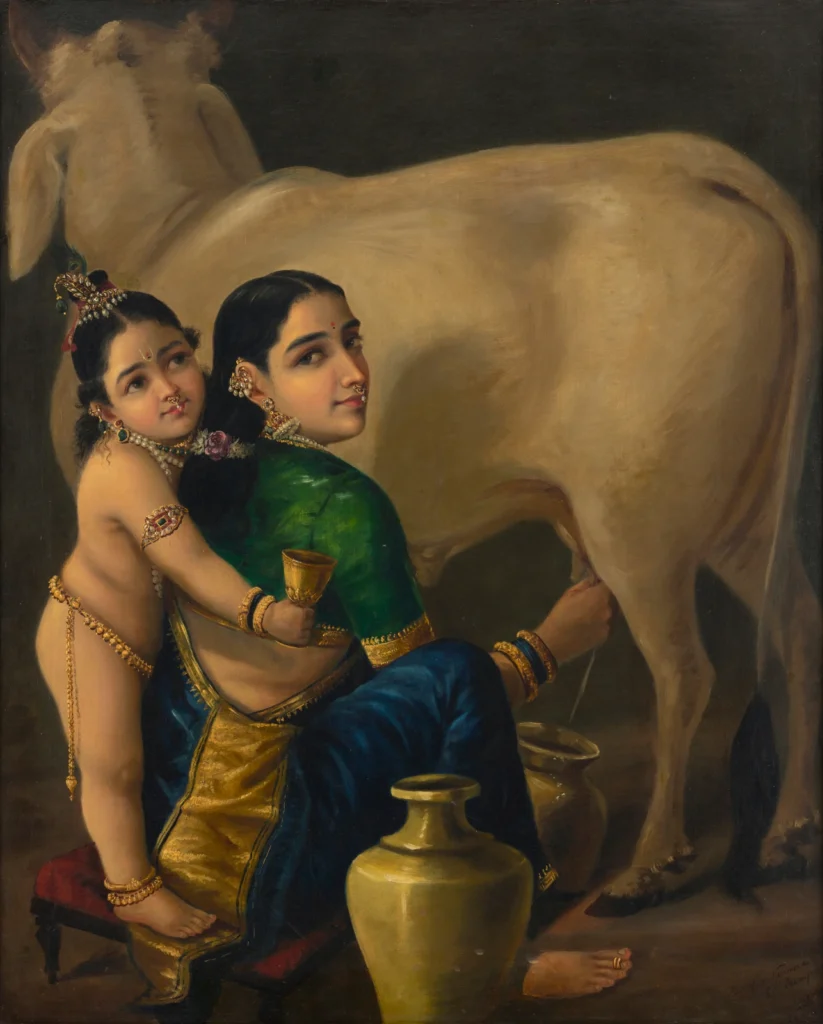
Painted in the 1890s, the piece is widely regarded as one of Varma’s most significant compositions, depicting the maternal bond between Yashoda and the infant Krishna. The buyer, Cyrus S. Poonawalla, described the work as a “national treasure” and indicated plans to make it accessible for public viewing. Dr. Poonawalla, widely known as the “vaccine billionaire”, is the Founder and Chairman of the Serum Institute of India.
The sale surpasses the previous record set by M. F. Husain’s Untitled (Gram Yatra), reflecting a broader surge in valuations for Indian modernists.
The record comes amid renewed strength in both the global and Indian art markets. The Art Basel & UBS Art Market Report 2026 update showed a rebound in art sales, with global sales rising to $59.6 billion in 2025 and auction activity—especially at the high-value end—driving recovery.
Within this global context, India is emerging as a high-growth segment. While still categorized within a broader “rest of world” share in global reports, the Indian market has more than doubled over the past decade, supported by rising domestic wealth and increased participation from collectors.
Additional insights from the Hurun India Art List 2025 show that India’s top artists collectively recorded sales of approximately ₹310 crore, with a majority seeing value growth—evidence of strengthening depth in the domestic market.
Recent analyses from Art Basel and market observers highlight several defining trends. Buyers are prioritizing “bankable” names like Varma and Husain amid global uncertainty. The number of lots sold in India has increased significantly, indicating stronger participation. Younger and first-time buyers are entering the market globally, a trend reflected in India as well.
Despite global volatility, India’s art market is increasingly seen as one of the most promising emerging segments. Rising GDP growth, expanding high-net-worth wealth, and growing global recognition of South Asian art are all contributing to sustained momentum.
Against this backdrop, the sale of Varma’s Yashoda and Krishna is more than a record—it marks a pivotal moment in the repositioning of Indian art within the global market hierarchy.