
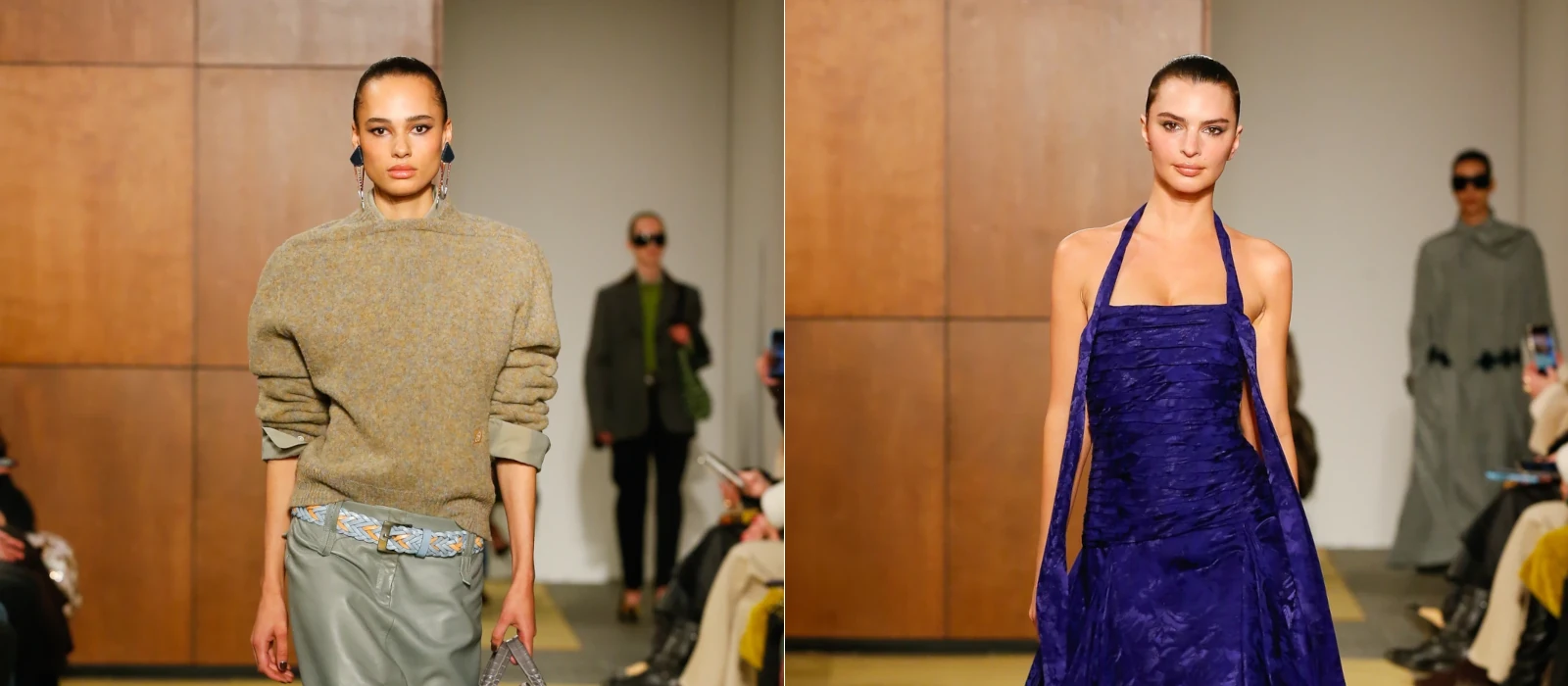
Tory Burch built her brand on a particular kind of American ease, where preppy references were softened by bohemian instinct, and served as accessible luxury at a time when that positioning was genuinely underserved. Two decades in, the Fall/Winter 2026 reads like a designer who has stopped explaining herself.
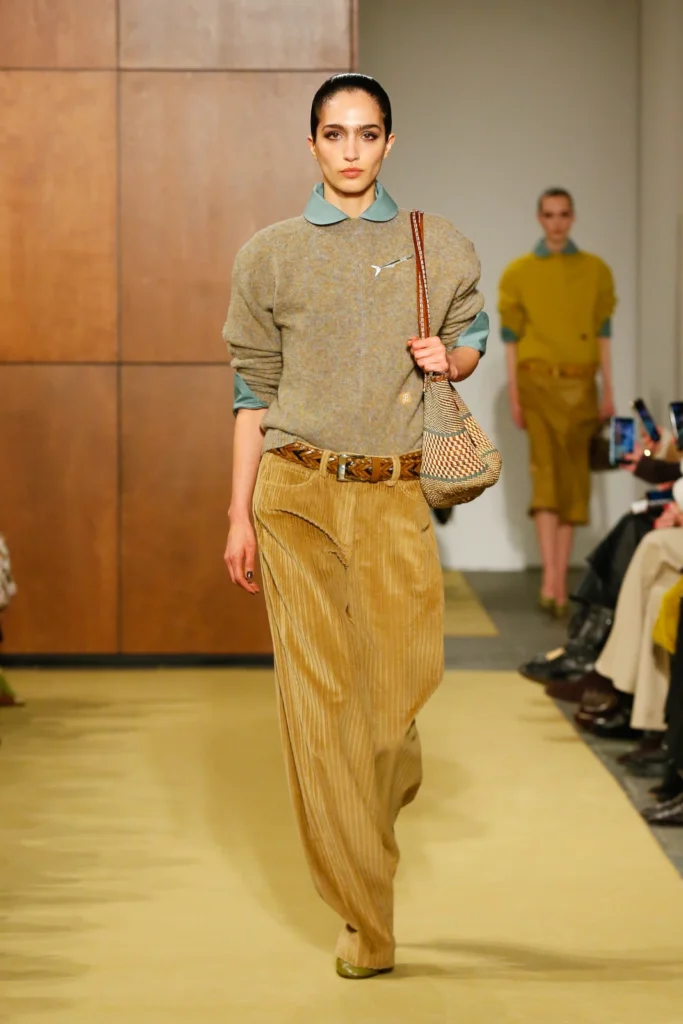
Personal history drove the design decisions in ways that went beyond mood. Her father Buddy’s corduroys were reimagined in apricot and saffron. Raffia and leather bags referenced ones she carried in high school. These are not abstract inspirations pulled from an archive. They are specific objects tied to specific people, and that specificity is what separates this collection from one that simply references nostalgia.
Bunny Mellon anchored the collection’s aesthetic and philosophical framework. Mellon, who died in 2014 at 103, was never a fashion figure in the conventional sense. She dressed with a consistency and quiet authority that put her outside trend cycles entirely, a quality that has made her a reference point for designers working against the grain of seasonal novelty.
Burch introduced what she is calling the Bunny Knot, a detail drawn from a quilted cushion found in Mellon’s home in Antigua, translated into hardware on heels, metal details on quilted shoulder bags and knotted jersey dresses.
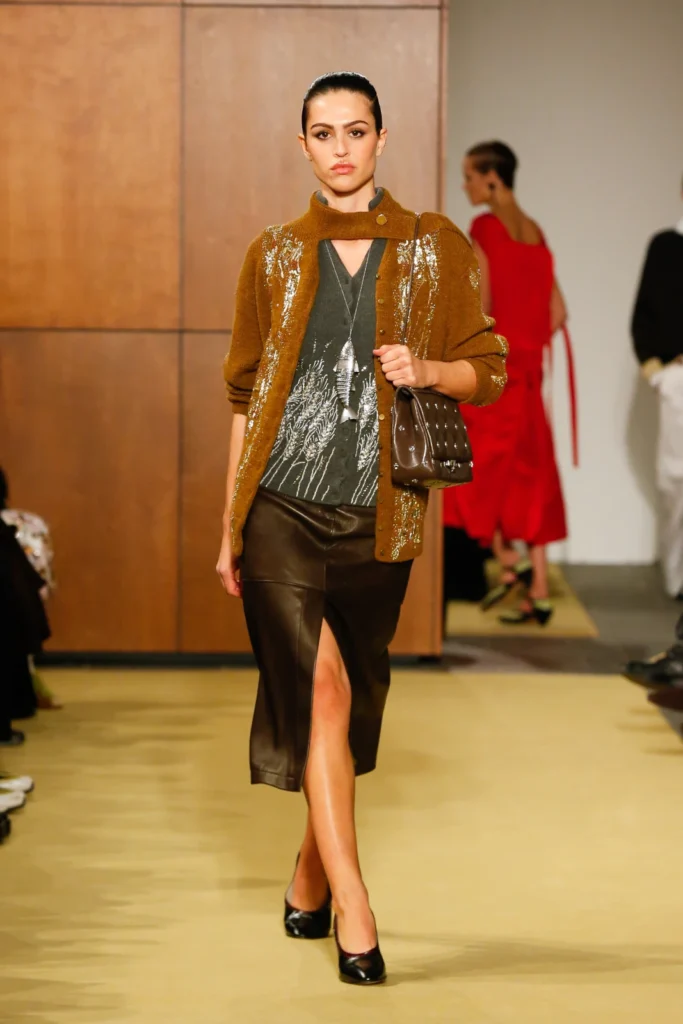
“The mix reflects how women dress now: by instinct, not rules. No one exemplified this quite like Bunny Mellon, the iconic horticulturist, landscape designer and philanthropist,” Burch shared.
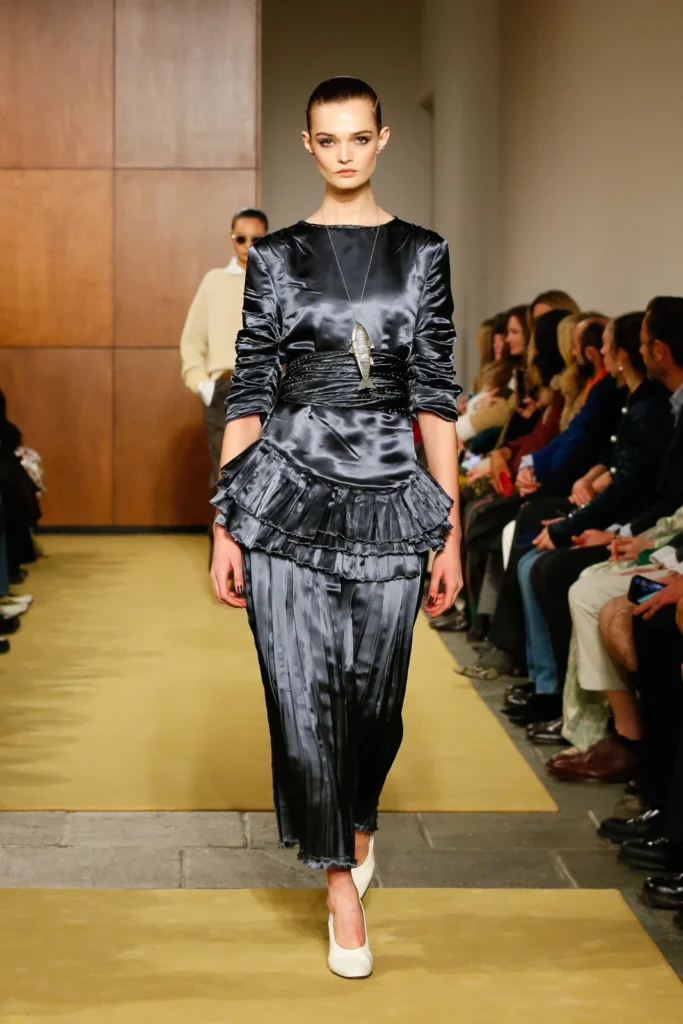
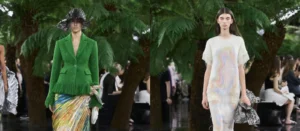
Silhouettes stayed close to archetype, the trench, the henley, the boatneck sweater, the pencil skirt, none of them reinvented, all of them reconsidered. Buddy Burch’s belief that “classics become interesting with your personal take” sat on the moodboard alongside photographs of Mellon, and both figures functioned as a design framework rather than decorative reference.
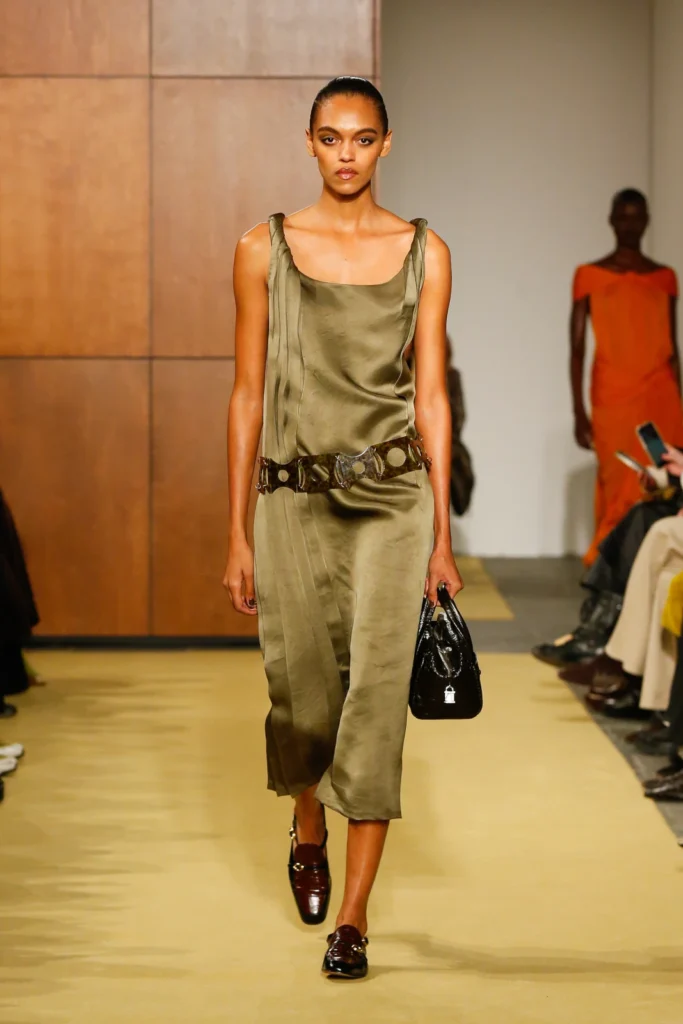
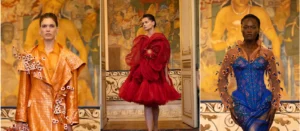
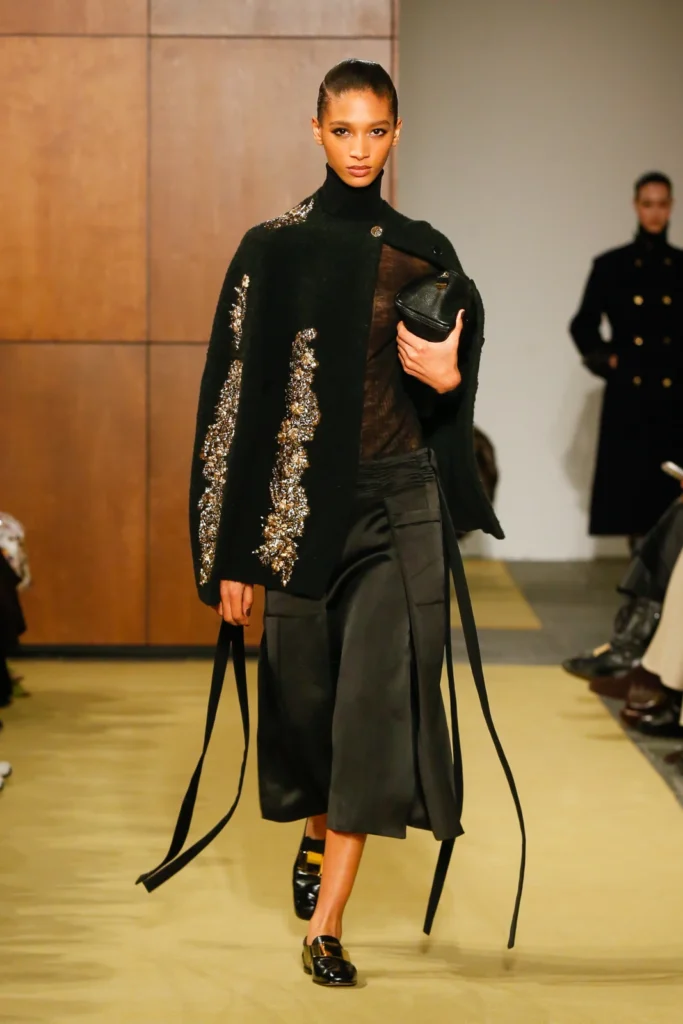
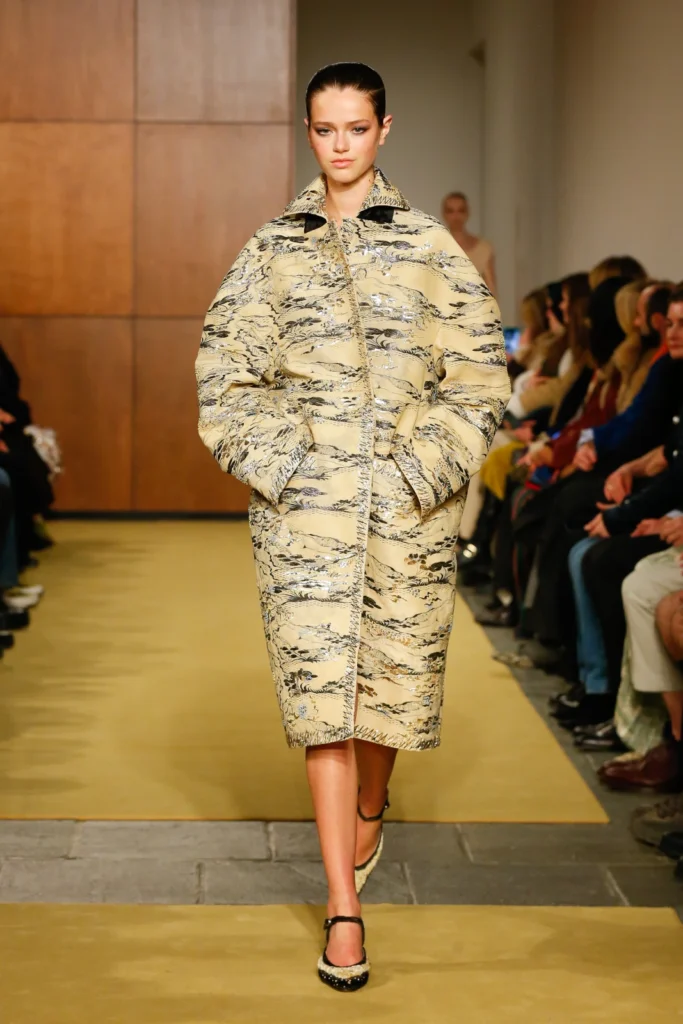
Craft carried the collection’s weight. Cardigans and rounded coats were layered with badla embroidery, done by hand by artisans in India, metallic threadwork placed against humble knits with deliberate contrast. Shetland wool sweaters were brushed and washed to an almost weightless softness. Silk dresses were thrown in the wash for a lived-in finish. Drop-waist dresses were left undone at the seams, a form of deliberate incompleteness that read as finishing rather than oversight.
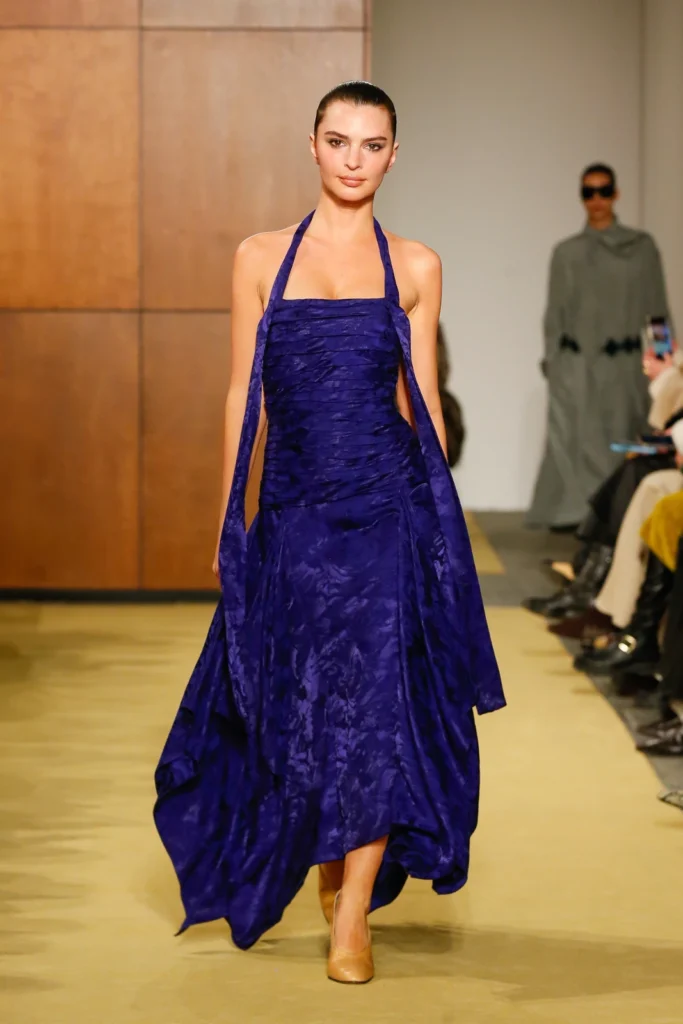
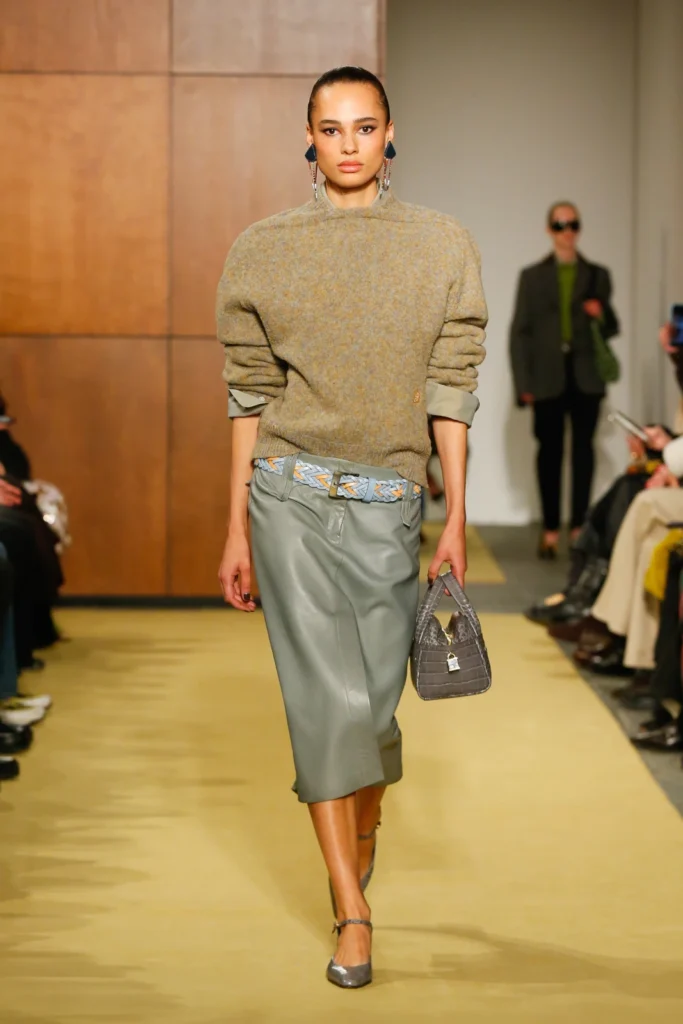
Accessories had texture and specificity. Leather-wrapped shell earrings, sardine pins and handwoven leather and raffia bags grounded sharp tailoring and sportswear. Bags included soft duffles referencing vintage military dopp kits and a new Charlie satchel alongside the Bunny Knot quilted shoulder bags.
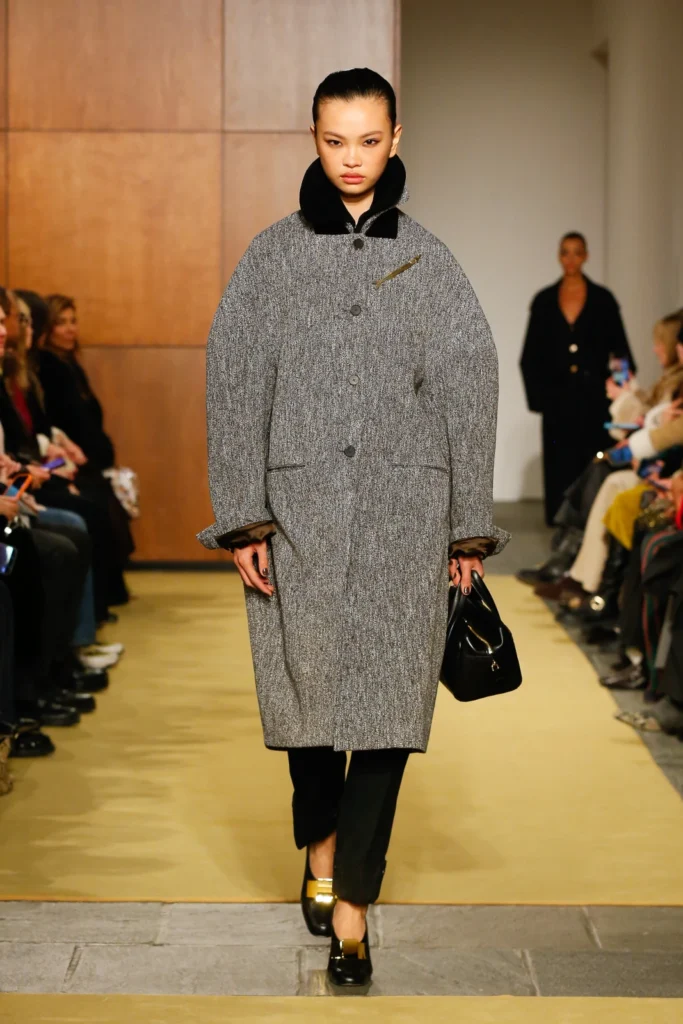
Shoes ranged from ladylike pumps to cut-out loafers, flat boots and a new low pump in ultra-plush velvet stitched with pearls. Jewelry drew from natural materials, shells, lava rock beads, embossed leather and fish pendants, alongside wrap-around metal sunglasses and delicate watches referencing vintage timepieces.
Music producer Wladimir Schall scored the show with a sequence that included “The Art of Meditation” by Sigur Ros, Formless, Paul Corley and Alan Watts, “Stumble Out of Bed” by The Bran Flakes, “9 to 5” by Dolly Parton, “Pinky’s Dream” in a Trentemøller remix by David Lynch and Karen O, “Can’t Get You Out of My Head” by Desire and Guy Gerber, and “The Order of Death” by Public Image Ltd. Burch’s note for the collection described it as “a meditation on what endures, especially in times of chaos and despair. Classics shaped by history and utility, made personal through our own stories and experiences, where true style originates.”