
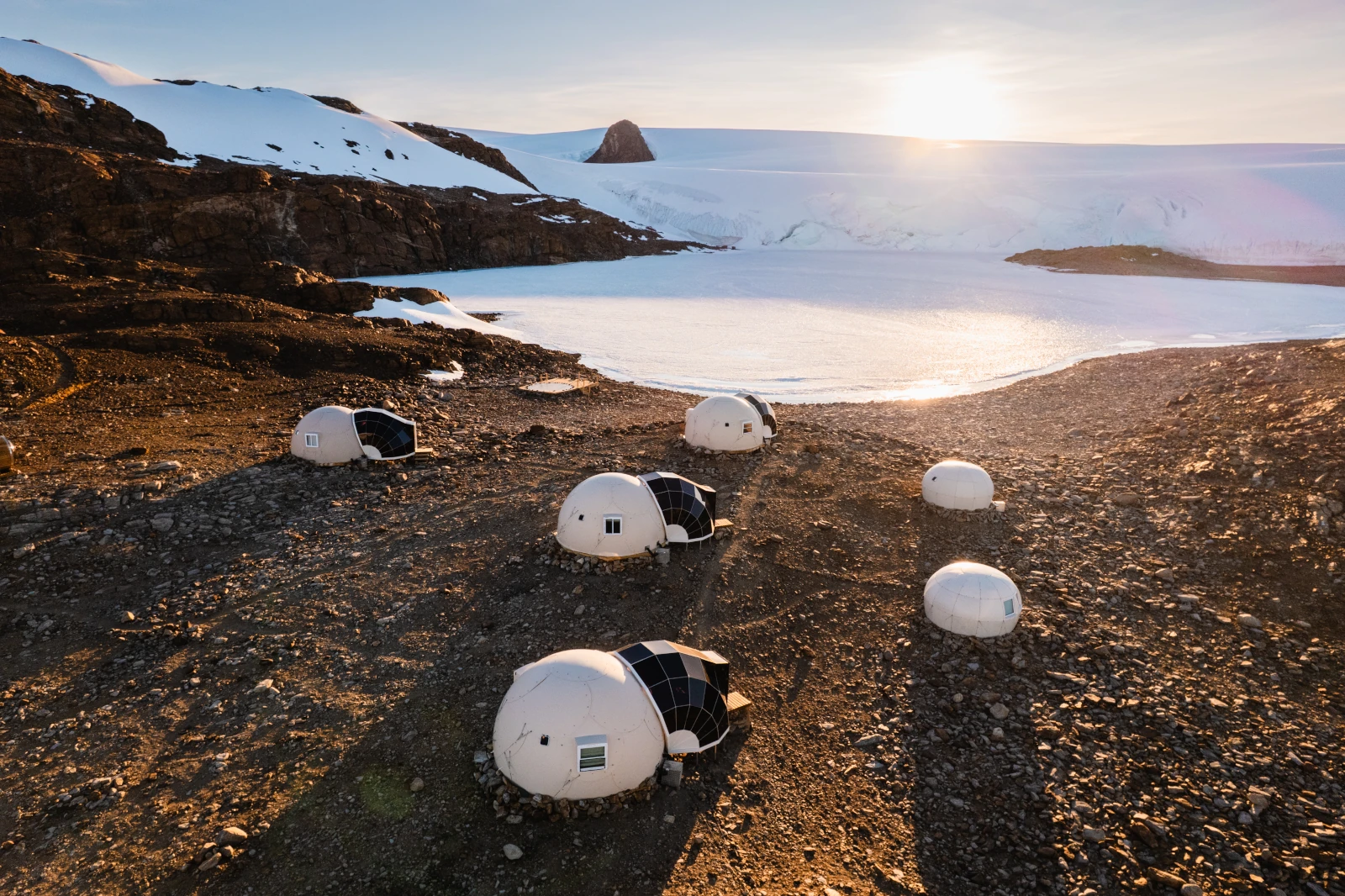
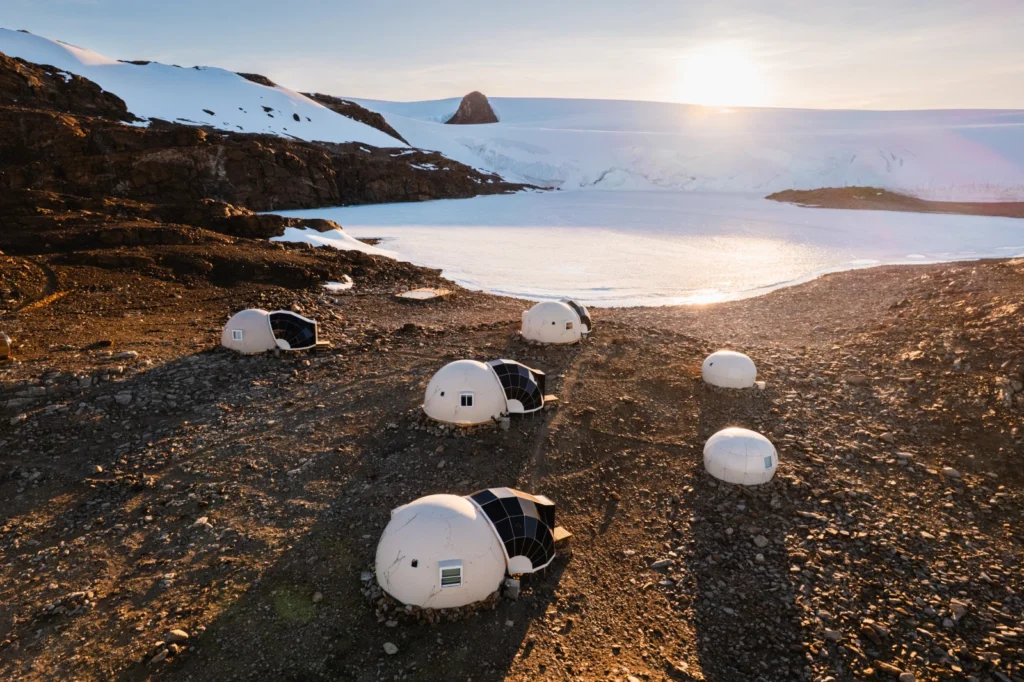
White Desert Antarctica, the only luxury operator with permanent seasonal camps on the southern continent, has just completed a comprehensive overhaul of its three properties, most notably the flagship Whichaway camp where the company’s story began two decades ago. The continent that holds 90% of the world’s ice has never been particularly accommodating to human ambition, yet the transformation represents more than aesthetic updates.
It signals a shift in how polar tourism is being packaged for travelers, who increasingly view extreme destinations not as conquest opportunities, but as spaces for genuine disconnection from an overstimulated world. White Desert has rebuilt Whichaway entirely while relaunching its Explorer camp, betting that the appetite for Antarctic experiences now extends beyond expedition purists to include guests seeking luxury wilderness immersion.
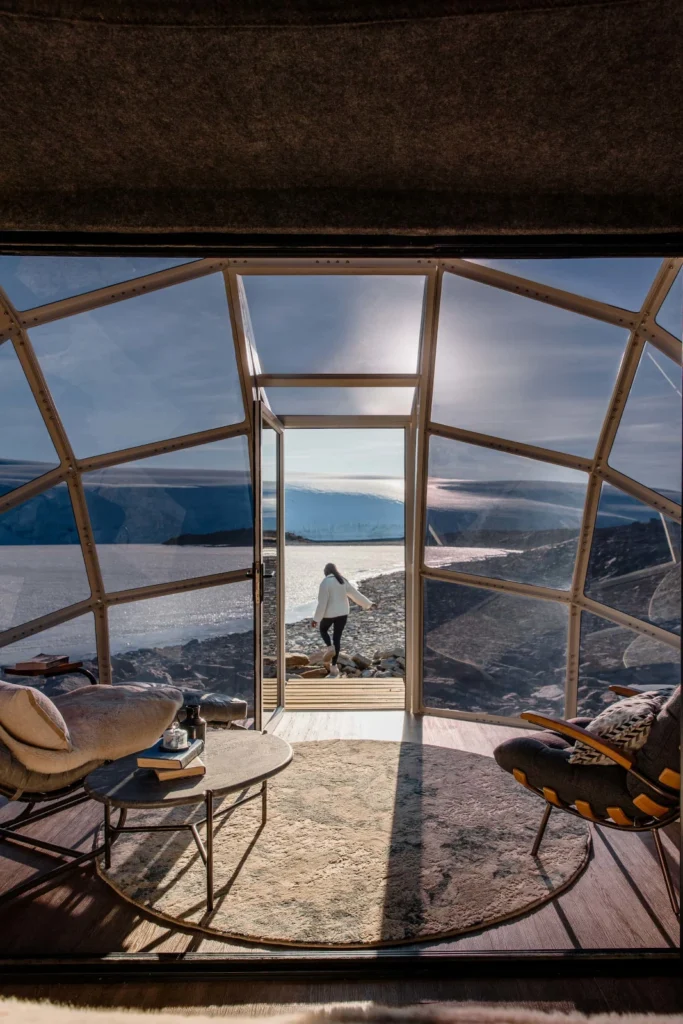
Whichaway occupies a position in the Schirmacher Oasis, an ice-free zone that comprises less than 3% of Antarctica’s landmass. Such terrain is exceptionally rare. Most of the continent remains buried under ice sheets averaging 1.9 kilometers thick. Here, blue ice cliffs rise against a network of more than a hundred freshwater lakes, creating visual drama that the redesigned pods now frame through expanded windows.
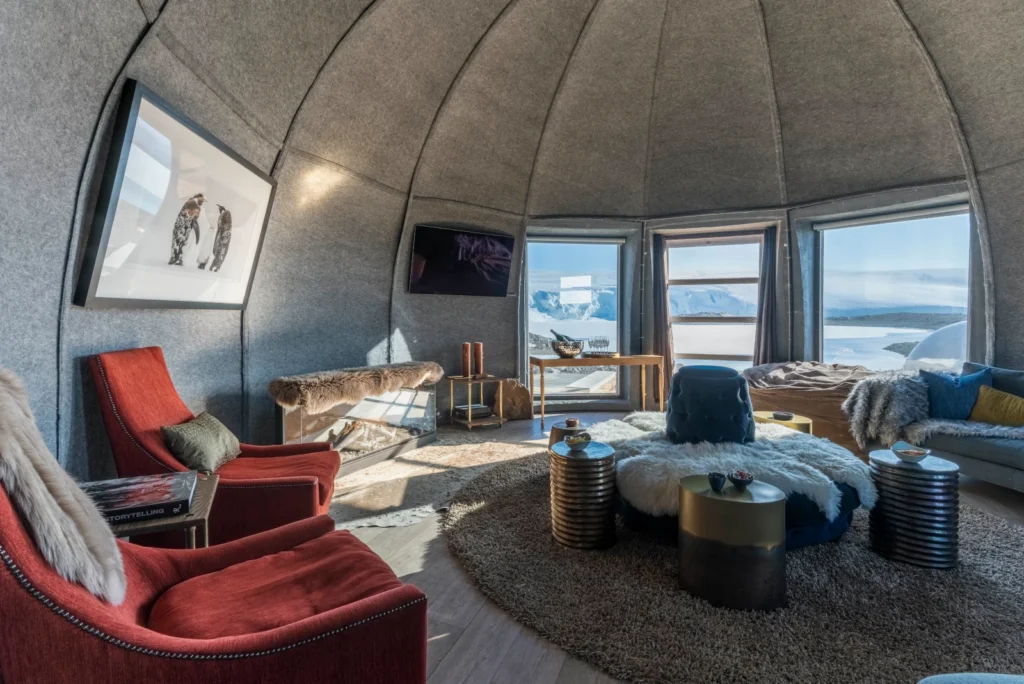
Founders Patrick and Robyn Woodhead established the camp years ago, naming it after Patrick’s first reaction when surveying the windswept coastline: “Which-a-way?” That question captured the disorientation inherent to a landscape where familiar markers of direction and scale cease to function normally. What began as a husband-and-wife operation has evolved into a company that now serves approximately 150 guests per season, according to industry reports, flying them via private Gulfstream jet from Cape Town to a blue-ice runway that the company maintains year-round.
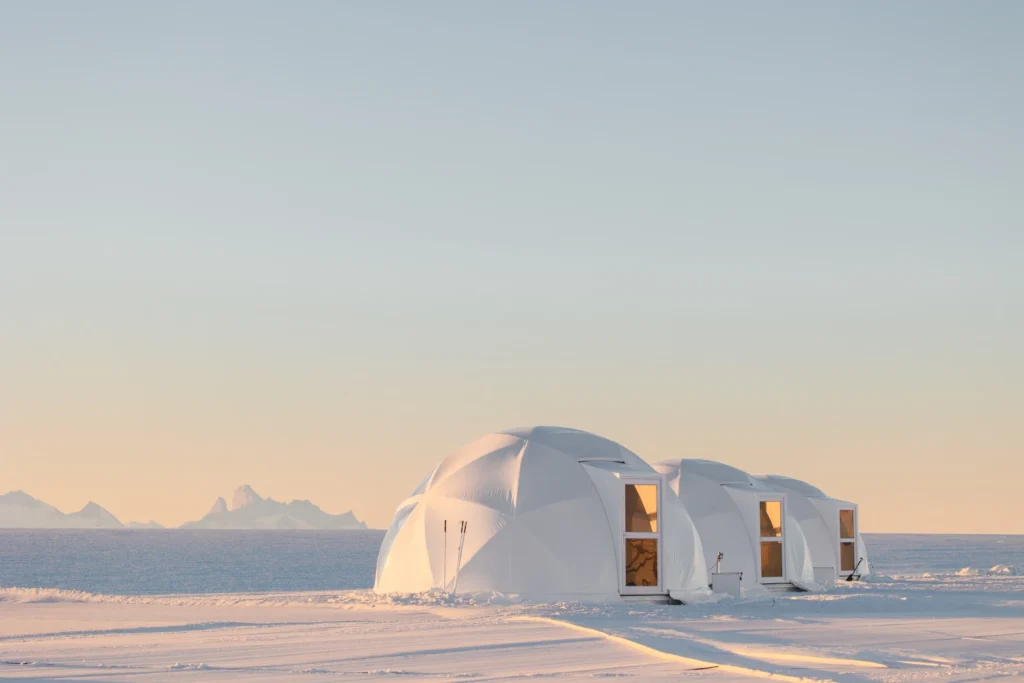
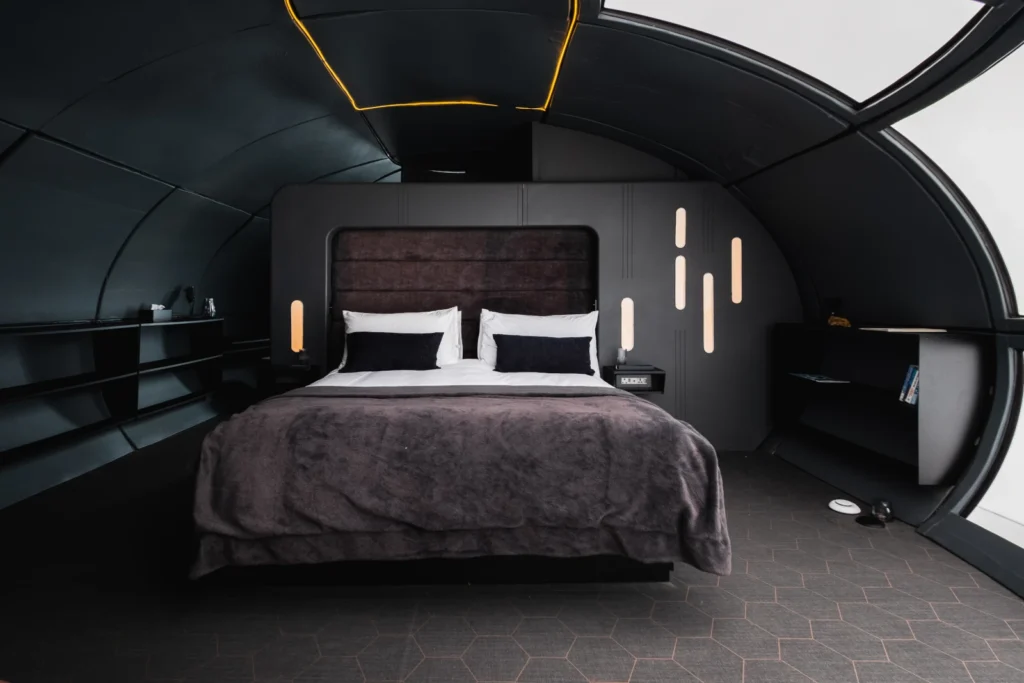
Newly configured pods prioritize warmth and refinement, a deliberate counterpoint to the hostile environment outside. This design philosophy reflects broader trends in adventure travel, where operators increasingly understand that exposure to extreme conditions registers more powerfully when balanced against comfort. Contrast heightens awareness rather than dulling it.
The Explorer camp takes a different approach. Positioned beneath T-Rex Mountain, it has been relaunched with what White Desert describes as a “polar adventure meets Alpine chalet” aesthetic. Heated bedroom tents serve guests who want tactile engagement with polar conditions, and the camp maintains its role as the primary departure point for South Pole expeditions, a journey that covers roughly 1,100 kilometers from the coast.
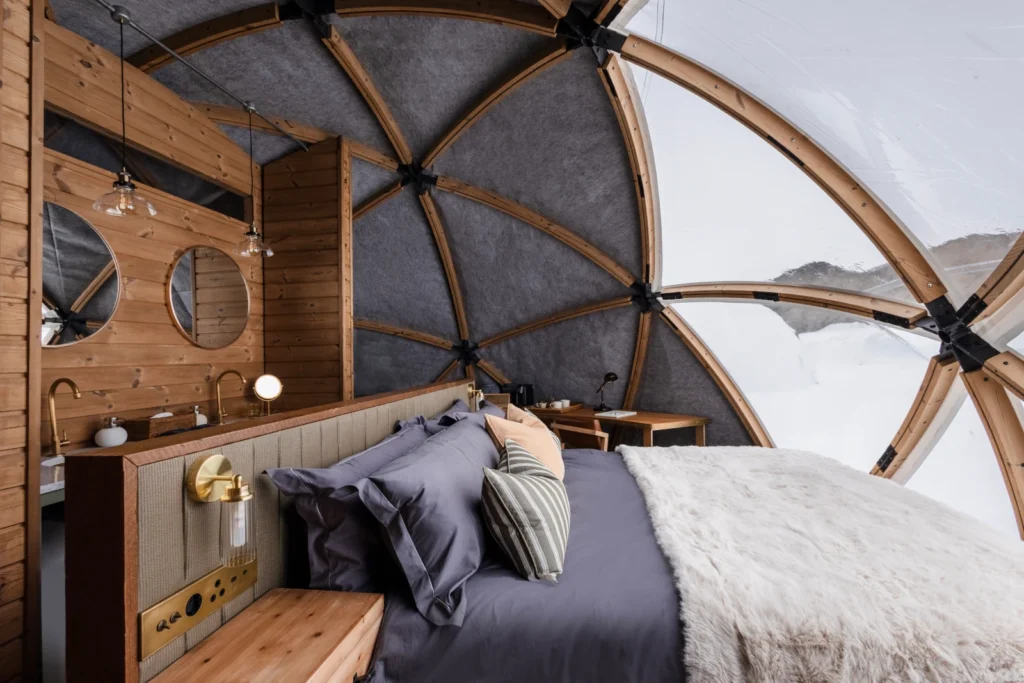
Distinction matters in a market where adventure tourism has splintered into increasingly specific subcategories. Some travelers want challenge and discomfort as proof of authenticity. Others want access to remote places without the traditional hardships that access once required. White Desert now offers both, acknowledging that these represent different but equally valid approaches to experiencing Antarctica.
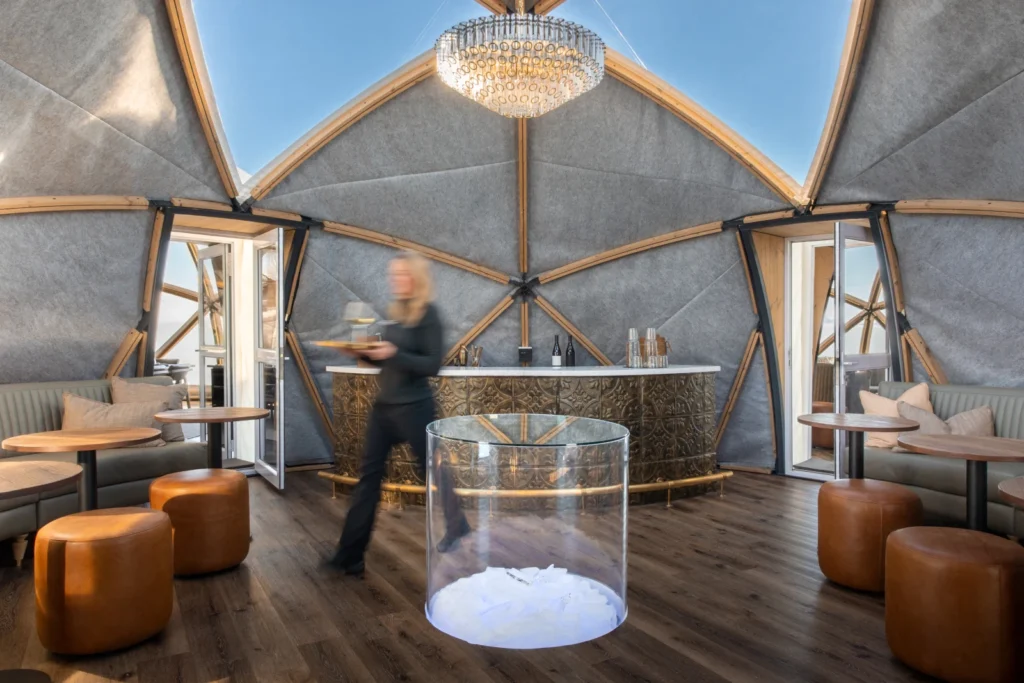
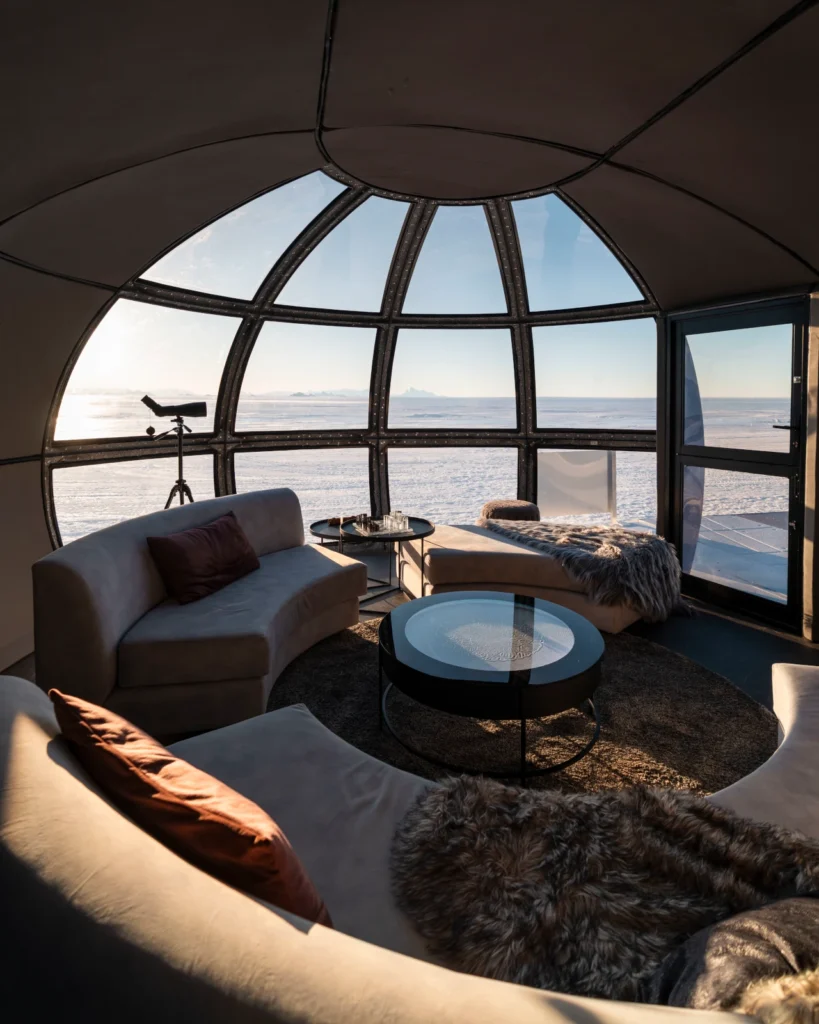
Echo camp operates as the company’s experimental edge. Set on a remote glacier and surrounded by nunataks, isolated mountain peaks that break through ice sheets, it features futuristic pods with floor-to-ceiling windows designed to blur boundaries between interior space and the Antarctic expanse. Design language here borrows more from science fiction than traditional polar architecture, targeting guests for whom Antarctica’s appeal lies not in expedition heritage or natural history but in the sensation of entering an environment so alien it might as well be another planet.
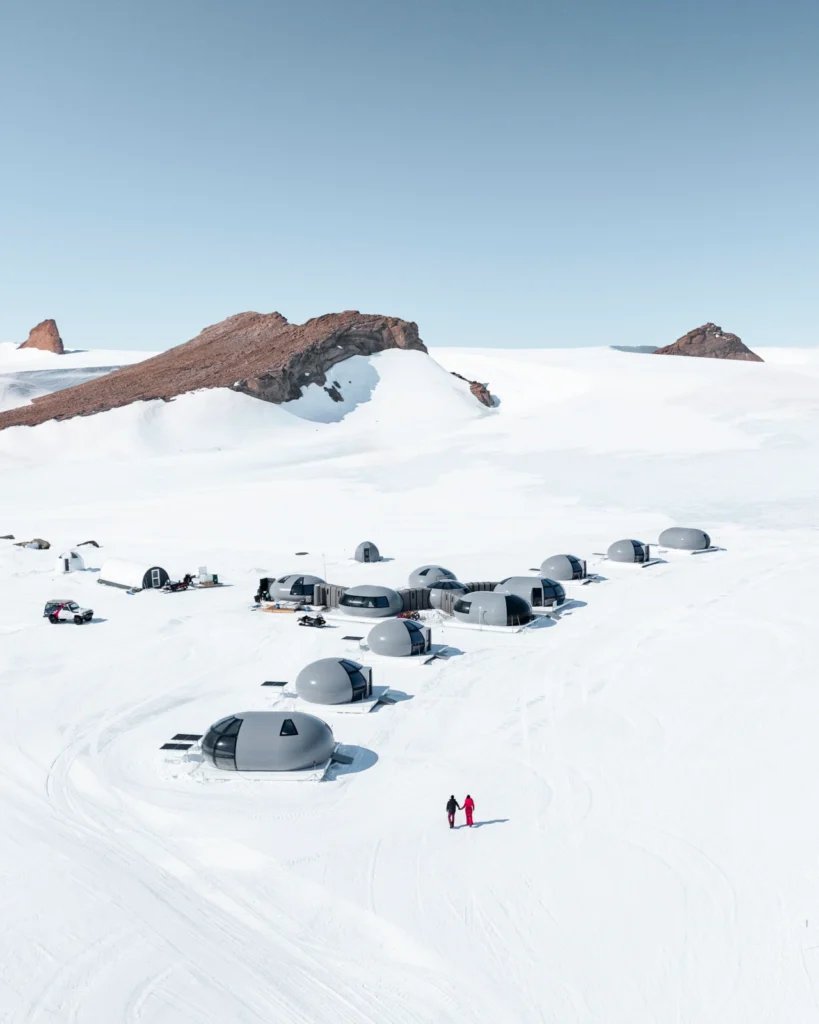
White Desert’s ability to execute this scale of redesign after 20 years demonstrates something about Antarctic tourism infrastructure development. Operations run under strict environmental protocols governed by the Antarctic Treaty System, which designates the continent as a natural reserve devoted to peace and science. All structures must be removable. All waste must be exported. Regulatory frameworks ensure that even luxury tourism leaves minimal permanent footprint, which paradoxically allows for these kinds of seasonal reinventions.
Timing also reflects practical realities. Antarctic tourism operates within a compressed summer window from November through February when temperatures rise to merely brutal rather than lethal. White Desert uses the eight-month off-season for construction and logistics, flying materials and staff to their private basecamp at Wolf’s Fang, a natural runway system discovered by the Woodheads during early reconnaissance flights.
Tourism to Antarctica has grown significantly over the past decade, though it remains infinitesimal compared to conventional destinations. International Association of Antarctica Tour Operators data shows approximately 100,000 visitors to the continent during the 2022-2023 season, most arriving by ship to the Antarctic Peninsula. Land-based operators like White Desert serve a fraction of that number, typically flying guests directly to interior camps via private aircraft. Barrier to entry, both financial and logistical, keeps volumes low and exclusivity high.
A typical week-long White Desert experience reportedly costs upward of $80,000 per person, positioning it firmly in the ultra-luxury segment alongside expedition brands like Abercrombie & Kent’s private jet journeys.
Antarctica, long marketed as the ultimate frontier to be conquered, is being repositioned as a setting for immersion and stillness, where presence carries more weight than spectacle. Operating three seasonal camps, each with a distinct personality, allows White Desert deliver unique flavors of the white continent, suitable for any kind of luxury traveler.