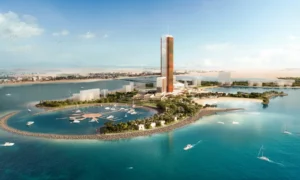

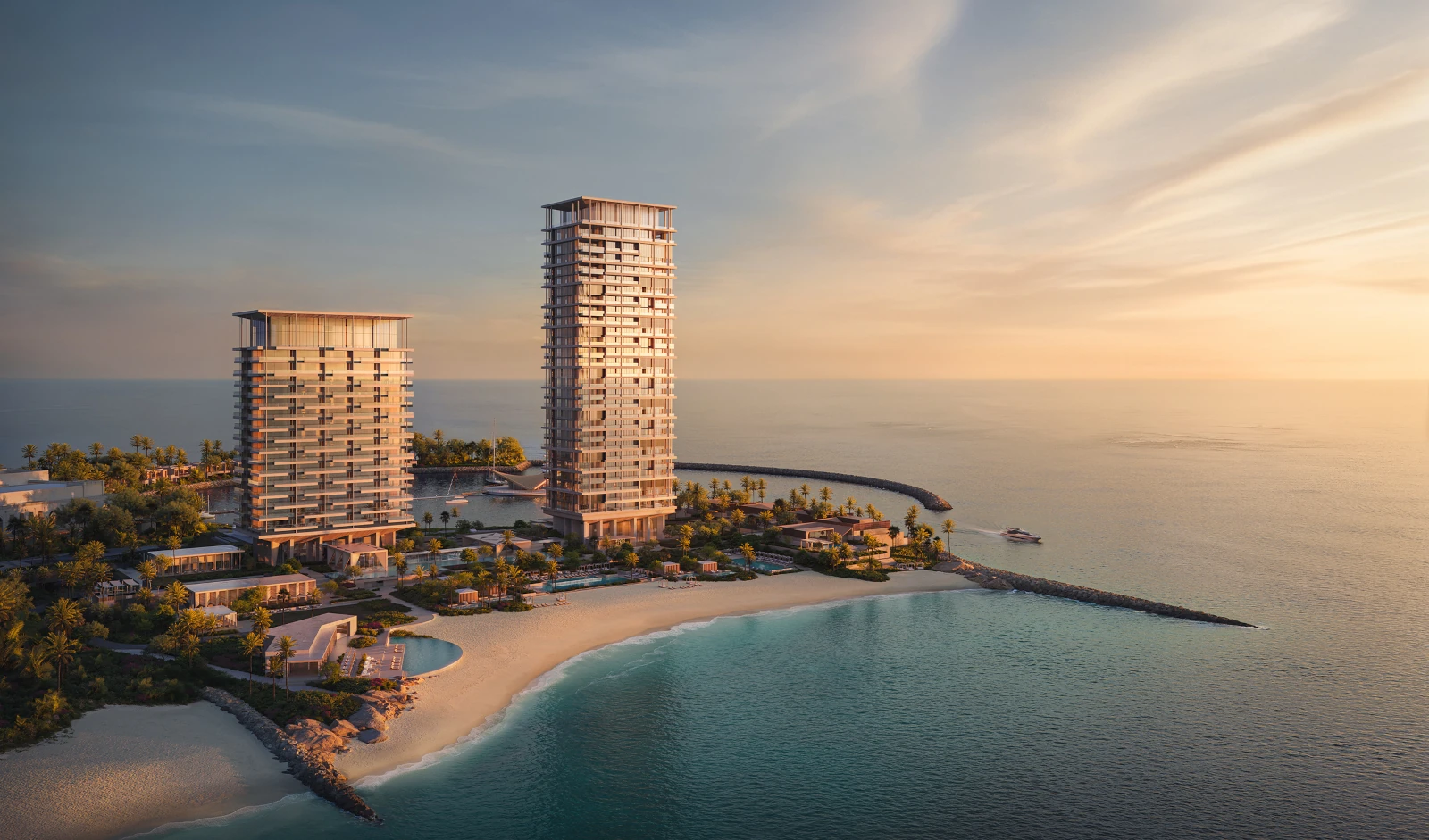
Aman Group has confirmed plans for Janu Al Marjan Island, marking the hospitality brand’s second property in the United Arab Emirates. This announcement positions Ras Al Khaimah as an increasingly important destination within the group’s regional expansion strategy, following Janu Tokyo, which opened in 2024 as the brand’s inaugural property.
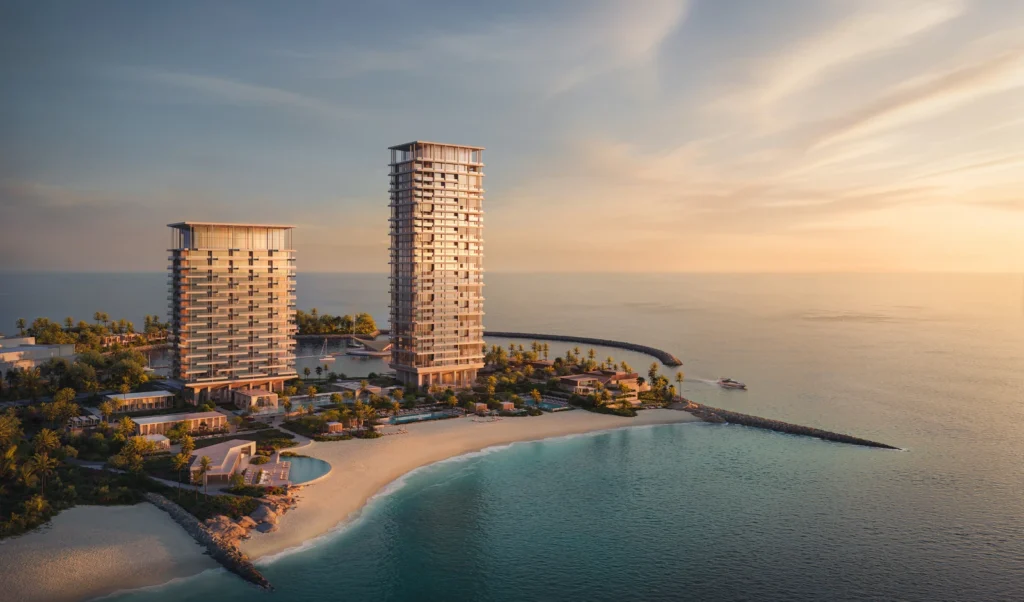
Janu Al Marjan Island will occupy a site on a man-made archipelago extending into the Arabian Gulf. Singapore-based SCDA Architects has been tasked with designing the resort, which will feature 132 hotel keys alongside a residential tower containing one- to five-bedroom units and standalone villas. Al Marjan Island has been central to Ras Al Khaimah’s tourism infrastructure development over the past decade, with the government positioning it as a prime waterfront destination.
Janu operates as Aman’s sister brand, though it targets a markedly different demographic than its parent company’s ultra-luxury properties. Aman built its reputation on privacy, exclusivity, and a relatively isolated guest experience across properties in remote locations like Bhutan, Indonesia, and Montenegro. Janu, by contrast, emphasizes social connectivity and communal experiences. Vlad Doronin, who acquired Aman in 2014 for a reported $358 million, launched Janu as a separate brand in 2019, clearly intending to capture younger affluent travelers who prioritize wellness and social interaction over traditional luxury markers.
SCDA Architects, founded by Soo Chan in 1995, has built a portfolio focused on tropical modernism and resort design across Asia. Their work on properties like Alila Villas Uluwatu in Bali and Soori Bali demonstrates an approach that integrates natural landscapes with contemporary design, which aligns with Janu’s stated emphasis on connection to the destination.
Amenities at Janu Al Marjan Island will include a wellness centre with yoga studio, gym, banya (Russian style sauna), and hammam. Dining and entertainment options will span two restaurants, a Mixology Bar, and a nightlife venue. A Kids’ Club will cater to families, while a private beach, Beach Club, and pool will provide water access. Residential owners will receive full access to hotel amenities, a mixed-use model that has become increasingly common in Gulf hospitality developments where long-term profitability often depends on residential sales rather than room revenue alone.
Proximity to Wynn Al Marjan Island and direct marina access with mooring facilities suggests Janu is targeting guests who travel by private yacht, a significant demographic in the Gulf region. Ras Al Khaimah has invested heavily in marina infrastructure, though it still lags behind Dubai Marina and Abu Dhabi’s Yas Marina in terms of capacity and services.
Doronin, Chairman and CEO of Aman Group, said, “Ras Al Khaimah is rapidly emerging as one of the Middle East’s most captivating destinations, making it a natural home for our next Janu property. Janu Ras Al Marjan Island will offer a vibrant setting where like-minded individuals can connect through shared experiences, immerse themselves in the region’s striking natural beauty, and embrace the brand’s spirited approach to contemporary, connected living.”
Janu’s expansion blueprint includes projects in Dubai, Turks and Caicos, and Saudi Arabia. Dubai’s Janu property will reportedly occupy a site in Bluewaters Island, though firm opening dates have not been announced. This UAE clustering is strategic, allowing the brand to establish regional recognition before expanding to less familiar markets. Turks and Caicos represents an entry into the Caribbean luxury market, while Saudi Arabia aligns with Vision 2030’s tourism push, which has attracted commitments from numerous international hospitality groups.
Ras Al Khaimah’s tourism arrivals grew by 6% in the first half of 2025, according to government data, driven partly by new hotel partnerships and improved direct flight connectivity to multiple countries.
For Ras Al Khaimah, securing a second Janu property alongside the forthcoming Dubai location validates the emirate’s decade-long effort to reposition itself within the UAE’s tourism landscape. The emirate has leveraged its natural assets, particularly its coastline and mountains, to differentiate from Dubai’s urban luxury and Abu Dhabi’s cultural focus.