
American Folk Art Museum’s programming for 2026 will foreground artists working outside formal training, examining how they have shaped their own identities over the past century. Arriving during the United States’ 250th anniversary year, the trio of exhibitions positions questions of artistic agency and national belonging within a moment of heightened reflection on American history.
Three exhibitions will unfold in phases across 2026. Two debut in April, followed by a major presentation on early American needlework and ornamental arts in October. Each show will occupy the New York-based museum’s newly renovated galleries and draw primarily from its permanent collection, complemented by key loans.
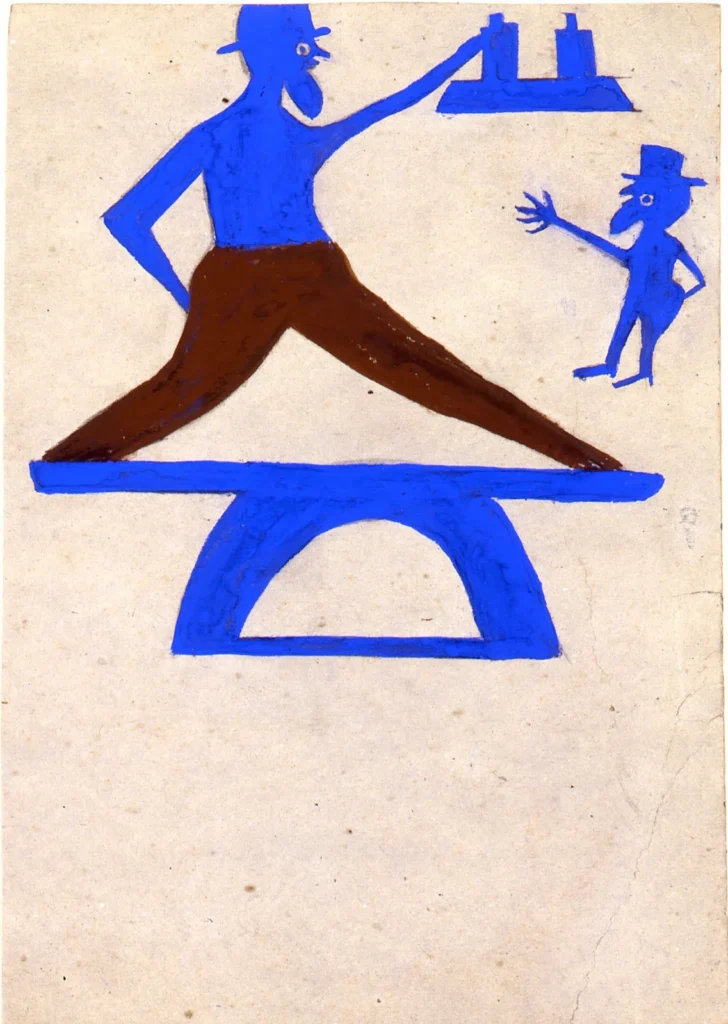
Self-Made: A Century of Inventing Artists opens April 10 and runs through September 13. The exhibition presents 90 artworks that document how formally untrained artists have portrayed themselves as artists, a subject the museum notes has not been systematically examined before. The show includes self-portraits, signature pieces, and depictions of alter egos, tracking methods of artistic self-fashioning from the early 20th century to the present.
The selection brings together American artists including John Kane, Morris Hirshfield, Martín Ramírez, Henry Darger, Sister Gertrude Morgan, Thornton Dial Sr., Joe Coleman, and Nicole Appel. International artists such as Aloïse Corbaz, Madge Gill, Augustin Lesage, Adolf Wölfli, and Marcel Bascoulard appear alongside them. The presentation extends beyond traditional paintings and sculptures to include photographs, artists’ notebooks, and videos, many recently acquired and rarely exhibited.
Valérie Rousseau, the museum’s Curatorial Chair and Senior Curator of 20th-Century & Contemporary Art, is curating the exhibition with assistance from Suzie Oppenheimer, the Ponsold-Motherwell Curatorial Fellow. The project takes what Rousseau describes as a critical approach to the historical formulation of the self-taught artist in the United States, examining a category that has shaped how institutions and markets have understood this work for decades.
The term “self-taught artist” has long carried complicated implications. It has served to recognize creators working outside academic systems while simultaneously marking them as separate from the mainstream art world. By focusing on how these artists represented themselves, rather than how others have labeled them, the exhibition reframes questions of artistic agency and creative aspiration.
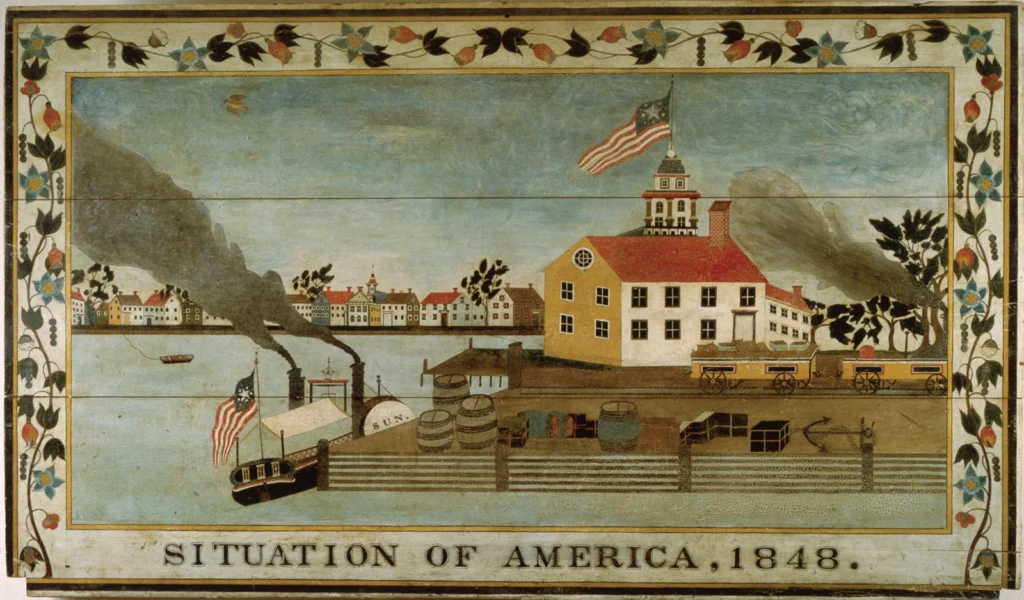
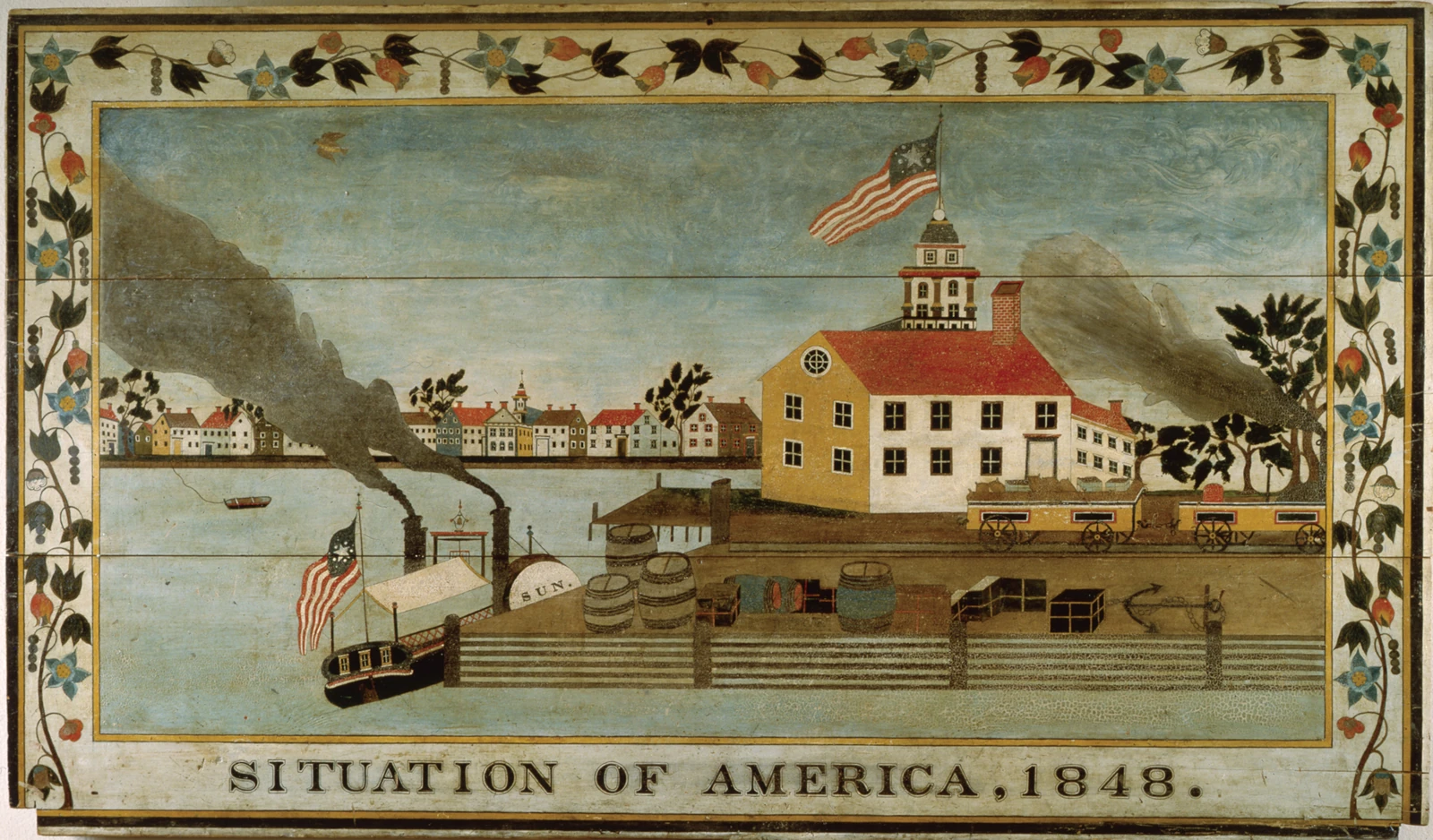
Launching the same day, Folk Nation: Crafting Patriotism in the United States remains on view through September 2027. Curators Emelie Gevalt and Caroline Culp examine the role vernacular objects have played in shaping ideas of American identity. The concept of “folk” is presented not as an inherent category but as one intertwined with the evolution of art and antiques markets.
Objects are positioned as carriers of layered meanings, shaped by their makers but also by collectors, dealers, and later owners who used them to construct narratives about American culture. Many early American pieces became symbolic tools through which subsequent generations defined the nation’s ideals, anxieties, and mythologies.
This historical dynamic intensified after the Revolutionary War and surged during the late 19th and early 20th centuries, when a young nation sought cultural legitimacy. Colonial Revival enthusiasm, mid-century scholarship, and waves of folk art collecting provide the context for understanding how patriotism has been expressed, revised, and sometimes romanticized through craft traditions. Installed in the Audrey B. Heckler Gallery, the exhibition explores both patriotic expression and the contradictions embedded within it.
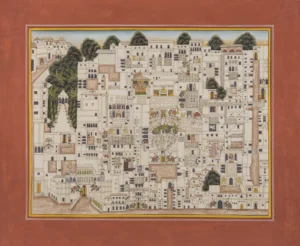
Arriving on October 8, Locating Girlhood: Place and Identity in Early American “Schoolgirl” Art gathers roughly 100 works from more than 35 museums and private collections. Long celebrated but rarely considered collectively at this scale, these needlework and ornamental objects reveal the significance of place in shaping the artistic output of 18th and 19th century American girls.
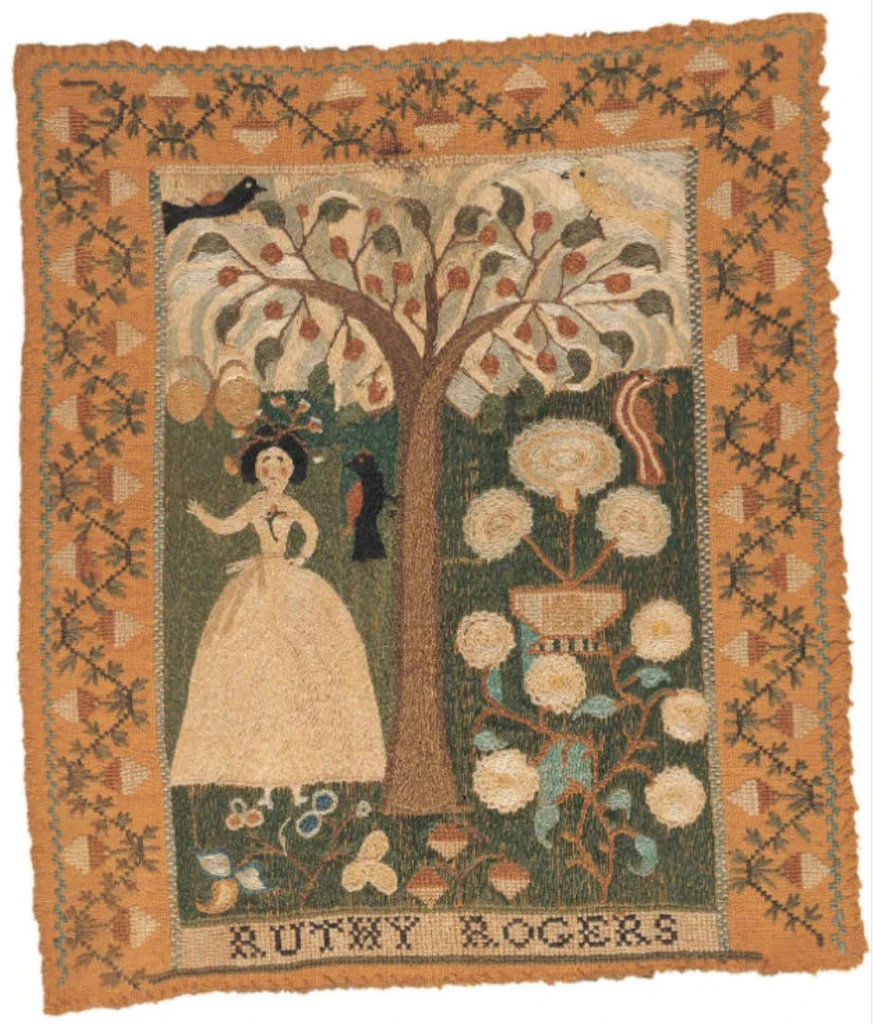
Samplers, needlework pictures, watercolors, and cartographic compositions often incorporated landscapes, from rural scenes to urban views, positioning young women as contributors to American landscape traditions long before the Hudson River School. Reframing these works as part of the broader history of American visual culture elevates material historically categorized as decorative or amateur.
Gevalt and Culp’s art historical approach highlights both the creativity of these young makers and the ideological frameworks, colonial, religious, and patriotic, that shaped their education and worldview. Presented during the semiquincentennial, the exhibition examines girlhood as both an artistic and cultural construct.
Together, the three exhibitions articulate a shared interest in self-definition, creative agency, and the narratives nations build through objects and images. Major support for Self-Made comes from Roberta S. and Ralph S. Terkowitz, with additional funding from the Robert Lehman Foundation. Folk Nation receives lead support from Catherine Loevner, with additional backing from Citi. Locating Girlhood is supported by Elizabeth and Irwin Warren, the Henry Luce Foundation, and the Historical Society of Early American Decoration. All three exhibitions are funded by the New York City Department of Cultural Affairs, the New York State Council on the Arts, and the David Davies and Jack Weeden Fund for Exhibitions. The Wyeth Foundation for American Art has supported the Locating Girlhood catalogue.