
Throttling into Jozani Chwaka Bay National Park—Zanzibar’s only national park—the forest slowly begins to unfold. At first, it’s a tangle of shrubs and bushes like wild hibiscus and screw pines. Then, deeper inside, the jungle thickens with towering red mahogany, mangroves, and oil palms rising high above. And just as I’m getting lost in the rhythm of it all, the skies open up with a sudden downpour. Well, you cannot predict the weather much here in Zanzibar, especially during the March–April time.
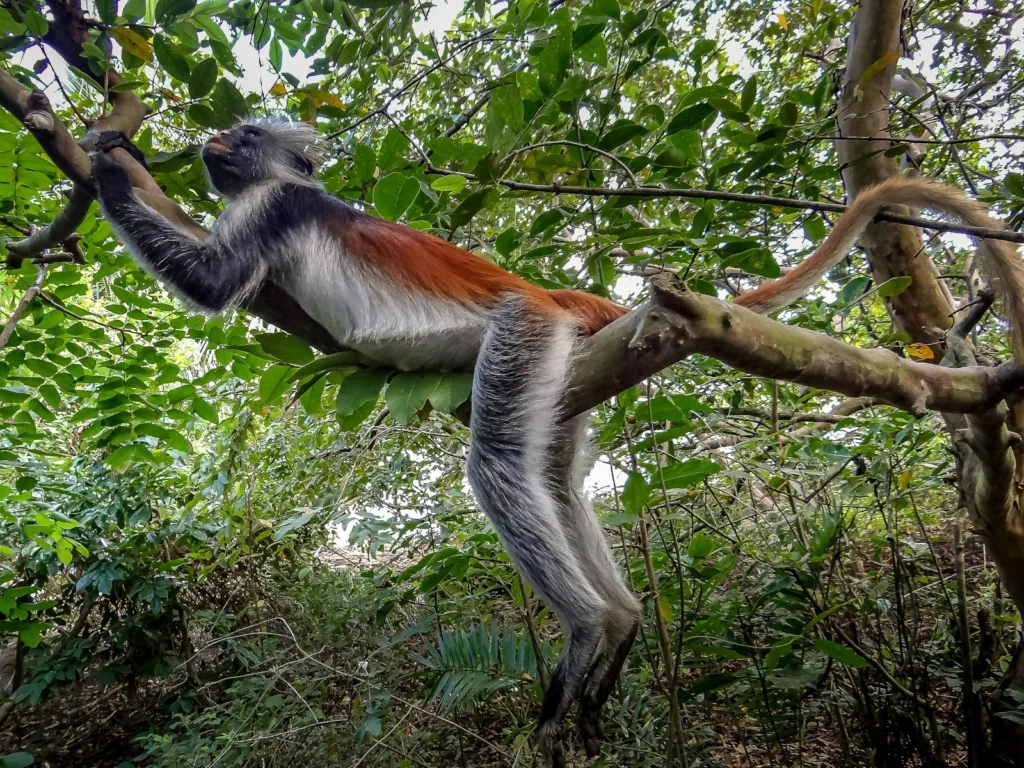
Being in Africa for the very first time, taking a walking safari inside a forest—right in the heart of the dense African wilderness—feels almost ethereal. And rather than feeling unsettled, there’s something profoundly sacred about simply walking here. The air is heavy yet sweet with petrichor, the scent of wet soil mingling with the earthy tang of decomposing leaves. And then, just ahead, a rustle. My guide, Ramadan, from The Residence Zanzibar, raises his hand and points silently toward the treetops. A flash of auburn fur darts between the branches; it’s my first glimpse of the endemic Zanzibar red colobus monkey.
Beyond the beaches
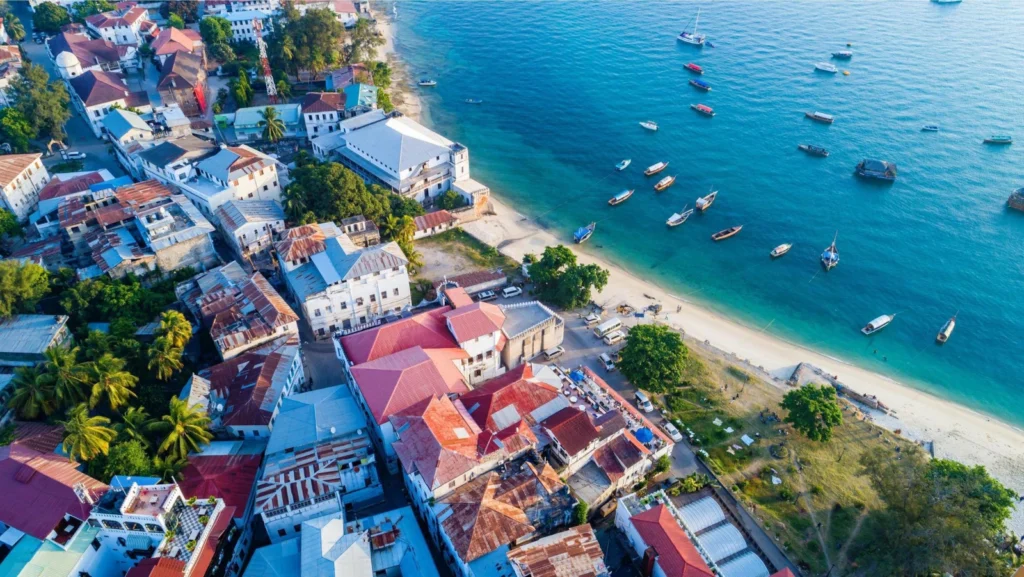
When most people think of Zanzibar, their mind drifts to its postcard beaches—powdery white sand and turquoise tides framed by leaning palms. It’s a place synonymous with spice plantations, ancient Stone Town, and leisurely island escapes. Tanzania’s mainland, meanwhile, is where the action happens: the Serengeti, Ngorongoro Crater, Tarangire—the holy trinity of big-game safaris.
Spanning about 50 square kilometres in the island’s central region, Jozani is a pocket-sized paradise and a mosaic of mangroves, tropical forests and coral rug forests, as well as groundwater, salt marshes, and agricultural and residential areas. The park is home to rare species found nowhere else on Earth, including the Zanzibar red colobus monkey (Piliocolobus kirkii). This primate, with its inquisitive face and distinctive reddish coat, is endemic to the island and once faced near extinction due to habitat loss. However, they now remain one of Zanzibar’s proudest natural symbols.
Under the canopy, we took shelter as the monkeys leapt effortlessly from branch to branch, while a group of enthusiastic photographers followed their every move, clicking away with massive lenses. It was quite a sight—a band of travellers huddled under broad leaves and trees for cover from the rain, while the monkeys went about their own playful day, completely unbothered.
Jozani’s is different; it’s slower, quieter, more introspective.
The rain has eased now, leaving the foliage glistening. Light filters through the branches like soft gold. The forest floor, though seemingly quiet, is alive with termites and millipedes; the canopy above is home to birds like the Fischer’s turaco and African paradise flycatcher.
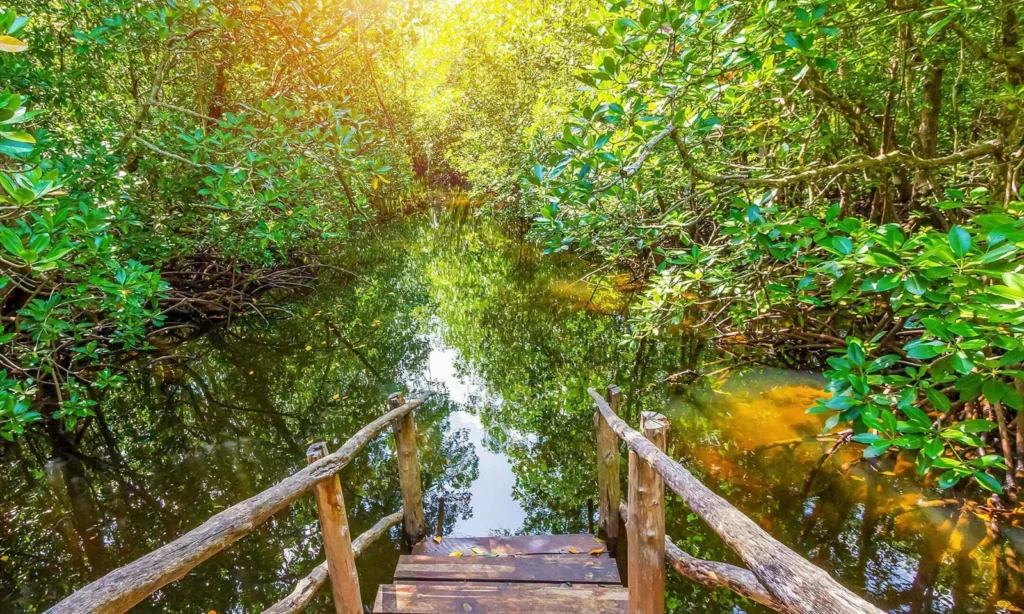
We reach an elevated boardwalk that cuts through the mangrove swamps. The roots, gnarled and knotted, rise dramatically from the brackish water. Ramadan explains how these mangroves shield Zanzibar’s coastline from erosion, acting as natural barriers against tides and storms. They also nurture fish nurseries, crustaceans, and even the elusive Ader’s duiker—a tiny, deer-like mammal that’s one of the rarest antelope species in Africa.
Walking safaris in Africa are not a novelty; parks in Zambia, Kenya, and Tanzania’s mainland have long embraced them. But Jozani’s is different; it’s slower, quieter, more introspective. There’s no adrenaline rush here, no checklist of ‘must-see’ animals. Instead, there’s patience. This forest, despite its small size, holds an enormity that the open savannahs sometimes forget.
While venturing into Zanzibar’s forests is an unforgettable experience, the wildlife doesn’t stay confined to the national park. Being a resort tucked away in a secluded corner of the island, The Residence Zanzibar is surrounded by lush greenery. It becomes a small sanctuary for the island’s unique wildlife. It’s not uncommon to spot a Zanzibar red colobus monkey swinging gracefully through the trees along the resort’s paths, or even the elusive Ader’s duiker, often seen peeking through bushes or foraging along the manicured lawns. There’s a gentle thrill in seeing these creatures so close, reminding you that in Zanzibar, the wild is never far away, even amid luxury.
Sealife bliss
Everything about it feels divine, as if the ocean itself is alive and breathing.
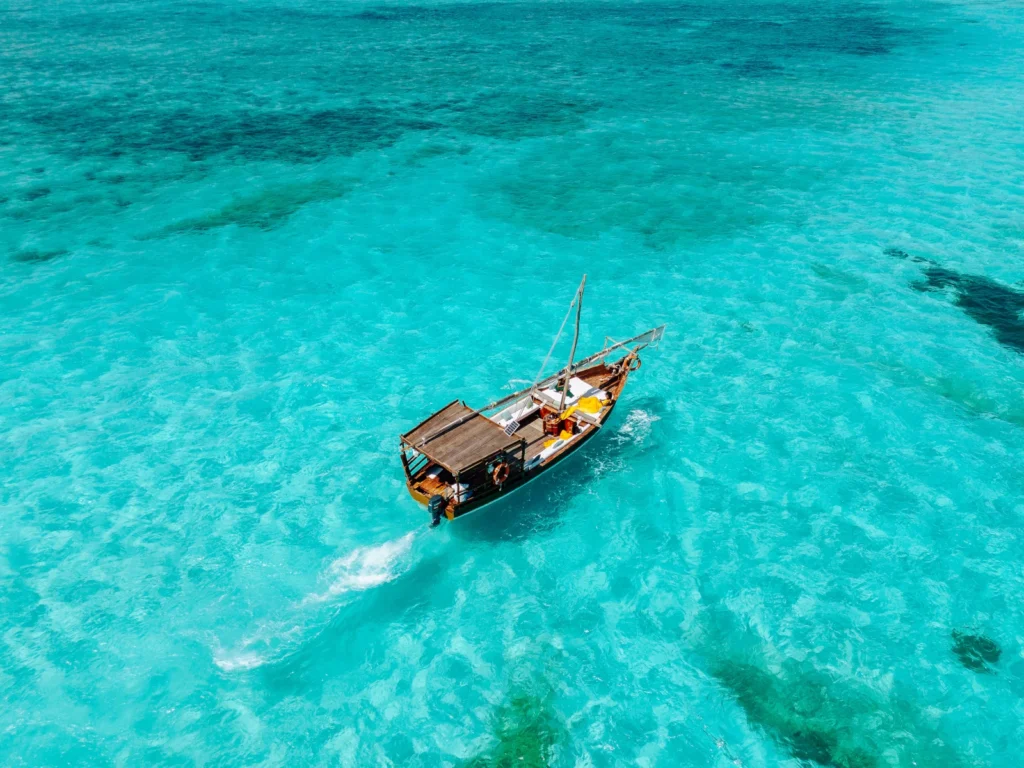
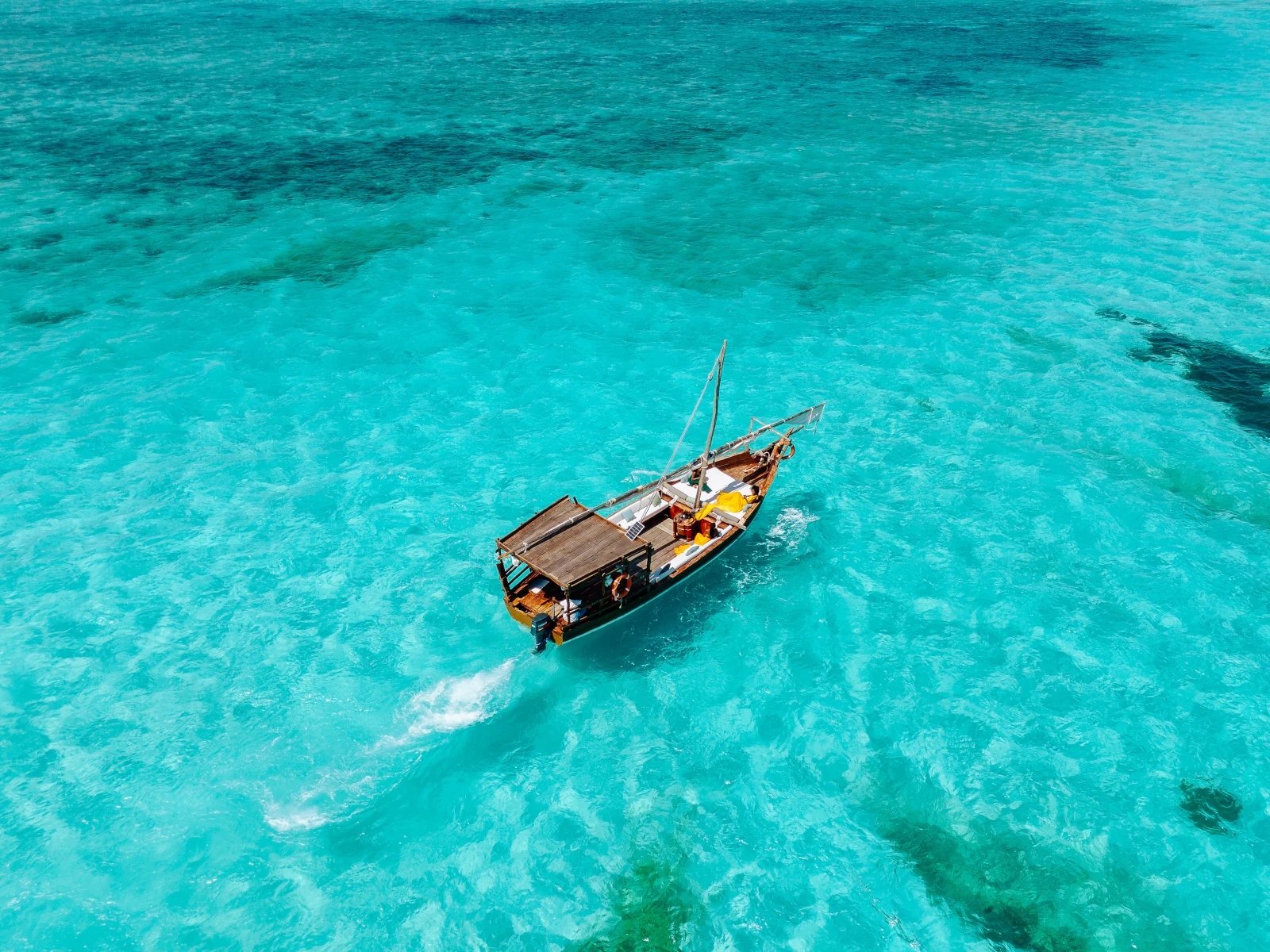
You can’t really be in an ocean island paradise like Zanzibar and not take a plunge into the living sea. Getting up close and personal with the water is, after all, one of the greatest joys of being here. There’s something deeply calming about drifting in these turquoise waters, and snorkelling is a beautiful way to begin your ocean safari—best experienced aboard a traditional dhow. These wooden sailing vessels have graced the Indian Ocean for centuries, once carrying traders and spices between Arabia, East Africa, and India. Built by hand, often without formal blueprints, a dhow is instantly recognisable by its elegant hull and distinctive triangular lateen sail that catches the wind like a billowing wing. Along Zanzibar’s coast, they remain an enduring emblem of the island’s rich maritime heritage.
For someone snorkelling for the first time, it feels almost surreal to slip from the dhow into this vast world of blue. In the afternoon, we set out to explore the underwater realm of Menai Bay, Zanzibar’s largest marine protected area. The crystal-clear, turquoise waters here are a snorkeller’s dream—calm, warm, and impossibly inviting. As I float face-down, the ocean floor reveals itself in breathtaking detail: rippling sands, coral gardens blooming in soft pastels, and tiny damselfish flickering past in flashes of yellow and blue, entirely unbothered by our presence. The silence underwater is almost sacred—the only sounds are the soft crackle of coral and the rhythm of your own breath. Everything about it feels divine, as if the ocean itself is alive and breathing.
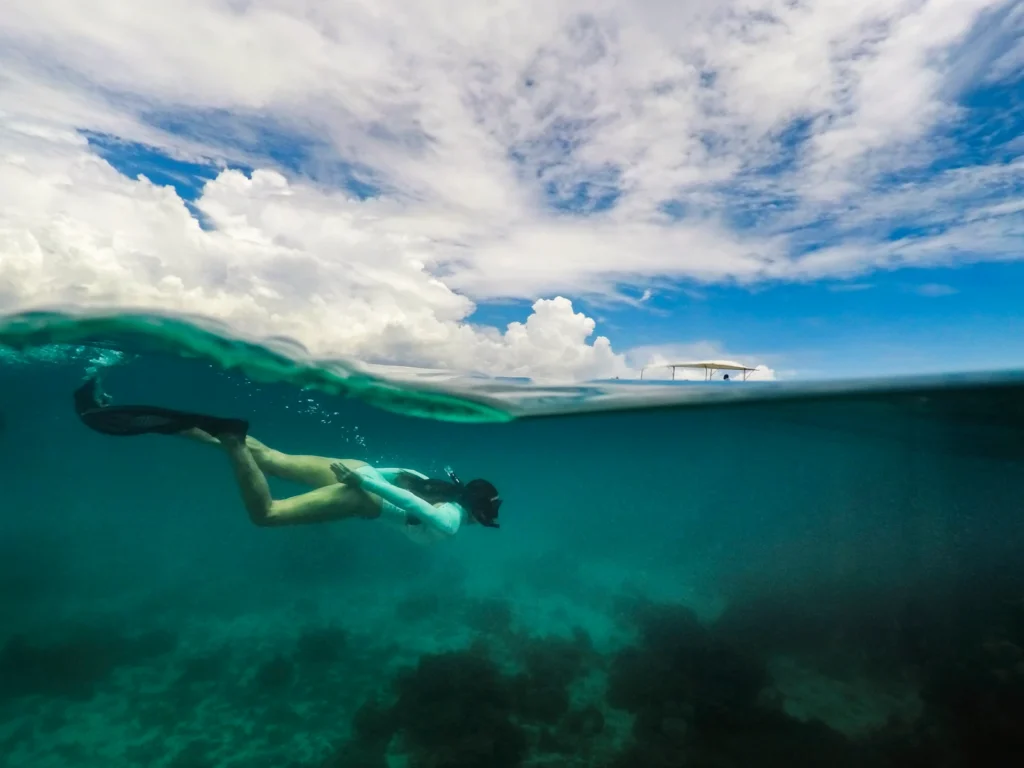
Being out in the ocean—surrounded by endless blue, water stretching as far as the eye can see—makes you feel both quaint and humbled. There are no huts, no beach bars, no sound but the gentle lapping of the tide and the whisper of the wind. You could almost imagine being marooned here, living out your castaway island fantasy with nothing but the sea for company.
We sail toward the deserted isles of Pungwe and Kwale in the Menai Bay Conservation Area, both ringed by lush mangroves and untouched beaches. The water is so clear it feels like glass—you can swim or snorkel among coral gardens alive with colour, watching schools of fish flicker past. As we glide closer to Kwale Island, another uninhabited gem fringed with mangrove forests, the dhow moves through shallow waters tinged a surreal shade of green, where mangrove roots rise from the sea like the fingers of some ancient creature.
Zanzibar’s lifeline
In the shallow, shimmering waters along Zanzibar’s southeast coast, seaweed thrives quietly beneath the sun. One morning in the villages of Paje and Jambiani, we set out across a stretch of powdery white sand, where the tide had pulled back to reveal a glistening expanse of shallow ocean. While The Residence Zanzibar’s nearby waters are home to seaweed farms, Paje remains one of the island’s main hubs for seaweed cultivation.
Once harvested and dried, the seaweed is transformed into handmade skincare products, including lemongrass-scented soaps, soothing balms, and bottled oils, among others.
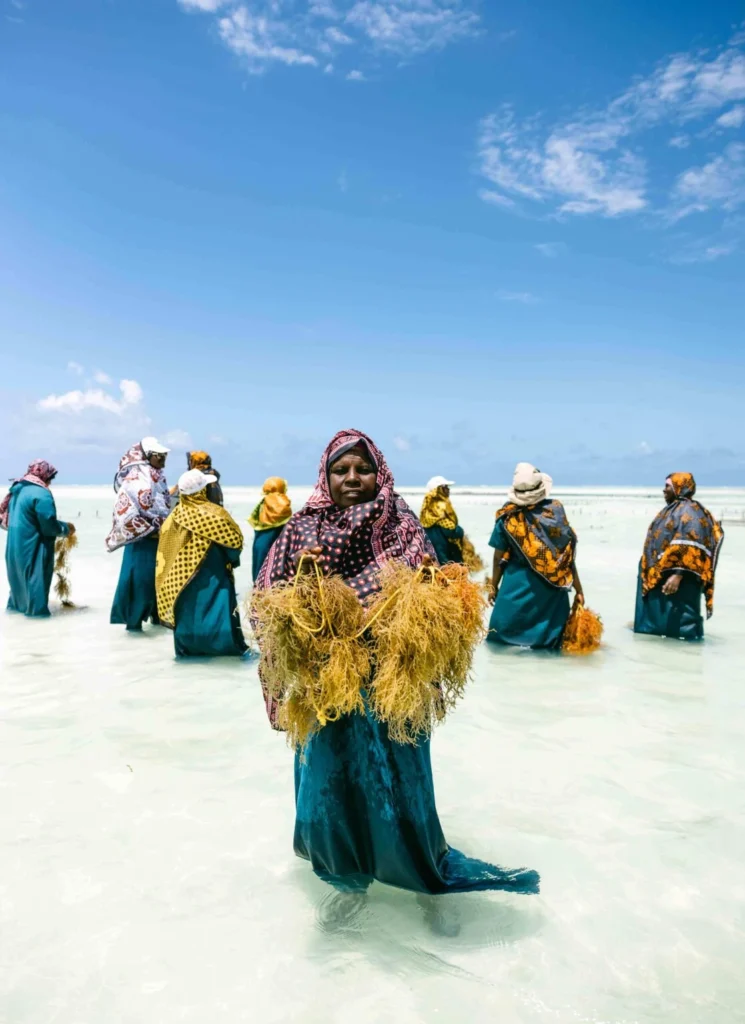
What began in the late 1980s as a small-scale export venture has since become the lifeblood of Zanzibar’s coastal economy—now largely driven by women. Wrapped in colourful kangas and headscarves, they wade into waist-deep waters as they tie seaweed seedlings to ropes held in place by slender wooden stakes.
Once harvested and dried, the seaweed is transformed into handmade skincare products, including lemongrass-scented soaps, soothing balms, and bottled oils, among others. These are sold to visitors and, increasingly, exported through collaborations with luxury hotels. At The Residence Zanzibar, for instance, toiletries crafted by local women’s cooperatives feature proudly in guest villas, bringing the story of these “seaweed mamas” full circle.
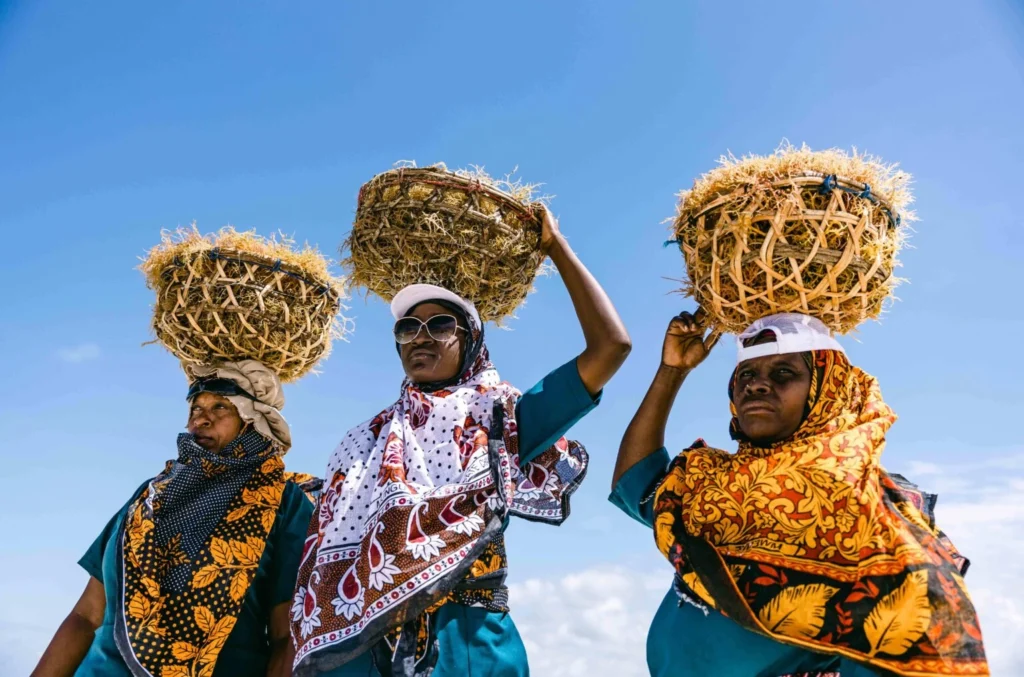
The result is far more than an economic shift; it’s a quiet social revolution. Local products now reach global markets, and an island once reliant solely on spices and tourism is finding new strength in the hands of its women.
As the sun begins its slow descent, we set out on our way back to the resort. The air is thick with salt and sunlight, and the horizon blushes gold. The world feels quieter somehow, the kind of stillness that only a quiet place like this can give. And that, perhaps, is the greatest luxury of all!