
Bottega Veneta’s Winter 2026 collection arrived in Milan with the kind of clarity that most fashion houses spend years working toward. Creative director Louise Trotter did not overhaul the house’s identity so much as she deepened it, drawing on its core strengths, exceptional craft, a preference for restraint, and an obsession with materials, and pushing them into new emotional territory.
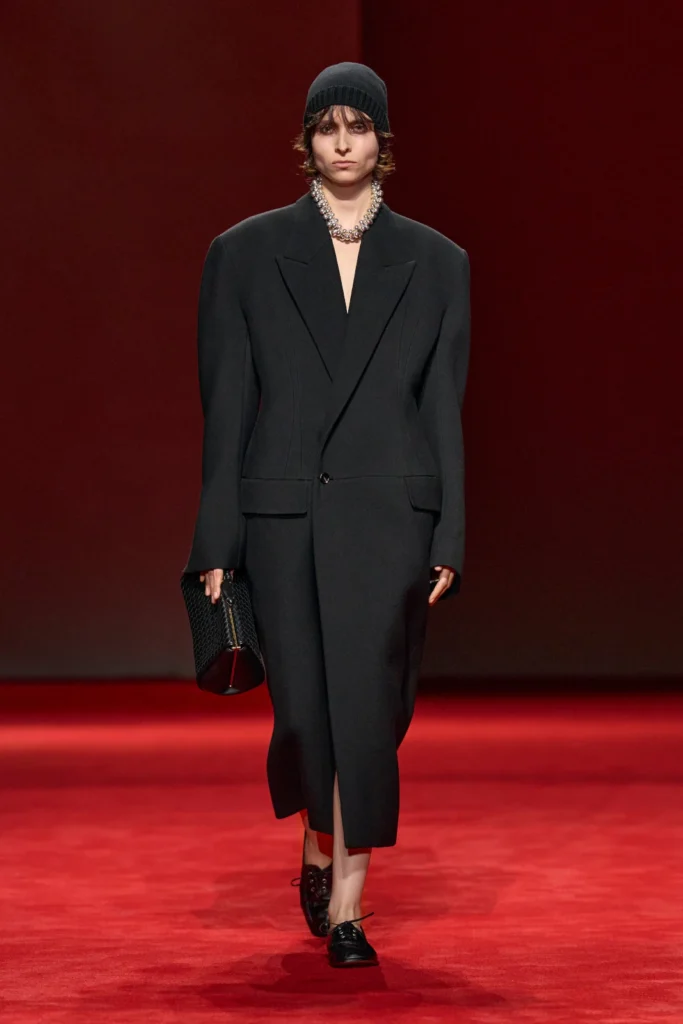
Second collections carry a particular kind of pressure in fashion. A debut can rely on novelty and the benefit of the doubt. The second one has to prove the first was not a lucky start. Trotter used this collection to show that her vision for the house is built to last. She studied the codes of Bottega Veneta closely and then stretched them, carefully, without losing what makes the house recognisable.
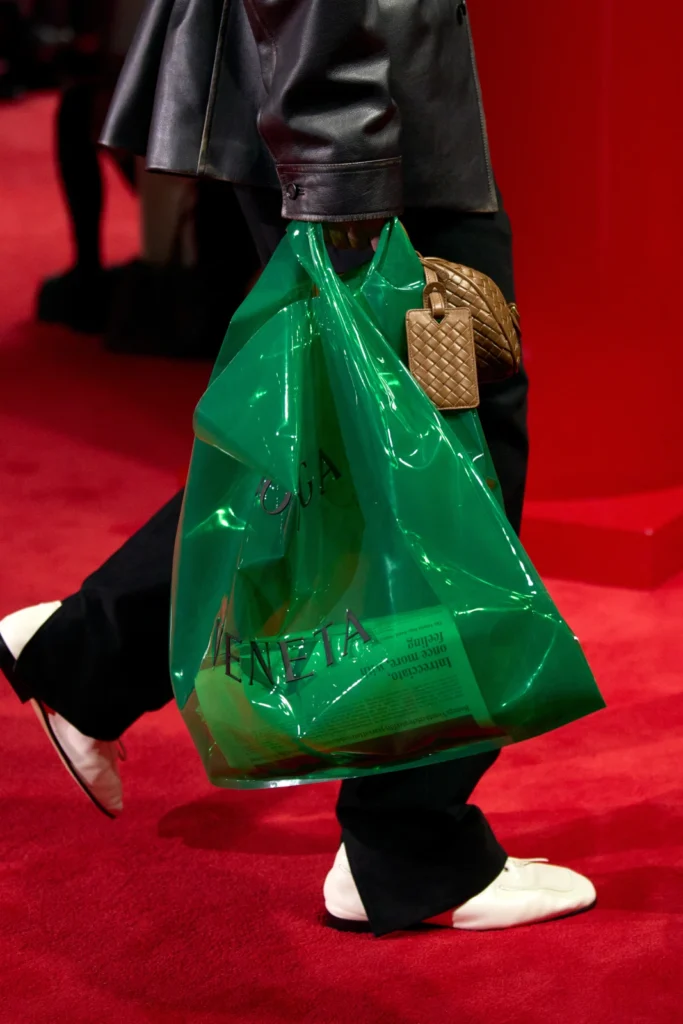
Her starting point was the tension between brutalism and sensuality, between hard structures and soft feeling. Rather than treating it as an abstract idea, she made it physical. The collection was about clothing that feels close to the body, that protects without restricting.
Sharp, clean lines occasionally gave way to something more expressive and free. Personal references ran through the whole line – a nostalgic floral print, a grandmother’s evening bag, a father’s old shoe. The kind of details that carry feelings without announcing it.
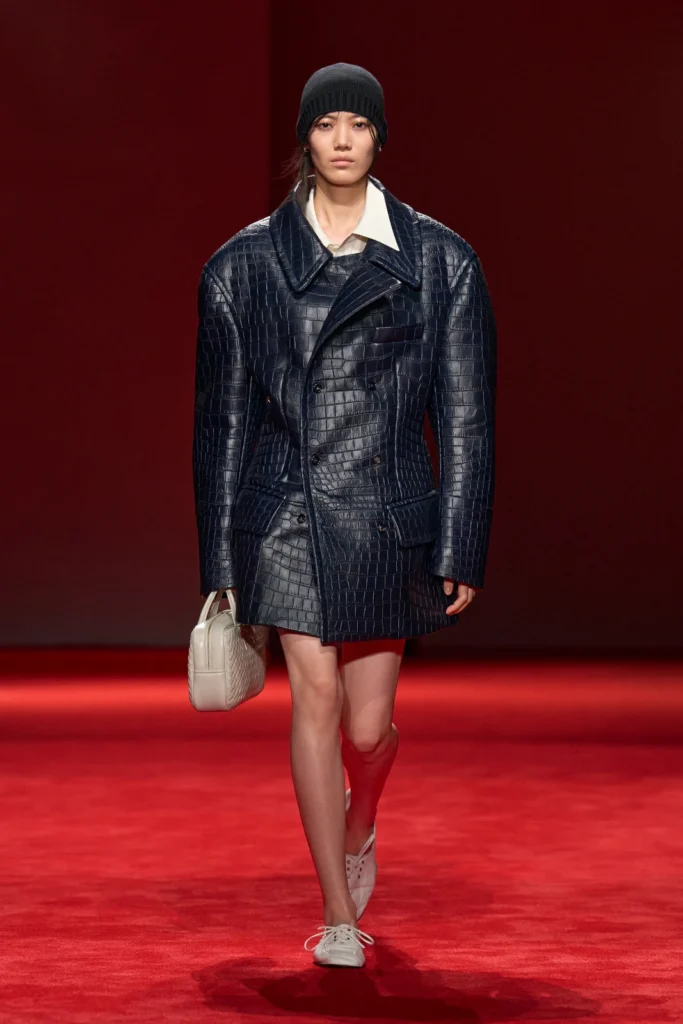
Outerwear was where the collection made its strongest case. A sculptural peacoat, broad through the shoulders and gently fitted at the waist, had a surface that absorbed light rather than caught it, giving it a quality that felt both serious and luxurious at the same time.
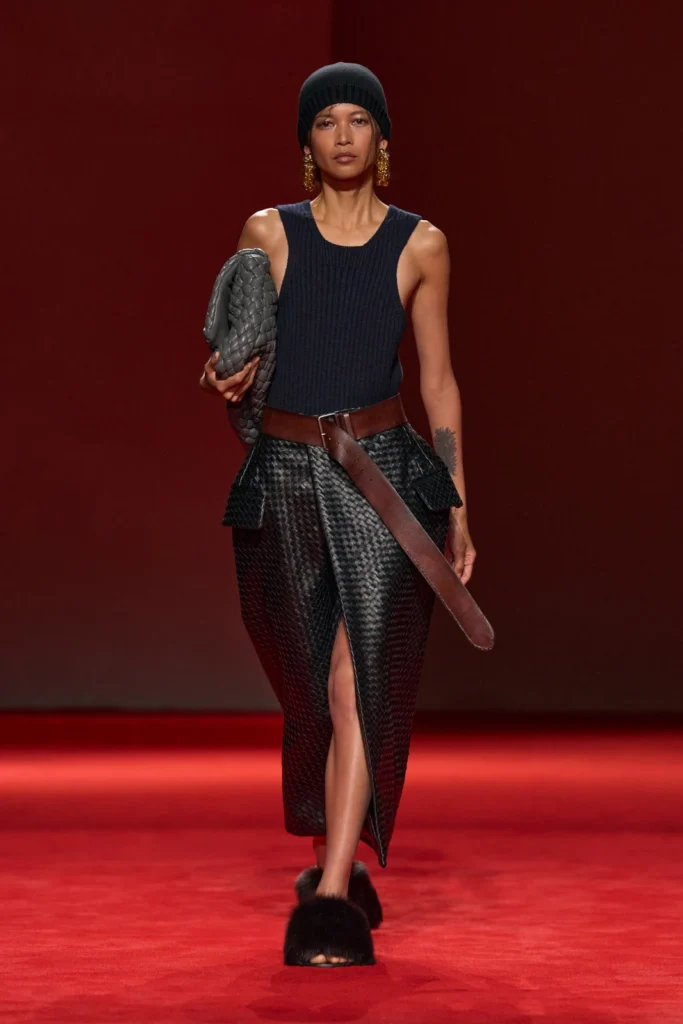
A coat made using the house’s signature Intrecciato weave, where leather strips are woven together by hand, took that technique in a new direction. The strips were loosened so that they moved as the model walked, which was a notable choice for a house that has always been associated with tight, controlled construction.
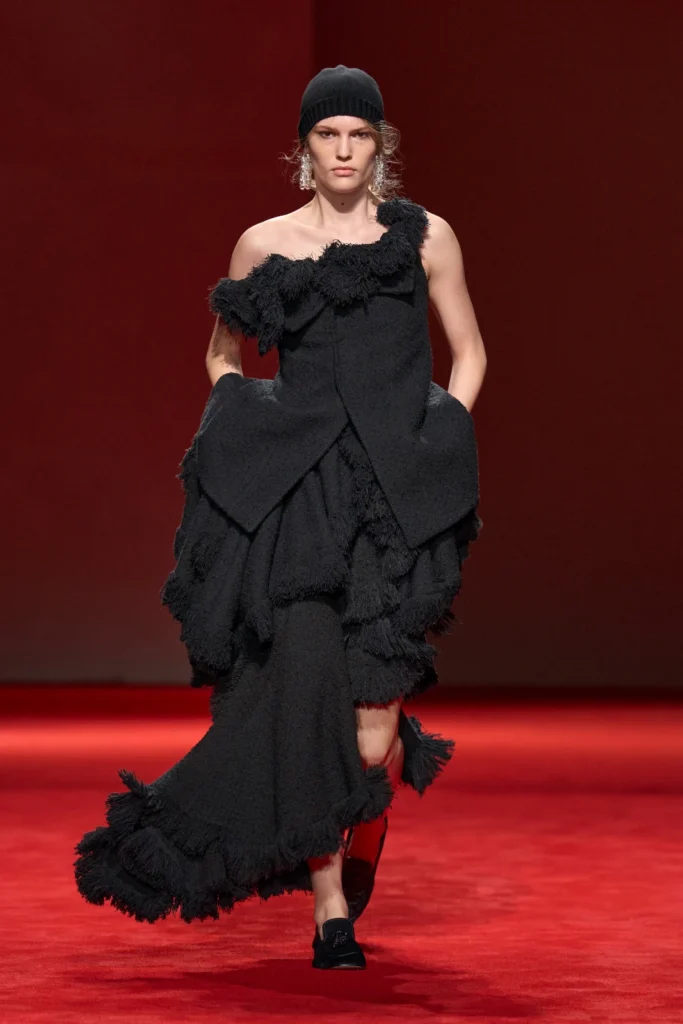
Strong shoulders and clean tailoring gave the clothes a sense of confidence, but nothing felt rigid or stiff. An asymmetrical black skirt with a long fringe along the hem, worn with a simple knit top, let the fabric do the talking.
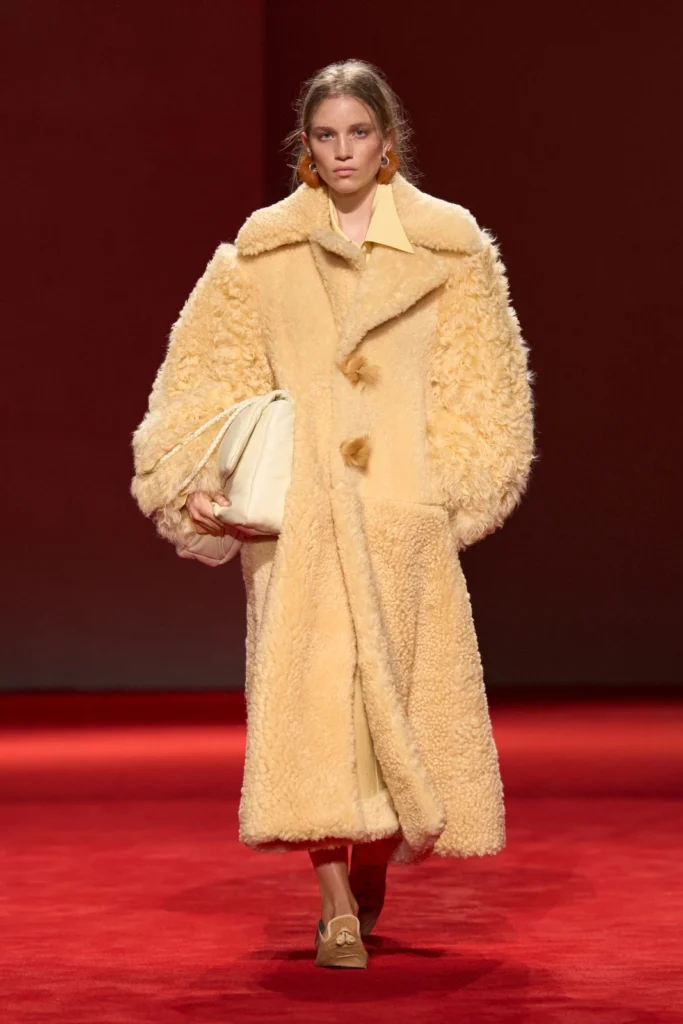
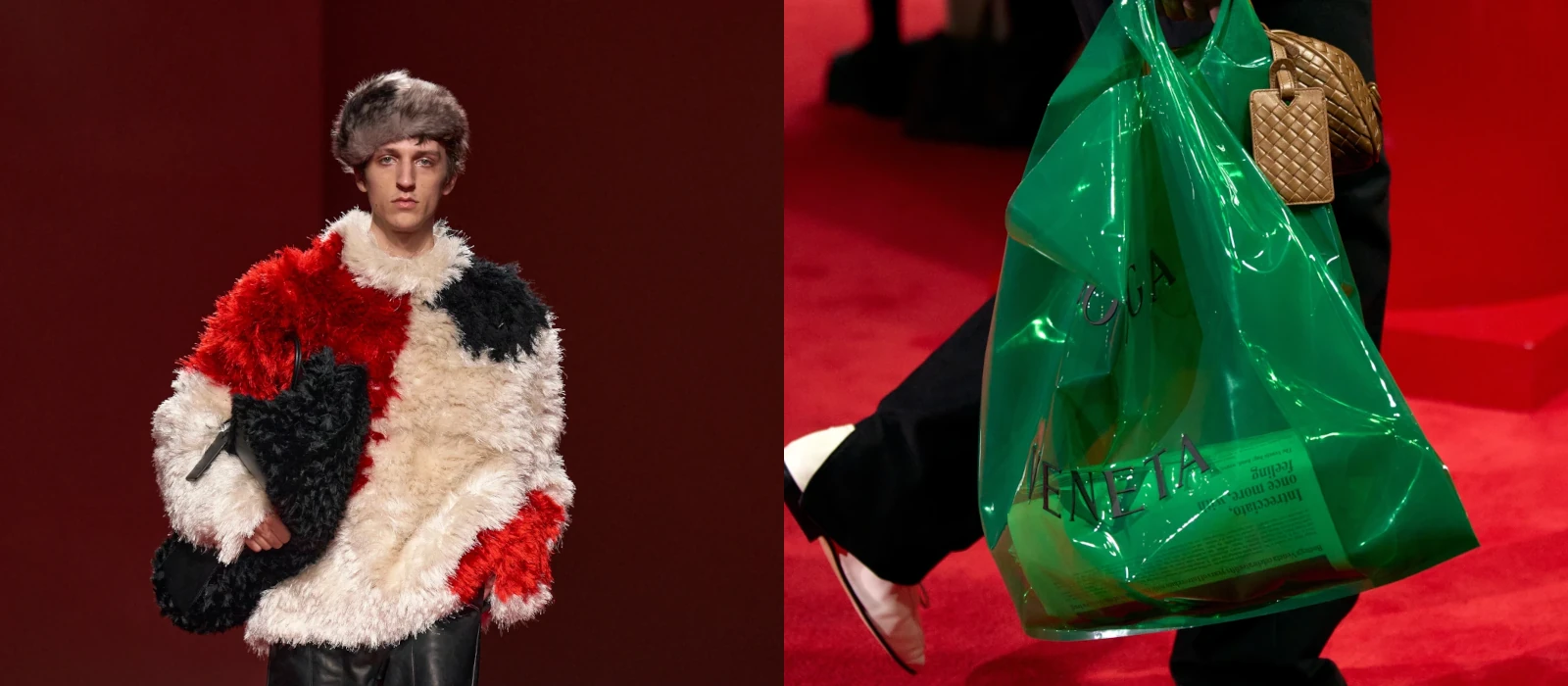
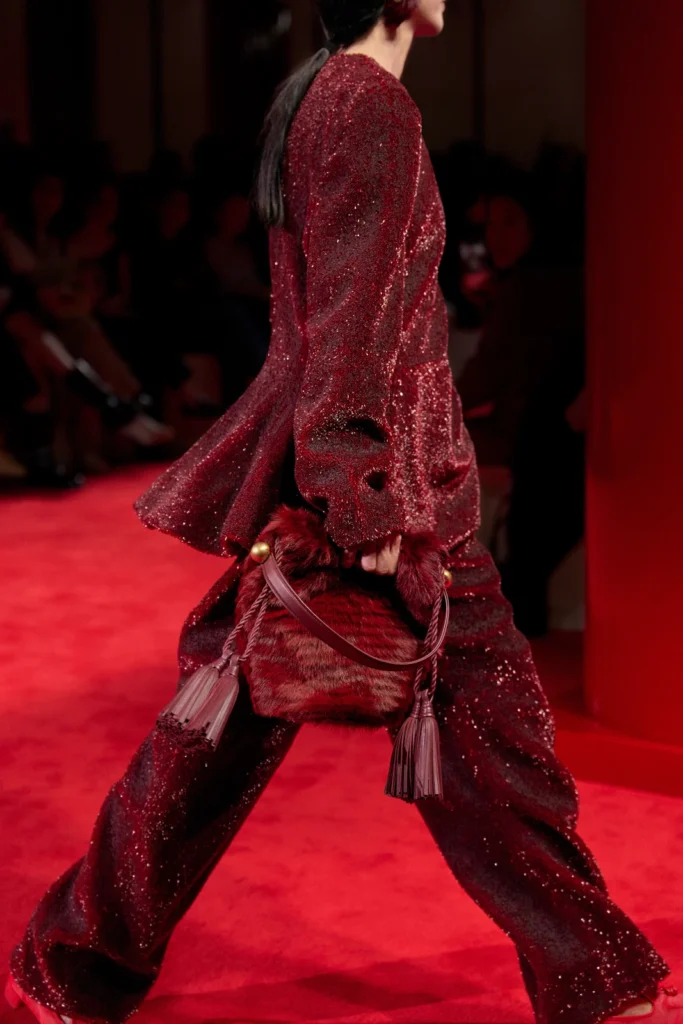
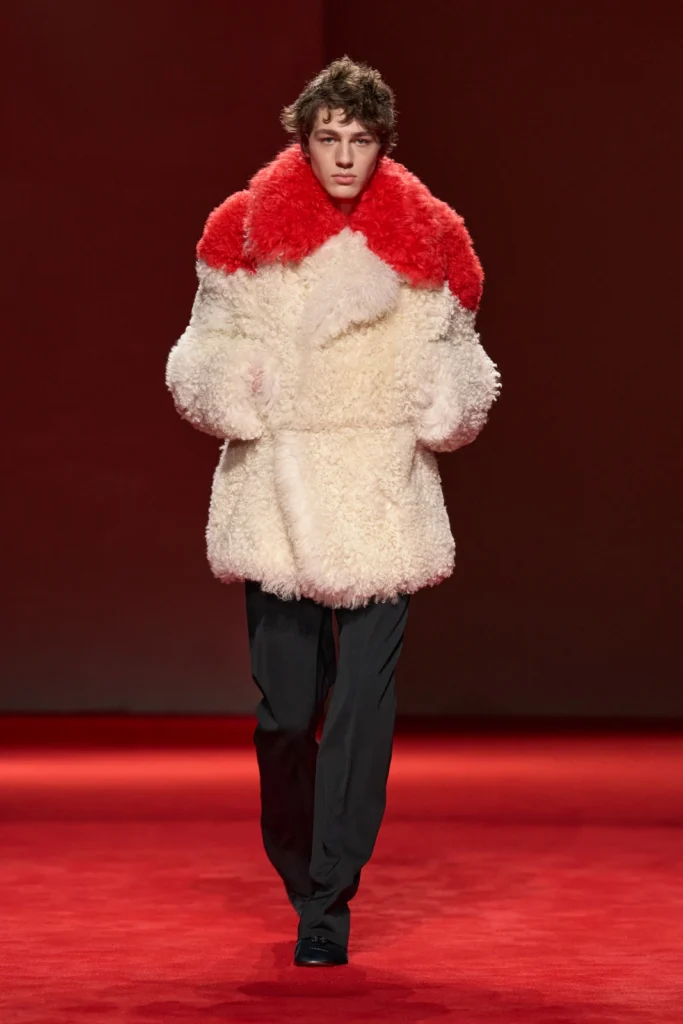
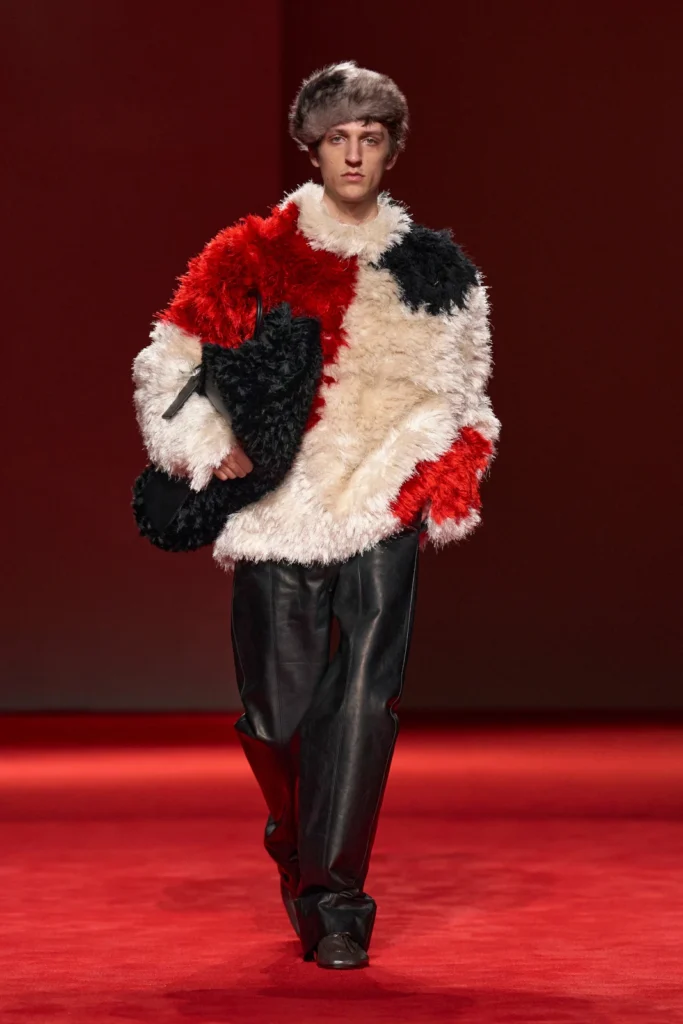
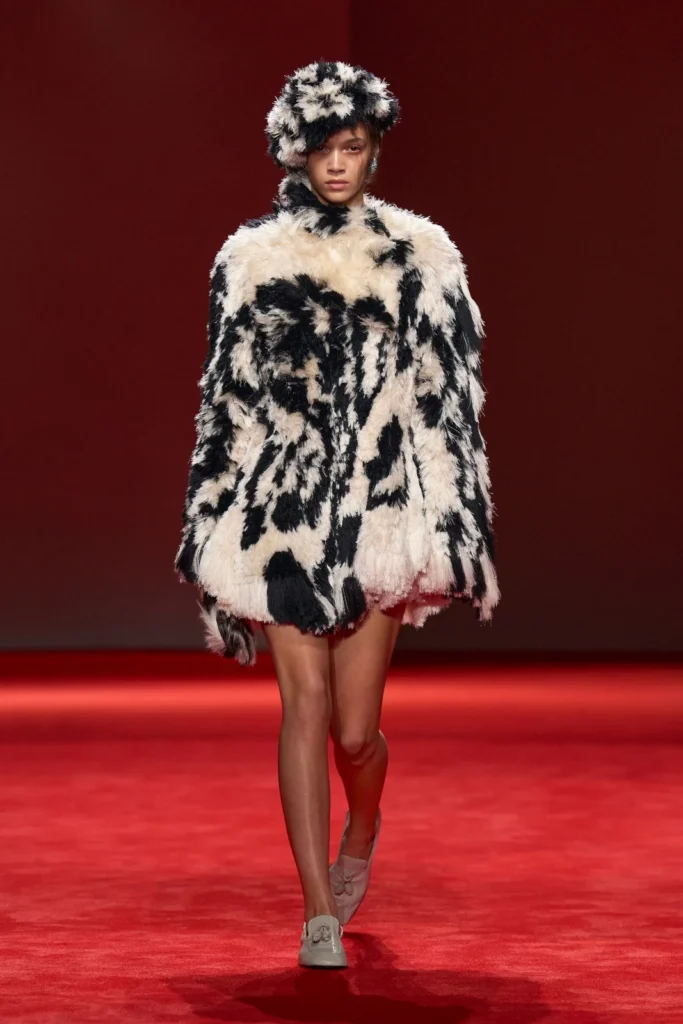
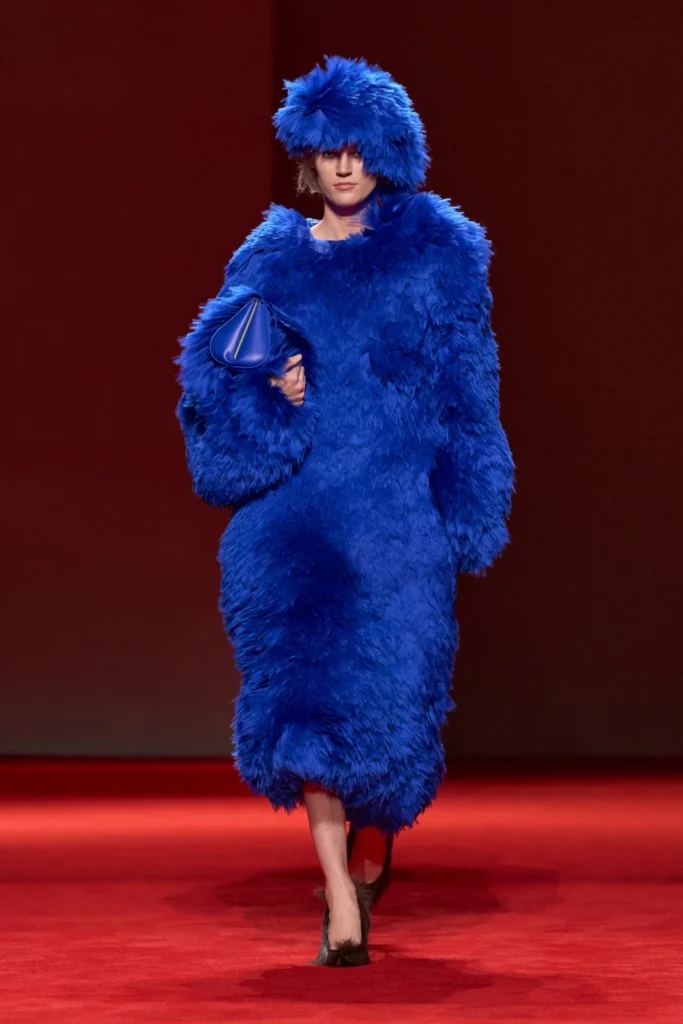
A shearling coat, finished to look like fox fur but made to feel much lighter, showed Trotter’s consistent interest in materials that surprise you – things that look one way and feel another.
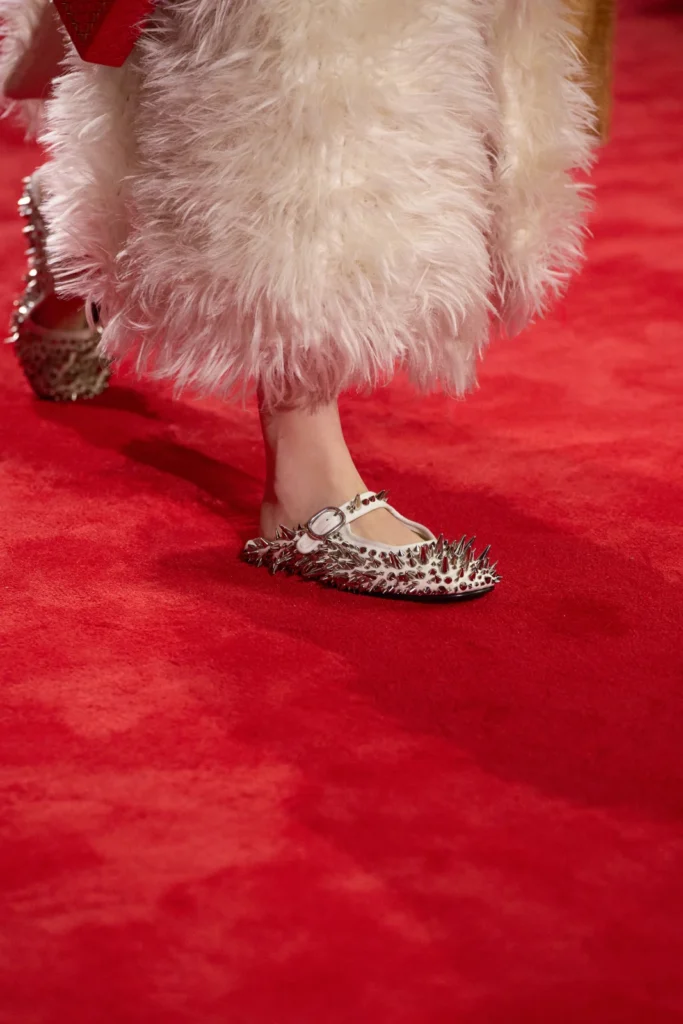
That interest connects to a wider conversation happening across the luxury industry right now. As brands face growing scrutiny over how things are made and what they are made from, Bottega Veneta leaned into its handcraft credentials. Fur-like textures were created using silk, a technique called fil coupé. Knitwear, and technical fabrics, were carried across clothing, shoes, and jewellery. It was a demonstration of skill as much as a design decision.
As the collection built toward its more dramatic closing looks, the references shifted to Maria Callas and Pier Paolo Pasolini, the opera singer and the filmmaker, both icons of Italian culture whose personal lives were as unconventional as their work.
Bottega Veneta was founded in Vicenza in 1966 and spent decades building a reputation on the idea that true luxury does not need to advertise itself. No visible logos, no loud branding, just exceptional materials and construction for those who knew what to look for. The house was brought back into the cultural conversation under Daniel Lee in the late 2010s, and Trotter, who joined in 2024 following roles at Lacoste, Calvin Klein, and Celine, has been continuing that work. Her direction here is moving the house toward something warmer and more communal.
The Bottega Veneta Winter 2026 collection is worth paying attention to.