
Textile has been carrying human memory longer than any written record has. The loom predates the printing press by thousands of years, and the knowledge locked inside weave structures, dye processes and embroidery techniques represents one of the oldest bodies of understanding passed down through generations. Chanakya School of Craft, a Mumbai-based non-profit collective and an extension of Chanakya International, has built its entire practice around that idea. Their debut solo exhibition in India, Trace, presented by Experimenter in Kolkata, brings that work into full public view.
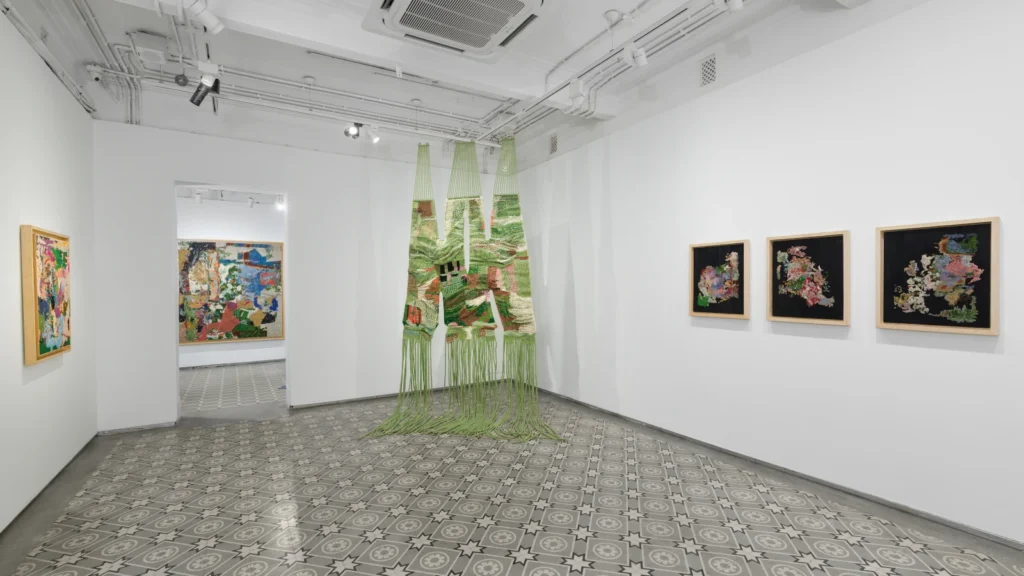
Led by Karishma Swali, the exhibition aims to be a meeting point of contemporary art and traditional textile knowledge, drawing from weaving, embroidery, beadwork, natural dyeing and stone carving. While showcasing works by both female and male craft practitioners, the foundation is fundamentally women-centred. Trace is built around a clear argument: that women have long been the primary keepers of these knowledge systems, encoding histories into the very structure of the weave, preserving what spoken language and written records couldn’t. For Chanakya School, to trace a line of thread is to follow an unbroken chain of knowledge, one that connects people to land, to each other, and to their communities.
A large triptych, Trace (III-V), anchors the exhibition, forming a continuous abstract landscape where movement and instinct take shape in textile form. Built through slow, careful layering, sometimes reaching twelve layers of thread and bead, the surfaces carry a weight and solidity that resembles stone, while still holding the softness of cloth.
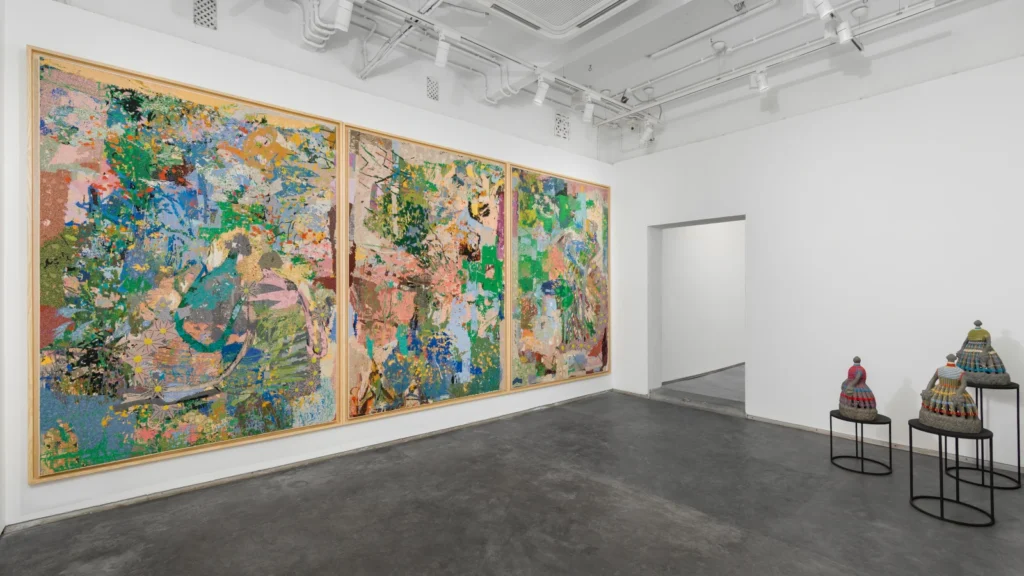
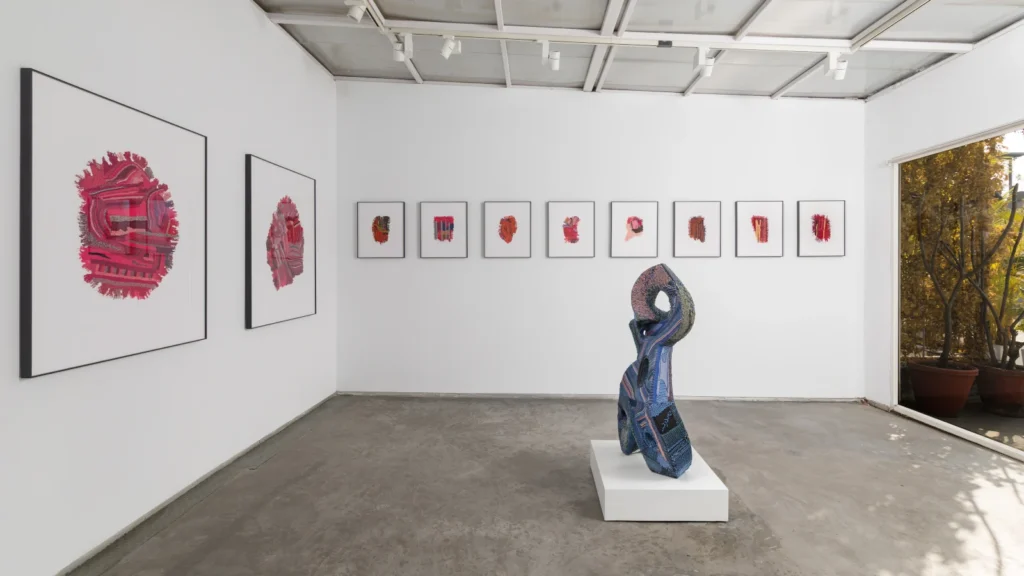
Singular woven panels, also titled Trace, run alongside and draw from long-standing practices of weaving, embroidering, spinning, sculpting and dyeing. Sculptural forms develop within these panels, shaped by what the collective describes as an open relationship to material, allowing each medium to find its own expression.
Anthropomorphic figures, referencing earlier stone carvings, appear across the panels, rendered softer and more fluid, often holding abstracted floral forms in stone-like grey glass beads. Hand-carved black stone sculptures, Form (II-V), bound with organic thread, stand in direct conversation with the textile figures around them.
Flowers in the Night is one of the more quietly political bodies of work in the exhibition. It draws attention to the preparatory processes of weaving, things like shuttle wrapping, that have long gone unrecognised and uncredited within craft communities. Woven on Saori looms using hand-dyed cotton, linen and jute, these panels work through herringbone, basket weave and chevron structures, some of the earliest ways through which thread was given order and meaning. Rips, joins and inconsistencies are left visible on purpose, keeping the reality of the making process honest and in plain sight. Hand embroidery extends this further, with recycled seed and glass beads stitched using cotton and silk thread in careful, deliberate layers.
Hanging sculptures, Flowers in our Forest and Opening Sky, draw from nature, with the forest, sky and sun as reference points, and human portraits surfacing from within the dense thread.
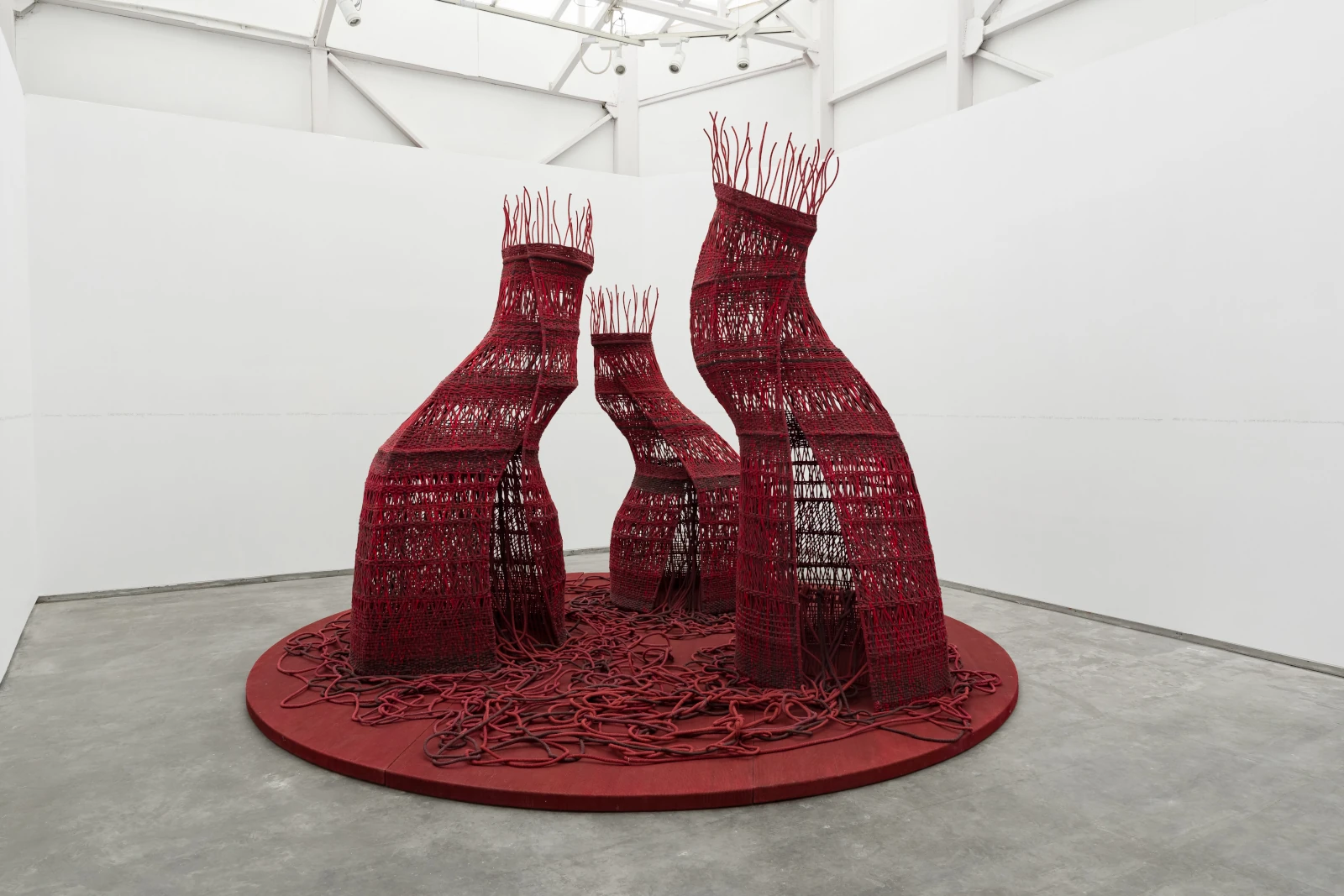
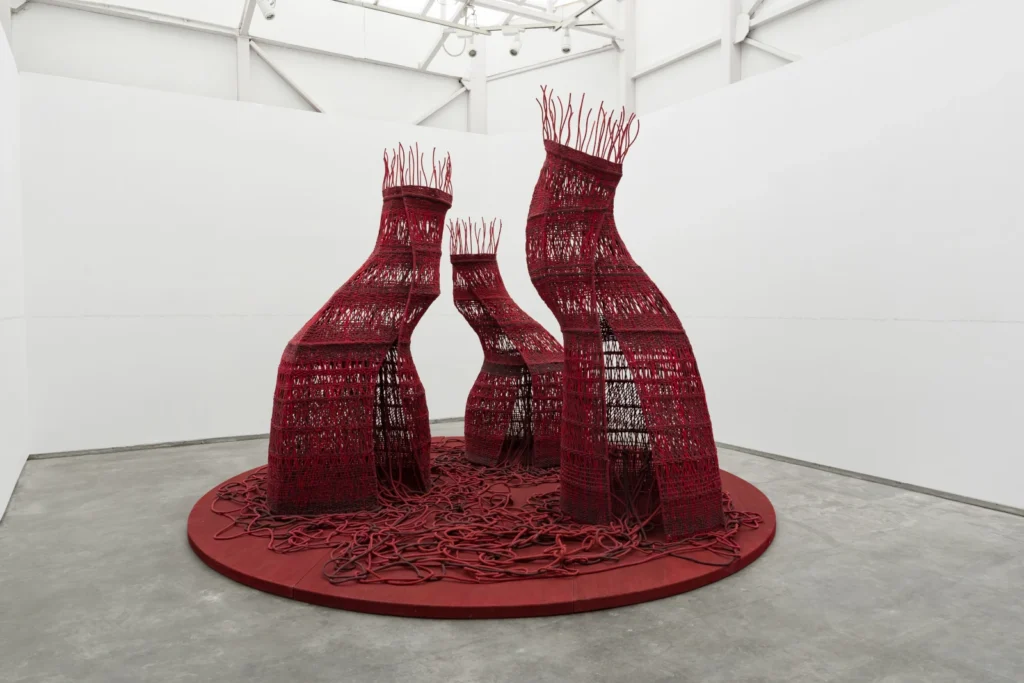
Dwelling, a large sculptural installation set in a vaulted gallery space where natural light comes through, draws from the Bhunga, the traditional round structures of the Kutch region that have long served as gathering points for social and cultural exchange. Reimagined here as individual forms that resemble women gathered together, weaving in close circles, the installation uses organic thread dyed with madder root. Cords extend outward from each form like lifelines, reaching toward one another, referencing connection, fragmentation and the passing of knowledge between people.
Wall panels titled Field Notes line the space around the installation, capturing a range of technical experiments and material combinations. A hanging tapestry titled Sediment pulls those experiments into a single, considered work.
Craft and textile practice has gone through a significant shift in how it is seen and valued globally over the past decade. Major institutions, including the Tate and The Met, have actively worked to challenge the long-standing hierarchy that placed textile below painting and sculpture as an art form. Chanakya School of Craft, in fact, has previously collaborated with Dior for an exhibition at the Vatican Library, highlighting textile art. Artists working in fibre, such as Sheila Hicks and El Anatsui, have drawn critical and commercial attention. Chanakya School sits within that wider shift, but its roots are specific. Grounded in the craft traditions of India, and in the labour of women practitioners, the collective carries an archival and social weight that goes beyond technique or material experimentation.
Trace is on view at Experimenter in Ballygunje Place, Kolkata, until March 21.