
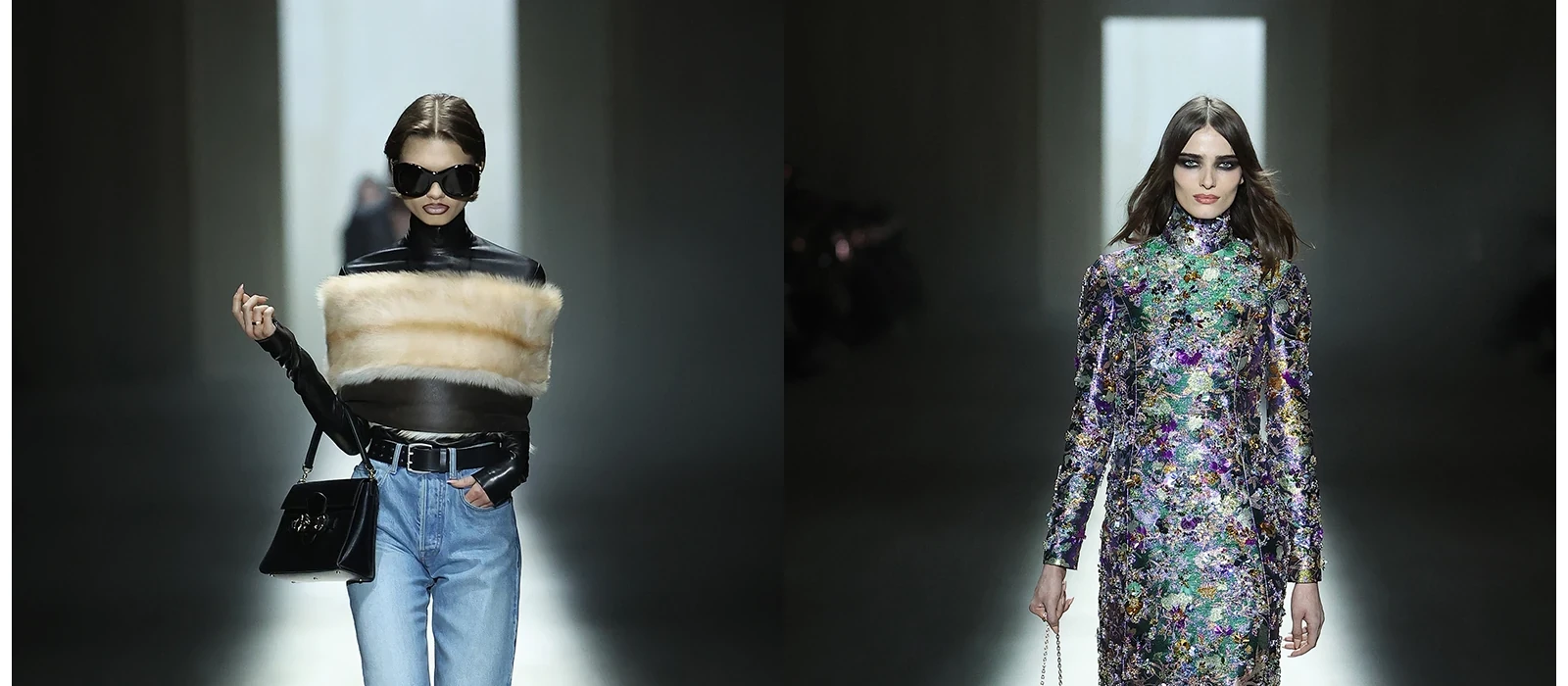
Demna’s first runway collection for Gucci was met with much anticipation and hype. With La Famiglia setting a stage for something unique, something dramatic, perhaps, Primavera felt like a betrayal.
The Italian brand’s Fall Winter 2026 collection echoed of the Tom Ford era. But what we wanted was Demna. Followed by some not-so-well-received AI slop on its Instagram feed, and presented in a monumental museum-like space surrounded by marble statuary, the collection attempted to draw on the house’s deep history while trying to make a case for where it is headed.
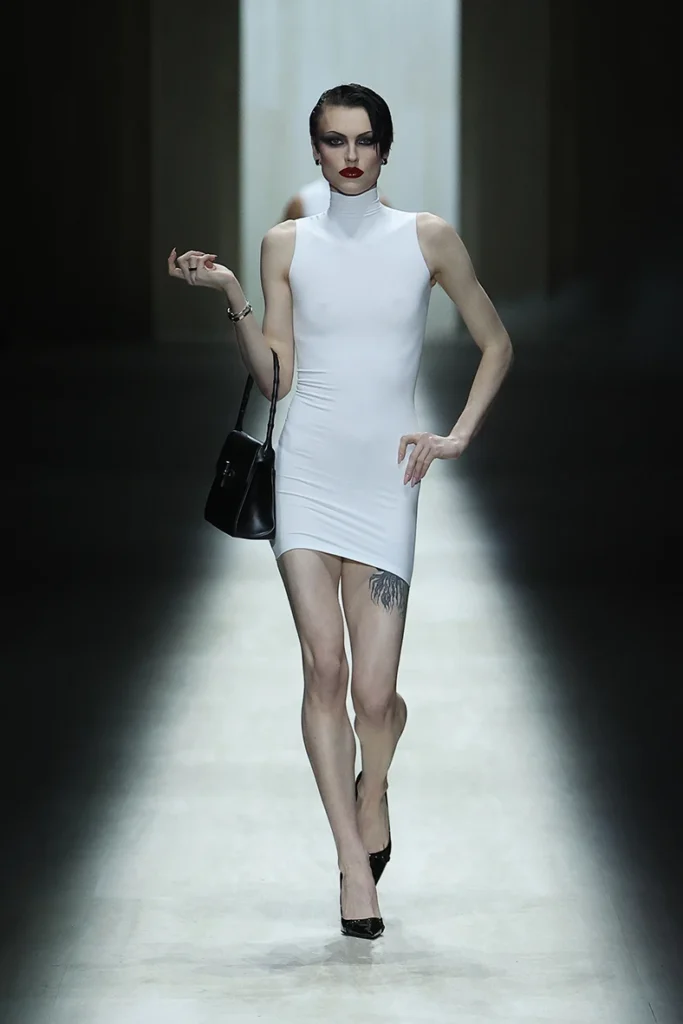
A minidress in white hosiery fabric opened the show, worn with what the house described as a “femme fatale attitude,” a palate cleanser that established the construction philosophy early. Garments were engineered to sit as close to the body as possible, invisible heat-sealed edges, and curved hems point to attention on detailing, placing this collection in precision dressing rather than decorative excess.
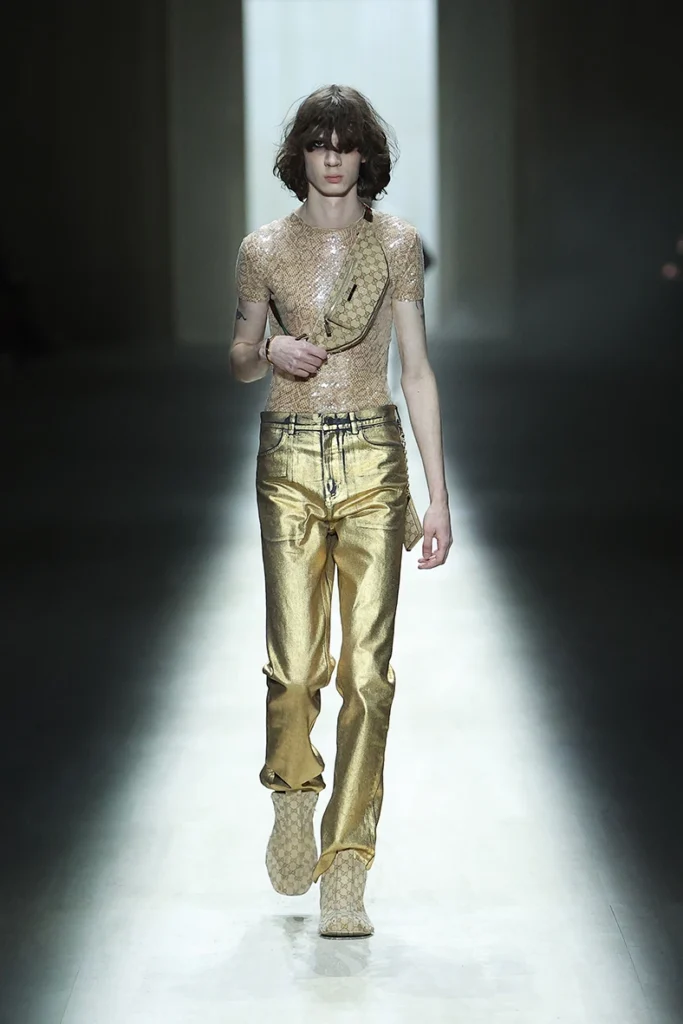
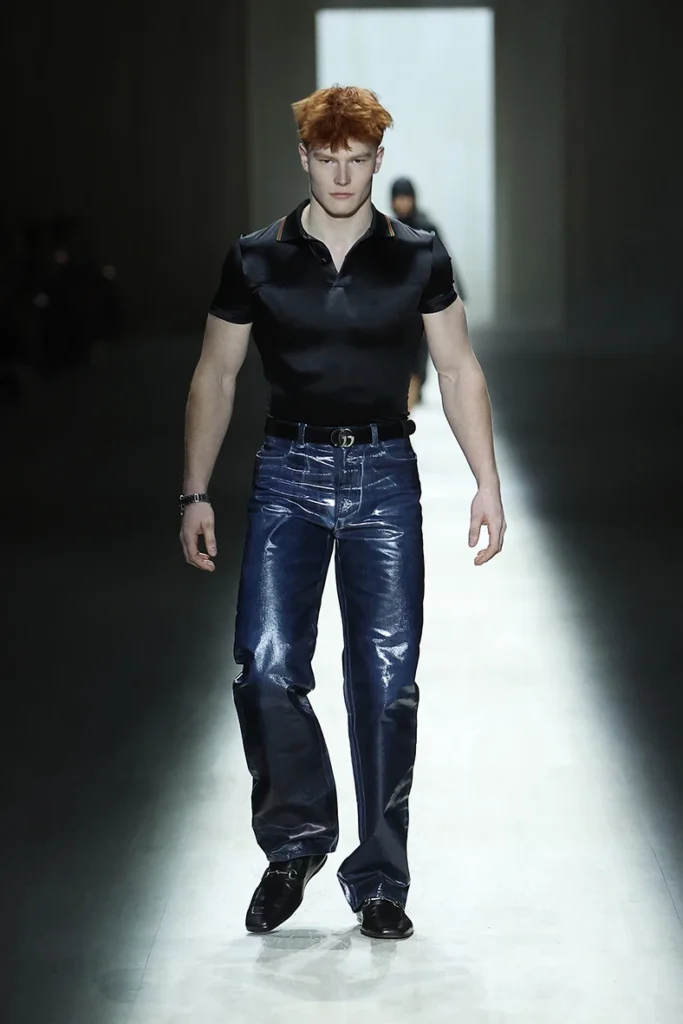
Tailoring arrived in liquid-like fabrics, given a streetwear sensibility through low-cut jackets and trousers with horizontal pockets. Gucci has historically leaned into formal and maximalist territory, so introducing streetwear posture into structured tailoring is a shift that attempts to speak to a younger consumer.
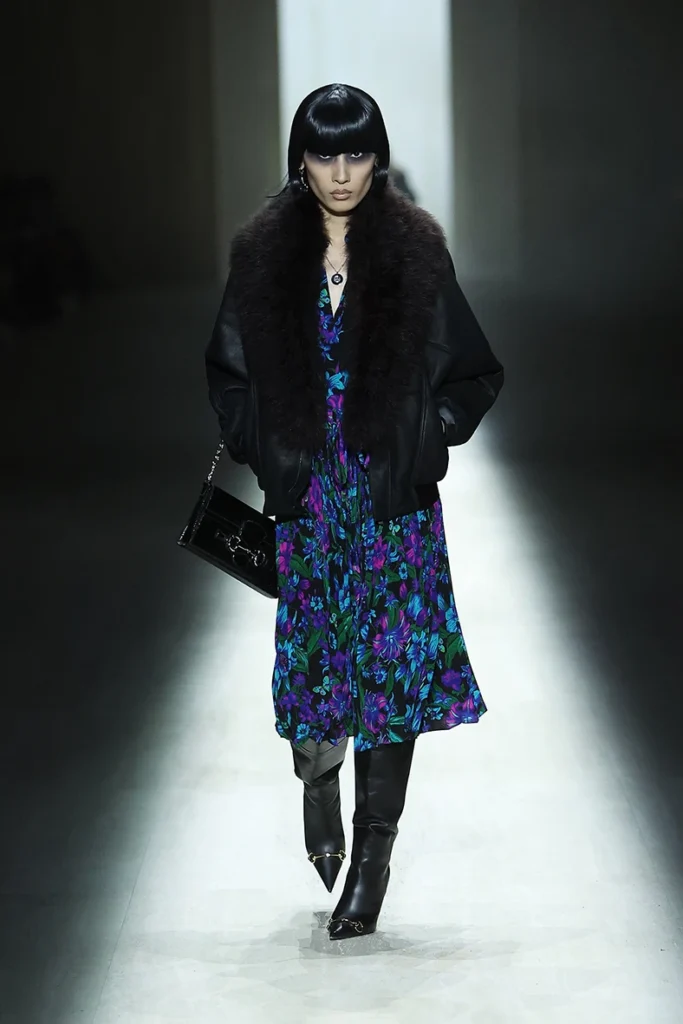
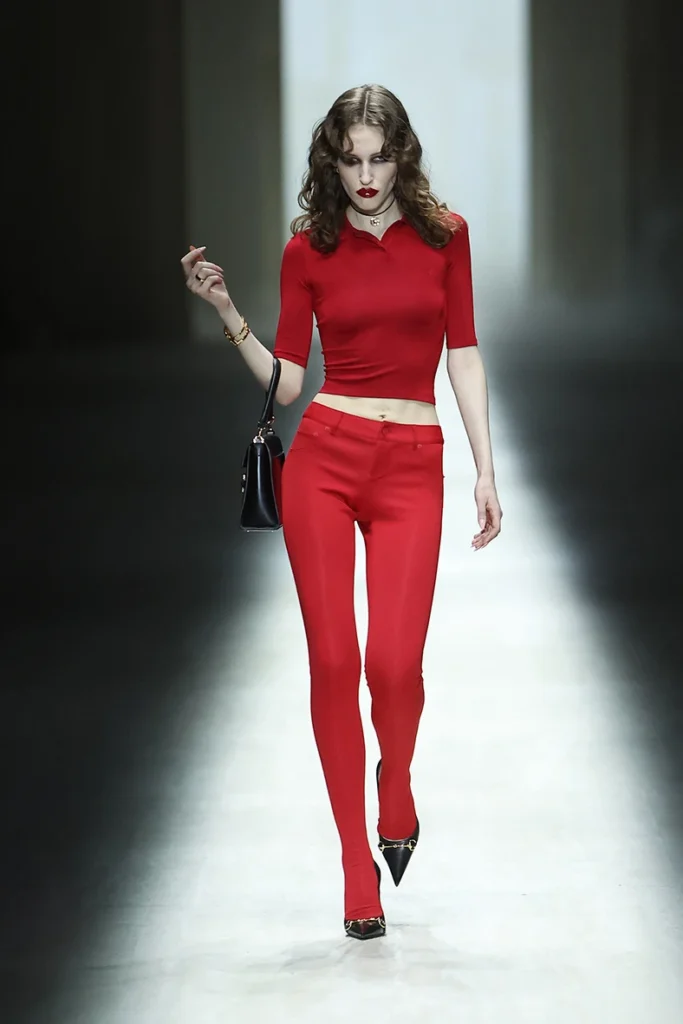
New garment types ran consistently through the collection. Tracksuits evolved into trackdresses. Leggings fused with trousers. Jackets and tops merged into single ultra-fitted pieces. Leather shoes and sneakers combined into a hybrid described as having “the aerodynamism of a sports car.”
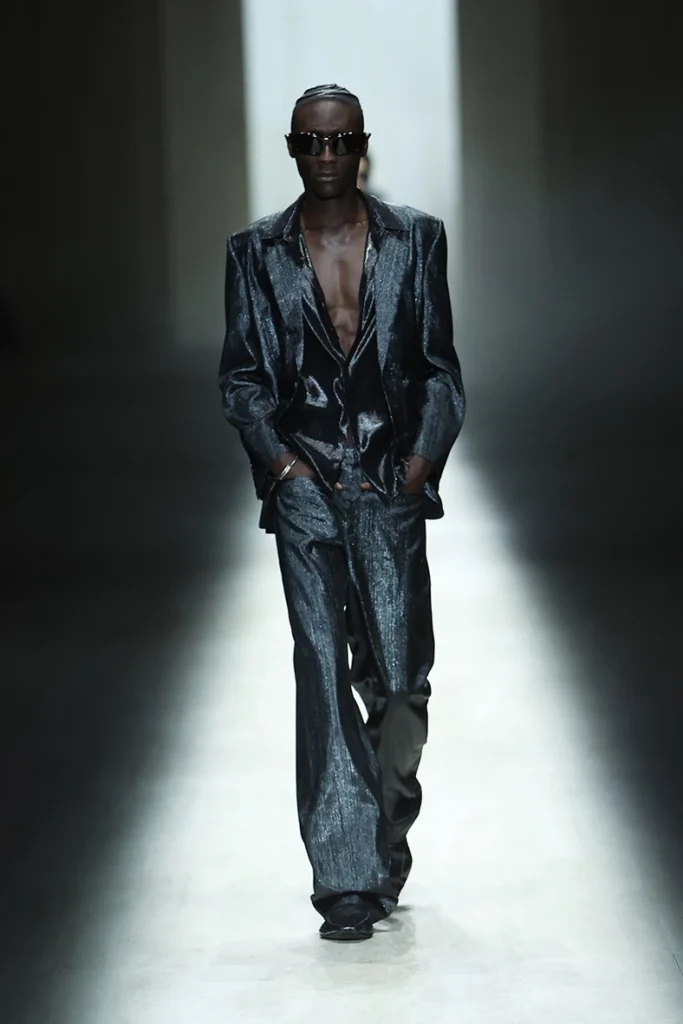
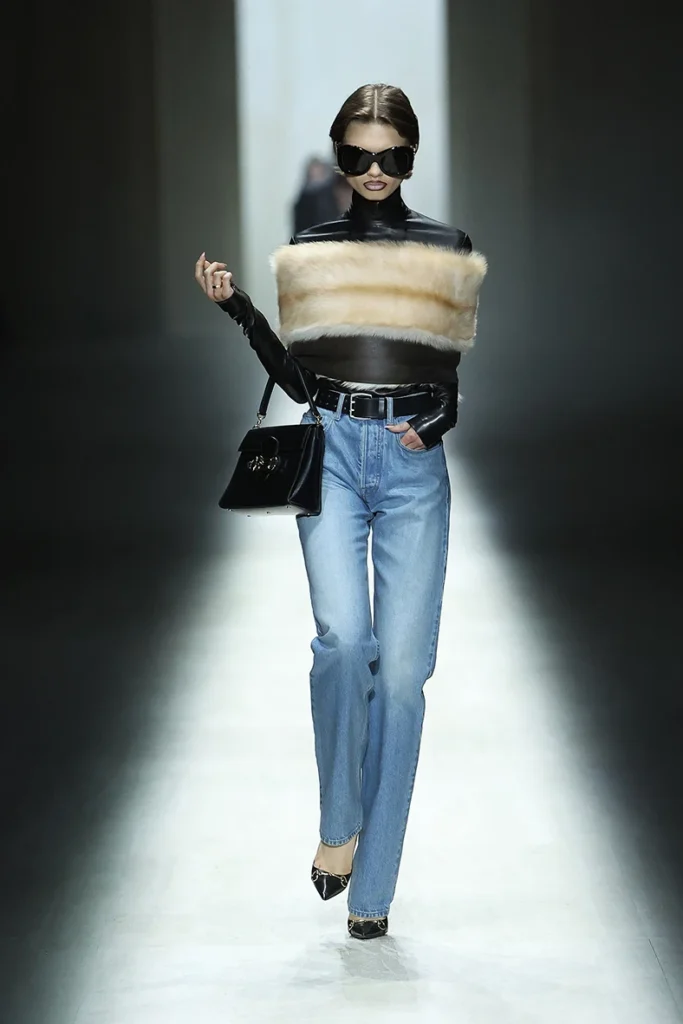
References to classical sculpture shaped several key looks. Chiseled silhouettes drew on Renaissance ideals of proportion and physique. Skater looks came with fluid T-shirts held in a Grecian drape. A slinky white gown referenced Botticelli’s Birth of Venus. These connections were grounded in the marble statuary physically present in the show space, making them feel contextual rather than borrowed.
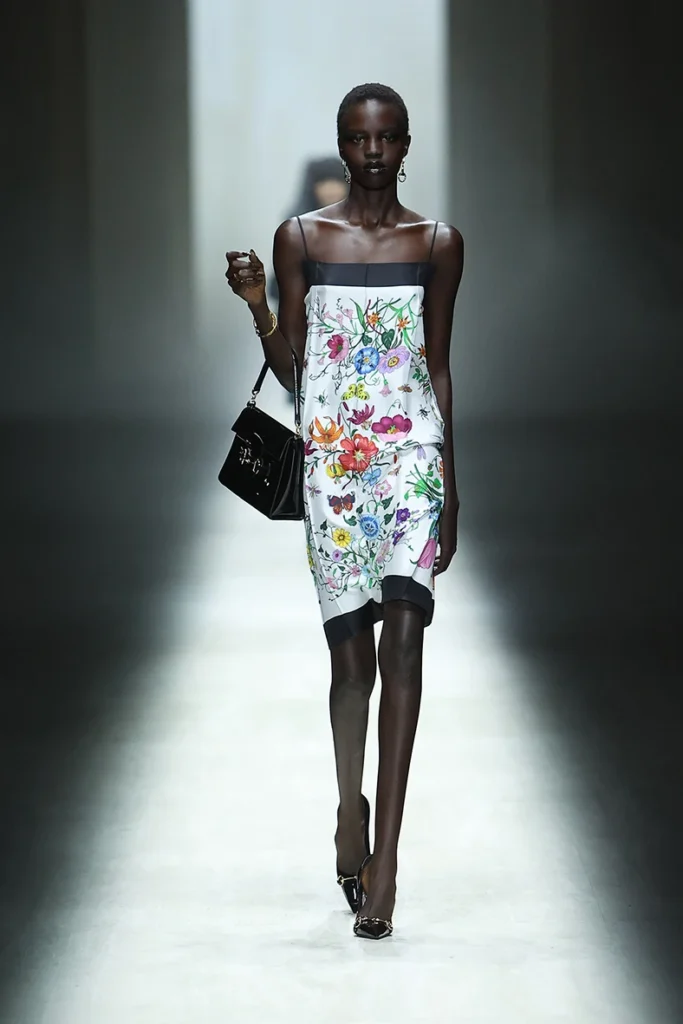
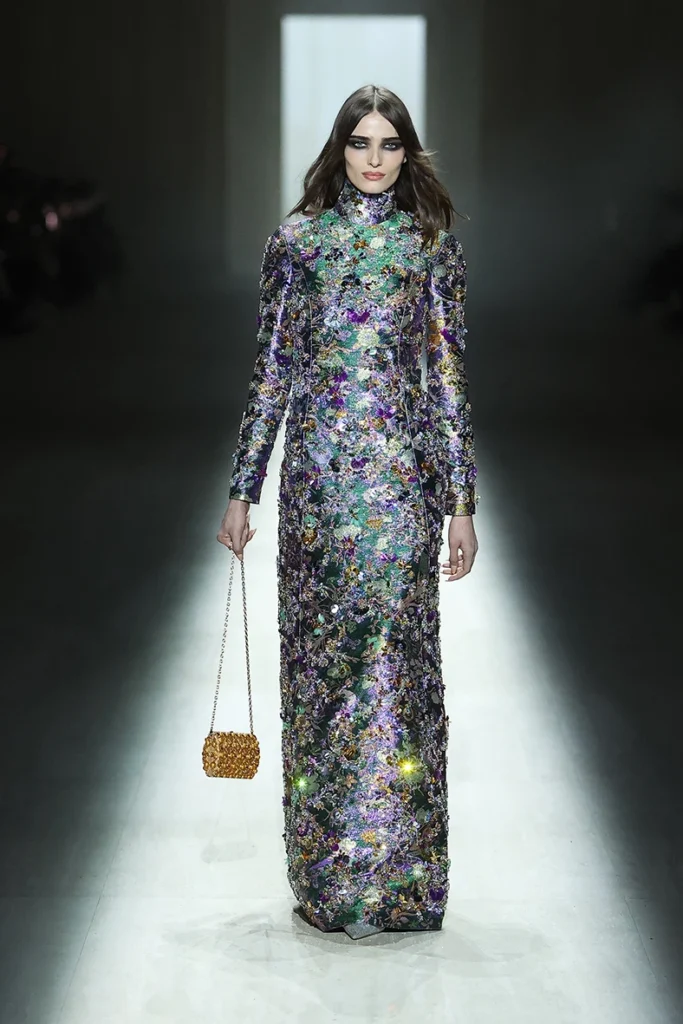
Feather embroideries lined bubble blousons, bombers, and intarsia shearlings. Precious leathers, chosen for softness and pliability, appeared in bikers, fitted pants, and circular stoles. Evening looks pushed further, with embellishment-heavy fitted tops and slinky trousers worn barefoot, followed by gowns and minidresses with waist-high slits, closing on a backless gown with a white gold GG thong set with 10 carats of diamonds.
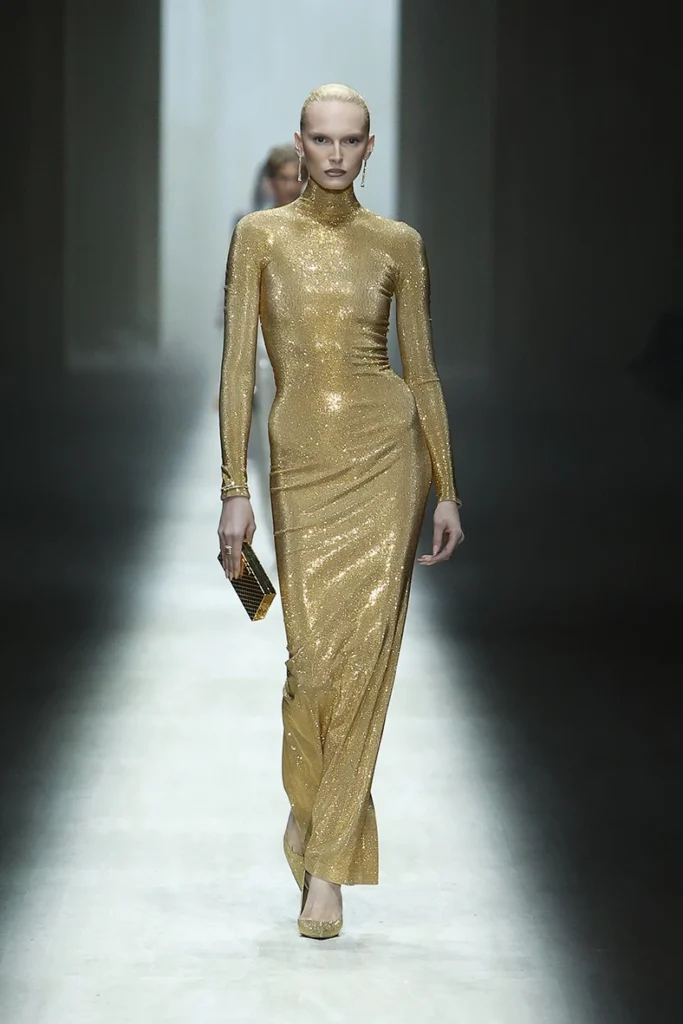
Accessories carried meaningful updates. The Bamboo 1947 bag, one of the house’s most iconic designs dating back to post-war Italy when craftsmen turned to bamboo out of material scarcity, received a redesign with a sleeker volume and a new handle made of flexible pieced leather sections. Archival minaudières were extended to fit a phone alongside daily essentials.
Manhattan, the first Gucci sneaker under current creative direction, combined an ultra-minimal basketball shape with the slip-on ease of a loafer. The Giovanni and Cupertino loafers were built to remove the stiffness that has long been the trade-off with leather shoes.
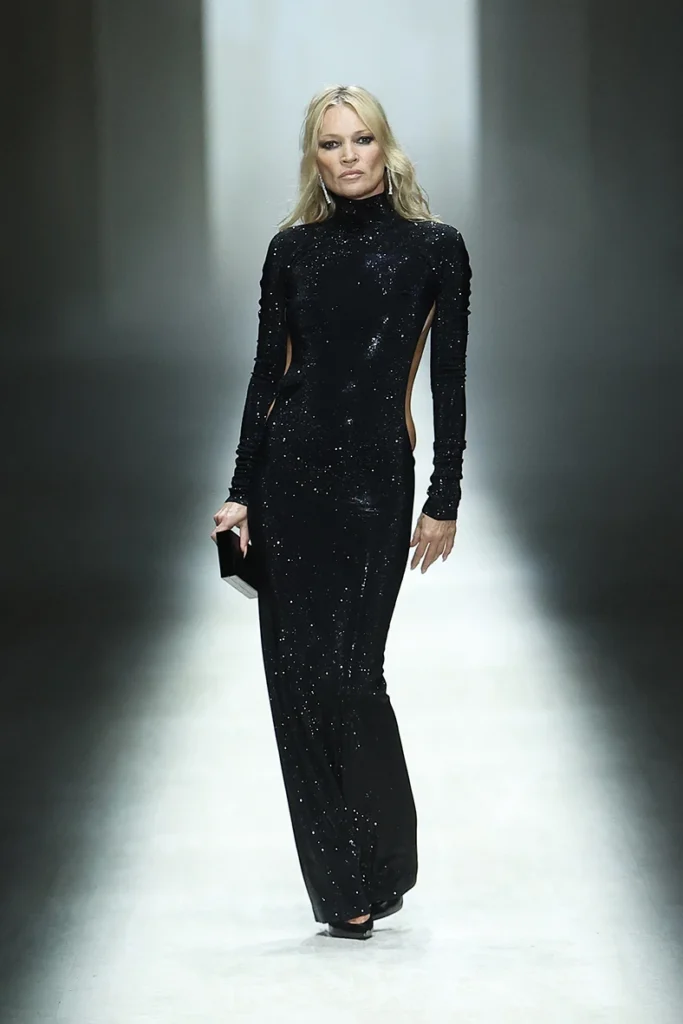
Gucci recorded a revenue decline of roughly 23% in 2024, making Primavera a significant marker of where the house is placing its focus. Body hugging dresses and white t-shirts might not be enough for Demna to save Gucci. While the evening wear was the saving grace of the collection, the rest did need more to hit the mark.
…………………………………………..
With inputs from Soumya Jain Agarwal.