
L’Art au Sommet has spent 17 editions making a case that serious contemporary art belongs on a mountain too, and this season’s lineup in Courchevel is the most ambitious version of that argument yet.
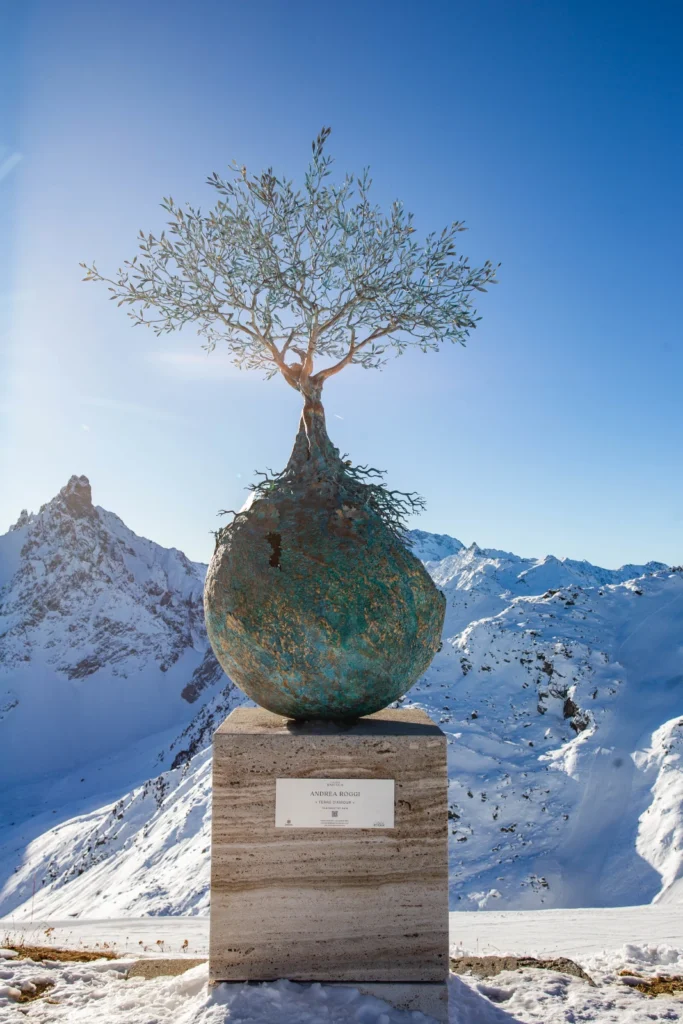
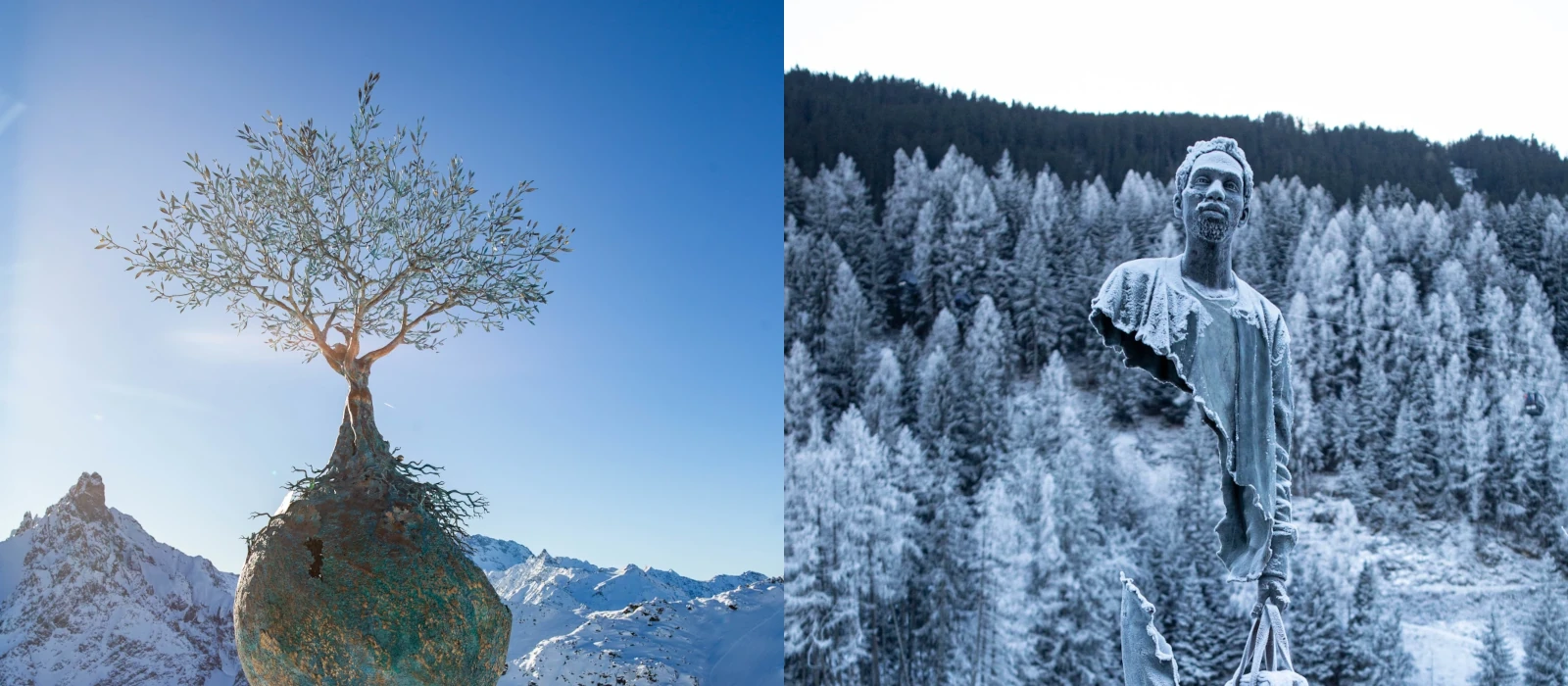
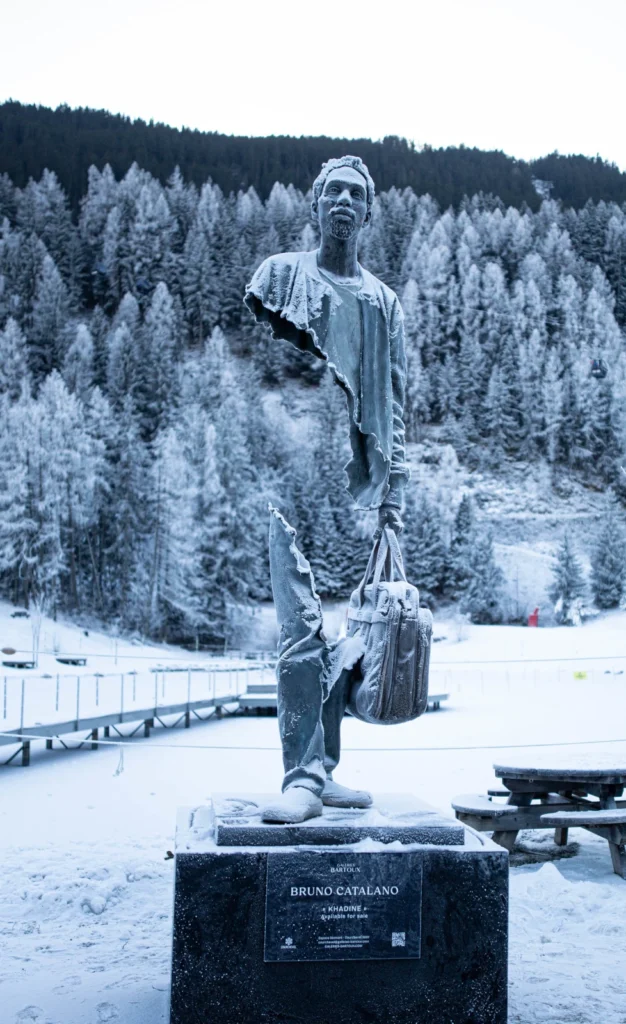
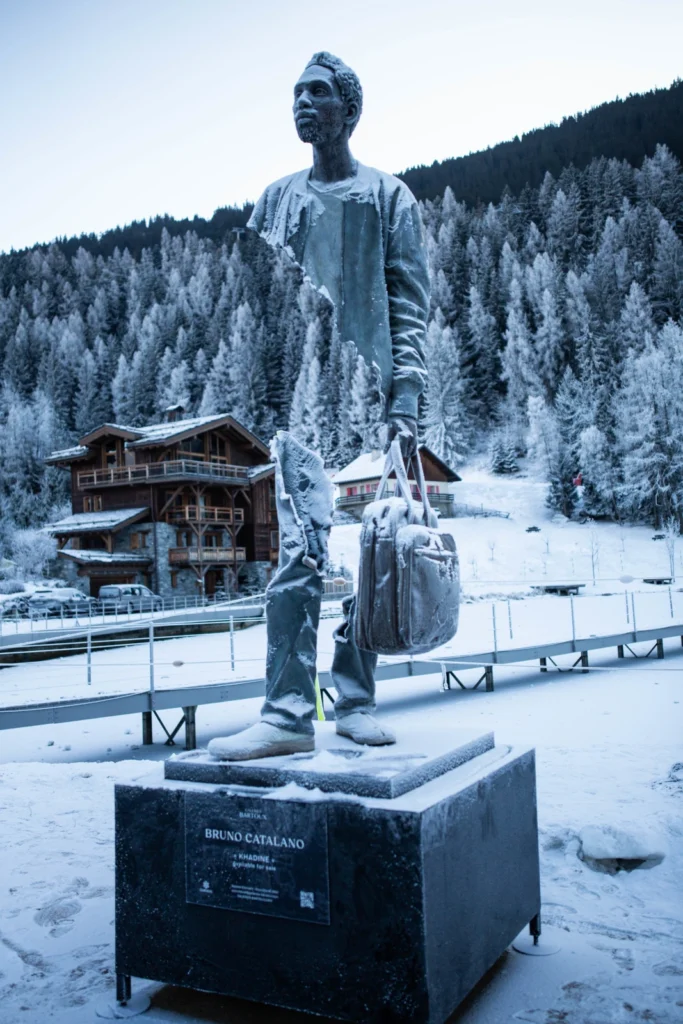
Galeries Bartoux, in collaboration with the Municipality of Courchevel, has brought together Italian sculptor Andrea Roggi and French artist Bruno Catalano for an exhibition that stretches across the resort’s villages and summits. Roggi’s Trees of Life are appearing in Courchevel 1850 for the first time, installed both in the village center and at 2,659 meters above sea level. Catalano’s Travelers, returning after a previous edition, are distributed across four villages, Courchevel Moriond, Courchevel Village, Courchevel Le Praz, and Courchevel La Tania, connecting the resort’s geography through sculpture.
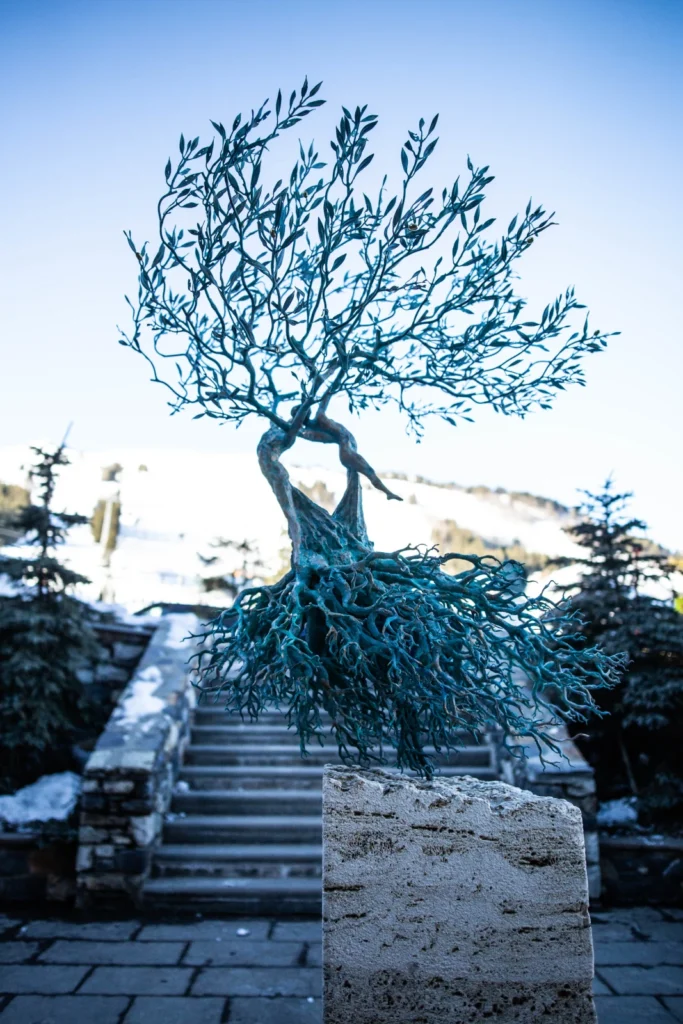
Both bodies of work are distinct but deliberately linked. Catalano’s Travelers function as a trail through the mountain, guiding visitors from village to village toward Roggi’s Trees of Life. Catalano’s figures are defined by absence, sections of the human body simply not there, voids cast in bronze that create a tension between what is present and what is missing. Roggi’s Trees of Life operate differently. Human figures merge with forms of ancient cypress and olive trees, the kind that surround his studio in Tuscany, producing works that are figurative and abstract at the same time. Both artists are considered among the last true sculptor-modelers working in bronze, a designation that carries weight at a time when digital fabrication has reshaped how monumental art is produced.
Roggi said, “Exhibiting my works at 2659 meters, among the snow and the mountains of Courchevel, shows in a very direct way how a sculpture can change depending on its surroundings. Up on the slopes, the shifting light and the movement of skiers make the piece become part of the landscape. In the village center, instead, the sculptures stand near the boutiques and the most frequented streets, meeting a different public and a more urban environment. This dual setting highlights how a sculpture can adapt to contrasting contexts and helps me understand even more how my work can engage with such diverse realities.”
Roggi was born in Castiglion Fiorentino in Tuscany in 1962 and came to sculpture through painting and poetry before a single visit to Florence’s Basilica of Santa Maria Novella changed his direction entirely. Standing before Masaccio’s fresco The Trinity, he found what he had been looking for. He established his studio, La Scultura di Andrea Roggi, in 1991, working in bronze using the lost-wax casting method, and later studied chemistry and metallurgy to refine and personalise his process. That level of technical investment reflects a broader commitment to craft that both artists share, and it is part of what distinguishes their work from the decorative commissions that often populate resort environments.
L’Art au Sommet has been running since 2008, making it one of the most established outdoor sculpture events in Europe’s alpine region. It sits within a growing global tradition of placing significant contemporary art outside museums and galleries, from Frieze Sculpture in London’s Regent’s Park to the long-running sculpture installations across Switzerland’s St. Moritz.