
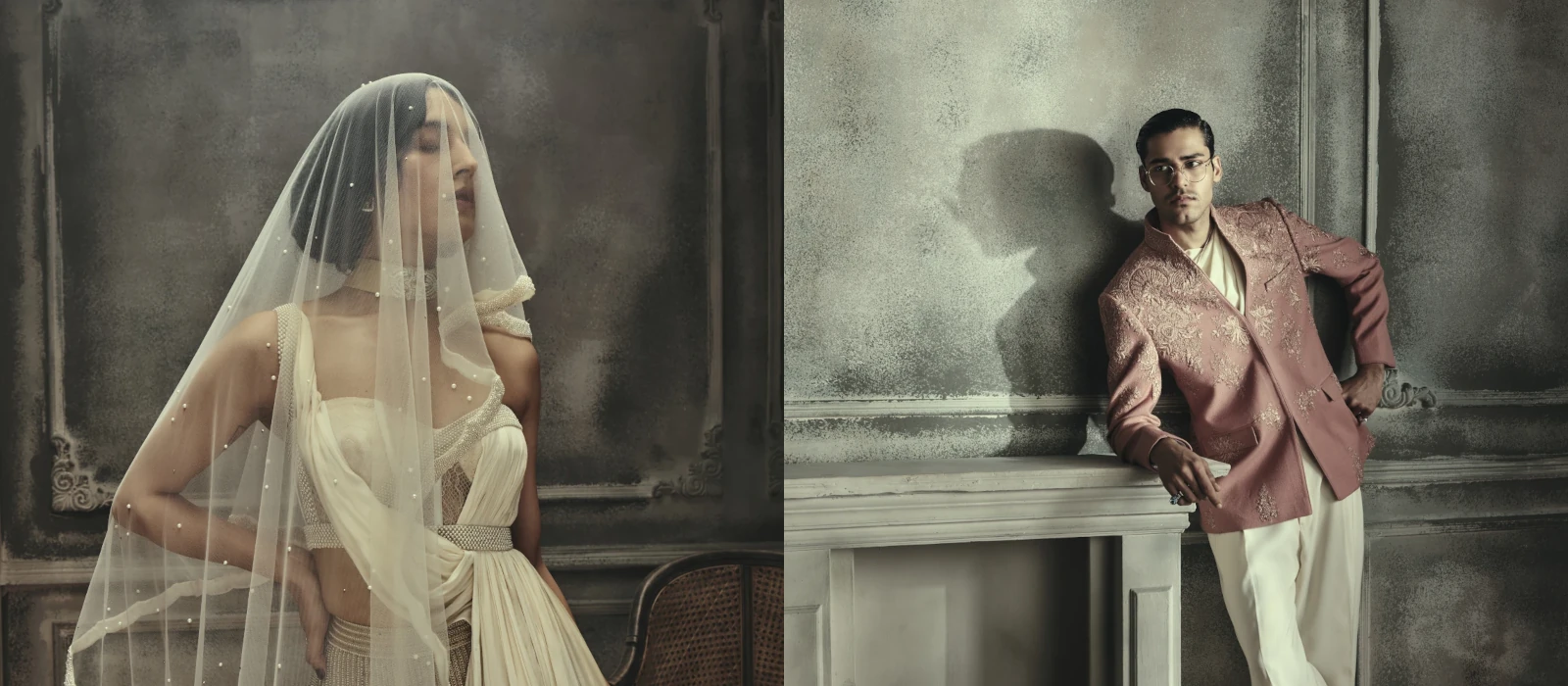
Shantnu & Nikhil’s latest collection, The Modern Ceremony, is not an experiment. It is a homecoming, a return to the design signatures that have defined the brand since brothers Shantnu Mehra and Nikhil Mehra first established their place in Indian ceremonial fashion. Precision tailoring, sculpted drapes, controlled embellishment: these are the tools the house has always worked with, and this collection puts them front and centre again with full conviction.
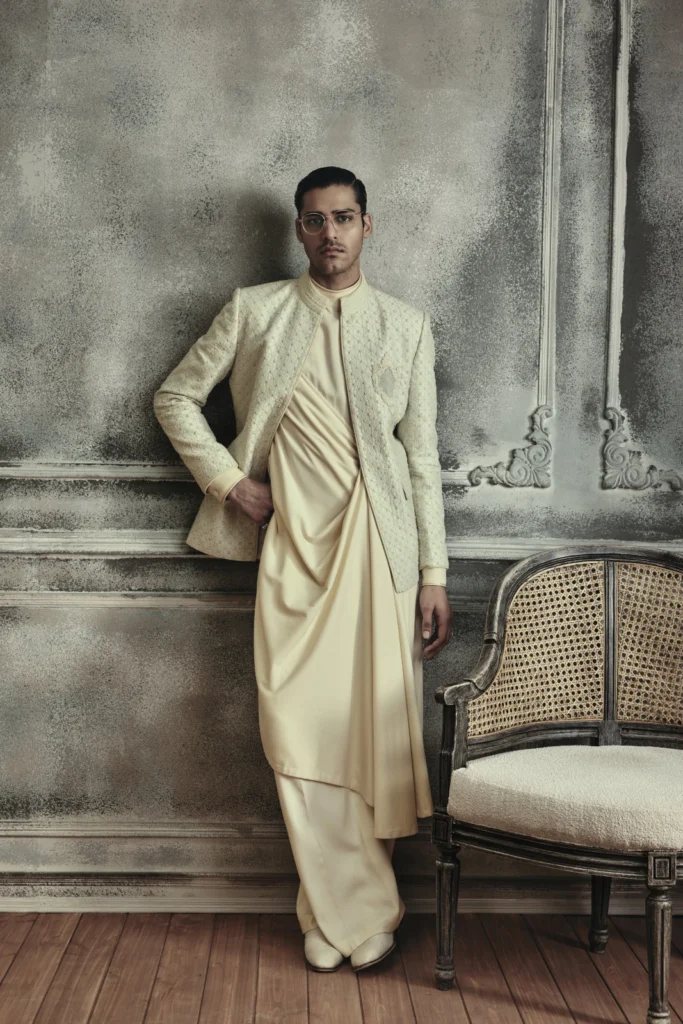
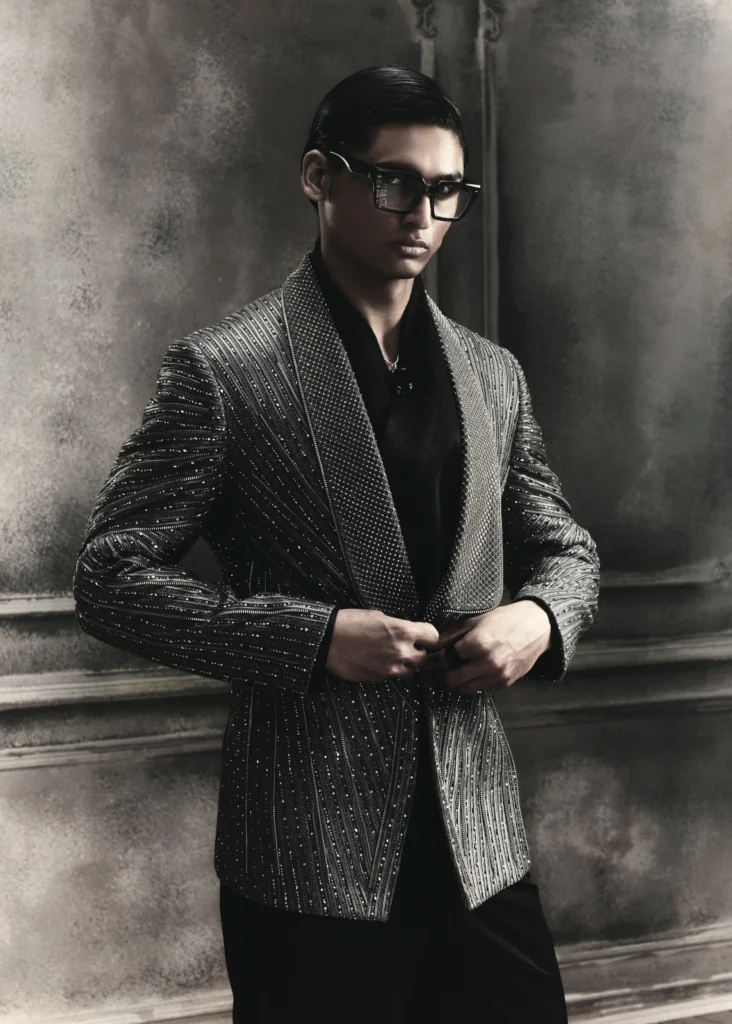
Menswear carries the collection’s clearest point of view. Sherwanis, bandhgalas, tuxedos, waistcoats, and the asymmetric draped kurta, a silhouette the brand has made its own over the years, are built with tailoring that is crisp but never stiff. Wrapped inner layers sit underneath both shorter and longer outer pieces, adding visual depth without adding bulk. The embroidery running through each garment is not surface decoration; it reinforces the shape and structure of the clothes from within.
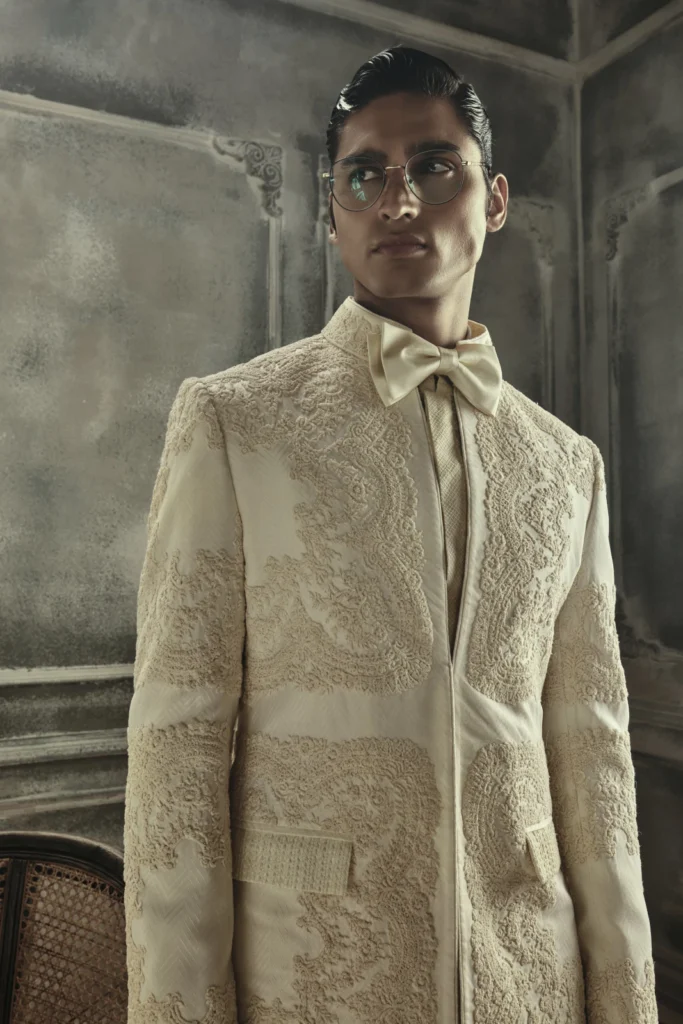
The colour palette in menswear stays in measured territory: ivories, creams, and greys lead, with mustard and muted blue used sparingly as accents. Fluid shawls are paired with sherwanis, softening the overall look without losing its backbone. A separate black story sits within the collection, built around directional threadwork, bold belts, and oversized sarpech headpieces.
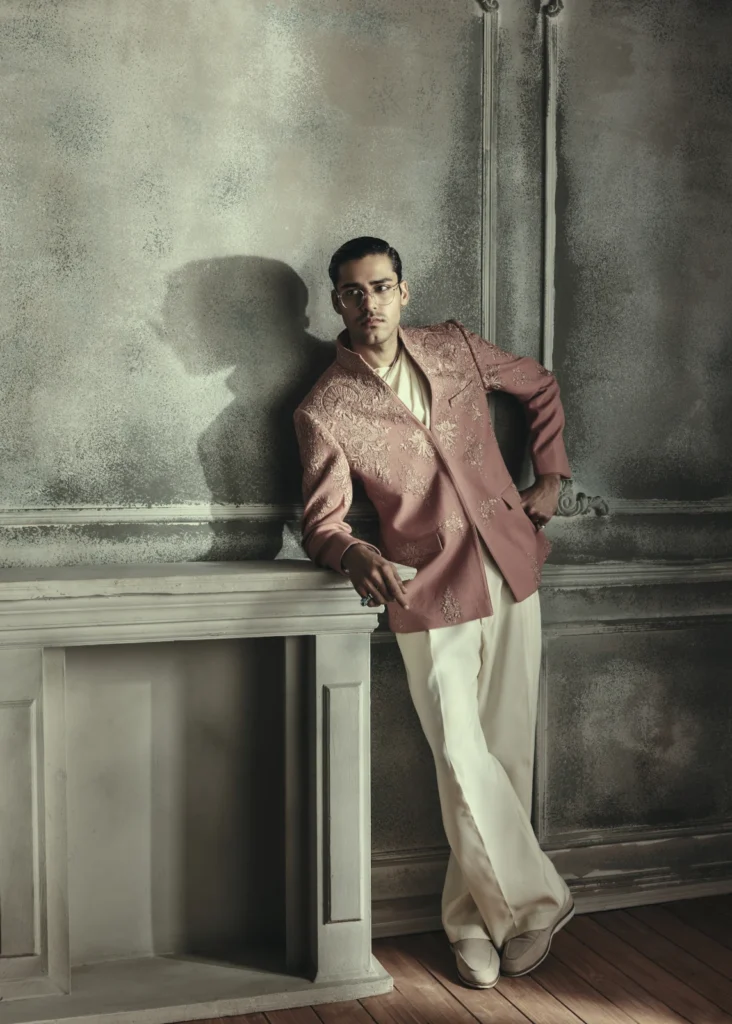
As Indian bridal wear moves back towards maximalism, this collection builds a wardrobe for the groom and his guests that is dressed for the occasion without being overwhelmed by it.
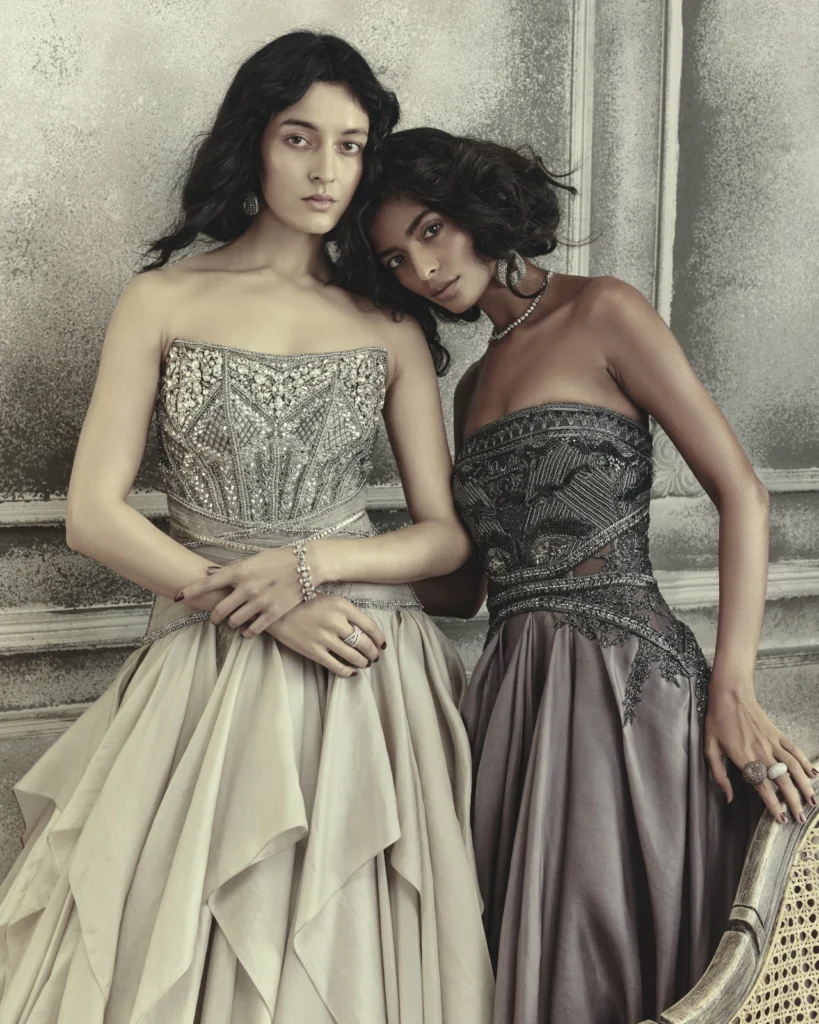
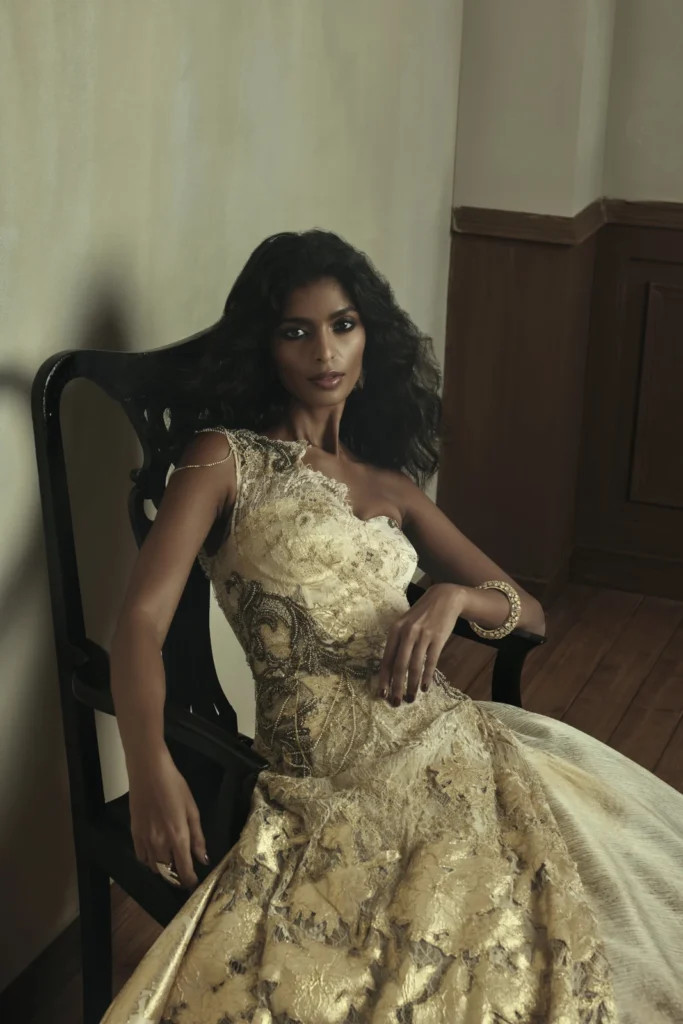
Womenswear is built around lehengas and gowns, using corseted structures, sculpted drapes, and controlled volume as its foundation. Structure and sensuality work together here rather than in opposition, which has been one of the house’s more consistent strengths in bridal design.
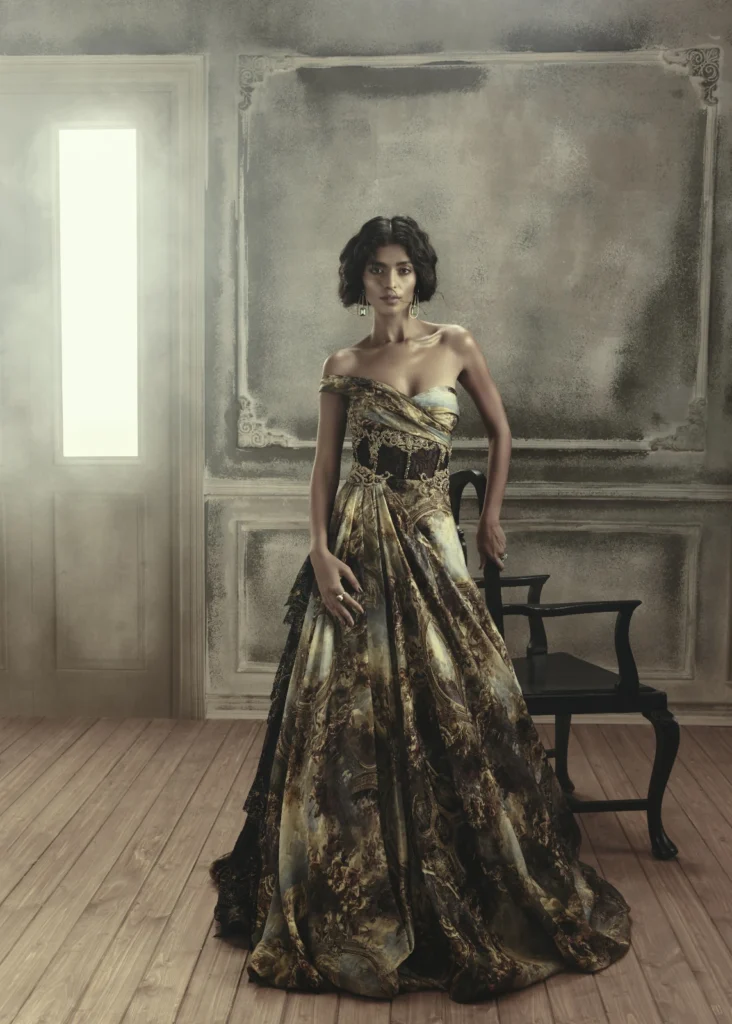
Drape is the collection’s dominant visual language for women: layered veils and architectural wraps frame the silhouette with drama that stays on the right side of restrained. Embroidery and surface detail are used to elevate looks that are already structurally strong, not to compensate for silhouettes that are not.
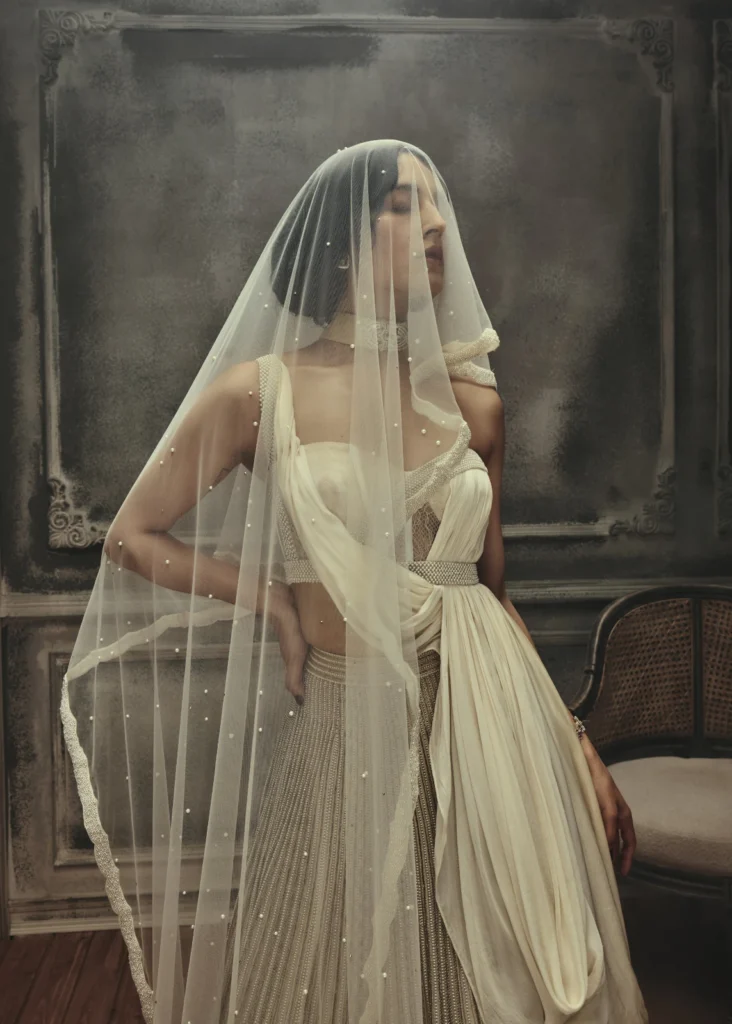
A specific design decision in womenswear is worth noting. Brides can choose to wear a full sweeping veil that raises the ceremonial scale of a look, or they can skip it entirely and let the construction of the garment carry the moment on its own. Both are designed to read as complete and intentional. In a bridal market where designers have historically steered brides toward a singular definitive look, building genuine flexibility into the design is a meaningful shift, and one that reflects how brides today are actually approaching their choices.
The Modern Ceremony consolidates the house’s hold across both menswear and womenswear at a time when the Indian bridal market is seeing serious momentum. As the house states, “ceremony is positioned not as spectacle, but as presence.”