
Quality materials have always carried the burden of proof. Marble signals permanence, silk signals care, leather signals age. Stainless steel, for decades, signalled something else entirely: the back-of-house, the industrial, the aggressively functional. Restaurant kitchens, steel chutes rattling with the pace of service, hospital trolleys, lift interiors that caught your reflection at angles you never quite trusted. Surfaces built to withstand contact rather than invite it.
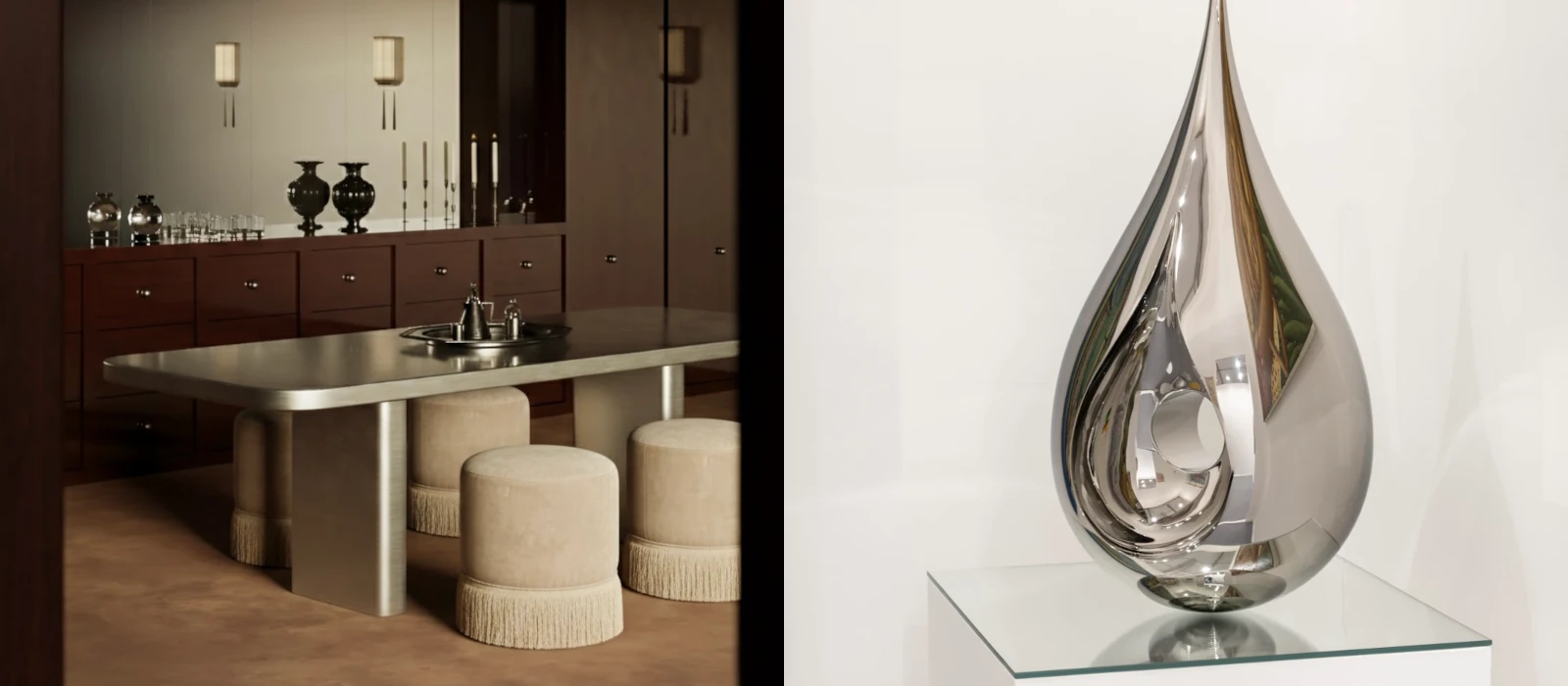
What feels different now is not the material itself but the way it has been pulled into view. Stainless steel has moved out from behind the scenes and into the foreground of domestic life, and it has done so with a certain self-awareness. It gleams across interiors that are clearly meant to be looked at, photographed, circulated. A dining table becomes a mirror. A cabinet holds light rather than just objects. A bar set, complete with stainless steel martini glasses, sits ready for display whether or not anyone is actually drinking from it.
The appeal is immediate when you see it in person. Steel does something that few other materials manage without effort. It takes the room and gives it back to you, slightly altered. Corners stretch, light sharpens, movement repeats. A ceiling fan spins twice, once above you and once beneath your glass-topped table. It is difficult to ignore, which is precisely why it has become so visible online. The camera likes it. More importantly, it understands how to read it.
The word “new” appears often, even though stainless steel is anything but.
Social media has had a very specific role in this shift, and it is difficult to separate the rise of stainless steel furniture and homeware from the way interiors are now consumed. Platforms reward surfaces that respond to light, that create depth within a flat image, that hold attention for longer than a passing glance. Stainless steel does this instinctively. A mirrored console table does not simply sit against a wall; it reflects the floor, the art above it, the person taking the photograph. The image becomes layered without any additional styling. It is a material that edits the room in real time, which explains why it circulates so easily across feeds that prioritise immediacy over explanation.
View this post on Instagram
This digital afterlife has fed directly into retail. Walk through most homeware stores and there is almost always a cluster of objects that lean into this reflective quality. Polished trays, sculptural stools, chrome-finished lamps, bar accessories that echo the language of professional spaces. They are often positioned as something slightly unexpected, a break from wood, linen, or ceramic, but also as something current, tied to what people are seeing online. The word “new” appears often, even though stainless steel is anything but.
The story of steel
Its history is more prosaic than glamorous. Stainless steel was developed in the early 20th century, often traced back to experiments in Sheffield where metallurgists were trying to create a rust-resistant alloy for industrial use. The addition of chromium gave steel its defining quality, the ability to resist corrosion, which made it invaluable in environments where durability mattered above all else. It moved quickly into industries that required hygiene and resilience: food production, medicine, transport. By the mid-century, it had become a material associated with modernity, efficiency, and a certain kind of technological optimism.
That association carried into design movements of the 20th century, where steel aligned neatly with ideas of clarity and function. It appeared in architecture, in furniture, in objects that rejected ornament in favour of structure. Even then, its appeal was visual as much as practical. The sheen suggested progress, a break from heavier, more traditional materials.
What we are seeing now feels like a return, though with a different emphasis. The industrial associations have not disappeared, but they are being reframed within a more image-conscious context. Designers tend to approach it with a degree of caution. Yashesh Virkar, whose work often moves between object and furniture, describes it in terms that feel closer to styling than construction. “Personally, I feel that when steel is used in a high-gloss or chrome finish for furniture, it should act as an element of ornamentation within a space. It works much like jewelry. If you wear too much jewelry, it can appear tacky; however, when used subtly, it enhances your personality and becomes part of your overall presence.”
It is a useful way of thinking about it. Stainless steel rarely carries a room on its own. It interrupts, it highlights, it draws attention to something else. A reflective edge on a table, a polished base beneath a sofa, a tray left deliberately out on a console. The effect depends on how much is revealed and how much is held back.
There is a growing preference for materials that are durable and easy to maintain, especially in urban homes where wear shows quickly.
Virkar is direct about the limits. “I think steel is a very quirky material and must be used with great control. Excessive use can disrupt the aesthetics of a space. It is best utilised in a minimal and calculated manner to enhance the overall experience.” That sense of control comes up repeatedly when people talk about steel. It does not forgive overuse. It tends to flatten everything if it is allowed to take over.
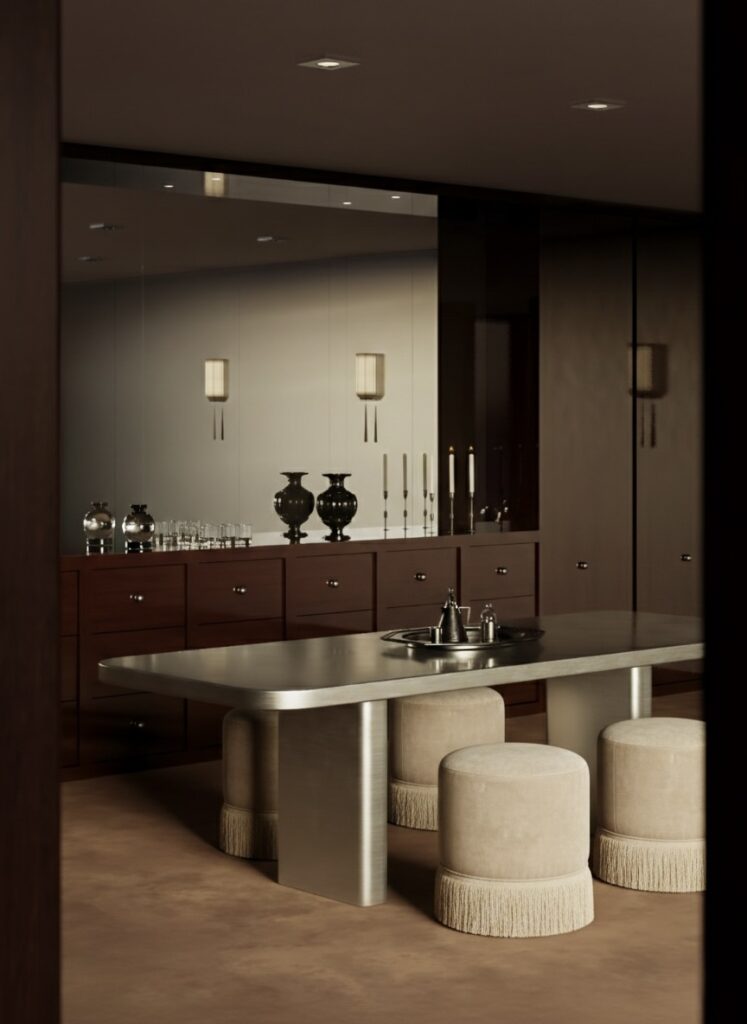
At the same time, its resurgence is tied to something more practical. There is a growing preference for materials that are durable and easy to maintain, especially in urban homes where wear shows quickly. Rucha Joshi and Nidhi Agarwal, designers at Staple Ink Studio frame it in straightforward terms. “We see stainless steel as a natural response to today’s shift toward honest, low-maintenance materials. Long valued in kitchens and restaurants for its hygiene and durability, it’s now finding relevance in homes for the same reasons.”
The weight of steel
That explanation sits alongside a broader cultural shift. As homes become more visible through screens, materials are asked to do more than simply function. They need to hold attention, to translate into images that travel. Stainless steel meets that demand almost too well. Its reflective surface carries the room into the photograph, creating a sense of depth that flat materials struggle to achieve.
View this post on Instagram
“Aesthetically, its clean lines and reflective quality align with the restrained, minimal language we often work with. It adds lightness without demanding attention, making it both functional and striking,” Joshi and Agarwal explain. That idea of lightness can feel slightly misleading until you spend time around the material. Steel is heavy, often unexpectedly so. Yet a polished surface can make it seem almost ethereal, especially in smaller rooms where reflections blur the edges. A table appears thinner, a cabinet less solid. The room feels larger, even if nothing has actually changed.
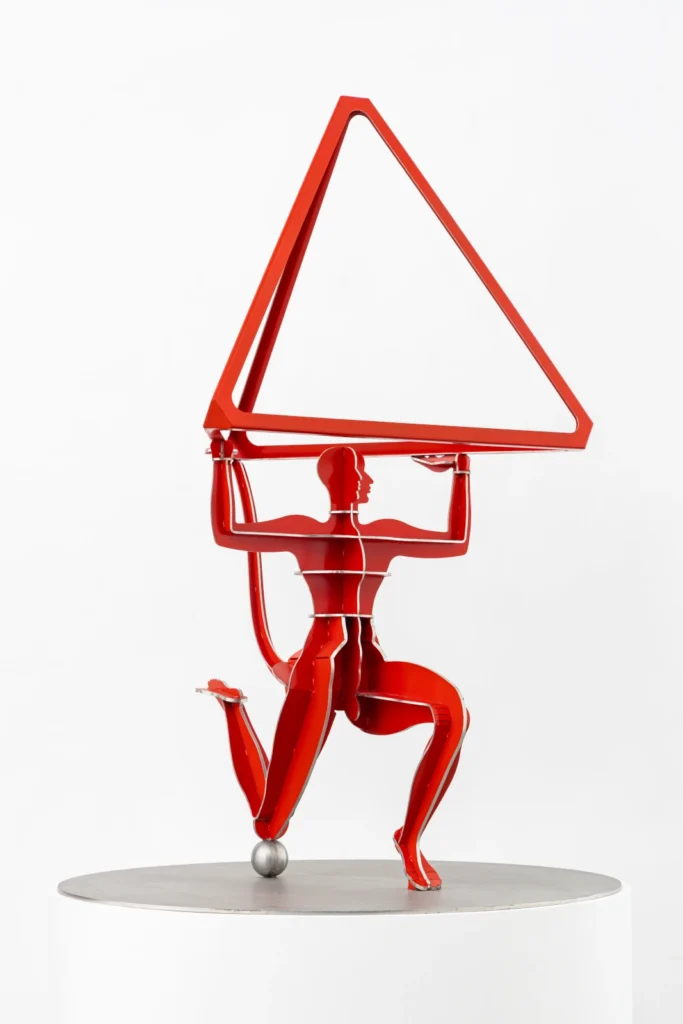
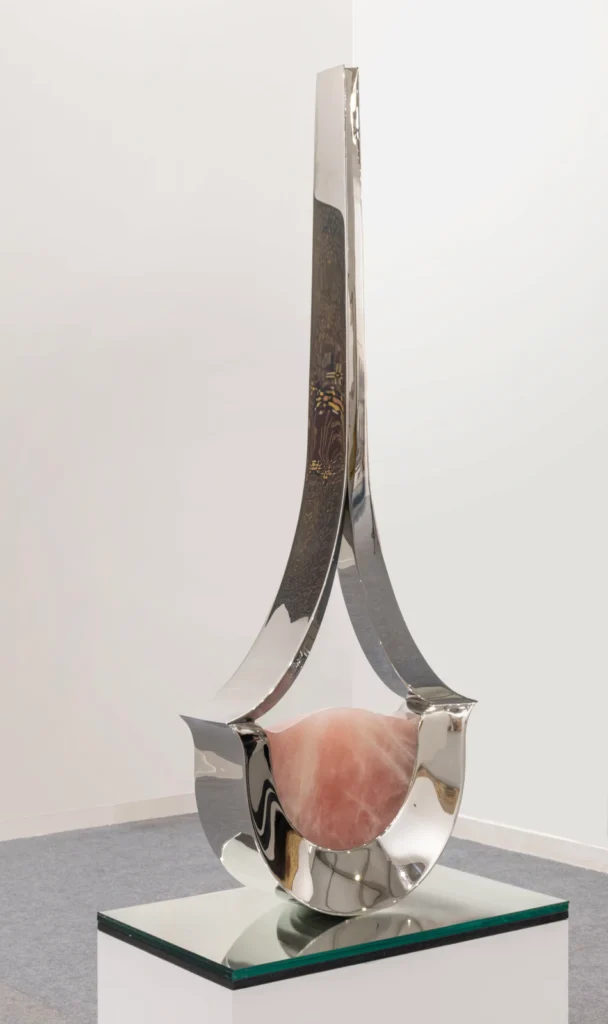
Artists have been working with that illusion for some time. Tarik Currimbhoy’s sculptures, made from mirror-polished steel, push the effect further. “The sculptures are heavy..some weighing a ton. The mirror polish of the steel makes it appear light and reflects the surroundings…so making it disappear into its surroundings and melting into nature.” Standing in front of one, you are aware of the weight, but what you see is something else entirely. The object seems to give way to whatever surrounds it.
A brushed surface diffuses light, making it easier to live with. A matte finish brings it closer to something like aluminium, less reflective, more subdued, less tied to the high-gloss imagery that dominates social feeds.
He speaks about how these pieces behave in interiors in a way that feels relevant beyond sculpture. “In an interior space the intent is to play with the sculpture, thereby interacting with it making it dance kinetically. When static it sits like a beautiful object reflecting the space around it.” That sense of interaction mirrors what happens on screen. A reflective surface shifts as the camera moves, as the person filming adjusts their angle, as light changes across the day. It is never quite the same twice, which gives it an advantage in a visual culture built on repetition.
The sense of novelty persists, even though the material itself is far from new. That has something to do with how it is being finished. “We’re already seeing a move beyond polished finishes: brushed, matte, and toned variations are making stainless steel more adaptable,” say the designers at Staple Ink Studio. These variations matter. A brushed surface diffuses light, making it easier to live with. A matte finish brings it closer to something like aluminium, less reflective, more subdued, less tied to the high-gloss imagery that dominates social feeds.
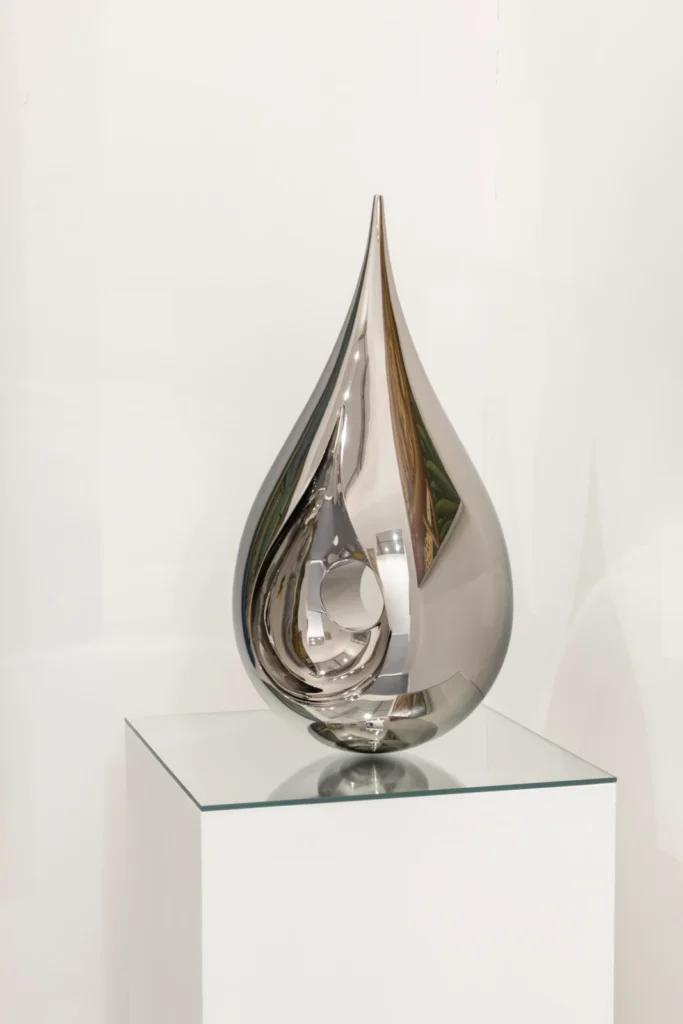
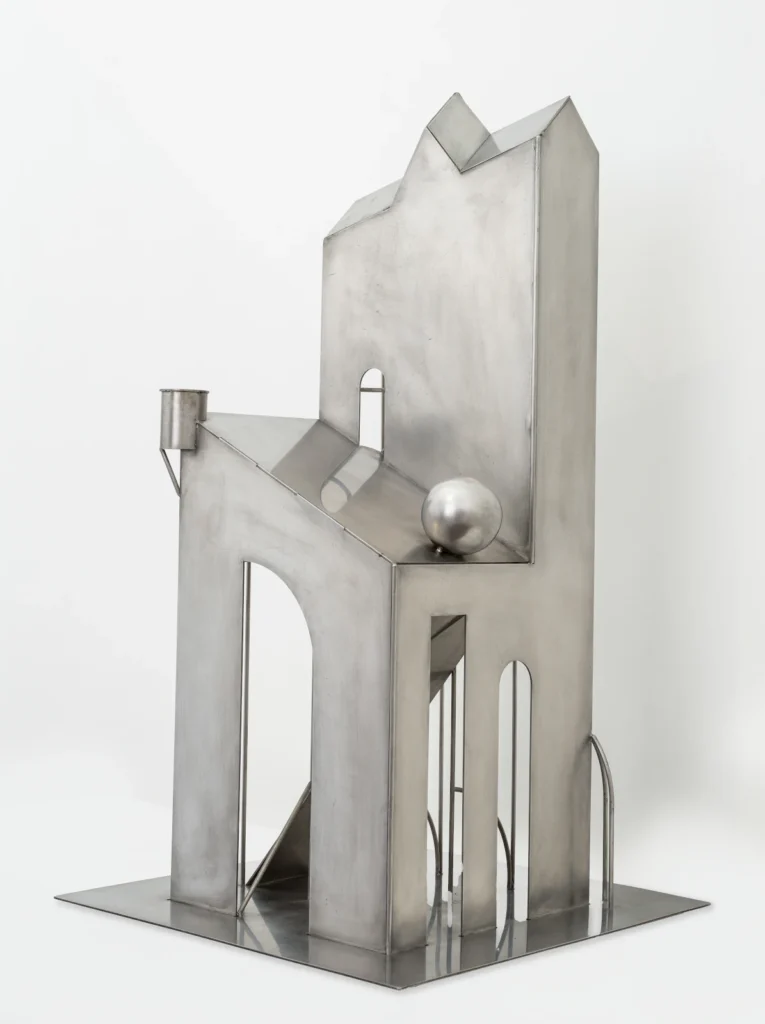
For some practitioners, the surface is only part of the story. Dhruva Mistry approaches steel as a medium that can be shaped and layered. “For my interest in geometry and drawing, I prefer to work with sheet metal almost like using clean sheets of paper, offering variable scale and volume to my work for it being as enduring as the best of classical materials in the Indian climate.” It is a reminder that stainless steel is not just about reflection. It can hold form, carry detail, support complexity.
The afterlife of steel
There are, of course, practical considerations that tend to get less attention in photographs. Steel shows fingerprints. It scratches. It requires a certain level of upkeep if you want it to remain pristine. These are not necessarily drawbacks, but they do shape how the material is experienced day to day. The mirror is never entirely clean, and perhaps that is part of its appeal. It records use rather than hiding it, even as it presents a polished exterior to the world.
What has emerged over the past few years is a material that sits in an unusual position. It is widely available, yet still capable of feeling distinctive. It appears in mass-produced objects and in highly controlled, limited pieces, circulating through the same visual channels. Social media collapses those distinctions, placing a steel tray from a home store next to a bespoke sculptural table, both framed within the same kind of image.

Virkar’s observation captures that imbalance. “While it contributes to just about 5% of the materials we use, it accounts for more than 50% of our reputation.” A small amount goes a long way. That seems to be the guiding principle, whether consciously applied or not.
Stainless steel has always been associated with endurance. What has shifted is the way it is framed and circulated. It is no longer confined to places where function dictates form. It now sits in spaces where form is expected to hold attention, where surfaces are part of how a room is understood and shared. It reflects, it distorts, it draws attention, then redirects it, working as much for the camera as it does for the person standing in front of it.