
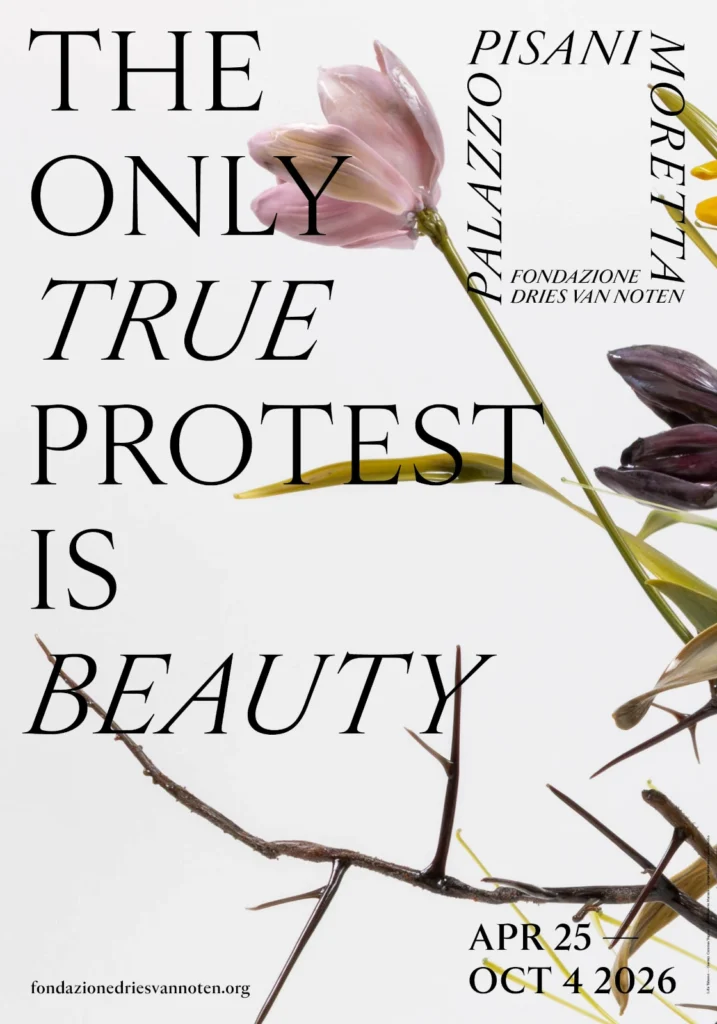
Venice has always been a city that wears its beauty like armor, so it makes sense that Dries Van Noten chose it as the site for his foundation’s first major statement. Fondazione Dries Van Noten, launched by the Belgian designer and his partner Patrick Vangheluwe, will open its debut presentation on April 25, 2026, at Palazzo Pisani Moretta, a 15th-century Gothic palace on the Grand Canal.
Van Noten built one of fashion’s most singular brands, showing in Paris for nearly four decades on his own terms, and this foundation carries the same logic. He retired from his eponymous label in 2024. However, it was less a farewell and more like a next chapter in his career.
The Only True Protest Is Beauty takes its title from American songwriter and political activist Phil Ochs, whose music became the soundtrack of the 1960s anti-war movement. Invoking Ochs is a deliberate act of positioning. This is not a show about aesthetics for aesthetics’ sake. It is about beauty as a provocation, a tool for questioning what is accepted, comfortable, and resolved. Van Noten has always designed with that tension in mind, building collections that were sensuous and cerebral in equal measure, and this presentation extends that practice into a broader curatorial form.
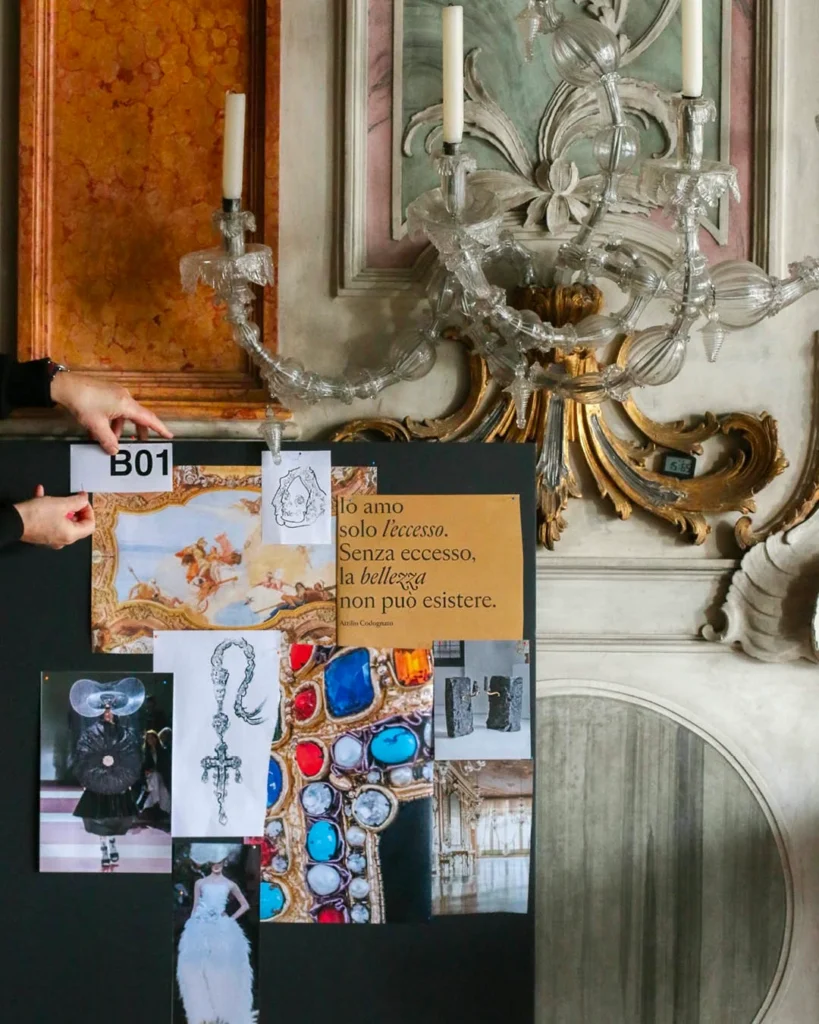
Curated by Van Noten and longtime collaborator Geert Bruloot, the show spans 20 rooms across the palazzo’s ground floor and two Piano Nobile levels, bringing together over 200 works across fashion, jewellery, art, collectible design, photography, glass, and ceramics. None of the architecture is treated as a neutral backdrop here. Historic frescoes, a chapel alcove, and the grand portego connecting the land entrance to the Grand Canal – all factor into the curatorial logic, shaping how each work is read within its setting.
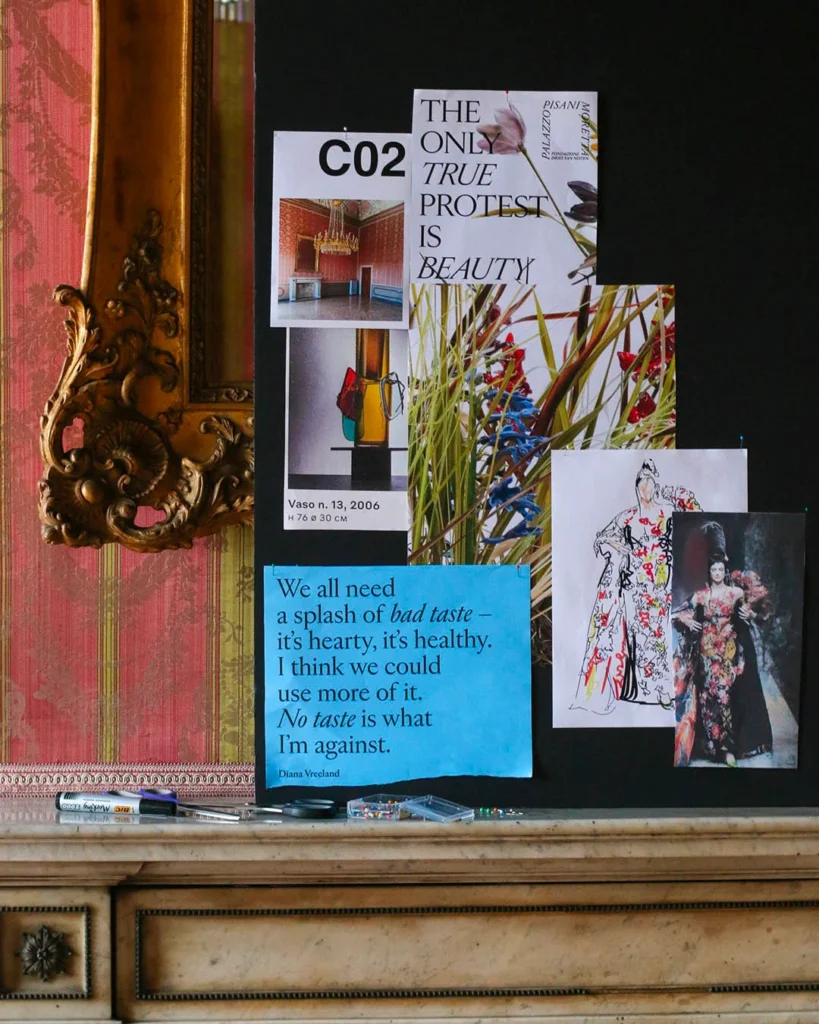
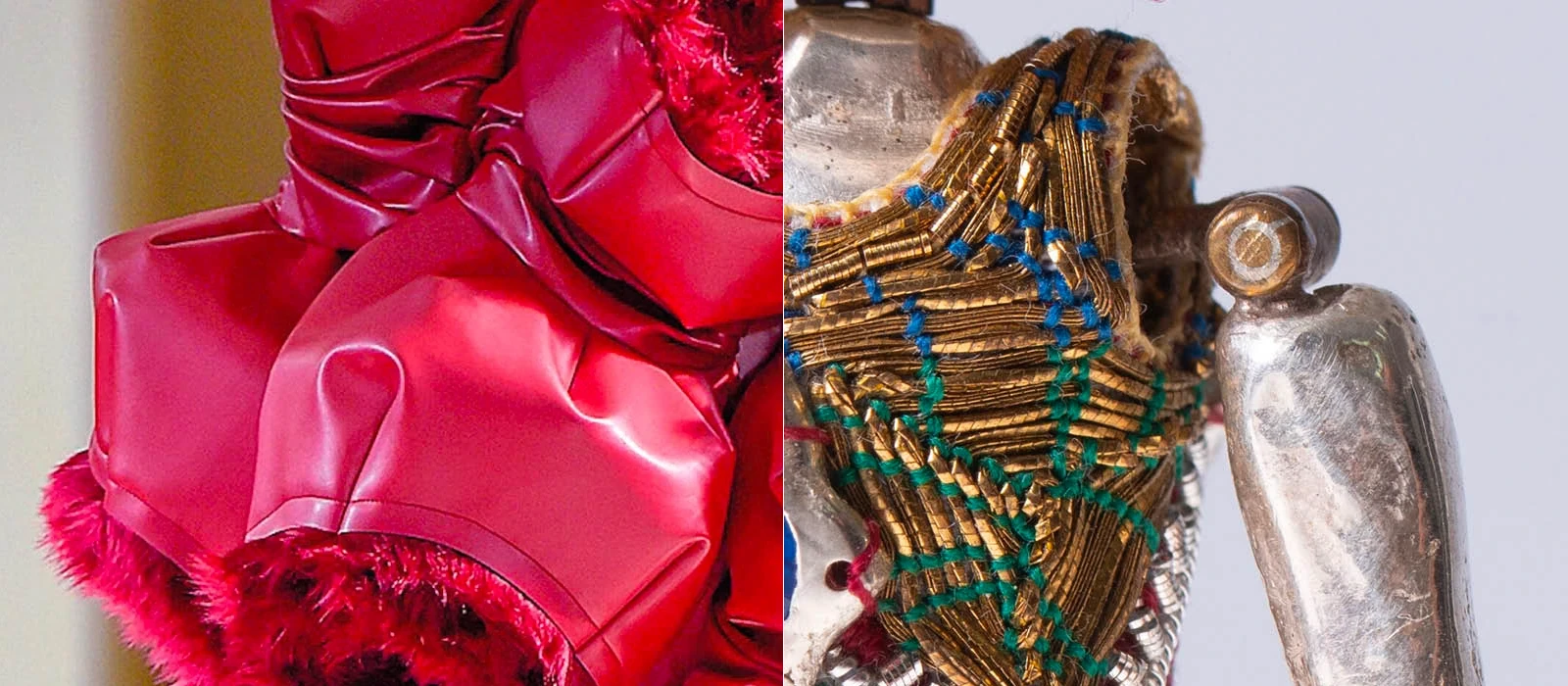
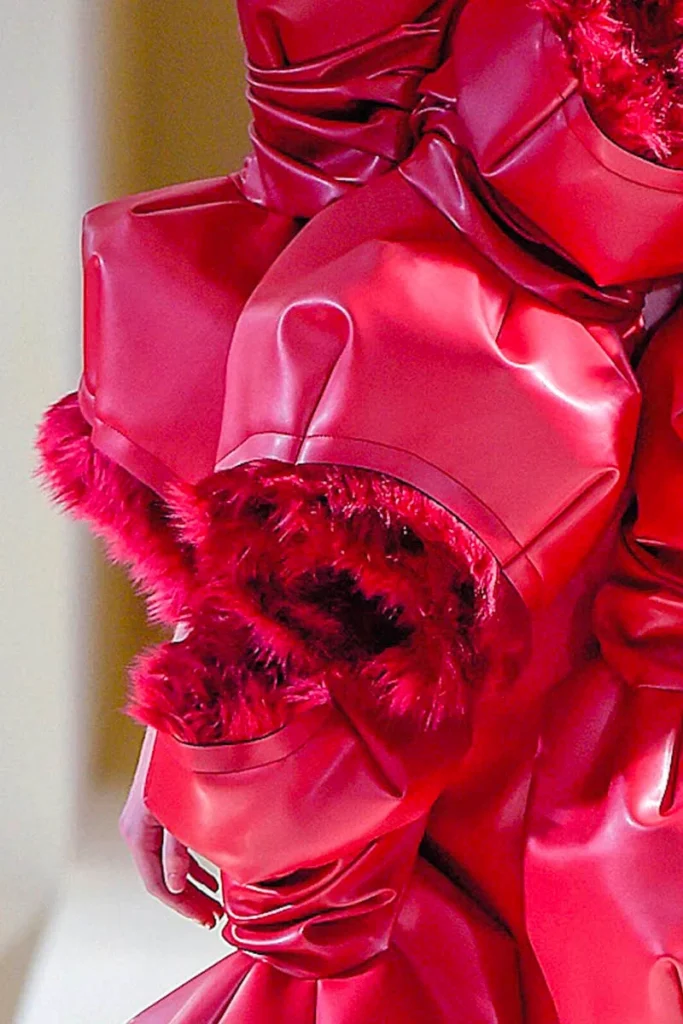
Fashion runs through the entire presentation, from the first room to the last. Fifteen silhouettes by Christian Lacroix, some drawn from private collections and rarely shown publicly, reveal the designer’s layered, ornamental constructions in direct conversation with the palazzo’s decorative richness. Archival pieces by Rei Kawakubo for Comme des Garçons from 2015 onward bring a different energy, sculptural and abstract forms that have always operated outside conventional ideas of beauty. Palestinian designer Ayham Hassan, raised in the West Bank, rounds out this section with work that transforms material constraint into a design vocabulary built on resilience. His inclusion signals that the foundation is interested in where fashion comes from, not just where it arrives.
Peter Buggenhout’s dust-laden sculpture greets visitors at the entrance, its ambiguous presence setting the register immediately. A ceiling fresco by Guarana, a student of Giambattista Tiepolo, depicting The Victory of Light over Darkness, becomes the canopy under which Steven Shearer’s photographs of sleeping figures and Codognato’s Memento Mori jewellery create an unlikely but considered exchange.
In the chapel alcove, a sculptural assemblage by Misha Kahn introduces irreverence into a space built for devotion, followed by Ann Carrington’s compositions made from discarded metal elements. Hubert Duprat’s Tube de trichoptère deserves its own mention, a work in which caddisfly larvae use gold, pearls, rubies, and diamonds to construct their protective casings. It sits precisely at the intersection of instinct, material, and craft.
Collectible design is placed in direct dialogue with antique furniture already belonging to the palazzo. Contemporary chairs by Guillermo Santomà, Nifemi Marcus-Bello, and Lionel Jadot sit alongside the palazzo’s historic seating, raising questions about function, collectability, and the meanings that accumulate in objects over time.
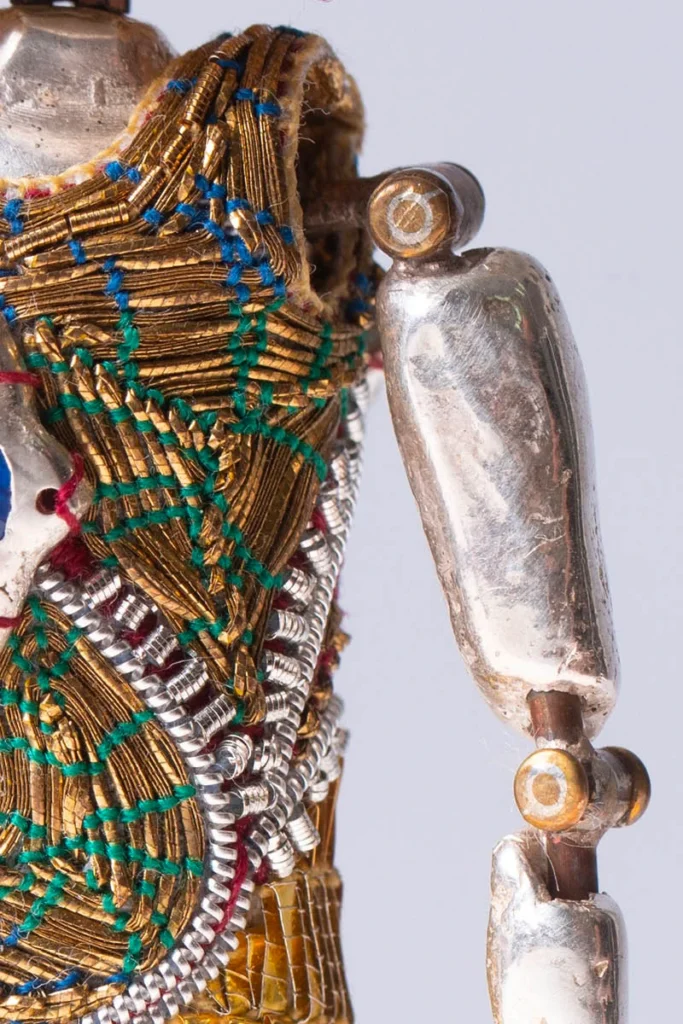
Isaac Monté’s mineral-crystallized vases and the Pisani Moretta family’s historic glassware collection sit in conversation with contemporary glass works by Alexander Kirkeby, Ritsue Mishima, and Armand Louis for Wave Murano Glass, treating craft as something that carries forward across generations rather than resetting with each new wave.
Over 20 behind-the-scenes videos will accompany the exhibition, documenting making processes and featuring conversations with participating artists and designers. Van Noten and Vangheluwe have been direct about their intent. “We are interested in beauty not as an answer, but as a question. It is not an escape from reality, but a way of engaging with it. When beauty allows for ambiguity, slowness, and contradiction, when it disturbs rather than resolves, then it becomes a subtle form of protest. This Presentation is an invitation to look longer, to stay with uncertainty, and to recognize making as a deeply human act in which concept and craft converge, carrying both culture and the memory of the hands,” the founders said in a statement.

The Only True Protest Is Beauty opens April 25, 2026, at Palazzo Pisani Moretta, Venice, as part of Fondazione Dries Van Noten’s inaugural programming.