
Universal Genève is relaunching after years away from the spotlight, and the Swiss watchmaker has returned with one of the most substantial debut collections the industry has seen from a revived brand in recent years. Built around some of the most historically significant pieces in its archive, the collection spans four distinct tiers, from the Prêt-à-Porter Polerouter to one-of-a-kind couture creations, each connected by a newly developed in-house movement and a design language rooted in over seven decades of history.

Anchoring the entire relaunch is the Polerouter, a watch with an origin story that goes beyond the drawing board. On November 15, 1954, Scandinavian Airlines flew the first transatlantic flight over the North Pole, taking a Douglas DC-6B from Copenhagen to Los Angeles and cutting travel time between Europe and America considerably. SAS needed a watch reliable enough for extreme polar conditions and turned to Universal Genève, who gave the task to a 23-year-old designer named Gérald Genta.
He delivered a design with a patented outer dial tension ring that kept out dust and water, anti-magnetic protection, shock resistance, and curved lugs for comfort on the wrist. Initially launched with a bumper automatic movement, it later incorporated the Microtor Calibre 215 in 1958, which at 4.1 mm was the world’s thinnest automatic movement at the time. Only 170 pieces were made initially, most given to SAS pilots, and they have since become some of the most sought-after references among vintage watch collectors worldwide.
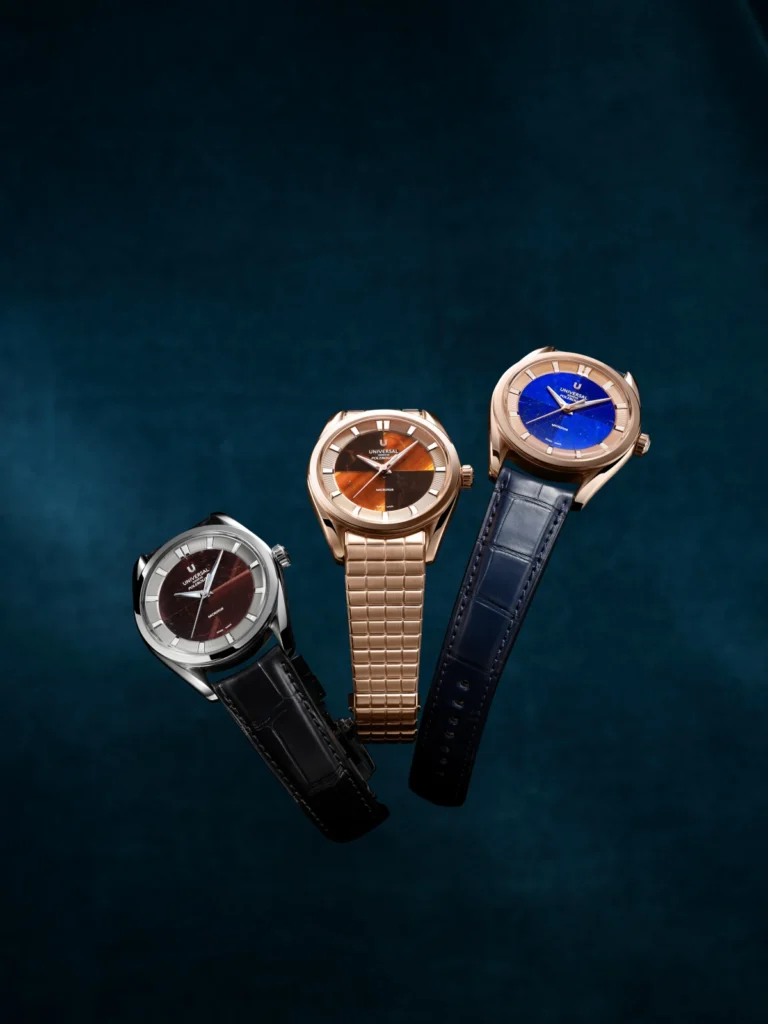
Genta would go on to become the most celebrated watch designer of the 20th century, responsible for icons including the Audemars Piguet Royal Oak and the Patek Philippe Nautilus. His widow Evelyne Genta recalled in 2011, “Whenever Gérald talked about his career, he always started with the Polerouter and Universal Genève. It was the start of it all.” Over six decades, Genta produced around 100,000 designs, yet this first commission stayed closest to him. Beyond its design legacy, the Polerouter crossed into popular culture, worn by Bruce Lee and Alain Delon, giving it a cultural reach that most functional watches of its era never achieved.
Powering every watch in the new Polerouter range is the UG-110, a newly developed in-house Microtor calibre that uses a small rotor to wind the movement, keeping the overall profile slim at just 3.8 mm. It runs at 4 Hz, is shock-resistant, and offers a 72-hour power reserve, enough to keep the watch running through a full weekend without winding. Every component is finished with close attention to detail, and the movement sits within a twin-barrel configuration.
Universal Genève is presenting the new Polerouter under its identity as “Le Couturier de la Montre,” across both the Prêt-à-Porter line and special capsule editions, with every model retaining the original’s twisted lugs, outer dial ring, and signature crosshair dial, each element subtly reworked to sharpen its character.
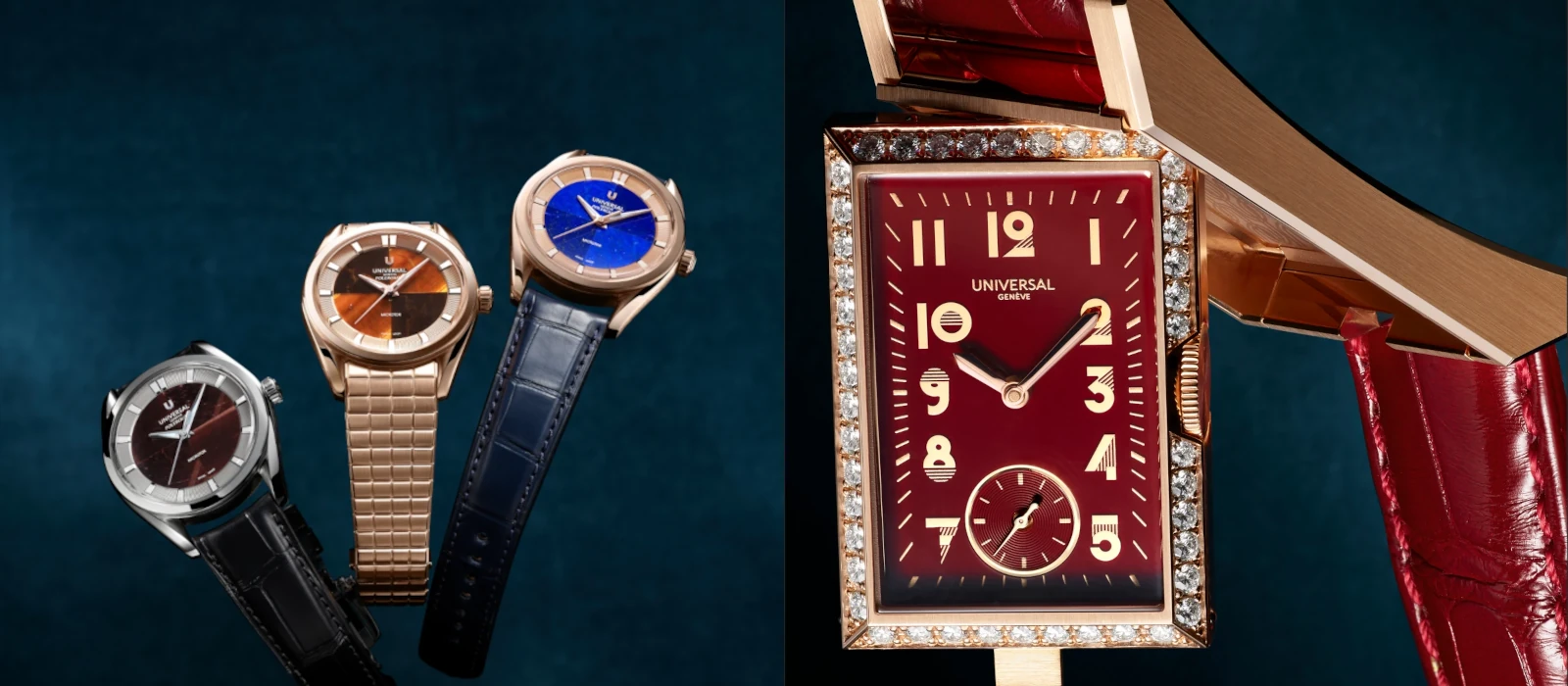
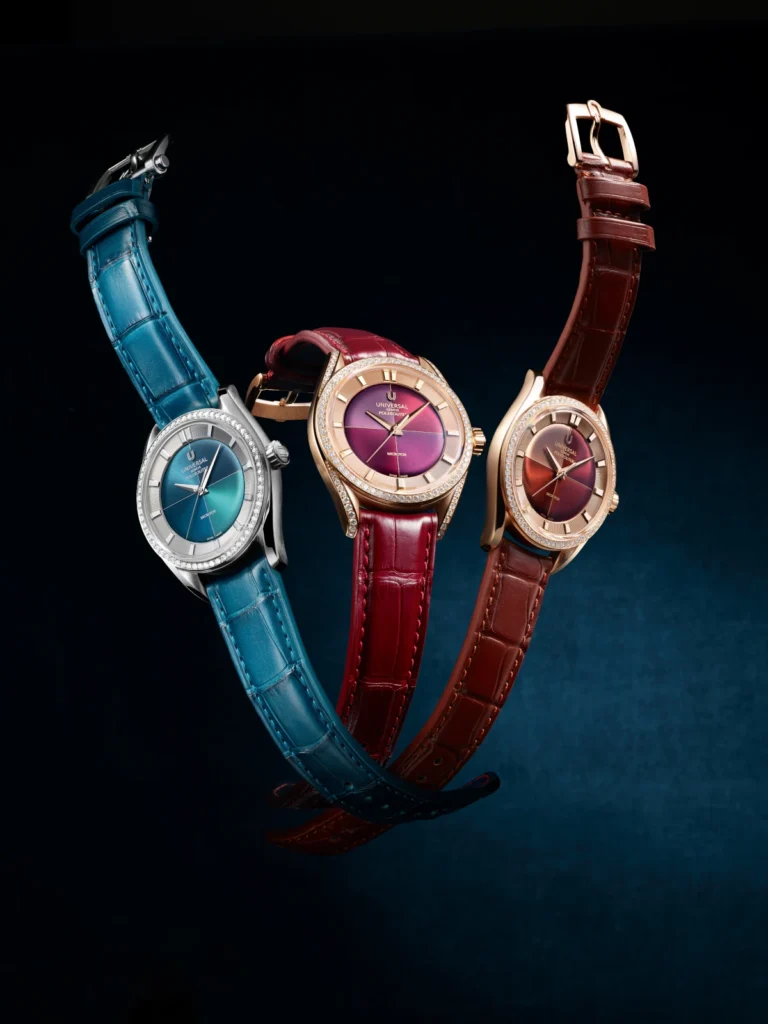
Capsule editions are where the brand’s design confidence becomes most visible. Polerouter Camaïeu, offered in a 37mm case, divides the dial into four sections using the signature crosshair, with each quarter rendered in a slightly different shade of the same colour, a technique drawn from fashion and textile traditions that results in a composition described by the brand as both whimsical and elegant.
Aqua mint comes in stainless steel with a diamond-set bezel, while toffee and berry versions are in 18K rose gold with diamond-set cases and bezels. Polerouter Hardstone, offered in 39mm, pays tribute to Universal Genève’s historic mastery of stone marquetry, using fibrous stone dials in lapis, tiger’s eye, and bull’s eye. Lapis and tiger’s eye versions sit in 18K rose gold cases, bull’s eye in stainless steel. Because the stone is natural, every dial looks slightly different, a genuine point of difference in a segment where limited editions can often feel more commercial than considered.
Gregory Bruttin, Managing Director of Universal Genève, said, “Today, Genta’s landmark Polerouter remains a cornerstone of Universal Genève’s offering, relaunched as a modern evolution of the vintage classic.”
Extending beyond the Polerouter, Universal Genève is also presenting its couture creations, one-of-a-kind pieces representing the highest expression of the brand’s offering. Drawing from the world of 1950s haute couture, an era defined by Christian Dior’s New Look introduced in 1947 and the work of Pierre Balmain, Cristóbal Balenciaga, and Hubert de Givenchy, these pieces translate the boldness of that period’s jewellery into wearable horology. Grace Kelly, Elizabeth Taylor, and Marilyn Monroe wore cocktail rings as expressions of confidence and individuality, and Universal Genève has used that visual language as a direct reference point, built around the brand’s philosophy of “ennoblissement,” the idea of elevation through ornamentation and craftsmanship.
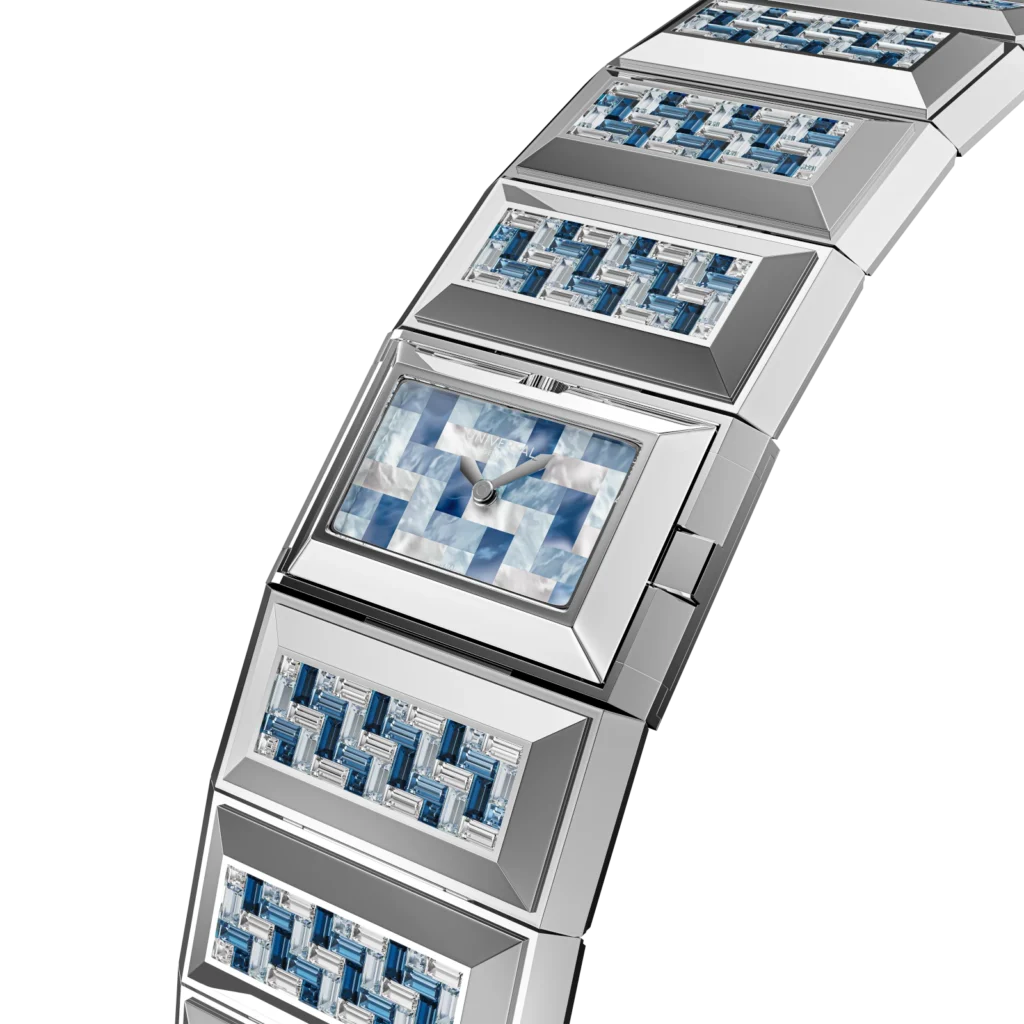
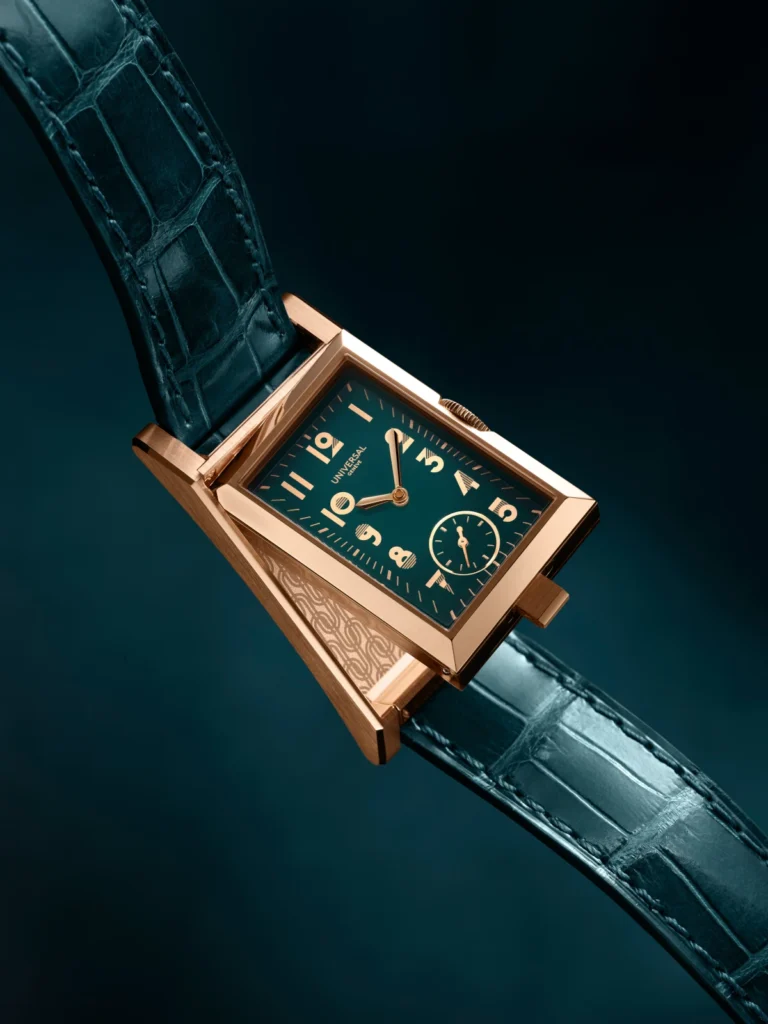
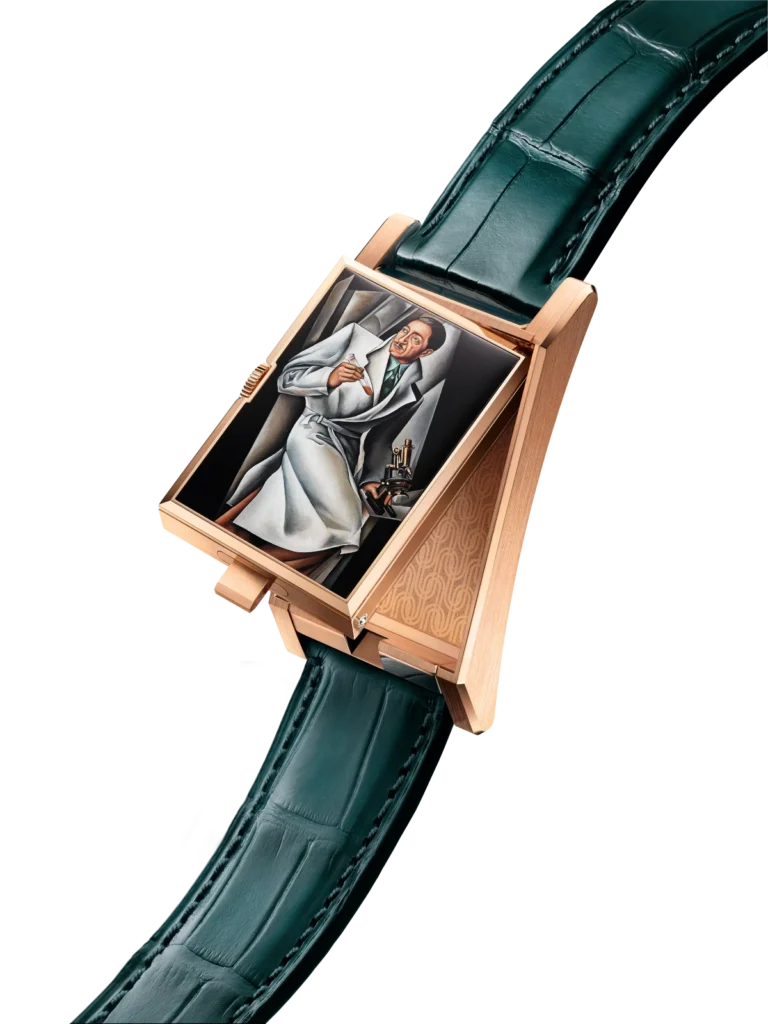
Four distinct couture creations make up this tier. Cabriolet Couture Edition is based on a 1933 model, reimagined as an Art Deco white-gold bangle with a herringbone motif of baguette diamonds and sapphires across three tonal variations, concealing a hidden dial revealed through the model’s signature hinge mechanism, with a mother-of-pearl mosaic dial reinforcing the textile references throughout the design.
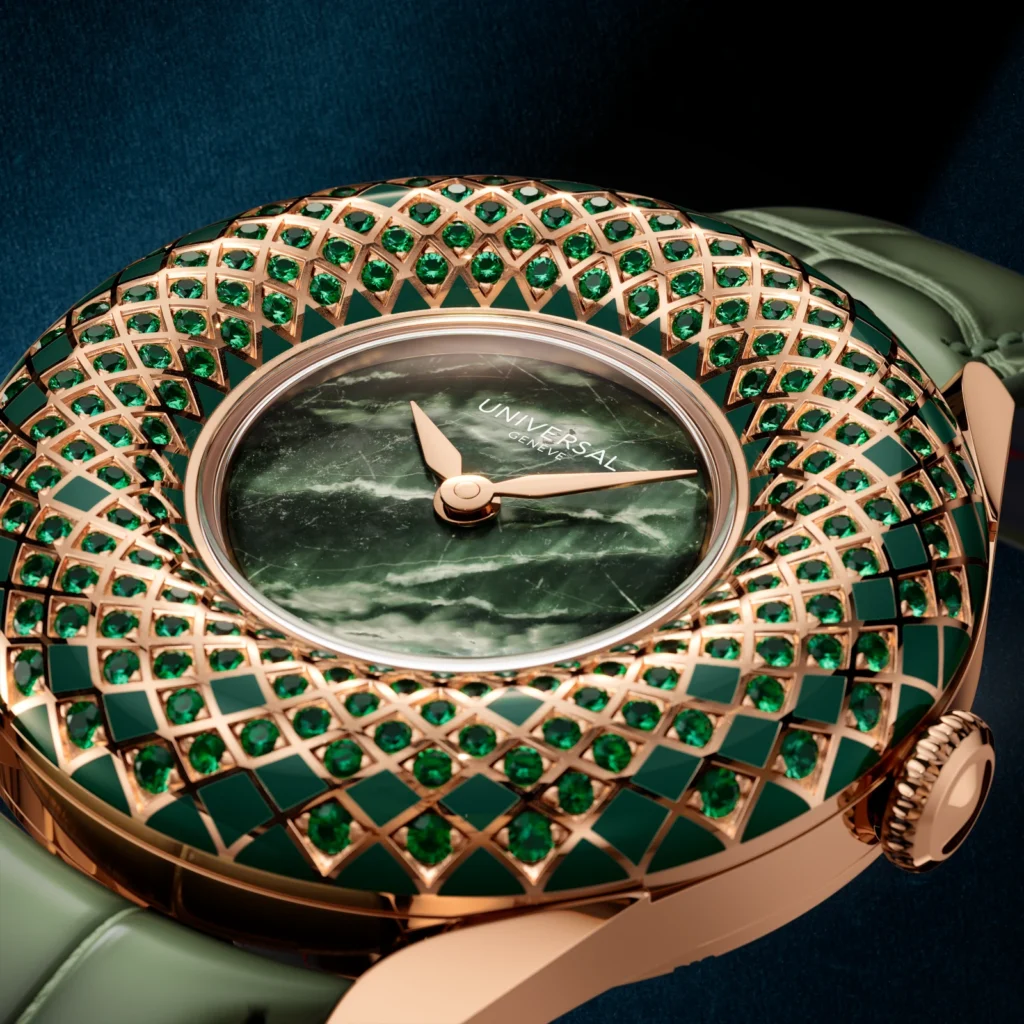
Dioramic Couture Edition draws on the 1956 Monodatic, featuring a domed three-dimensional bezel, a lattice-worked rose-gold case with scattered emeralds and champlevé lacquer accents, all anchored by a central imperial jade stone.
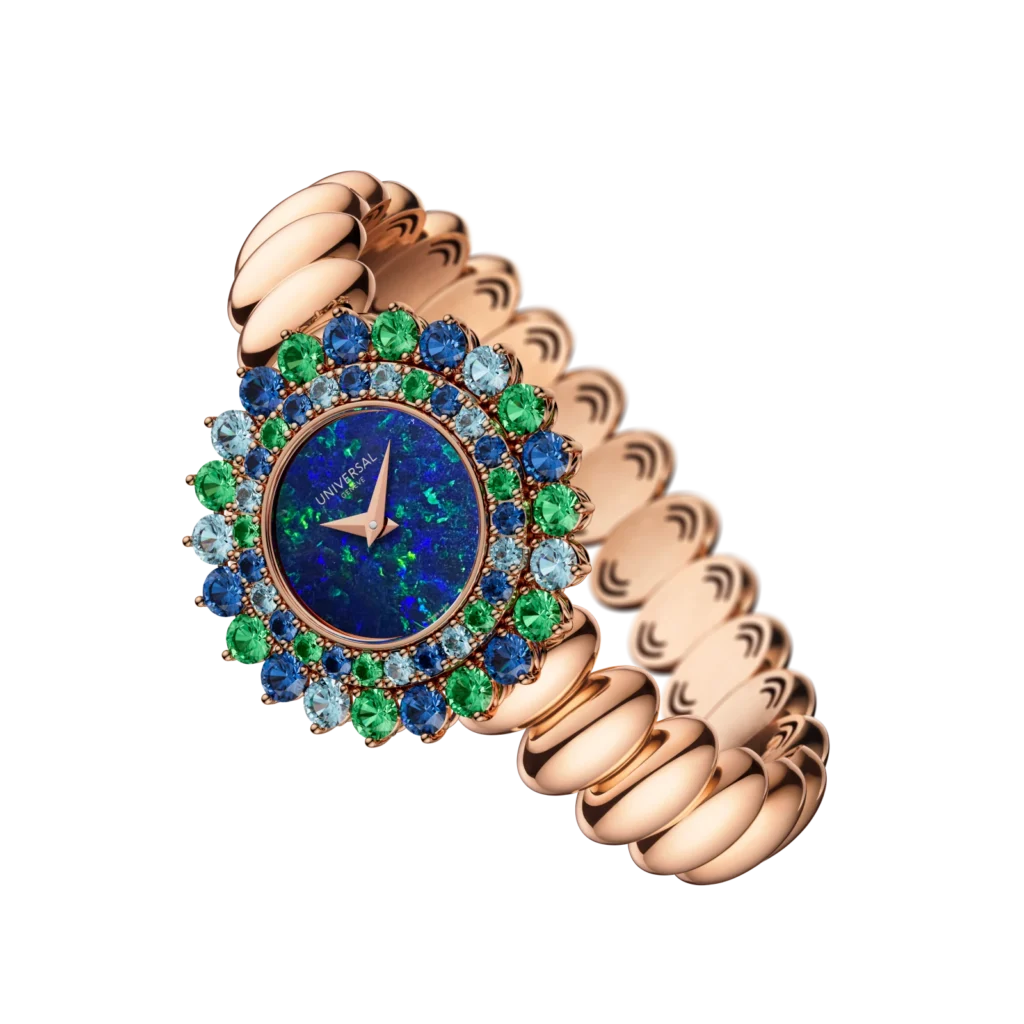
Disco Mini Couture Edition features dials cut from rare opal, selected for the unique play of colour created by water particles within the stone, surrounded by a halo of matched gemstones on an 18K rose gold case with a flexible bangle bracelet available in three sizes.
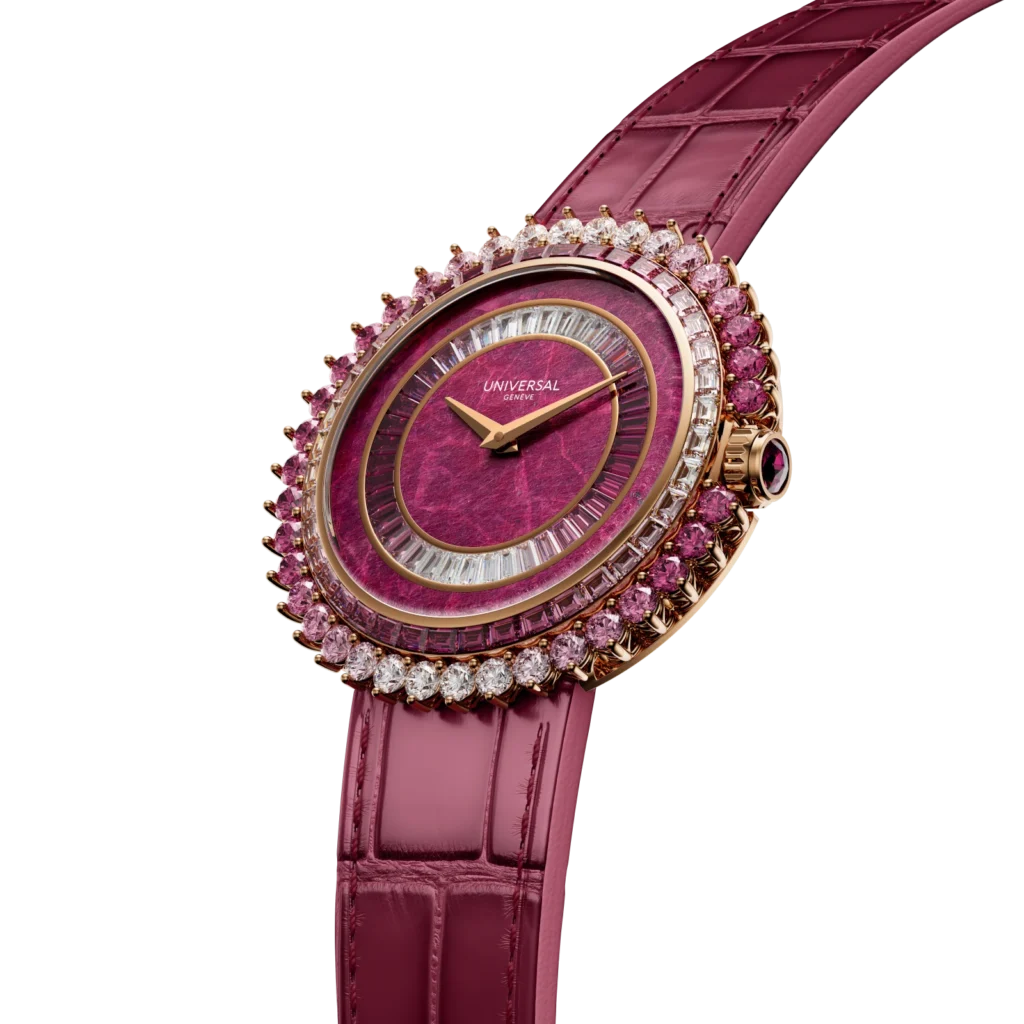
Disco Maxi Couture Edition is a new 42mm creation built specifically for this collection, featuring a ruby root dial surrounded by a gradient of baguette-cut stones moving from ruby through pink sapphire to diamond, set using an invisible baguette technique so no metal is visible between the stones, with baguette-cut sapphires lining the inner ring and round sapphires framing the outer bezel, paired with a burgundy alligator strap on a rose-gold case.
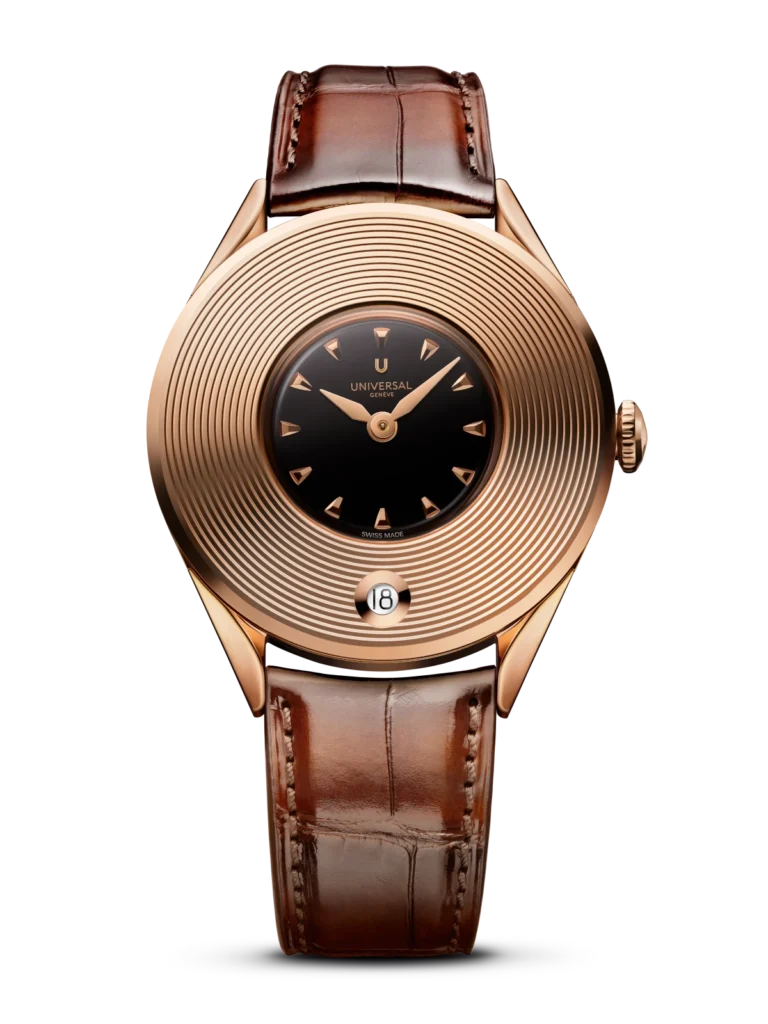
Two signature timepieces complete the relaunch, positioned by the brand as a bridge between its permanent core collection and the more experimental capsule editions. Dioramic Signature Edition retains the wide bezel of the 1956 Monodatic with concentric fluting, while adding angled trapeze-shaped indexes on a lacquered dial, fully polished twisted lugs, a sapphire box crystal, a date display built into the bezel with modernised numerals, and an open caseback revealing the twin-barrel UG-110. It is offered in stainless steel with a blue dial and matching strap, and in 18K rose gold with a black dial and brown alligator strap.
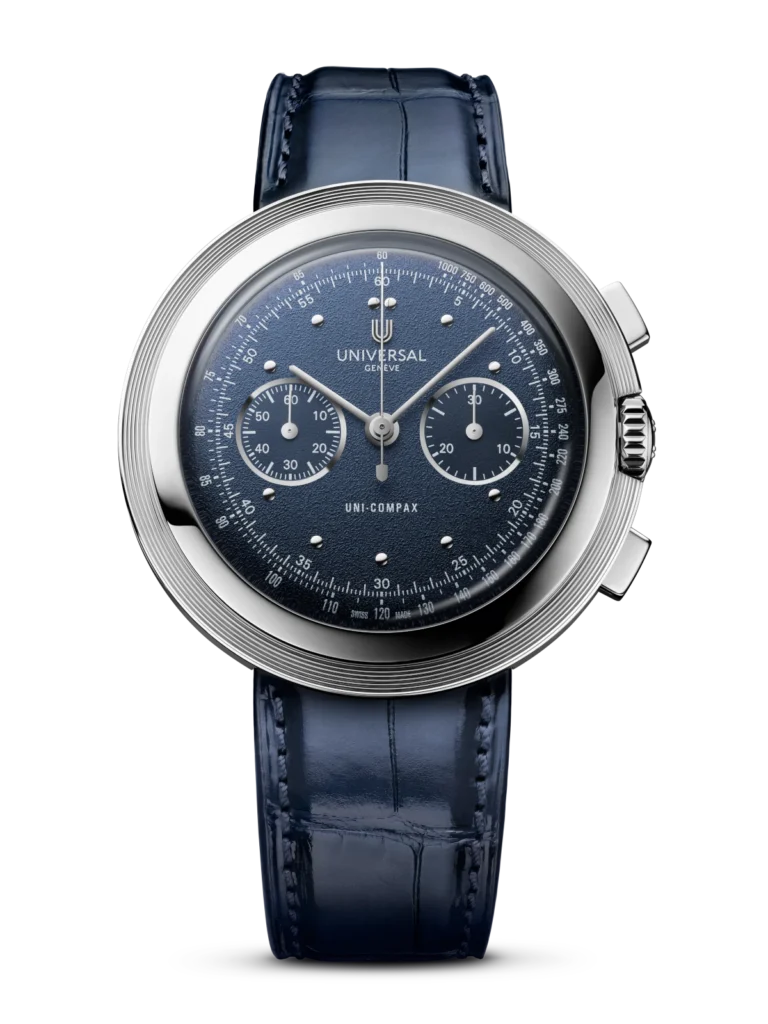
Disco Volante Signature Edition takes its name from the Italian for flying saucer, a nickname collectors gave to certain Universal Genève Uni-Compax chronographs from the late 1930s, pieces that helped establish the brand as one of the leading chronograph makers of the twentieth century. Its new version keeps the lug-less stepped case, adds a polished inner bezel with engraved concentric decoration, a pronounced sapphire box crystal, a grained dial with applied indexes, and a two-counter Uni-Compax chronograph display with tachymeter scale, finished with a transparent caseback. It is available in stainless steel with a blue dial and tone-on-tone counters on a blue strap, and in 18K rose gold with a rose gold dial on a black alligator strap.
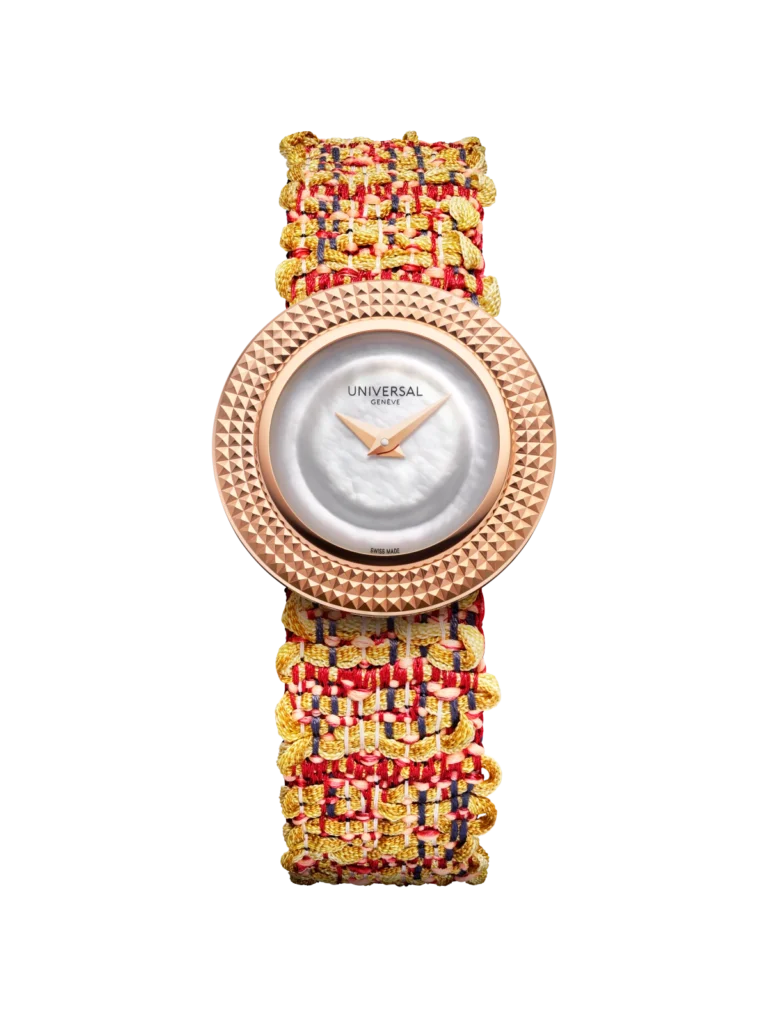
The thoughtful and considered relaunch of Universal Genève comes after its recent acquisition by Breitling. With an archive that spans aviation history, mid-century design, fine jewellery, and some of the most technically ambitious movements ever produced in Switzerland, this relaunch draws from all of it, across the Polerouter Prêt-à-Porter, capsule editions, signature timepieces, and couture creations. Each piece is connected by the newly developed UG-110 movement and a design identity that traces directly back to the crosshair dial Genta first drew for a polar flight more than 70 years ago.